The Zouaves are Coming

Civil War Day-by-Day

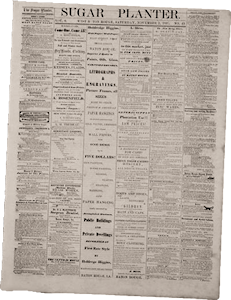
March 16, 1861, Sugar Planter (West Baton Rouge, LA.)

The Inkerman Zouaves, about whose identity there can be no dispute, will pay the citizens of Baton Rouge a visit so soon as their engagement at the Academy of Music in New Orleans terminates. There is something about the name of “Zouave” that is highly pleasing to Southern ears in these “piping times of”–war. We sing the Marseilliese [sic] now instead of the Star Spangled banner, and our military men, in their uniforms, come as near the Zouave dress as possible. The daring deeds of this heroic body of French soldiery have filled the world with admiration and none are more willing to accord them all praise than the chivalrous sons of the Sunny South. The Academy of Music is nightly filled to witness the performances of the Zouaves, who amidst the dreariness of a long and arduous campaign in the Crimea, could find time to indulge in theatricals when every one else almost was thinking of home and its comforts. On one occasion in the Crimea, while the same company were performing at their little Theatre D’Inkerman, the Russians made a sortie upon the French lines. The Thespians flew to arms, with their comrades, while in stage attire, and completely repulsed their enemy. After it was all over, they returned to the theatre and resumed their performance as if nothing of the kind had occurred. We feel assured they will be well received in our sister city. Let them come, we want something to drive away ennui.

0 comments

Fort Sumter—The Facts

Civil War Day-by-Day

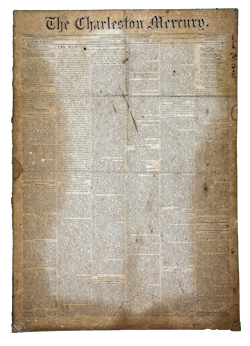
March 16, 1861; The Charleston Mercury

A rumor was current yesterday that Mr. FORSYTH had sent despatches to the Governor, positively assuring him that the garrison would be withdrawn from Fort Sumter. This is incorrect. In his despatch, Mr. FORSYTH merely gave it as his impression that LINCOLN would pursue the course indicated.

Per contra, the following indicated despatch, from a reliable source in Washington, was received yesterday.

“Great efforts are being made to reconsider the withdrawal of the troops from Fort Sumter. I think they will fail. A final consultation is to be held tomorrow.”

So that the matter is still in doubt.

0 comments

The Change

Civil War Day-by-Day

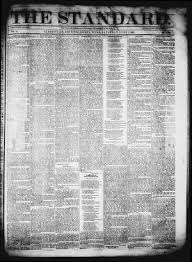
March 16, 1861; Standard (Clarksville Texas)

The State of Texas having resumed her sovereignty; the act being complete, there can be no propriety in the continuance of the Standard of the late Union at our editorial head. We therefore make a change conforming to the change of circumstances, by which, as a citizen of Texas we are necessarily and willingly governed. It is not with pleasure that we furl the old flag, though we have done it before; and in 1836, sailed a few days, under the white red and green, of the Constitutional party of Mexico; and subsequently under the Lone Star, which we raise to day to the head of our paper.

0 comments

The Crisis in Kansas

Civil War Day-by-Day

March 16, 1861; The Charleston Mercury

Our Leavenworth Correspondence.

LEAVENWORTH, KAN., March 5, 1861.

LINCOLN’S inaugural was received here last night. It means coercion–war. Holding, occupying and possessing government property means quartering an army of occupation throughout the Southern Confederacy; holding forts on Southern soil vi et armis; reinforcing Forts Sumter and Pickens, and retaking Fort Moultrie and all other posts now in possession of the South. Collecting revenue means blockade of Southern ports, and levying tribute upon Southern commerce at the cannon’s mouth. War is inevitable.

As long as it was reasonable to indulge in the hope that our difficulties could be adjusted without conflict of arms, we clung to the delusion; but the bloody intent of this foreshadowing manifesto, illy concealed by equivocal verbiage, knocks the last plank from under us, and we must fight or yield. No concession is to be granted; no compromise offered; no settlement proposed. The solemn act of seven sovereign States, dissolving allegiance with a government no longer entitled to their fealty and respect, and erecting themselves into a free and independent nation, is treated as mere child play. ABRAHAM LINCOLN says to the South: “You can amuse yourself with a mock government, but you must obey my government; you can raise a revenue of your own, but you must pay mine; you can have mail facilities by paying or them–if you don’t accept those which I extend, you shall have none other; you can build forts, but those now on your soil are mine–you shall not have them–I will retake the, hold them, and shell your towns and cities if you resist me; you can [continue reading…]

0 comments

Civil War Day-by-Day

Civil War Day-by-Day

March 16, 1861

  • Confederate Provisional Congress creates the Confederate Marine Corps. It never numbers more than 600 members and its records are destroyed intentionally near the end of the war
  • Edwin Vose Sumner promoted to Brigadier General and given command of the Department of the Pacific, replacing Albert Sidney Johnston
0 comments

Bates on Provisioning Fort Sumter

Miscellaneous document sources

From Edward Bates to Abraham Lincoln, March 15, 1861

The President of the United States has required my opinion in writing, upon the following question:

“Assuming it to be possible to now provision Fort Sumter, under all the circumstances, is it wise to attempt it?”

This is not a question of lawful right nor physical power, but of prudence & patriotism only. The right is, in my mind unquestionable, and I have no doubt at all that the Government has the power and the means, not only to provision the Fort, but also, if the exigency required, to man it, with its war complement of 650 men, so as to make it impregnable to any local force that could be brought against it. Assuming all this, we come back to the question — “Under all the circumstances, is it wise,” now to provision the fort?

The wisdom of the act must be tested by the value of the object to be gained, & by the hazards to be encountered in the enterprise. The object to be gained, by the supply of provisions, is not to strengthen the fortress, so as to command the harbor and enforce the laws, but only to prolong the labors & privations of the brave little garrison that have so long held it, with patient courage.

The possession of the fort, as we now hold it, does not enable us to collect the revenue or enforce the laws of commercial navigation. It may indeed involve a point of honor or a point of pride, but I do not see any great national interest involved in the bare fact of holding the fort, as we now hold it — and to hold it at all, we must supply it with provisions. And it seems to me that we may, in humanity & patriotism, safely waive the point of pride, in the consciousness that we have the power, and lack nothing but the will, to hold Fort Sumter in such condition as to command the harbor of Charleston, cut off all its commerce, and even lay the city in ashes.

The hazards to be met are many and obvious. If the attempt be made in rapid boats light enough to pass the bar in safety, still they must pass under the fire of Fort Moultrie and the batteries on Morris’ Island. They might possibly escape that danger, but they cannot hope to escape the armed guard boats which ply all night, from the Fort to the outer edge of the bar– These armed guard boats would be sure to take or destroy our unarmed tugs, unless repelled by force, either from our ships outside the bar, or from Fort Sumter within — and that is war. True, war already exists by the act of South Carolina — but this Government has, thus far, magnanimously forborne to retort the outrage. And I am willing to forbear yet longer, in the hope of a peaceful solution of our present difficulties. I am most unwilling to strike — I will not say the first blow, for South Carolina has already struck that — but I am unwilling, “under all the circumstances,” at this moment to do any act, which may have the semblance, before the world, of beginning a civil war, the terrible consequences of which would, I think, find no parallel in modern times. For I am convinced that flagrant civil war in the Southern states, would soon become a social war, and that could hardly fail to bring on a servile war, the horrors of which need not be dwelt upon.

To avoid these evils, I would make great sacrifices, — and Fort Sumter is one; but if war be forced upon us by causeless & pertinacious rebellion, I am for resisting it, with all the might of the nation.

I am persuaded, moreover, that in several of the misguided states of the South, a large proportion of the people are really lovers of the Union, and anxious to be safely back, under the protection of its flag. A reaction has already begun, and, if encouraged by wise, moderate, and firm measures on the part of this Government, I persuade myself that the nation will be restored to its integrity, without the effusion of blood.

For these reasons, I am willing to evacuate Fort Sumter, rather than be an active party in the beginning of civil war. The port of Charleston, is, comparatively, a small thing. If the present difficulties should continue & grow, I am convinced, that the real struggle will be at the mouth of the Mississippi, for it is not politically possible for any foreign power, to hold the mouth of that river, against the people of the middle & upper valley.

If Fort Sumter must be evacuated, then it is my decided opinion, that the more Southern forts, — Pickens, Key West &c — should, without delay, be put in condition of easy defence against all assailants; and that the whole coast from South Carolina to Texas, should be as well guarded as the power of the Navy will enable us.

Upon the whole, I do not think it wise now to attempt to provision Fort Sumter.

Most respectfully submitted

Edwd. Bates

Atty. Genl

0 comments

Horatio Nelson Taft

Diary of US patent clerk Horatio Nelson Taft.

FRIDAY 15

A cool day, chilly wind, but not freezing. It is colder tonight, freezes some. No Comisr in our office yet, and no particular news about town. The great Gaines Lawsuit was decided yesterday by the Supreme Court which is the end of the Law. Over two Millions of property goes to Mrs Gaines by this decision. Went the round of the Hotels with Brother this Evening, “Willards,” “National,” “Browns,” & “Kirkwoods,” a good crowd in all of them. Came home before 9, read the papers, and talked of Williamstown Matters & People till after 11 o’clock.


The three diary manuscript volumes, Washington during the Civil War: The Diary of Horatio Nelson Taft, 1861-1865, are available online at The Library of   Congress.

0 comments

Operations in Charleston Harbor — Relief of Fort Sumter

War of the Rebellion: from the Official Records of the Union and Confederate Armies and Navies

EXECUTIVE MANSION, March 15, 1861.

The honorable SECRETARY OF WAR:

MY DEAR SIR: Assuming it to be possible to now provision Fort Sumter, under all the circumstances is it wise to attempt it? Please give me your opinion in writing on this question.

Your obedient servant,

[A. LINCOLN.]

The following papers marked “Answer” and as inclosures “A” – “H” are filed with the President’s inquiry; they were probably submitted to the Cabinet March 15, 1861.


Answer.

In reply to the letter of inquiry addressed to me by the President, whether, “assuming it to be possible now to provision Fort Sumter, under all the circumstances is it wise to attempt it,” I beg leave to say that it has received the careful consideration, in the limited time I could bestow upon it, which its very grave importance demands, and that my mind has been most reluctantly forced to the conclusion that it would be unwise now to make such an attempt.

In coming to this conclusion I am free to say I am greatly influenced by the opinions of the Army officers who have expressed themselves on the subject, and who seem to concur that it is, perhaps, now impossible to succor that fort substantially, if at all, without capturing, by means of a large expedition of ships of war and troops, all the opposing batteries of South Carolina. All the officers within Fort Sumter, together with Generals Scott and Totten, express this opinion, and it would seem to me that the President would not be justified to disregard such high authority without overruling considerations of public policy.

Major Anderson, in his report of the 28th ultimo, says:

I confess that I would not be willing to risk my reputation on an attempt to throw re-enforcements into this harbor within the time for our relief rendered necessary by the limited supply of our provisions, and with a view of holding possession of the same with a force of less than a twenty thousand good and well-disciplined men.

In this opinion Major/Anderson is substantially sustained by the reports of all the other officers within the fort, one of whom, Captain Seymour, speaks thus emphatically on the subject:

It is not more than possible to supply this fort by ruse with a few men or a small amount of provisions, such is the unceasing vigilance employed to prevent it. To do so openly by vessels alone, unless they are shot-proof, is virtually impossible, so numerous and powerful are the opposing batteries. No vessel can lay near the fort without being exposed to continual fire, and the harbor could, and probably would, whenever necessary, be effectually closed, as one channel has already been. A projected attack in large force would draw to this harbor all the available resources in men and material of the contiguous States. Batteries of guns of heavy caliber would be multiplied rapidly and indefinitely. At least twenty thousand men, good marksmen and trained for months past with a view to this very contingency, would be concentrated here before the attacking force could leave Northern ports. The harbor would be closed. A landing must be effected at some distance from our guns, which could give no aid. Charleston Harbor would be a Sebastopol in such a conflict, and unlimited means would probably be required to insure success, before which time the garrison of Fort Sumter would be starved out.

General Scott, in his reply to the question addressed to him by the President, on the 12th instant, what amount of means and of what description, in addition to those already at command, it would require to supply and re-enforce the fort, says:

I should need a fleet of war vessels and transports which, in the scattered disposition of the Navy (as understood), could not be collected in lees than four months; 5,000 additional regular troops and 20,000 volunteers; that is, a force sufficient to take all the batteries, both in the harbor (including Fort Moultrie), as well as in the approach or outer bay. To raise, organize, and discipline such an army (not to speak of necessary legislation by Congress, not now in session) would require from six to eight months. As a practical military question the time for succoring Fort Sumter with any means at hand had passed away nearly a month ago. Since then a surrender under assault or from starvation has been merely a question of time.

It is true there are those, whose opinions are entitled to respectful consideration, who entertain the belief that Fort Sumter could yet be succored to a limited extent without the employment of the large army and naval forces believed to be necessary by the Army officers whose opinions I have already quoted.

Captain Ward, of the Navy, an officer of acknowledged merit, a month ago believed it to be practicable to supply the fort with men and provisions to a limited extent without the employment of any very large military or naval force. He then proposed to employ four or more small steamers belonging to the Coast Survey to accomplish the purpose, and we have the opinion of General Scott that he has no doubt that Captain Ward at that time would have succeeded with his proposed expedition, but was not allowed by the late President to attempt the execution of his plan. Now it is pronounced from the change of circumstances impracticable by Major Anderson and all the other officers of the fort, as well as by Generals Scott and Totten, and in this opinion Captain Ward, after full consultation with the latter-named officers and the Superintendent of the Coast Survey, I understand now reluctantly concurs.

Mr. Fox, another gentleman of experience as a seaman, who, having formerly engaged on the Coast Survey, is familiar with the waters of the Charleston Harbor, has proposed to make the attempt to supply the fort with cutters of light draught and large dimensions, and his proposal has in a measure been approved by Commodore Stringham, but he does not suppose or propose or profess to believe that provisions for more than one or two months could be furnished at a time.

There is no doubt whatever in my mind that when Major Anderson first took possession of Fort Sumter he could have been easily supplied with men and provisions, and that when Captain Ward, with the concurrence of General Scott, a month ago proposed his expedition he would have succeeded had he been allowed to attempt it, as I think he should have been. A different state of things now, however, exists. Fort Moultrie is now rearmed and strengthened in every way; many new land batteries have been constructed; the principal channel has been obstructed; in short, the difficulty of re-enforcing the fort has been increased ten if not twenty fold.

Whatever might have been done as late as a month ago, it is too sadly evident that it cannot now be done without the sacrifice of life and treasure not at all commensurate with the object to be attained; and as the abandonment of the fort in a few weeks, sooner or later, appears to be an inevitable necessity, it seems to me that the sooner it be done the better.

The proposition presented by Mr. Fox, so sincerely entertained and ably advocated, would be entitled to my favorable consideration if, with all the light before me and in the face of so many distinguished military authorities on the other side, I did not believe that the attempt to carry it into effect would initiate a bloody and protracted conflict. Should he succeed in relieving Fort Sumter, which is doubted by many of our most experienced soldiers and seamen, would that enable us to maintain our authority against the troops and fortifications of South Carolina? Sumter could not now contend against these formidable adversaries if filled with provisions and men. That fortress was intended, as her position on the map will show, rather to repel an invading foe. It is equally clear from repeated investigations and trials that the range of her guns is too limited to reach the city of Charleston, if that were desirable.

No practical benefit will result to the country or the Government by accepting the proposal alluded to, and I am therefore of opinion that the cause of humanity and the highest obligation to the public interest would be best promoted by adopting the counsels of those brave and experienced men whose suggestions I have laid before you.


[Indorsement.]

There was a signed copy of the within placed in the hands of President Lincoln.

SIMON CAMERON.

MARCH 17, 1875.


[Inclosure A.]

MEMORANDUM OF DIFFERENT PLANS FOR RE-ENFORCING FORT SUMTER.

Memoranda read before the President and Cabinet, General Scott and Commodore Stringham, and Mr. Fox, late of the Navy, Washington, March 15, 1861, by Bvt. Brig. Gen. Joseph G. Totten, Chief of Engineers.

The obstacles to the relief of Fort Sumter are natural or artificial obstacles to navigation, and military opposition.

The main channel in its best natural state would not admit the passage of vessels larger than sloops of war; so that, before it was obstructed, a naval attack, to be very formidable, must have consisted of many vessels of this kind.

In designing the defenses of Charleston Harbor, therefore, it was considered that Fort Sumter, with Castle Pinckney, would suffice, with some improvement of Fort Moultrie, and the erection of batteries in time of war on James Island at the position called Fort Johnson. A deeper entrance would have demanded a stronger system.

The South Carolina troops have strengthened Fort Moultrie and added batteries thereto; they possess Castle Pinckney; they have erected batteries at Fort Johnson, and, not having Fort Sumter, they have planted a number of guns (number not known) on Morris Island.

These last do not, certainly, bring their system up to that which included Fort Sumter; but they, as is represented, have also so blocked the main channel, or made its navigation so intricate, that only vessels light in draught can enter–vessels unavoidably weak to resist and impotent to assail.

If we suppose a squadron of war vessels as large as can be forced through the impediments of the main bar to have overcome that difficulty, and, under pressure of steam, to advance in daylight (as I think would be indispensable), they would suffer greatly from the fire of Morris Island, Fort Moultrie, and its adjacent batteries–but they would suffer much less than the small vessels, because much stronger and with vital parts better secured, and because their own fire would, to a certain extent, keep under, and, to a great degree, render uncertain the fire of the batteries. But whether larger or smaller, the vessels have not merely to pass the fire of the batteries–they must remain exposed to it. Because, before getting beyond the fire of Fort Moultrie, they come within scope of Fort Johnson, and while yet under the guns of these batteries they will be reached by Castle Pinckney. There is no point of shelter within these waters; and although the squadron of heavy sloops might survive the dangers of the passage, they could not long endure the cannonade that would be concentrated on any anchorage. In these very waters, this problem was settled in the Revolutionary War by the contest between the squadron of Sir Peter Parker and the single work of Fort Moultrie–then certainly not more powerful than now.

To enable the supposed squadron to remain, it is indispensable that a military force should capture the batteries from the land, and be strong enough, besides, to hold possession against the troops now assembled in and around them, and those that would rapidly come from the interior.

Should small vessels attempt this entrance by daylight, their destruction would be inevitable; at any rate, the chances of getting through would be too slender to justify any such enterprise. We have certain information that there is much practice with these guns, and that the practice now is good. If this risk were to be run by daylight, the vessels might have a draught of about eight feet, and could use the “Swash Channel,” or a passage between this and the main channel, or, finally, the latter. But I must repeat that unless we were to find a degree of inaptness and imbecility, and a want of vigilance and courage that we have no right to assume, this attempt by daylight with small vessels, even of great speed, must fail.

There remains another project, namely, to enter at night by the “Swash” Channel with a few (two or three) fast steam-tugs, having a draught of only (or about) five feet. To do this it will be necessary to take position before dark off this channel, so as to get upon the proper leading line to be followed after dark by the ascertained course, or, possibly, by the bearing of the lights of Fort Sumter. With proper precautions in screening the lights and fires of the boats, &c., I think the risk would not be so great, considering only the batteries, as to deter from this attempt, provided the object were of very great importance. I should expect one or two, perhaps all, of these vessels to reach Fort Sumter, and the shoal upon which they must be grounded–provided no other impediments awaited them.

But, in the first place, it is a necessary condition that the boats arrive off the harbor before night. If they can see to take these bearings, they can be seen from the shore. In the next place, it seems impossible to fit out any expedition, however small and unobtrusive, without arousing inquiry, and causing the intelligence to be transmitted by telegraph. We may be certain, therefore, that these tugs will be waited for by steamers lying in the channelway, full of men.

This mode of relieving Fort Sumter, or another by men in rowboats passing up the same channel, is so obvious that it is unreasonable to suppose it has not been duly considered and provided for, where so much intelligence and resource in military means have been displayed in the scheme of defense, and so much earnestness and energy in execution. We know that guard rowboats and steamers are active during the night; and that they have all the means of intercepting with certainty this little expedition, and overpowering it, by boarding–a commencement of war.

This attempt, like any other, will inevitably involve a collision.

This raises a question that I am not called on to discuss, but as to which I may say that if the General Government adopts a course that must be attended with this result, its first measure should not be one so likely to meet disaster and defeat; nor one, I may add, which, even if successful, would give but momentary relief, while it would open all the powers of attack upon the fort, certainly reducing it before the means of recovering Charleston Harbor, with all its forts and batteries and environs, can possibly be concentrated there.

Respectfully submitted.

J. G. T.


[Inclosure B.]

General Scott’s memoranda for the Secretary of War.

It seems from the opinions of the Army officers who have expressed themselves on the subject–all within Fort Sumter, together with Generals Scott and Totten–that it is perhaps now impossible to succor that fort substantially, if at all, without capturing, by means of a large expedition of ships of war and troops, all the opposing batteries of South Carolina. In the mean time–six or ten months–Major Anderson would almost certainly have been obliged to surrender under assault or the approach of starvation; for even if an expedition like that proposed by G. V. Fox should succeed once in throwing in the succor of a few men and a few weeks’ provisions, the necessity of repeating the latter supply would return again and again, including the yellow-fever season. An abandonment of the fort in a few weeks, sooner or later, would appear, therefore, to be a sure necessity, and if so, the sooner the more graceful on the part of the Government.

It is doubtful, however, according to recent information from the South, whether the voluntary evacuation of Fort Sumter alone would have a decisive effect upon the States now wavering between adherence to the Union and secession. It is known, indeed, that it would be charged to necessity, and the holding of Fort Pickens would be adduced in support of that view. Our Southern friends, however, are clear that the evacuation of both the forts would instantly soothe and give confidence to the eight remaining slaveholding States, and render their cordial adherence to this Union perpetual.

The holding of Forts Jefferson and Taylor, on the ocean keys, depends on entirely different principles, and should never be abandoned; and, indeed, the giving up of Forts Sumter and Pickens may be best justified by the hope, that we should thereby recover the State to which they geographically belong by the liberality of the act, besides retaining the eight doubtful States.


[Inclosure C.]

Lieutenant Hall’s notes.

I have the honor to state that I could not concur with Captain Rodgers, with whom I was directed to confer, in his plan for the entrance of the harbor of Charleston with men and provisions for Fort Sumter. He proposes to procure a vessel (steamboat), with a draught of not over six and one-half feet, in some Northern port, and with the cargo to be cleared for Charleston, letting it be known, as if in confidence, that the design is to force a landing on the southern extreme of Morris Island; to carry the batteries by the rear and destroy the channel; to bring in the vessel, the vessel to regulate her speed so as to arrive off the bar in a dark night and at high tide, and to proceed through the Swash Channel with her lights extinguished; in case of discovery and being fired at, to drop a cork with a light in it, which would deceive the gunners. If the batteries are lighted up the men cannot see in the distance; if they are not, the lights will not be visible. The commander is to be allowed to back his vessel in case of a storm on the way down.

My objections to this plan are very numerous. In the first place, the deception would be apparent, as no one would attempt a forced landing with means possible to such a vessel. Secondly, not being a sea-going vessel the danger to life and the success of the undertaking is so great as to appear imprudent at best. Thirdly, it is unsafe to calculate upon not being seen off the bar, as a number of watch vessels, some with troops and cannon, are stationed off and along the entrance. Fourthly, even though the above dangers should all be safely passed and it should prove a moonless night and high tide at a proper time, still a chance shot through the machinery would defeat the enterprise.

The plan is grounded upon the most fortunate and improbable circumstances. It might succeed; but I think failure would be the rule. By an examination of the chart of the harbor of Charleston it will be seen that the Swash Channel passes outside the range of all the batteries erected along the entrance, except, perhaps, the small one near Cummings Point (of one 32-pounder and one 12-pounder), and this can be safely neglected. Fort Moultrie can bring several guns to bear for a mile and a half (not ten minutes), but their field has been greatly reduced by the traverse with small embrasures lately thrown up on the parapet. Considering as effective all the means in the hands of those hostile to the undertakings, the following are at present to be noticed: The channel will not admit of more than six and one-half feet draught with ease in sailing; at least one steamer with troops and field guns will be near the bar; a line of pilot schooners and signal vessels form a cordon outside the bar; the main ship channel is obstructed with sunken ships; Maffitt’s Channel is raked and crossed by the fires of Moultrie and batteries placed along Sullivan’s Island; the buoys and range lights are removed; the anchorage, except a small area, is under the fire of guns from the several fortified points; the Swash Channel is readily followed by ranging Fort Sumter on St. Michael’s till within five hundred yards of the fort, where a detour to the right will be necessary. Carefully navigated, passing very near the north side of the fort, the vessel may be brought to the wharf at high tide. If not successful, small boats may be furnished by the fort. The only effective guns are those of Fort Moultrie on this entrance. I have the honor to propose that a war vessel (the Brooklyn best) be dispatched with two schooners and two ordinary steam-tugs, each of not more than six feet and a half draught, and under the same pretension as that first proposed, and this combination will give color to the rumor. One of the schooners is to be loaded with provisions entirely, and the hay is to be stored on the starboard. The other, with some provisions, is to carry the troops. The vessels arrived off the bar, the Brooklyn can keep all hostile vessels at a distance and make the following arrangement:

The vessel with provisions is to be placed upon the right, next a screw-tug, next the vessel with troops, and again a tug. The right-hand vessel will cover those on the left, protecting from fire the troops and means of locomotion. The vessels should arrive off the bar two hours before high tide, so that the tide will be rising all the way in, and if grounded may be floated off in a short time. To prevent vessels from the city and the cutters inside the harbor from interfering, the fort shall be signaled, and will reply by lowering its flag or showing a light, and will prevent any vessel going out. Signals should be agreed upon, and the time, day or night, also. Two field pieces, loaded with canister, might be used to meet a desperate attempt to board the vessels. The hay in bales should be wet, to prevent heated balls from setting fire to the vessels.


[Inclosure D.]

Opinions of various officers.

George W. Snyder, lieutenant of Engineers, February 28, 1861: 4 regiments, or 4,000 men; 4 vessels of war.

R. K. Meade, jr., second lieutenant of Engineers, February 28, 1861: 5,000 men, at least; supported by gunboats.

S. W. Crawford, February 28, 1861: 4,000 men, supported by the Navy.

Norman J. Hall, second lieutenant, First Artillery, February 28, 1861: 3,500 men; 7 war vessels.

J. C. Davis, first lieutenant, First Artillery, February 28, 1861: 3,000 men; 6 war vessels.

Theodore Talbot, first lieutenant, First Artillery, February 28, 1861: 3,000 men and naval vessels.

T. Seymour, brevet captain and lieutenant, First Artillery, February 28, 1864.

A. Doubleday, captain, First Artillery, February 28, 1861:10,000 men and Navy.

J. G. Foster, captain of Engineers, February 28, 1861: 6,000 regulars or 20,000 volunteers to take them; 10,000 regulars or 30,000 volunteers to hold them.

Captain Ward, who came here believing it practicable, abandoned it after consultation with General Scott. General Scott and the Chief of the Coast Survey, Mr. Foster, evidently a man of sound sense and experience as a seaman, who is acquainted with the waters, having formerly been attached to the Coast Survey, proposed to make the attempt with cutters of light draught and large dimensions. He was in a measure sustained by Commodore Stringham, but did not suppose provisions for more than one or two months could be furnished at a time.


[Inclosure E.]

Memorandum of Capt. G. V. Fox.

WASHINGTON, D. C., February 8, 1861.

Lieut. Gen. WINFIELD SCOTT,
U. S. Army, Washington, D.C.:

GENERAL: The proposition which I had the honor to submit fully in person is herewith presented in writing. Lieutenant Hall and myself have had several free conferences, and if he is permitted by the South Carolina authorities to re-enter Fort Sumter, Major Anderson will comprehend the plan for his relief. I consider myself very fortunate in having proposed a project which meets the approval of the General-in-Chief, and I ask no reward but the entire conduct of the part, exclusive of the armed vessels. The commander of these should be ordered to co-operate with me, by affording protection and destroying their naval preparations near the bar, leaving to me, as the author of the plan, the actual operations of relief. I suggest that the Pawnee be immediately sent to the Delaware Breakwater to await orders; the Harriet Lane to be ready for sea, and some arrangement entered into by which the requisite steamer and tugs should be engaged, at least so far as not to excite suspicion. I would prefer one of the Collins steamers. They are now being prepared for sea, and are of such a size and power as to be able fearlessly to run down any vessels which might attempt to capture us outside by a coup de main. I could quietly engage one and have her ready to start in twenty-four hours’ notice, without exciting suspicion. I shall leave for New York at 3.10 p.m., and any communication previous will find me at Judge Blair’s. If the Pawnee pivot-gun is landed it should certainly be remounted.

I have the honor to be, with great respect, your obedient servant,

G. V. FOX.


[Inclosure F.]

ST. GERMAIN HOTEL, NEW YORK, February 6, 1861,

Since the repulse of the steamer Star of the West at Charleston it may be assumed that all the channels over the bar are obstructed, but as the bar is more than four miles in length the spaces between these channels are too extensive to be closed; therefore at high water and smooth sea the harbor is perfectly accessible to vessels drawing, say, seven feet of water. The United States have no steamers of this draught. The skillful officers at Charleston, aware of this fact, will conclude that relief must go in at high water in boats or light-draught steamers, incapable of bearing a very offensive armament. They will be perfectly prepared for such attempts by arming and heavily manning all the steamers they possess, and at the critical moment will throw themselves alongside of the relief vessels, and thus jeopardize the movement by the very detention of the conflict. To elude their vigilance or attempt a stratagem, however ingenious, I consider too liable to failure. I propose to put the troops on board of a large, comfortable sea steamer, and hire two powerful light-draught New York tug-boats, having the necessary stores on board; these to be conveyed by the U. S. steamer Pawnee, now at Philadelphia, and the revenue cutter Harriet Lane. (The Pawnee is the only available steam vessel of war north of the Gulf of Mexico, draws twelve feet of water, and has seven heavy guns. As a steamer, she seems to be a failure, but may be got ready for this emergency; at least she is, unfortunately, our only resource.) The Harriet Lane I understand to be an excellent and efficient vessel; but either of these steamers alone may be liable to capture by an overwhelming force.

Arriving off the bar I propose to examine by day the naval preparations and obstructions. If their vessels determine to oppose our entrance (and a feint or flag of truce would ascertain this) the armed ships must approach the bar and destroy or drive them on shore. Major Anderson would do the same upon any vessels within the range of his guns, and would also prevent any naval succor being sent down from the city. Having dispersed this force the only obstacles are the forts on Cummings Point and Fort Moultrie, and whatever adjacent batteries they may have erected distant on either hand from midchannel about three-quarters of a mile. At night, two hours before high water, with half the force on board of each tug within relieving distance of each other, I should run in to Fort Sumter.


[Inclosure G.]

NEW YORK, February 23, 1861.

MY DEAR BLAIR: Mr. Blunt received a telegraph from General Scott a few days since which he thought indicated an adjournment of my plan; but I put the construction upon it that another was substituted for mine, and I feel certain it must be “boats.” To corroborate this the New York Times, of February 21, says: “Government has determined to relieve Fort Sumter by boats at night.” I consider this plan possible, and the alternative of mine, but inferior at every step. The distance from Fort Sumter to outside is five miles–an hour’s pull. From this point the open ocean, winter season, and at night, say two hundred men (requiring for six months five hundred and forty-six barrels of provisions) are to be put into boats, rowed over a very dangerous bar, and subjected for half an hour to a fire of grape from sixty guns. Besides, if a single tug (they have four) eludes Major Anderson’s vigilance, she would run in amongst these boats with perfect impunity to herself and utter destruction to them. I have made two cruises on the coast of Africa, where the passing of bars by boats, unless very light and in broad daylight, was considered the most dangerous duty we were subjected to, fatal accidents being common in the smoothest weather. Moreover, this plan has been spoken of publicly in connection with the U. S. ship Brooklyn, and from this fact is probably made a special study by the Charlestonians.

I simply propose three tugs, convoyed by light-draught men-of-war. These tugs are sea-boats, six feet draught, speed fourteen knots. The boilers are below, with three and a half feet space on each side, to be filled with coal. The machinery comes up between the wheel-houses, with a gangway on either hand of five to six feet, enabling us to pack the machinery with two or three thicknesses of bales of cotton or hay. This renders the vulnerable parts of the steamer proof against grape and fragments of shells, but the momentum of a solid shot would probably move the whole mass and disable the engine. The men are below, entirely protected from grape–provisions on deck. The first tug to lead in empty, to open their fire. The other two to follow, with the force divided, and towing the large iron boats of the Baltic, which would hold the whole force should every tug be disabled, and empty they would not impede the tugs. When such men as George W. Blunt, Charles K. Marshall, and Russell Sturgis, all seamen, give my plan the preference, it must have merit. At Kinburn, in the Black Sea, eight gunboats passed in the night forts mounting eighty guns–only one boat hit. The next day, in broad daylight, the Cracker (English) came out under their deliberate fire–distance nine hundred yards. The Vladimar (Russian steamer at Sebastopol) was under fire at various distances during the whole war, but her motion prevented her being disabled. How few of Dahlgren’s shots hit the target with all the elements of success he is capable of producing! I am sure I could convince the authorities of the preference that is due to this plan, if I could argue the plan instead of write it.

Sincerely yours,

G. V. FOX.


[Inclosure H.]

NEW YORK, March 1, 1861.

DEAR BLAIR:

I just met Russell Sturgis, who has charge of most of the tow-boats in the harbor, and he informs me that the Charleston authorities have opened negotiations here for the purchase of two tugs, and that the two proposed are two of the three I had selected, being the only three really fit for the work in the whole city. I thought it best to give you this information at once, as the probability of re-enforcing Fort Sumter except by landing and capturing their forts will be lessened with such fine boats as I have described in their possession. Captain Sturgis has put these boats in order, notwithstanding my plan has the go-by, for we all feel that a severe discussion must bring it up again.

I met a Navy officer to-day who has just received a letter from Hartstene. He is captain in the S.C. Navy with the same pay as a U. S. captain, and has charge of the coast defenses. He thinks he has prevented an attack upon Sumter so far, but says it will soon be done, and will be a very sanguinary affair. Paul Hamilton, esq., commands the floating battery now launched. They have four tugs, which do not amount to much compared to one of these powerful New York ones.

I wrote you last Sunday in full. Write me as soon as anything definite is done.

Yours,

G. V. FOX.

Direct your letters care of A. H. Lowery, 77 Nassau street, and I get them in the morning, otherwise not until p.m. I trust you and the General will give me a hand in this business. He seems most favorably disposed towards me.
0 comments

Operations in Charleston Harbor

War of the Rebellion: from the Official Records of the Union and Confederate Armies and Navies

EXECUTIVE MANSION, March 15, 1861.

The honorable SECRETARY OF WAR:

MY DEAR SIR: Assuming it to be possible to now provision Fort Sumter, under all the circumstances is it wise to attempt it? Please give me your opinion in writing on this question.

Your obedient servant,

[A. LINCOLN.]

_______

Papers marked “Answer” and as inclosures “A” – “H” are filed with the President’s inquiry; they were probably submitted to the Cabinet March 15, 1861.   See On Provisioning Fort Sumter.

0 comments

To Beauregard: “Give but little credit to the rumors of an amicable adjustment.”— Confederate Records

War of the Rebellion: from the Official Records of the Union and Confederate Armies and Navies

WAR DEPARTMENT, C. S. A.,
Montgomery, March 15, 1861.

Brig. Gen. BEAUREGARD, Charleston, S.C.:

GENERAL: Dispatches just received from Washington, of the highest authority, speak of mines in Fort Sumter, and a purpose to destroy it and the garrison rather than be taken. Foster, the Engineer, might be a good guarantee, if kept in the fort.

Give but little credit to the rumors of an amicable adjustment. Do not slacken for a moment your energies, and be ready to execute any order this Department may forward.

Very respectfully, your obedient servant,

L. P. WALKER,

Secretary of War.

0 comments

The Forts will be given up, and we will go on as usual.

Journal of Meta Morris Grimball
Meta Morris Grimball

March 15

       There seems to be every prospect of a peaceful arrangement of the difficulties between the North & the South. The Forts will be given up, and we will go on as usual. I have been reading some old letters for the last week, and they interest me so very much, they are from my Grandmother Manigault to my Mother, and there are also letters from some of her Sisters to her, they commence in 1807, about which time my Mother was married, and end in 1822 in which year, the 22 of September, she died, being crushed in the fall of the house they lived in, on Sulivan’s Island, during the storm of that year. It is the history of a whole family, contained in these letters, and the lesson, the shortness of life. These letters give an insight into the domestic life of very accomplished people, and the charm which elegant tastes surround life with, are very perceptible. My Grandmother’s style is very fine, so simple, & so clever, & she describes the events daily passing around her, in a fascinating manner. My Grandfather lived in South Carolina and determined to move to Philadelphia where he died soon after the purchase of an estate in the country, of Apaplexy , brought on by anxiety of mind, & worry. In 1815 Emma died of consumption, in 1817 Caroline died, in 1818 Charlotte died, the tome of these letters, the gradual change from full happiness to the sad desolation of being nearly alone, just Ella & I with her, is very painful, the effort to be cheerful, the yearning for Mama’s society. She died 2 years after. It was not usual then for people to express themselves on religious subjects as they do now, and therefore it is not proper to judge of my Grandmother’s feelings on this subject by what she does not say.—

       In the first place, her husband, who was a most devoted one, died when they had been married 22 years. My Mother died when she had been married 16 years. This March we have been married 31 years, is this not a cause for thankfulness. Here is a man cultivated, very much in love with his old wife of 51 years and, although not in robust health, getting on, more amiable than he was, more easy in his means and my children, such as ought to satisfy any woman,—but I wish they, the elder ones, could be settled, married well, it is for the happiness of a woman & for that of a man. I could wish that Elizabeth was well married and Berkley & Lewis; William might wait a little longer but if anyone very desirable should offer I would not object. I cannot alter this, and I think it better so, than married in an unsuitable way.—

       Elizabeth went to pay a visit to Mrs Vanderhorst, we expect them back to day.—

       The pledge Lewis gave his Father the last Spring in March he faithfully kept, and when it expired, he said he would not take another until he found it necessary.—He seems so unsettled, so restless, I am truly sorry for him, and I pray for him.—

0 comments

Secession Votes

Civil War Day-by-Day

March 15, 1861; Tri-Weekly Alamo Express , San Antonio, TX

There has only been 41,000 votes cast in the State so far as heard from which is about a half vote, and by which we have good reason to infer that a majority of the people are against secession.–A majority of those cast for secession have been obtained under false pretenses, bribery, trickery and intimidation. Some have been deceived by the cry of re-construction, others by the assurance that all the Border States would secede, that there was an irrepressable conflict, that great prosperity would spring out of disunion, &c. The timid were assured of peace; the wild, reckless and daring were promised war. Such have been the deceptions used to gull a frank, generous people. A day of retribution is near at hand when a free and indignant people will trample under foot all humbugs and oppressions emanating from self constituted bodies.

0 comments

The Permanent Constitution

Civil War Day-by-Day

March 15, 1861; The Charleston Mercury

There was quite a rush for THE MERCURY yesterday morning, containing the first copy of the Permanent Constitution published in Charleston. For this opportunity of placing so important a document before the public in advance of all other papers in the city, we are indebted to the Montgomery Advertiser of Monday afternoon, containing the Constitution, and which reached us by mail in advance of the copies forwarded by our attentive special correspondents in Montgomery.

0 comments

The Printing of the Laws

Civil War Day-by-Day

March 15, 1861; The Charleston Mercury

We have received from the Department of State of the Confederate States an official notification that THE CHARLESTON MERCURY has been designated as a proper paper for the publication of the Acts of Congress. Our readers may therefore, look to our advertising columns for the full and official copies of these important documents.

We may add that until recently the Acts of the Congress of the United States were published by authority in THE MERCURY. Notwithstanding the new relations which South Carolina had assumed towards the Federal Government, we received, a few weeks ago, the usual request to print, as advertisements, the Acts passed by the last Congress. But having grave doubts of the solvency of the Abolitionized Government, and feeling assured that the Acts in question would be utterly devoid of interest to our readers throughout the Confederates States, we have not entertained the offer.

0 comments

The News

Civil War Day-by-Day

March 15, 1861; The New York Herald

The Commissioners of the Southern confederacy, now at Washington, on Wednesday sent a communication to the State Department requesting recognition by the government, with the view to the opening of negotiations, at the same time stating that the Secretary of the Commission would call for an answer at noon yesterday. At the hour designated the Secretary called at the State Department when he was informed that the administration desired time for further reflection on the communication submitted.

From New Orleans we are informed that Capt. Hill, commander of the United States troops at Fort Brown, Texas, agreed on the 6th inst. quietly to surrender that fort to the secessionists. It is said that he would evacuate as soon as transportation for his forces could be procured. The steamship, Daniel Webster was still lying off Brazos, awaiting the embarkation of the Untied States troops which she had been detailed to carry off.

In the United States Senate yesterday Mr. Mason offered a resolution calling for information as to whether any portion of the militia of the District of Columbia has been mustered into the service of the government. Mr. Sumner objected, and the subject lies over. The Senate refused, by a vote of 16 to 24, to proceed to the consideration of Mr. Dougals’s resolution calling for information relative to the Southern forts and other public property. Mr. Fessenden’s resolution, declaring the seats of Senators from seceded States vacant, and directing that their names be stricken from the roll, was discussed at considerable length. The resolution was modified so as to direct the Secretary of the Senate to their names respectively from the roll and then passed by a vote of 24 against 10. In executive session a number of appointments were confirmed. The names of the appointees may be found among our Washington despatches.

In another column will be found further particulars relative to the seizure of the schooner Restless, sections of the acts pertaining to the matter, and a description of the vessel.

0 comments

Southern Confederacy

Civil War Day-by-Day
1860s newsprint

March 15, 1861, The Staunton Vindicator

The Southern Confederacy is gradually progressing in a career of eminent success. With the flower of the American Army in command of 50,000 well drilled troops; the most gifted and experienced statesmen of the age in charge of its civil departments; a treasury well supplied with funds; and sustained by the hearts and hands of a united people, the new Confederacy bids fair to become one of the most successful and prosperous governments on the globe. Its foundation are being carefully and firmly laid; its columns erected to meet all the shocks and throes incident to new enterprises, and its arches formed to bear the weight of an empire baptised in blood, if needs be. The idea of this government ever again uniting with a people whose entire education is enmity and whose highest ambition is oppression, aggression and outrage, is simply preposterous. Such a thing is not dreamed of by the statesmen who are directing the affairs of the Confederate States. Every act is looking directly to the establishment of a firm, united and powerful government, sufficient for all the exigencies of peace or war.

0 comments

Lincoln’s War Policy

Civil War Day-by-Day
1860s newsprint

March 15, 1861, The Staunton Vindicator

The Washington correspondent of the Richmond Examiner says:

In Southern circles here little doubt is entertained as to the policy and purpose of the Inaugural address. It is believed Mr. Lincoln will proceed, without delay, to adopt hostile measures against the South. A collision in less than a week is quite possible. This may grow out of an attempt to collect revenue at the South, to reinforce Forts Sumter and Pickens, or to retake other places. The words, “hold, occupy and possess,” in reference to the forts and other coast points in the South, coupled with the special reservations made as to interior places where residents cannot be induced to hold offices, are full of meaning. They teach us to be prepared for war at a moment’s notice, and those recreant Virginians whose base hearts throb with sympathy for the North may at once prepare their cartridges for a fight with their own neighbors.

In army circles the reinforcement of Fort Sumter is proposed to be effected in a stealthy mode at first, by sending down a ship provided with good seat boats, who are to go in by night from the sea, take advantage of bad weather, fogs and an imperfect vigilance of the South Carolina steamers posted on the look out, and thus get men enough in Fort Sumpter to resist an assault. After this is done, four or five war vessels will then essay to force their way in, and Major Anderson will open fire to sustain them.

It is not unlikely this plan may be hit upon, but I am included to think a prior step will be the repudiation by the Government of agreement made at Pensacola by the late Administration. Orders will be sent to Lieut. Slemmer, commanding Fort Pickens, to take men from the slip to reinforce the garrison, to bring in the war vessels, and to demand a surrender of the Navy Yard by the officers of the Provisional Government.

Such are some of the steps likely to be taken by the Government to bring on the war they covet. They rely upon their ability to whip the South, and count extensively on help from Andrew Johnson and the men like him in your Convention. Lincoln does not know these men. Their treason lies in hatching plots, and will shrink from the open field where they will have to confront the brave and true men of the South.

0 comments

Civil War Day-by-Day

Civil War Day-by-Day

March 15, 1861

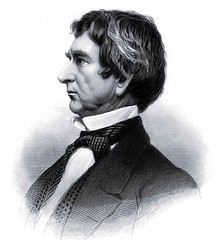
  • U.S. Secretary of State William H. Seward responds to the communication requesting a meeting from the CSA Commissioners with a memorandum explaining that the position of the administration is that the CSA states remain a part of the United States and are not a foreign government with whom diplomatic relations ought to be or can be established and states that the President agrees with this position, as explained in his inaugural address, a copy of which is included with the memorandum.
0 comments

“The pressure for office is very great, especialy from the Western States.”—Horatio Nelson Taft

Diary of US patent clerk Horatio Nelson Taft.

THURSDAY, MARCH 14, 1861.

A little rainy this morning, but the rain turned into snow about noon and it has snowed ever since, melting as it came until night when it covered the ground. It is not cold enough to freezze. Nothing new transpiring in the office. No removals or appointments there as yet. Was down at Willards this evening. Saw the old M.C., E B Morgan, Engineer in Chief Archibold and others there. The pressure for office is very great, especialy from the Western States. Julia is staying at Mr Woodwards tonight. It is after 11 & I will retire.


The three diary manuscript volumes, Washington during the Civil War: The Diary of Horatio Nelson Taft, 1861-1865, are available online at The Library of   Congress.

0 comments

Louis Wigfall to Francis Halsey Wigfall

Louise Wigfall Wright — A Southern Girl in ’61

(March 1861, writing to his son at school)

“Political matters are in statu quo, ante bellum. The war has not yet begun, but I believe it will before the end of summer, though the general impression here is that we will have peace.

“When I get to Montgomery I’ll write you fully all the news, and my impressions as to the political conditions present and to come. Ben McCulloch was here yesterday. He came on to buy Colt’s pistols for a Mounted Regiment in Texas, which he is authorized by the Confederate States to raise. He has gone to Richmond where I’ll meet him to-morrow. Morse went on to Hartford to buy the pistols. (The indictment against Governor Floyd has been dismissed by the Government. There never was the slightest ground for indicting him. Andy Johnson was reported in the Republican papers here as using very offensive language in reference to Governor Floyd. The Governor addressed him a note to-day enquiring as to the correctness of the report and Andy, of course, disclaimed it. So the matter ended.)”

0 comments

Operations in Florida – Confederate Correspondence

War of the Rebellion: from the Official Records of the Union and Confederate Armies and Navies

MONTGOMERY, ALA., March 14, 1861.

Hon. S. R. MALLORY, Secretary of the Navy :

SIR: The port of Apalachicola is without any means of defense, having only two hundred muskets and sixty rifles; no artillery of any kind. The commercial importance of the city may make it more than a point of ordinary interest to the United States Government, if they intend to enforce the collection of the revenue.

The citizens of the city are organized into four volunteer companies, which comprise about two-thirds of the people capable of bearing arms. They are under apprehension that the city and property therein is in danger.

I beg to call your attention to the fact, and request that some means of protection may be afforded us if there is a probability of hostilities. The men can be raised there, it we had the guns.

Yours, respectfully,

D. P. HOLLAND.

0 comments

Operations in Charleston Harbor — Confederate Records

War of the Rebellion: from the Official Records of the Union and Confederate Armies and Navies

MONTGOMERY, March 14, 1861.

General BEAUREGARD, Charleston:

Steamers Star of the West, Harriet Lane, Crusader, Mohawk, and Empire City ordered to sail from New York last night. Said to carry arms, provisions, and men. Destination not known.

L. P. WALKER.


[Copies to General Bragg, Pensacola; Captain Jones, Fort Morgan; Major Duncan, Forts Jackson and St. Philip.]

0 comments

Highly Important from Washington

Civil War Day-by-Day

March 14, 1861; The New York Herald

WASHINGTON, March 13, 1861.

Information has just been received in this city of the most important character from Montgomery. The Southern administration know that the evacuation of Forts Sumter and Pickens has been decided on. Despatches from General Beauregard, represent that it would be utterly impossible for any united force that the administration at Washington could collect, to prevent the surrender of Major Anderson before the lapse of many weeks. Despatches from Washington have also assured the Montgomery government that no attempts at reinforcement will be made, and that the troops of the United States will be soon withdrawn. President Davis has, however, received the most ominous communications from his friends here, respecting the intentions of the Lincoln administration to blockade Southern ports, and make an attempt to collect the revenue. He is assured that the most strenuous and active measures are being taken to concentrate the naval forces of the North, and that not only Charleston, Savannah, New Orleans and Mobile will be blockaded; Forts Pickens, Jefferson and Taylor reinforced; but that, if necessary, vessels will be chartered to keep up as active a surveillance as possible of all parts of the coast, where there are ports of entry, between South Carolina and the Rio Grande.

The indignation that prevails at Montgomery and elsewhere, in view of this prospective attempt to carry out the threats in Mr. Lincoln’s inaugural knows no bounds. Cabinet meetings have been held, and it has been resolved, at the first appearance of hostilities, or just so soon as a single vessel has been stopped outside of any Southern port, to put the whole available force of the South in motion, and to march through the border States upon Washington. Fifty thousand troops can be collected without difficulty, and, so far from any opposition being apprehended from Virginia, Maryland, and North Carolina, it is believed that the people will rally to reinforce the invading army, and assist them with arms as well as sympathy.

The people of the South are fully alive to the exingencies of the period. They, on the whole, anticipate war, and wish, at all events, to take time by the forelock. If Mr. Lincoln provokes civil discord, the first sound of cannon may greet his ears near the White House, if he has courage enough to stay there to hear it.

The intelligence from Montgomery indicates great impatience to know whether the issue is to be war or peace. Large bodies of troops are concentrated, and ready to march at a moment warning.

0 comments

Movements in New York Harbor

Civil War Day-by-Day

March 14, 1861; The New York Herald

The Steamer Empire City.

The steamer Empire City has been charted by the government for some particular service in the Southern waters, her clearance papers stating Indianola, Texas, as her destination. These papers have been taken out for several days, and the vessel has been lying at the anchorage off Quarantine, all person visiting her requiring an order from the army authorities here before they would be allowed to step on board. Whey lying at her wharf at the foot of Varick street, she was employed in taking on government stores, of which a more than ordinary quantity was shipped. The Empire City is a side wheel steamer of 1,751 tons register, and was built in this city in 1848. She has two decks. She has a side lever engine. Her length is 240 feet, breadth 48 feet, depth of hold 23 feet. She carries three masts, and is schooner rigged forward. She draws fourteen feet of water. Her owner is Marshall O. Roberts. She has had pretty hard usage, and, although a tolerable sea boat, would not stand five minutes’ cannonading, her sides not having been constructed to resist the impinging weight of hostile cannon balls.

The Star Of The West.

The Star of the West has, for the last few days, been busily engaged taking on board stores, &c. previous to her voyage toward the South. It appears that the destination of the vessel is Brazos Santiago, Texas, and the object of her visit to that port to relieve and bring away from that State the United States soldiers who have been left destitute. Her supply of stores, doubtless intended for provisioning the men during their passage to the North, consists of about two hundred barrels of meat (beef and pork), three hundred barrels of bread, two hundred barrels of flour, several barrels of sugar, beans, whiskey, and such like stores, a few large bags of potatoes, supplies of coffee, tea, &c. Yesterday her tanks were filled with water, and fresh provisions for the cabin table shipped. In addition to the foregoing, several hundred feet of [continue reading…]

0 comments

The News

Civil War Day-by-Day

March 14, 1861; The New York Herald

The news from Washington this morning is highly important. The Southern Commissioners are patiently waiting the development of the policy of the administration. It is understood that they will make no move until they learn whether the Southern forts are to be evacuated, and whether an attempt is to be made to collect the revenue of the Southern ports. Should the administration decide upon making an effort to collect the revenue and blockade the ports, the Southern confederacy will, it is understood, immediately assume an offensive attitude. In such a contingency they will, it is believed, without delay march upon the federal capital.

Our despatches from Washington state that the Cabinet will meet today, when a formal vote will be taken on the question of evacuating Fort Sumter. That the vote will be in the affirmative is beyond doubt.

The evacuation of Fort Sumter having been determined upon by President Lincoln, the United States steamer Crusader has been detailed to proceed from this city to Charleston and embark Major Anderson and the garrison under his command and convey them to some other port. The public interest will, therefore, for a time be directed to another quarter. This step, although agreed upon very reluctantly by President Lincoln and his advisers, has no doubt inspired the administration to retain possession of the other forts now in their possession at the South. Among them are Fort Jefferson, Tortugas; Fort Taylor, Key West; Fort Pickens, at Pensacola, and Fort Brown, on the Rio Grande, Texas. The latter fort was founded on the site of a temporary work erected during the Mexican war by Major Brown, who fell in its defence. Fort Jefferson and Fort Taylor, on the Florida keys, have recently been reinforced and placed in condition for one year’s siege. Fort Pickens has provisions for about thirty days. Deeming any facts connected with these works of interest to our readers at the present time, we publish in another part of today’s paper, a carefully prepared statement on the subject, and also some further particulars relative to the movements in New York harbor, and the fitting out of several vessels by the government.

A despatch from Savannah states that the report of the seizure of the stock of the Macon Railroad – held by Northern [continue reading…]

0 comments