Latest By Telegraph—The News From Washington.

Civil War Day-by-Day

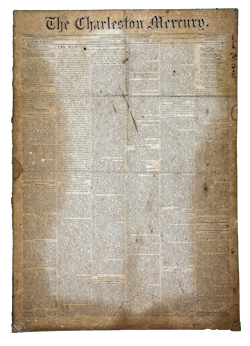
Charleston Mercury
April 18, 1861

(From Our Own Correspondent.)

WASHINGTON, April 17.—The National Intelligencer of this morning throws off the mask, and comes out boldly in favor of coercion.

The streets are lined with the military—regulars and volunteers—and squads are seen everywhere anxiously discussing the probable action of Virginia. It is the impression here that had the Border States seceded promptly after the organization of the Confederate States Government there would have been no collision. As it is, the preparations for subjugating the South are pushed steadily forward, although many of the leading Republicans seem startled at the first results of their own policy.

Sympathy for the Southern movement is fast on the increase in this District, and the Administration scarcely knows whom to trust.

It is currently stated, although the rumor lacks confirmation, that the Government will shortly call for a levy of 150,000 additional troops from the States. Of course they must all be got from the North. The army Engineers in the Arsenal, which commands the approach to this city by the Potomac river, are busily engaged devising plans and choosing their positions for the defence of the city from the dreaded attack by the Southern troops.

THE LATEST.

WASHINGTON, April 17—9 1/2 p.m.—The Administration is exultant over the war feeling in the North, and LINCOLN says, bluntly, that the South shall have war just as long as the Free States will furnish the men and money.

Gen. SCOTT proposes to concentrate 35,000 men at this point; 25,000 at St. Louis; 5000 in Western Texas; 25,000 at Fort Pickens; and 1000 to cruise off the coast of the Carolinas. It is generally believed that his suggestions will be acted on.

The most feverish anxiety is manifested to hear news from Richmond. LINCOLN fully anticipates the secession of the Old Dominion, and fears that from that quarter the thunder and the lightning may come together.

The necessary orders will be issued tomorrow to throw heavy reinforcements in Fort McHenry, near Baltimore. This move, it is hoped, will keep Maryland quiet.
0 comments

Latest by Telegraph. The News from Montgomery. —Proclamation by President Davis

Civil War Day-by-Day

Charleston Mercury
April 18, 1861

MONTGOMERY, April 17.—The Proclamation of LINCOLN having at last been received here in a form sufficiently authentic to leave no doubt of its being genuine, President DAVIS has in turn issued today the following highly important and spirited Proclamation.

PROCLAMATION.

BY THE PRESIDENT OF THE CONFEDERATE STATES OF AMERICA.

WHEREAS, ABRAHAM LINCOLN, the President of the United States has, by Proclamation, announced the intention of invading this Confederacy with an armed force for the purpose of capturing its fortresses, and thereby subverting its independence, and subjecting the free people thereof to the dominion of a foreign power; and whereas it has thus become the duty of this Government to expel the threatened invasion, and to defend the rights and liberties of the people by all the means which the laws of nations, and the usages of civilized warfare, place at its disposal:

Now, therefore, I, JEFFERSON DAVIS, PRESIDENT OF THE CONFEDERATE STATES OF AMERICA, do issue this my Proclamation, inviting all those who may desire, by service in private armed vessels on the high seas, to aid this Government in resisting so wanton and wicked an aggression, to make application for commissions or Letters of Marque and Reprisal, to be issued under the Seal of these Confederate States.

And I do further notify all persons applying for Letters of Marque, to make a statement in writing, giving the name and a suitable description of the character, tonnage and force of the vessel, and the name and place of residence of each owner concerned herein, and the intended number of the crew, and to sign said statement and deliver the same to the Secretary of State, or to the Collector of any port of entry of these Confederate States, to be by him transmitted to the Secretary of State. [continue reading…]

0 comments

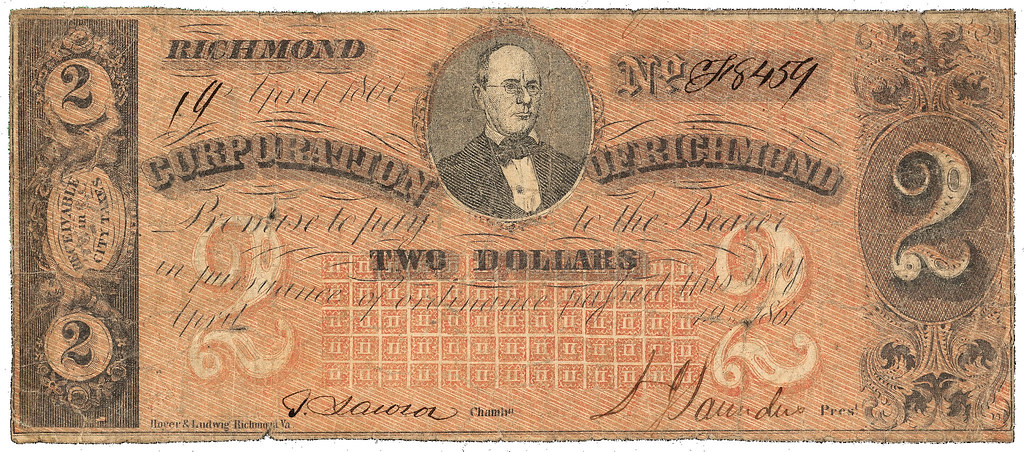
Richmond, Virginia, 2 dollars, April 19, 1861

Miscellaneous document sources

Corporation of Richmond (Virginia), 2 dollars, 1861Title
Corporation of Richmond (Virginia), 2 dollars, 1861
Author / Creator
Hoyer & Ludwig, Richmond [producer]
Creation Date
1861
Edition
Virginia, 1861
Description
Printed on white paper in red and black ink. Images include complex background pattern in red ink and a portrait of John Letcher. Verso: blank.
Materials/Techniques: ink on paper
Materials/Techniques: paper
Dimensions: 7.4 x 17 cm.
Notes
General: Note in manuscript: issue number “[ ]8459” and signatures of the Chamberlain and President in brown ink.
Subject: Civil War era currency
Inscription: “RICHMOND 19 April 1861 CORPORATION OF RICHMOND Promise to pay to the Bearer TWO DOLLARS in pursuance of ordinance passed this day April 19 1861”.
Subject
money ; Paper money ; bills of exchange ; patterns (design elements) ; portrait medallions
Form / Genre
currencies
engravings
Associated Name
Letcher, John, 1813-1884 [associated name]
Corporation of Richmond, Virginia [associated name]
Virginia [associated name]
Related Work
part of American Currency Collection
Related Information
Development of American Capitalism–Money and banking
Repository
Baker Library Special Collections, Harvard Business School

Note: The reverse side has no printing.

0 comments

The War News.

Civil War Day-by-Day

Charleston Mercury
April 18, 1861

The News conveyed to our despatches this morning is important. While the LINCOLN Administration is rapidly concentrating the hungry hordes with which it proposes to subjugate the South, and draining the pockets of the anxious stock-jobbers who have staked their all in the success of the mad scheme of coercion, the President of the Confederate States meets the threatened invasion promptly and with vigor. In a Proclamation issued yesterday, he announces that letters of marque and reprisal will immediately be issued, under the authority of the Government, to armed vessels cruising as privateers upon the high seas. Northern cupidity is thus arrayed against Northern fanaticism, and it is not difficult to predict the result.

The valorous Yankee, led by the scent of the rich prey, will not long scruple, under the sanction of the Southern flag, to sweep from the seas the commercial marine of his Yankee neighbors. How long the shipping interest of the North will care to sustain the terrible risk which begins today remains to be seen.

If, however, this measure should not suffice to check the impudent pretensions of the abolitionized North to hold a free people in subjection, the Confederate States are ready to try other and more direct remedies.

0 comments

Visit to Fort Sumter.

Civil War Day-by-Day

Charleston Mercury
April 18, 1861

Yesterday morning Mr. RUSSELL, the correspondent of the London Times, now in this city, visited Fort Sumter. He was accompanied by Colonel MILES, Colonel CHESNUT, Colonel MANNING and Colonel WHITING, Aids to General BEAUREGARD, and Colonel LUCAS, Aid to Governor PICKENS. Mr. FONTAINE, of the New York Herald, and others, were of the party.

0 comments

Our Montgomery Correspondence.

Civil War Day-by-Day

Charleston Mercury
April 18, 1861

MONTGOMERY, April 15.

The excitement in this city since the first gun was fired at Fort Sumter, has been great, and every facility for obtaining news is grasped at eagerly. The bulletin boards at the newspaper offices are besieged at all hours of the day, and every despatch that leaves the telegraph office is watched with anxious eyes. On Sunday THE MERCURY was in great demand, and large sums were offered for a single copy containing the account of the battle. When a telegram announced that the Confederate flag was raised upon Sumter, a salute was fired, and amid the shouts of thousands, several flags were hoisted in various parts of the city. Never in our history has there been so much enthusiasm on one day; and never has the public mind been raised to such a pitch of excitement. One can imagine what a relief it was to hear that the gallant Carolinians were victorious, and the long pent up emotions burst forth in tumultuous cheers. This victory has given us additional confidence in the courage and patriotism of our brave volunteers who have so nobly come forward to drive the invaders from our shores.

Notwithstanding a thousand rumors all afloat in the street, there is very little of interest that I can get, which is well authenticated. The Commissioners came here this morning, and have been closeted with the President and Cabinet nearly all day. Mr. CRAWFORD is now at his home in Columbus, Georgia. The official correspondence between them and the Federal Government is expected here tonight by ADAMS’ Express. It will be published as soon as it comes to this city, as well as the Address of the Commissioners. Thus far nothing has been learned outside in regard to their acts, beyond that already known from Washington despatches.

Yesterday evening the steamer King came up the river, having on board Mrs. President DAVIS. Seven guns were fired from the King upon her arrival at the levee, in honor of the news from Fort Sumter. Mrs. DAVIS is now stopping at the Exchange Hotel, where she will remain until the White House is ready. [continue reading…]

0 comments

A Full Account

Civil War Day-by-Day

Charleston Mercury
April 18, 1861

A FULL ACCOUNT of the Battle of Fort Sumter, with all the stirring incidents of the bombardment and subsequent surrender, has been compiled in a complete form, chiefly from the very full and interesting details published in the journals of this city, and will be issued from the press of Messrs. EVANS & COGSWELL this afternoon. It may be had tomorrow morning at the bookstores and principal news depots. This graphic and highly interesting history of the reduction of the greatest stronghold of our harbor will doubtless be eagerly sought for by all, and carefully preserved by those who have shared in the glory of the achievement.

0 comments

Female Volunteers.

Civil War Day-by-Day
1860s newsprint

Albany Patriot
(Georgia)
April 18, 1861

The Holly Spring Herald learns that the county of Chickasaw, Miss., has ten companies of volunteer soldiers ready to be mustered into the service of the State. It adds that, in addition to these:

“The county has a regularly officered and drilled company of young ladies, who have pledged themselves, in the event that the men are called into service, to protect their homes and families during their absence, and see that the farms are properly cultivated, and full crops raised not only for the support of the county, but the army of Mississippi.”

0 comments

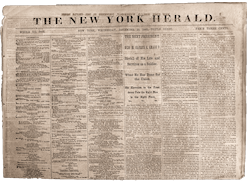
The War.—Our Despatches From Washington.

Civil War Day-by-Day

New York Herald
April 18, 1861

WASHINGTON, April 17, 1861.

The administration is considerably alarmed today lest an attempt be made by the secessionists in Virginia to seize the government vessels now at Norfolk. Intimations of such a purpose on their part were received here this morning.

There are now six vessels of war at Norfolk, namely, the Merrimac, Germantown, Bainbridge, United States, Pennsylvanian and Potomac. The three former are in excellent condition, and can soon be got ready for sea. The three latter are in a disabled condition.

Owing to the present precarious and unsettled state of affairs in Virginia, the government today decided to strengthen all the military posts in the State. Several companies will immediately be despatched to Harper’s Ferry.

The administration will at once take the necessary steps to remove them to some other point in the event of the Virginia convention passing the secession ordinance.

The administration has not yet decided to blockade the Southern ports. They will probably wait until something [continue reading…]

0 comments

Preparations at Washington for Defence.

Civil War Day-by-Day

New York Herald
April 18, 1861

Great preparations are being made to defend Washington against the anticipated attack of a Confederate army. Among these is the enrolment of a regiment of Zouaves from the Fire Department of this city, and Colonel Ellsworth, of the Chicago Zouaves, has arrived here for the purpose. Without any disparagement to the militia, it is felt that men accustomed to a rough life and exposed to hardship are best calculated for hard fighting in the streets, sleeping out in the open air and all those privations which are inseparable from a soldier’s life. Colonel Ellsworth, with ten of this Chicago corps, is about to organize a regiment of this kind in New York; and no doubt it will be a highly efficient one, and do good service in protecting the government at Washington against its enemies.

0 comments

Grand Union Demonstration—New York Rallying to the Support of the Administration.

Civil War Day-by-Day

New York Herald
April 18, 1861

Yesterday morning a preliminary meeting of the merchants of our city and of the members of the Stock Exchange was held at the Chamber of Commerce, for the purpose of making arrangements for a grand mass meeting of our citizens in support of the war policy of the administration. The greatest unanimity prevailed, and it was agreed on all hands that now that hostilities had been commenced by the South the people of New York, as of the North generally, were bound to sink all their political differences, and to unite as one man in defence of the national flag. After some discussion as to the manner in which the views of the gentlemen present should be carried out, it was agreed that a grand mass meeting be held at three o’clock on Saturday afternoon next, under the Washington Monument, in Union Square and that business people be requested to close their stores an hour or two previously, as well to allow their employees to attend as to mark the critical character of the events that call our citizens together.

The limits of the locality fixed upon will hardly afford space enough for the crowds that will be present. The demonstration promises to be the grandest and most imposing that ha ever taken place in this country. And there is good reason that is should be so; for our existence as a nation, in a great measure depends on the manner in which New York shall speak out on this occasion.

0 comments

The News.

Civil War Day-by-Day

New York Herald
April 18, 1861

President Davis, of the Confederate States, has issued a proclamation inviting privateers to take service with the revolutionists. The document is given in another column. It is reported that several vessels are now fitting out at New Orleans for privateers.

There is a report from Texas that all the American vessels at Galveston have been embargoed.

One of our correspondents at Washington states that Mr. Seward yesterday received information from Richmond to the effect that the secession ordinance had been defeated in the Virginia Convention in secret session by seven majority. Other reports corroborate this news. Apprehensions were entertained yesterday that the Virginia revolutionists would seized upon the arsenal at Harper’s Ferry, and troops were to leave Washington last night to garrison that important post.

A despatch from our correspondent at New Orleans, dated yesterday, states that the military status at Pensacola remained unchanged, and that Gen. Clark, who had just arrived from there, said no attack would be made upon Fort Pickens for ten days. [continue reading…]

0 comments

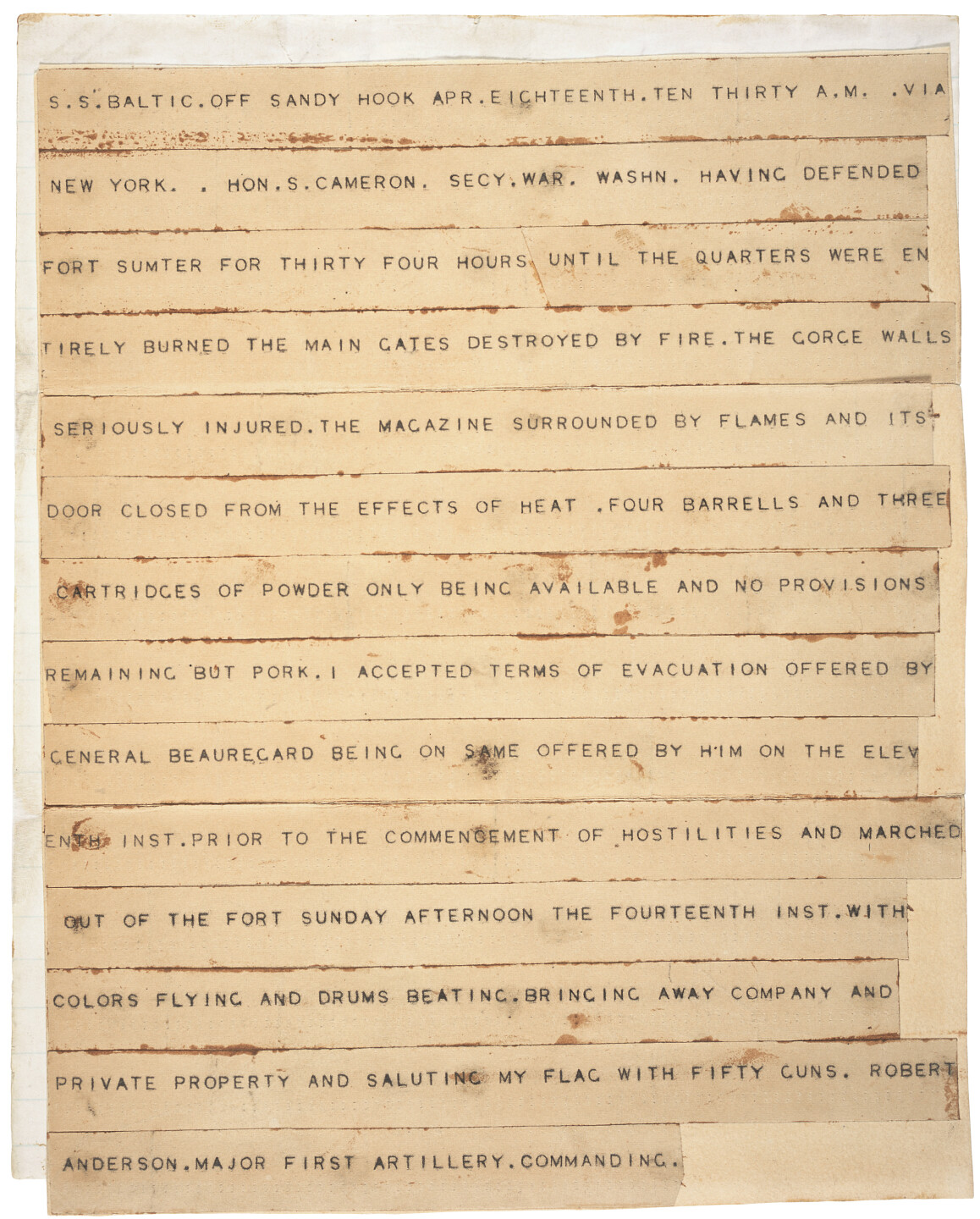
Robert Anderson Telegram to the Secretary of War

Miscellaneous document sources

Robert Anderson Telegram to the Secretary of War, April 18, 1861, from S.S. Baltic off Sandy Hook, New YorkApril 18, 1861, from S.S. Baltic off Sandy Hook, New York

Telegram from Maj. Robert Anderson to Hon. Simon Cameron, Secretary, announcing his withdrawal from Fort Sumter, April 18, 1861 (National Archives Identifier: 594525); Records of the Adjutant General’s Office, 1780s-1917; Record Group 94; National Archives.

Transcription (edited for readability)
S.S.Baltic.off Sandy Hook Apr. eighteenth. ten thirty a.m. via New York. Hon.S.Cameron. Secy. War. Washn. Having defended Fort Sumter for thirty four hours until the quarters were entirely burned the main gates destroyed by fire.the gorge walls seriously injured. the magazine surrounded by flames and its door closed from the effects of heat. four barrells and three cartridges of powder only being available and no provisions remaining but pork. I accepted terms of evacuation offered By General Beauregard being on same offered by him on the eleventh inst. prior to the commencement of hostilities and marched out of the fort Sunday afternoon the fourteenth inst. with colors flying and drums beating. bringing away company and private property and saluting my flag with fifty guns. Robert Anderson. Major First Artillery. Commanding.


0 comments

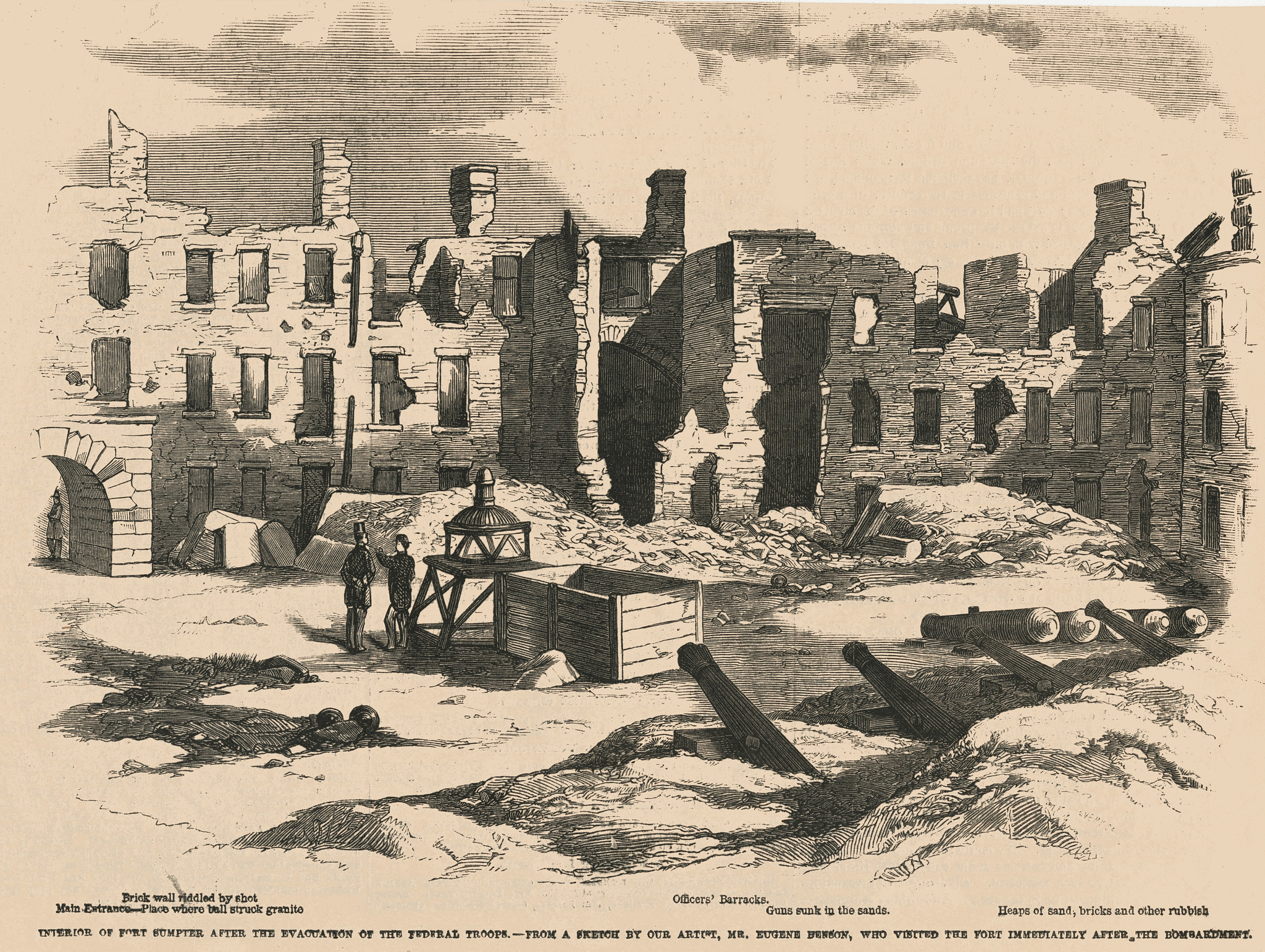
Interior of Fort Sumpter after the Evacuation of the Federal Troops—From a sketch by our Artist, Mr. Eugene Benson, Who Visited the Fort Immediately after the Bombardment

Miscellaneous document sources

Interior of Fort Sumpter after the Evacuation of the Federal Troops—From a sketch by our Artist, Mr. Eugene Benson, Who Visited the Fort Immediately after the Bombardment Physical Descriptions
Medium: illustrations (layout features)

Item Location: Fort Sumter NM/Charles Pinckney NHS Curatorial Storage Facility, located at Charles Pinckney National Historic Site

Box: Box 3 of 3 FOSU 19th c Illustrations Frank Leslie Harper’s Weekly London Times etc Drawer 1.

Contributing Institutions
Held By Fort Sumter and Fort Moultrie National Historical Park

0 comments

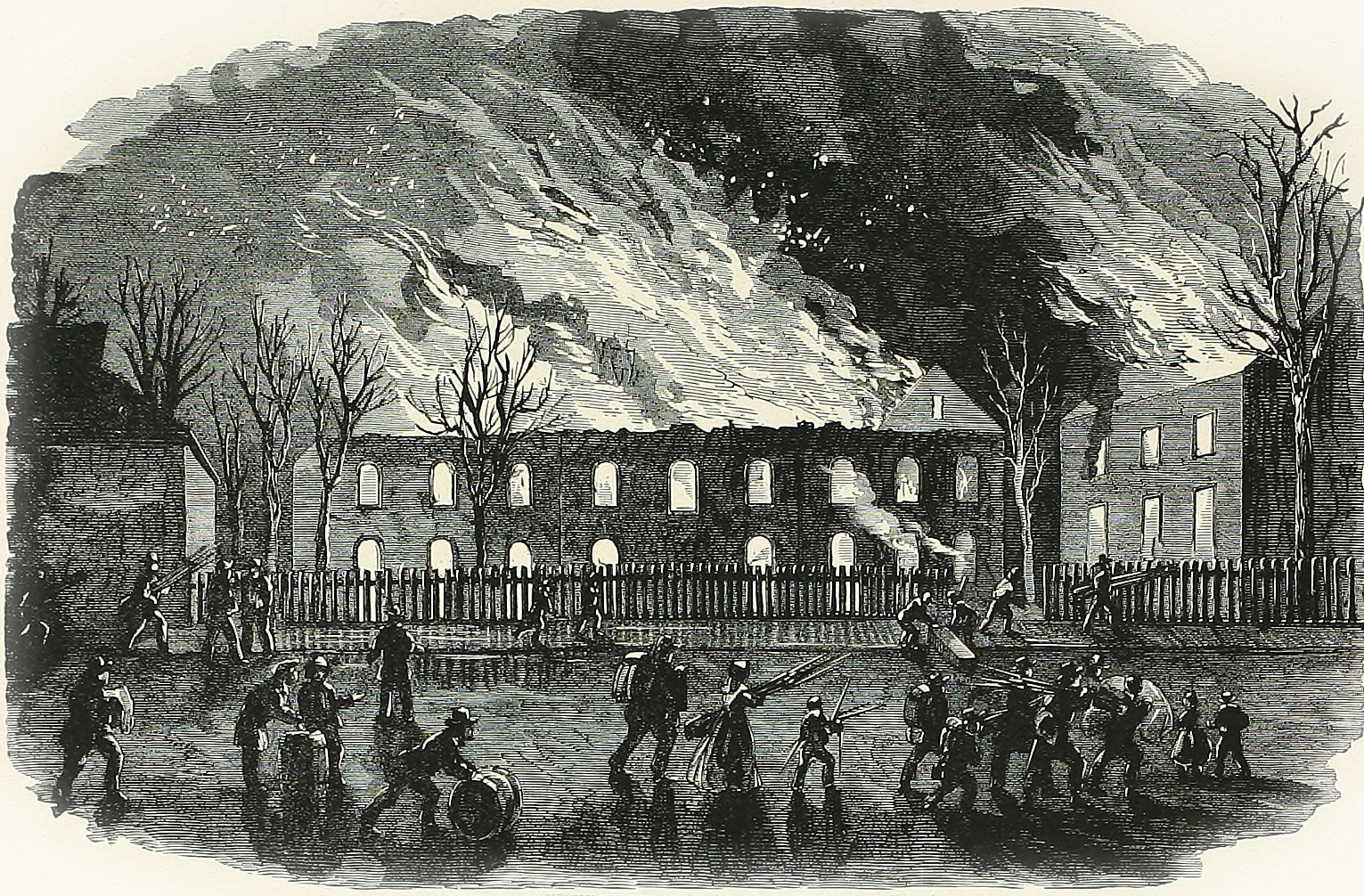
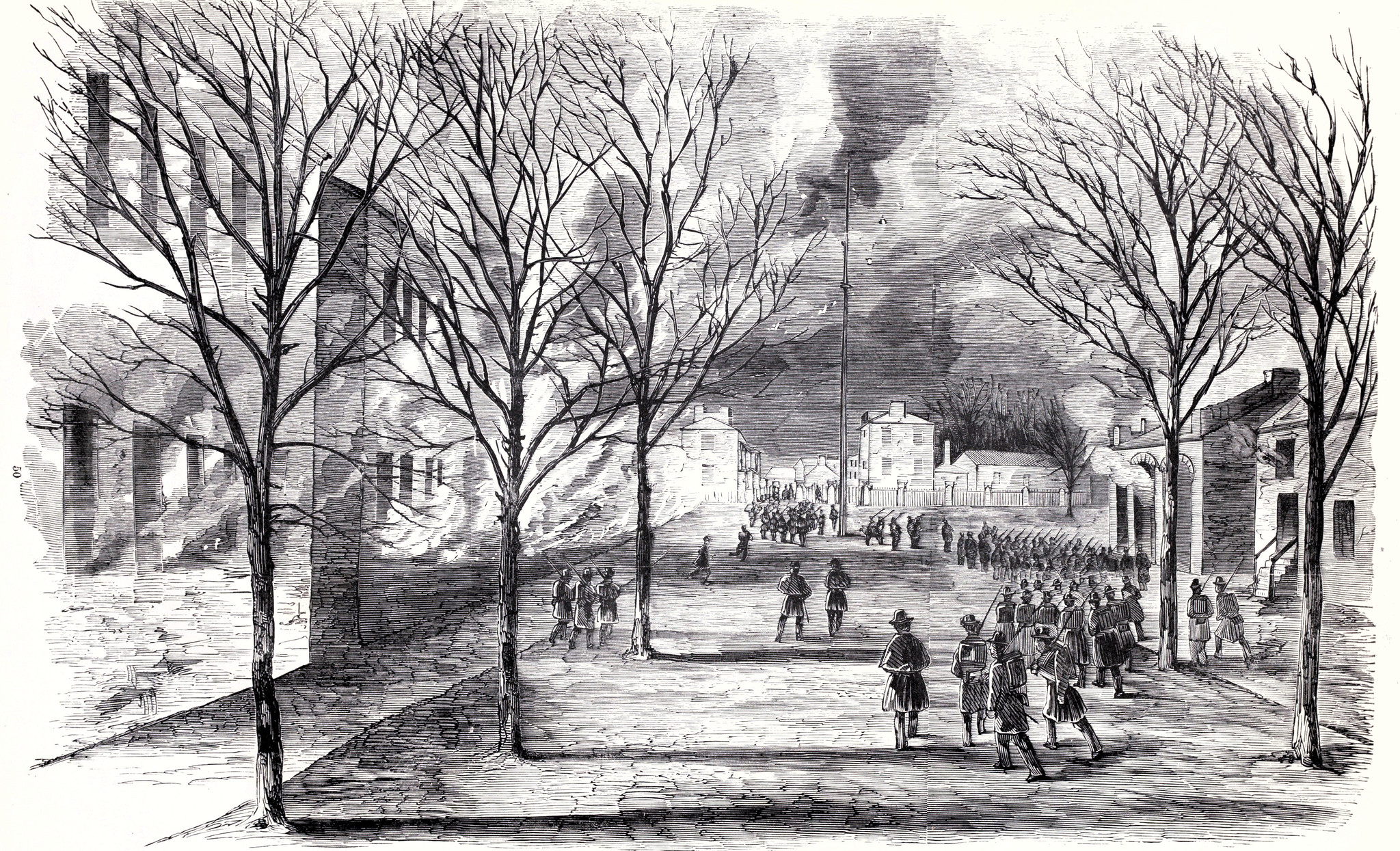
Burning of the United States Arsenal at Harper’s Ferry, 10 P.M., April 18, 1861

Miscellaneous document sources

Burning of the United States Arsenal at Harper's Ferry, 10 P.M., April 18, 1861Harper’s Pictorial History of the Civil War by Alfred H. Guernsey and Henry W. Alden; copyrighted 1866 by Harper and Brothers; 1894 by Alfred H. Guernsey and Henry W. Alden; 1894 by McDonnell Bros; pub. The Puritan Press Co.; Chicago, Illinois

0 comments

Burning of the United States Arsenal at Harper’s Ferry, Va., April 18th, 1861

Miscellaneous document sources

Burning of the United States Arsenal at Harper's Ferry, Va., April 18th, 1861(from Frank Leslie’s Illustrated History of the Civil War…, edited by Louis Shepheard Moat, Published by Mrs. Frank Leslie, New York, 1895)

“The arsenal at Harper’s Ferry contained a large quantity of machinery and arms, and was garrisoned by a small detachment of United States Rifles, under the command of Lieutenant Roger Jones. Having been apprised of the approach of an overwhelming force of Confederates, under instructions from the Governor of Virginia to seize the arsenal, Lieutenant Jones, in order to prevent its falling into the hands of the enemy, set fire to the building, which was soon a mass of flames. Lieutenant Jones and his men then fled across the Potomac and reached Hagerstown about seven o’clock the next morning. The government highly commended the lieutenant for his, judicious conduct, and promoted him to the rank of captain.”

0 comments

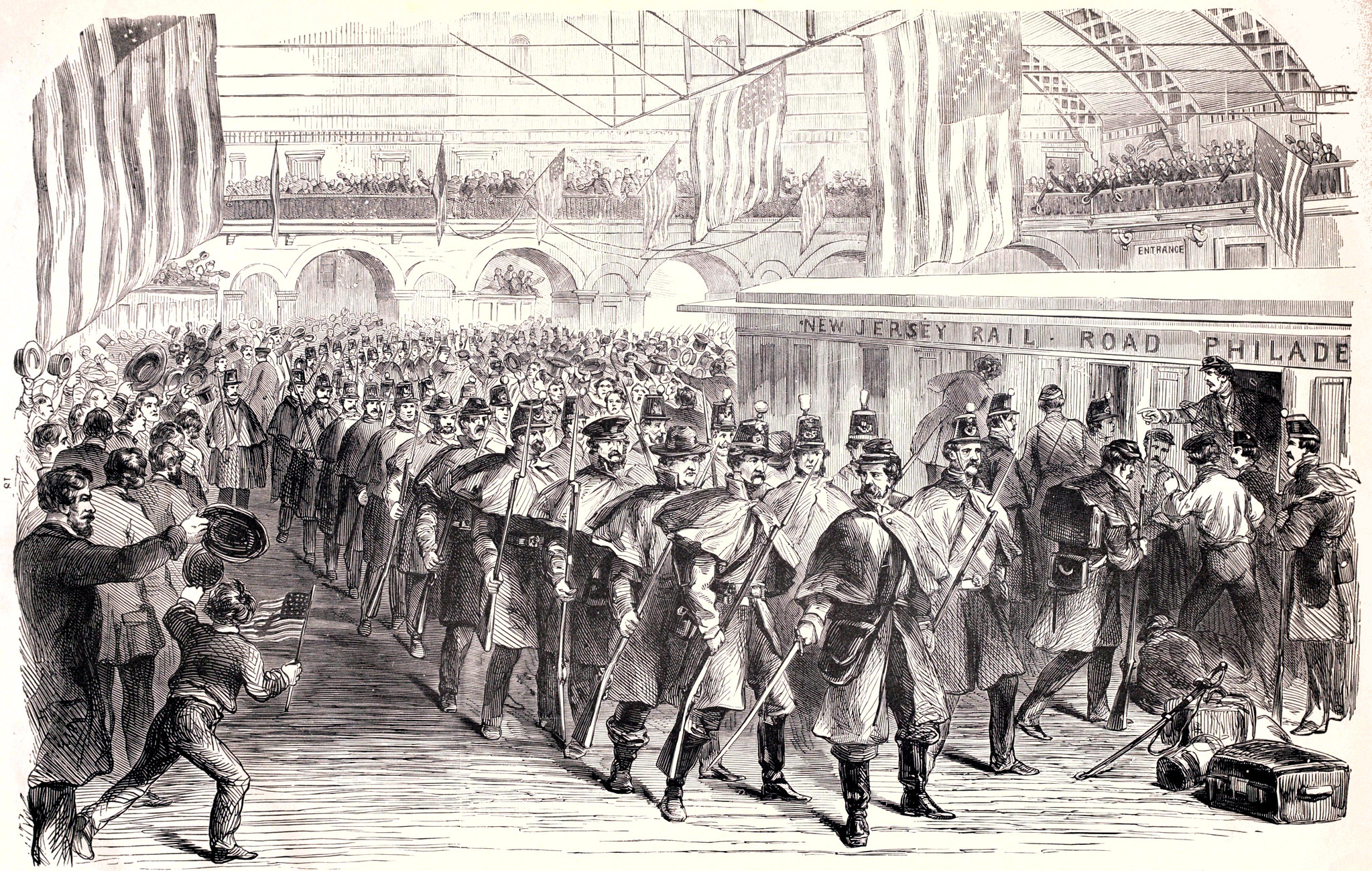
The Sixth Regiment of Massachusetts Volunteers Leaving Jersey City Railroad Depot to Defend Washington D. C., April 18th, 1861

Miscellaneous document sources

The Sixth Regiment of Massachusetts Volunteers Leaving Jersey City Railroad Depot to Defend Washington D. C., April 18th, 1861(from Frank Leslie’s Illustrated History of the Civil War…, edited by Louis Shepheard Moat, Published by Mrs. Frank Leslie, New York, 1895)

“Thousands of patriotic citizens filled every available space in the big railroad station in Jersey City when the Sixth Regiment of Massachusetts entered, on its way to defend the Capital, Washington, April 18th, 1861, after marching through the streets of New York. The people enthusiastically cheered the soldiers and wished them a safe journey as they boarded the waiting train. The regiment was composed of eight hundred men. This was the regiment which, upon its arrival in Baltimore, was stoned and shot at by a mob of Southern men who attempted to stop its progress to Washington.”

0 comments

Mary Anna Custis Lee

Civil War Day-by-Day

Civil War Portraits—Leaders, Influencers, and the Incidentally Important #003


Mary Anna Custis Lee (C. 1854)?

Mary Anna Randolph Custis Lee (October 1, 1808 – November 5, 1873) was a third cousin and the wife of Robert E. Lee, the prominent career military officer who subsequently commanded the Confederate Army of Northern Virginia during the American Civil War. They married at her parents’ home, Arlington House, in Virginia in 1831, and had seven children together; she survived him by three years.

Mrs Lee was descended from several colonial and Southern families, including the Parke Custises, Fitzhughs, Dandriges, Randolphs, Rolfes, and Gerards. Through her paternal grandmother, Eleanor Calvert, she descended from Charles Calvert, 5th Baron Baltimore. Through her mother, Mary Lee Fitzhugh Custis, she was a descendant of William Fitzhugh. Mary Anna Custis Lee was the only surviving child of George Washington Parke Custis, George Washington’s step-grandson and adopted son and founder of Arlington House, and Mary Lee Fitzhugh Custis, daughter of William Fitzhugh and Ann Bolling Randolph Fitzhugh. Her godmother, Mary Randolph, the first person recorded buried at Arlington, wrote an early book on housekeeping and cooking. Lee’s birth year is usually given as 1808, but it appears in the Custis family Bible and in records kept by her mother as 1807, and is also referred to in a letter her mother wrote in the autumn of 1807. She was born at Annefield in Clarke County, Virginia when her mother’s coach stopped there during a journey. She was well educated, having learned both Latin and Greek. [continue reading…]

0 comments

“Soldiers are arriving from the North tonight and an attack is expected upon the City from Virginia.”—Horatio Nelson Taft

Diary of US patent clerk Horatio Nelson Taft.

THURSDAY 18

Cool pleasant day, fire comfortable. Business in the office goes on as usual and is increasing this month. Business there does not seem to be much affected by the excitement in the City. The rumor today that Virginia had “seceded” and seized Govt property at Norfolk & Harpers Ferry caused intense excitement. There seemed to be a great anxiety to fight manifested all round. Soldiers are arriving from the North tonight and an attack is expected upon the City from Virginia. The City is apparently pretty well prepared. Wo[e] to the invaders.


The three diary manuscript volumes, Washington during the Civil War: The Diary of Horatio Nelson Taft, 1861-1865, are available online at The Library of   Congress.

0 comments

Rebel War Clerk

Civil War Day-by-Day
A likeness of Jones when he was editor and majority owner of the Daily Madisonian during President John Tyler’s administration.

April 18th.–In spite of every precaution, it is currently whispered in the streets to-day that Virginia has seceded from the Union; and that the act is to be submitted to the people for ratification a month hence. This is perhaps a blunder. If the Southern States are to adhere to the old distinct sovereignty doctrine, God help them one and all to achieve their independence of the United States. Many are inclined to think the safest plan would be to obliterate State lines, and merge them all into an indivisible nation or empire, else there may be incessant conflicts between the different sovereignties themselves, and between them and the General Government. I doubt our ability to maintain the old cumbrous, complicated, and expensive form of government. A national executive and Congress will be sufficiently burdensome to the people without the additional expense of governors, lieutenant-governors, a dozen secretaries of State, as many legislatures, etc. etc. It is true, State rights gave the States the right to secede. But what is in a name? Secession by any other name would smell as sweet. For my part, I like the name of Revolution, or even Rebellion, better, for they are sanctified by the example of Washington and his compeers. And separations of communities are like the separations of bees when they cannot live in peace in the same hive. The time had come apparently for us to set up for ourselves, and we should have done it if there had been no such thing as State sovereignty. It is true, the Constitution adopted at Montgomery virtually acknowledges the right of any State to secede from the Confederacy; but that was necessary in vindication of the action of its fathers. That Constitution, and the permanent one to succeed it, will, perhaps, never do. They too much resemble the governmental organization of the Yankees, to whom we have bid adieu forever in disgust.

0 comments

Mills House, Charleston—Old Abe’s Proclamation—A Ridiculous-Looking Craft—Indignation Against the City of New York—General Beauregard—William Howard Russell

My Diary North and South – William Howard Russell

April 18th.—It is as though we woke up in a barrack. No! There is the distinction, that in the passages slaves are moving up and down with cups of iced milk or water for their mistresses in the early morning, cleanly dressed, neatly clad, with the conceptions of Parisian millinery adumbrated to their condition, and transmitted by the white race, hovering round their heads and bodies. They sit outside the doors, and chatter in the passages; and as the Irish waiter brings in my hot water for shaving, there is that odd, round, oily, half-strangled, chuckling, gobble of a laugh peculiar to the female Ethiop, coming in through the doorway.

Later in the day, their mistresses sail out from the inner harbors, and launch all their sails along the passages, down the stairs, and into the long, hot, fluffy salle-à-manger, where, blackened with flies which dispute the viands, they take their tremendous meals. They are pale, pretty, svelte–just as I was about to say they were rather small, there rises before me the recollection of one Titanic dame–a Carolinian Juno, with two lovely peacock daughters–and I refrain from generalizing. Exceedingly proud these ladies are said to be–for a generation or two of family suffice in this new country, if properly supported by the possession of negroes and acres, to give pride of birth, and all the grandeur which is derived from raising raw produce, cereals, and cotton–suâ terrâ. Their enemies say that the grandfathers of some of these noble people were mere pirates and smugglers, who dealt in a cavalier fashion with the laws and with the flotsam and jetsam of fortune on the seas and reefs hereabouts. Cotton suddenly–almost unnaturally, as far as the ordinary laws of commerce are concerned, grew up whilst land was cheap, and slaves were of moderate price–the pirates, and piratesses had control of both, and in a night the gourd swelled and grew to a prodigious size. These are Northern stories. What the Southerners say of their countrymen and women in the upper part of this “blessed Union” I have written for the edification of people at home.

The tables in the eating-room are disposed in long rows, or detached so as to suit private parties. When I was coming down to Charleston, one of my fellow-passengers told me he was quite shocked the first time he saw white people acting as servants; but no such scruples existed in the Mills House, for the waiters were all Irish, except one or two Germans. The carte is much the same at all American hotels, the variations depending on local luxuries or tastes. Marvellous exceedingly is it to see the quantities of butter, treacle, and farinaceous matters prepared in the heaviest form– of fish, of many meats, of eggs scrambled or scarred or otherwise prepared, of iced milk and water, which an American will consume in a few minutes in the mornings. There is, positively, no rest at these meals–no repose. The guests are ever passing in and out of the room, chairs are for ever pushed to and fro with a harsh grating noise that sets the teeth on edge, and there is a continual clatter of plates and metal. Every man is reading his paper, or discussing the news with his neighbor. I was introduced to a vast number of people and was asked many questions respecting my views of Sumter, or what I thought “old Abe and Seward would do?” The proclamation calling out 75,000 men issued by said old Abe, they treat with the most profound contempt or unsparing ridicule, as the case may be. Five out of six of the men at table wore uniforms this morning. [continue reading…]

0 comments

“I am almost discouraged at the task before me.”—Colonel Harvey Brown at Fort Pickens

War of the Rebellion: from the Official Records of the Union and Confederate Armies and Navies

HEADQUARTERS DEPARTMENT OF FLORIDA,
Fort Pickens, April 18, 1861.

Lieut. Col. E. D. KEYES, Secretary to the General-in-Chief, Washington, D.C.:

COLONEL: We arrived off this place on the evening of the 17th instant, having encountered a heavy norther on the passage from Tortugas. I immediately sought and obtained an interview with Captain Adams, commanding the naval forces here, who promised me every assistance in his power, and boats to land my command. I decided to land with a part of my force without delay, and while preparing to land, signal rockets from Fort Pickens, indicating an expected attack, hastened our departure. I got in the fort at 2 o’clock yesterday morning with the Sappers and Miners and a part of Clitz’s company. Our arrival probably prevented the contemplated attack. I found in the fort, besides the two companies of artillery, a detachment of one hundred marines and sailors. The greater portion of them I have sent back to the ships. In the course of yesterday and to-day all the troops and horses have landed, and a very small portion of stores, the landing of which in the surf is a slow operation.

In going over the fort and examining its condition, the miserable state of its armament, the small supply of ammunition and stores, I am almost discouraged at the task before me. The mounted guns are few in number–two 10-inch shell guns, four 8-inch howitzers, seventeen 32-pounders,   and seven 18 and eleven 12 pounders. The guns are generally indifferent, and the carriages old and not to be depended on.

I have not been able to ascertain the exact force of the secessionists, but so far as I can learn their force is nearly 7,000 men. [continue reading…]

0 comments

Civil War Day-By-Day

Civil War Day-by-Day

April 18, 1861

  • Robert E. Lee is unofficially offered command of the thousands of soldiers being called up to protect Washington by presidential adviser Francis P. Blair. Lee immediately refuses.1
  • Federal forces withdraw from Harpers Ferry
  • Federal marshals seize records of telegraphs sent from major northern cities, leading to the arrest of southern sympathizers.

A Chronological History of the Civil War in America2

  • U. S. steamer “Star of the West” captured by the rebels at Indianola, Tex.
  • U. S. Sec. of the Treasury ordered that no clearances should be granted to vessels bound to ports south of Maryland.
  • Pennsylvania State Volunteers reached Washington.
  • Rebels obstruct the channel at Norfolk, Va., to prevent the sailing of war vessels from that point.
  • Harper’s Ferry Arsenal destroyed to prevent its being held by the rebels.

    1. Pryor, E. (2011, April 20). The General in his Study. New York Times Opinionator. Retrieved April 11, 2021
    2. A Chronological History of the Civil War in America by Richard Swainson Fisher, New York, Johnson and Ward, 1863
0 comments

Braxton Bragg

Civil War Day-by-Day

Civil War Portraits—Leaders, Influencers, and the Incidentally Important #002

Braxton Bragg (March 22, 1817 – September 27, 1876) was a career United States Army officer, and then a general in the Confederate States Army

Braxton Bragg

Braxton Bragg (March 22, 1817 – September 27, 1876) was a career United States Army officer, and then a general in the Confederate States Army—a principal commander in the Western Theater of the American Civil War and later the military advisor to the Confederate President Jefferson Davis.

Bragg, a native of North Carolina, was educated at West Point and became an artillery officer. He served in Florida and then received three brevet promotions for distinguished service in the Mexican-American War, most notably the Battle of Buena Vista. He established a reputation as a strict disciplinarian, but also as a junior officer willing to publicly argue with and criticize his superior officers, including those at the highest levels of the Army. After a series of posts in the Indian Territory, he resigned from the U.S. Army in 1856 to become a sugar plantation owner in Louisiana.

During the Civil War, Bragg trained soldiers in the Gulf Coast region. He was a corps commander at the Battle of Shiloh and subsequently was named to command the Army of Mississippi (later known as the Army of Tennessee). He and Edmund Kirby Smith attempted an invasion of Kentucky in 1862, but Bragg retreated following the inconclusive Battle of Perryville, Kentucky, in October. In December, he fought another inconclusive battle at Murfreesboro, Tennessee, the Battle of Stones River, but once again withdrew his army. In 1863, he fought a series of battles against Maj. Gen. William S. Rosecrans and the Union Army of the Cumberland. In June, he was outmaneuvered in the Tullahoma Campaign and retreated into Chattanooga. In September, he was forced to evacuate Chattanooga, but counterattacked Rosecrans and defeated him at the Battle of Chickamauga, the bloodiest battle in the Western Theater, and the only major Confederate victory therein. In November, Bragg’s army was routed in turn by Maj. Gen. Ulysses S. Grant in the Battles for Chattanooga.

Read more at <a href=”https://en.wikipedia.org/wiki/Braxton_Bragg” rel=”noreferrer nofollow”>Braxton Bragg</a> on Wikipedia


0 comments

Village Life in America

Village Life in America, 1852 – 1872, by Caroline Cowles Richards

April.–The Siamese twins are in town and a lot of the girls went to see them in Bemis Hall this afternoon. It costs 10 cents. Grandmother let us go. Their names are Eng and Chang and they are not very handsome. They are two men joined together. I hope they like each other but I don’t envy them any way. If one wanted to go somewhere and the other one didn’t I don’t see how they would manage it. One would have to give up, that’s certain. Perhaps they are both Christians.

0 comments