Thursday, 5th–Four men from Company A of the Eighth Iowa were drummed out of camp today. They had refused to take the oath to support the United States Government.
American Civil War Chronicles
William Howard Russell’s Diary: Anonymous letters.—General Fremont’s sudden outburst in the West.
September 5, 2021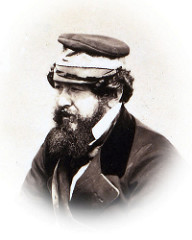
Sept. 5th.–Raining all day. McClellan abandoned his intention of inspecting the lines, and I remained in, writing. The anonymous letters still continue. Received one from an unmistakable Thug to-day, with the death’s-head, cross-bones, and coffin, in the most orthodox style of national-school drawing.
The event of the day was the appearance of the President in the Avenue in a suit of black, and a parcel in his hand, walking umbrella-less in the rain. Mrs. Lincoln has returned, and the worthy “Executive” will no longer be obliged to go “browsing round,” as he says, among his friends at dinner-time. He is working away at money matters with energy, but has been much disturbed in his course of studies by General Fremont’s sudden outburst in the West, which proclaims emancipation, and draws out the arrow which the President intended to discharge from his own bow.
Civil War Day-By-Day
September 5, 2021
September 5, 1861
- Union troops commanded by Ulysses Grant prepared to move into Kentucky in response to the move made by Polk to seize Columbus
“The death of Jeff Davis is confirmed in the enemies papers.”—Horatio Nelson Taft
September 4, 2021
WEDNESDAY, SEPTEMBER 4, 1861.
Beautiful day, rather hot in the sun. Called on Doct Smith which amounted to nothing. I think he likes to have people think that they are under great obligations to him. Got glass and glazed the broken windows, saved $1.50 by doing it myself. Paid my Ice bill $3.70. It is supposed that fighting is going on this afternoon up the river where the rebels are attempting to cross. The Balloon was up over the River on the lookout. Large bodies of troops have arrived today, one Regt passed our door. The death of Jeff Davis is confirmed in the enemies papers.
______
The three diary manuscript volumes, Washington during the Civil War: The Diary of Horatio Nelson Taft, 1861-1865, are available online at The Library of Congress.
The gift of a number of very fine hams.
September 4, 2021
The home letters, full of sweet air and peaceful views, were delightful to get in the dust and confusion of Washington, which, however, with all its discomforts, nothing would have induced us to leave. Among the letters of introduction which made our way simple and pleasant were those from Cousin Wm. Aspinwall to Senator Dixon and General Ripley (“a fine, blunt old gentleman”) of Connecticut, and to Generals Hamilton and Van Rensselaer, on the staff of the Commanding General Scott. Also to Generals Wool, Dix and McDowell, Admiral Wilkes and family, and the household of Mr. Hodge, a cousin of our good Dr. Hodge of Philadelphia. We imagined that our unctuous way to the good graces of the Commanding General was made by the gift from Joseph Howland of a number of very fine hams. These, cast upon the water, came home to us later in an invitation to dinner, which seemed rather to have the nature of a military summons, delivered as it was by a Colonel on the staff. We accepted with the mixed feeling which one must have who receives the “Queen’s Command” to an interview.
The hams appear in the following note:
0 comments
Headquarters of the Army, Washington.
Dear Mrs. Howland: The Lieutenant General desires me to send his thanks for the hams sent to him by Mr. Howland. He considers them very fine indeed, to which opinion I beg leave to add my own.
Yours very truly,
H. Van Rensselaer.
“General Rosecrans takes command here. We go south to Sutton, etc., until we meet the enemy.”—Rutherford B. Hayes
September 4, 2021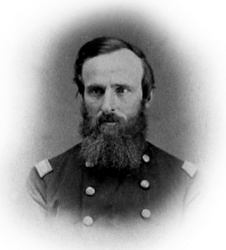
Wednesday, 3 [4].–Saw General Rosecrans and staff. Caught our guard without a salute. We go with him south today. A good time with McCook and his Ninth. Marched from Bulltown to Flatwoods on road to Sutton, about ten or eleven miles. Camped on a hill with Captain Canby’s Company F of our right wing and Captain Moore’s Company I, ditto. How pleasant to meet them after our long (five weeks) separation. They have had troubles, hard marches, and fun; one man shot resisting a corporal, two men in irons for a rape, and one man arrested for sleeping on post (third offence penalty death!)
_______
BULLTOWN, September 3, [4], 1861. Wednesday Morning.
DEAREST:–Let me say first that the army mail arrangement is perfect. All letters are got promptly here. We march forty or sixty miles to a new point. We are hardly stopped at our destination on a sidehill, in a wood or meadow, before a courier steps up and hands us, privates and all, letters just from Clarksburg. For instance, we are seventy miles over mountains from our last camping place. I had not got off of Webby before a fellow came up, “Are you the Major?” and handed me a letter from you, 27th, from Mother, 26th, from Uncle, 26th, and half a dozen others all late. The same thing is happening all the time.
We have had a forced march without tents, cooking utensils, or knapsacks over a mountain road–bridle path. I came out first best. All the horses injured except Webby. . . . [continue reading…]
He does not look like a military genius.—Rebel War Clerk
September 4, 2021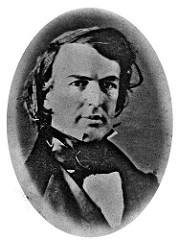
SEPTEMBER 4th.—J. R. Anderson, proprietor of the iron-works here, has been appointed brigadier-general by the President. He, too, was a West Pointer; but does not look like a military genius. He is assigned to duty on the coast of North Carolina.
Only one man was wounded.
September 4, 2021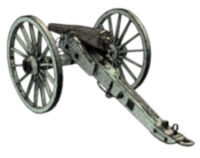
Wednesday, September 4.—After returning from a battery drill, orders awaited our section, in command of Lieut. J. A. Tompkins. We left Darnes town at five o’clock P. M., going at a fast rate towards Great Falls, a distance of ten miles. At our arrival we found the Seventh Pennsylvania Regiment, commanded by Col. Harvey. During the day the enemy had some pieces of artillery in position, to bear on the water-works at Great Falls, and on the Seventh Pennsylvania Volunteers, firing a hundred rounds. Only one man was wounded. Col. Harvey guided our battery through the woods at midnight. Our section took position on the edge of a knoll, while the Seventh fortified our guns. It rained during the night.
Federal troops landing on the Kentucky shore opposite Cairo
September 4, 2021
Federal Troops Landing on the Kentucky Shore, Opposite Cairo, for the Purpose of Building Fort Holt.
Fort Holt was situated on the Kentucky side of the Ohio River, and almost opposite Cairo. It was named in honor of that noble Kentuckian, Joseph Holt, who, during the time he held the War Department, after the defection of Floyd, endeavored to repair the damage done by his fraudulent predecessor.
(from Frank Leslie’s Illustrated History of the Civil War…, edited by Louis Shepheard Moat, Published by Mrs. Frank Leslie, New York, 1895)
“I have just been informed that an order has been made out relieving me from this post and I suppose it directs me to report to Head Quarters in St Louis.”
September 4, 2021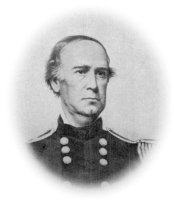
Jefferson Barracks Mo.
Sept. 2, 1861
My dear wife
I have received your nice basket of plums and cake by express. The plums are some of them decayed but the major part are fresh and beautiful. The cake too is nice and plump but a little smeared over with plum juice. I will distribute the contents among friends who will appreciate them quite as well as I can.
Nothing important has transpired here since I wrote you. We had a sword presentation to Col Ellis of the is Mo Cavelry by the officers of his Regiment The Col was quite overwhelmed and could only say “I hope if I disgrace this bright emblem I may be pieced to the hear with a sharper one.” A sharp speech you perceive. The Col looks daggers however, and I have no doubt he will make his mark. I have labored considerably in geting up his regiment which is now nearly ready for service. The Colonel has presented me with a beautiful pair of silver spurs.
I have just been informed that an order has been made out relieving me from this post and I suppose it directs me to report to Head Quarters in St Louis. Genl Polk [Pope] goes up North to fix up the troubles on the Hannibal road which his contributive order only made worse as I predicted it would.1 Indeed matters do not seem to improve in Missouri save in the increases of Military force.
The martial law2 has not yet been sufficiently tested and under the order restricting the military action in carrying it out I do not think it can make much show. The abolition Clause will make more noise than any thing and when we go south if the Negroes get a knowledge of it the effect may be serious. It will help to increase the cry of “Fremont and freedom” that so alarmed the South in 1856. In that view of the matter I would not be surprised at stirring consequences; but without that clause martial law would not be perceived.
I see by the papers you now have troops in Keokuk and I hope our citizens will not be required to do any more guard duty. The insinuations of the Hawkey[e]l3 that your pains are to get the depot is almost diabolical.
It is enough for our people to stand guard over this state and the states honor without being sneered at by cowards that skulk away from scenes of danger just to give a little patronage to a pitiful pack of pusillaminous whelps that have lost the public advantages that once gave them power.
It is very hot this evening. It had been cool and fall like to day but now it is so warm I will postpone the completion of my letter till tomorrow.
Sept 3d
My orders for being relieved at this post are said to be made out. Of course this is necessary as my command has dwindeled down to such insignificance as to make it unnecessary for a Brigadier to remain here. I see too that General Pope who has been staying in the city is now ordered up north and I presume I will again be directed to remain near the Commanding General.
However this may be I shall follow my orders which I look for this evening.
Capt. McAllister, my Commissary, has been sick for a week or ten days in the city, and has now come down and is spending his time with me. He is convalescent but quite poorly yet. We had the cake and plums at dinner and enjoyed them very much.
Sept 4
This letter runs along very well. I have just received Henrys letter of the 30th giving news of his safe arrival home &c He erred in writing Secry of War instead of Genl L. Thomas Adt Genl. But it matters nothing. He needs no further orders but may report at any time to Genl Fremont as Capt. Rankin4 did when he was down here. But there is no hurry about it. Henry says you would like to visit me while I am down here. Of course I will not be here long enough, but will expect you all ready to come down soon enough to visit me at St Louis before we move South.
How are you progressing with the packing up business?
It is exceedingly dull at this camp although the Post duties keep me very busy. Captain McAllister is still quite poorly and I fear yet he may have prolonged fever.
I hope Genl Pope has gone into the matter of fighting the rebels in N Missouri to some purpose before this time. It is certain matters have been poorly managed heretofore.
Give my love to all
Affectionately yours
Saml R. Curtis
1. Gen. John Pope in an order of July 21, 1861, declared that all residents within five miles of any bridge, culvert, and railroad track damaged or willfully destroyed by southern sympathisers, would he held liable for costs of repair, etc. See Official Records, 1st ser., 3, 404-404.
2. Fremont’s declaration of Aug. 30, 1861.
3. Rivalry between Burlington and Keokuk as the rendevous points for the first Iowa regiments was keen, as were the contests for designation as supply centers and hospital bases for federal troops.
4. John W. Rankin.
A lady’s wit and its result
September 4, 2021
Dallas Herald, September 4, 1861
A Tennessee lady, who has been passing some time at Ashland, was, while promenading the beautiful grounds which adorn the place, accosted by a gentleman who seemed to be arranging a bouquet; with the inquiry if there were any laurels, either in the grounds or the woods near by. Noting that he was in citizen’s dress, she replied promptly, and with much meaning in her dark eye: “No, sir, but I understand the Virginians have recently gathered a great many at Acquia Creek, Sewell’s Point and Fairfax Courthouse. I doubt not there are still more left at those places and many other parts of Virginia.” The hint was not lost. A few days after, the gentleman joined a gallant corps, and is now at Manassas, no doubt determined to reap a harvest of laurels with his own good blade. Richmond Dispatch.
Lieutenant Hiram L. Hendley of Co. A, 9th Tennessee Cavalry Battalion, in silver brooch.
September 4, 2021Civil War Era Photographic Portraiture No. 14

Title: [Lieutenant Hiram L. Hendley of Co. A, 9th Tennessee Cavalry Battalion, in silver brooch]
Date Created/Published: [between 1861 and 1865]
Medium: 1 photograph : ambrotype, hand-colored ; 5.0 x 3.7 cm (brooch)
Summary: Portrait photograph of identified soldier set in brooch.
Reproduction Number: LC-DIG-ppmsca-33335 (digital file from original item)
Rights Advisory: No known restrictions on publication.
Access Advisory: Use digital images. Original served only by appointment because material requires special handling.
Call Number: AMB/TIN no. 2946 [P&P]
Repository: Library of Congress Prints and Photographs Division Washington, D.C. 20540 USA
Notes:
…..Title devised by Library staff.
…..Case: plain leather.
…..Gift; Tom Liljenquist; 2012; (DLC/PP-2012:127).
…..More information about this collection is available at http://hdl.loc.gov/loc.pnp/pp.lilj
…..Purchased from: Bill Adams, Roberta, Georgia, 2012.
…..Forms part of: Liljenquist Family Collection of Civil War Photographs (Library of Congress).
Library of Congress item permalink
Mike’s notes:
Image restoration note – This image has been digitally adjusted for one or more of the following:
– fade correction,
– color, contrast, and/or saturation enhancement
– selected spot and/or scratch removal
– cropped for composition and/or to accentuate subject matter
– straighten image
Image restoration is the process of using digital restoration tools to create new digital versions of the images while also improving their quality and repairing damage.
There are two men to each bunk, my bunk-mate being Thomas Fossett.–Alexander G. Downing.
September 4, 2021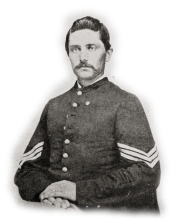
Wednesday, 4th–Very fine weather. No news of importance. The Government has issued to each man a good, double, woolen blanket, which we use for covers at night in our bunks of wheat straw. There are two men to each bunk, my bunk-mate being Thomas Fossett. He is a good, conscientious fellow.
William Howard Russell’s Diary: Skirmishing.
September 4, 2021
September 4th.–I rode over to the Chain Bridge again with Captain Haworth this morning at seven o’clock, on the chance of there being a big fight, as the Americans say; but there was only some slight skirmishing going on; dropping shots now and then. Walker, excited by the reminiscences of Bull Run noises, performed most remarkable feats, one of the most frequent of which was turning right round when at full trot or canter and then kicking violently. He also galloped in a most lively way down a road which in winter is the bed of a torrent, and jumped along among the boulders and stones in an agile, cat-like manner, to the great delectation of my companion.
The morning was intensely hot, so I was by no means indisposed to get back to cover again. Nothing would persuade people there was not serious fighting somewhere or other. I went down to the Long Bridge, and was stopped by the sentry, so I produced General Scott’s pass, which I kept always as a dernier ressort, but the officer on duty here also refused it, as passes were suspended. I returned and referred the matter to Colonel Cullum, who consulted General Scott, and informed me that the pass must be considered as perfectly valid, not having been revoked by the General, who, as Lieutenant-General commanding the United States army, was senior to every other officer, and could only have his pass revoked by the President himself. [continue reading…]
Civil War Day-By-Day
September 4, 2021
September 4, 1861
- Excitement flared… on 4 September when Confederate Major General Leonidas Polk occupied strategic Columbus, Kentucky, fifty miles
downstream from Paducah on the Mississippi River.
“Death of Jeff Davis reported in the papers.”—Horatio Nelson Taft
September 3, 2021
TUESDAY 3
Bright day. Firing heard over the river nearly all day, supposed to be fighting going on. collisions betwen the pickets occur every day. A Battle cannot be far off. Death of Jeff Davis reported in the papers. Doct Barnes, Lieut Swan and Qr M Hamilton called upon us today. Tried my combined door fastener, it works to a charm. Called at Doct Smiths this morning, have spent the evening at home. Wife went to meeting.
______
The three diary manuscript volumes, Washington during the Civil War: The Diary of Horatio Nelson Taft, 1861-1865, are available online at The Library of Congress.
Diary of Rutherford B. Hayes
September 3, 2021
Tuesday, September 2 [3].–Twelve miles from Walkersville to Bulltown. Found McCook and had a good time with him.
Rebel War Clerk
September 3, 2021
SEPTEMBER 3d.—My article on the defenses of North Carolina seems to have silenced the censures of the cavilers.
…a fine view of the imperial yacht,—Woolsey family Letters; Mary Woolsey Howland to Abby and Sarah C. Woolsey writes during her visit to Astoria at this time.
September 3, 2021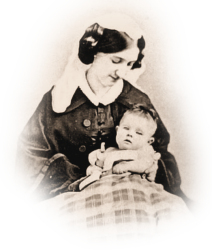
Mary Woolsey Howland:
Astoria, Sept., ‘61.
Dear Abby: Sarah and I have been all the morning arranging flowers. . . . Our roses are most luxuriant this year, and just now we have outside the front door two large orange trees from the greenhouse which are one mass of blossom and perfume the whole place. We have been quite on the qui vive yesterday and to-day at the expected arrival of the Great Eastern at Port Morris which is that cluster of buildings, you may remember, next to Casina dock, on the opposite side of the river. The vessel comes consigned to Howland & Aspinwall. The English agents sent them word at the last minute that she would come in by the Sound, so we have been constantly on the look-out. It would be very pleasant to have her lying in sight of the windows for some days. On Saturday we had a fine view of the imperial yacht which passed up the river with royalty on board, and looked beautifully with its gold prow and the gold line running round the sides. Sarah particularly enjoys the river, bathes every day in a highly ornamental costume brought for the purpose, and floats round on the surface like a cork. We have had some charming sails too, and indeed divide our time about equally between the water and the carriage, with occasional short digressions among the rose bushes. Tell Carry that Mr Stagg spent Saturday evening with us, and brought up the package of handkerchiefs which he promised her. They are a dozen of large, fine, colored-bordered ones, very much in the style of those I brought Ned from Paris, and such as I should not at all object to crib for private use. He must have intended them in case of a cold-in-the-head of the War Dept., they are on such a grand scale. However, I thanked him on behalf of the national nose, and will take charge of them for Carry.
 Sarah C. Woolsey:
“The children are my delight all day, especially Bertha, whose little flower of a face tempts me to continual kisses. Dear little puss, she grows sweeter every day. Una, too, develops continually powers and talents undreamed of. She has learned to say ‘R-r-ra,’ which means Hurrah! and she says it with great enthusiasm whenever a steamer passes full of troops and we all rush out to the bank to wave our handkerchiefs to them,–the children held up by Ann and Maria, and solemnly gesturing with their little hands, and May waving one flag and the gardener’s boy another. The group is so very patriotic that we are generally saluted by cheers from the boats.”
Unidentified Officer
September 3, 2021Civil War Era Photographic Portraiture No. 13

Title: [Unidentified Confederate(?) officer, full-length portrait, standing, with sword in right hand]
Date Created/Published: [between 1860 and 1870]
Medium: 1 photographic print on carte de visite mount : albumen.
Reproduction Number: LC-USZ62-119426 (b&w film copy neg.)
Rights Advisory: No known restrictions on publication.
Call Number: LOT 6592, no. 77 USE SURROGATE [P&P]
Repository: Library of Congress Prints and Photographs Division Washington, D.C. 20540 USA
Notes:
…..In album: [U.S. army officers and other persons of the Civil War period / John White Geary, comp. 1861-1865], no. 77, surrogate p. 20 (upper left).
…..Surrogate available as color laser copy in P&P Reading Room.
Library of Congress permalink
Mike’s notes:
Image restoration note – This image has been digitally adjusted for one or more of the following:
– fade correction,
– color, contrast, and/or saturation enhancement
– selected spot and/or scratch removal
– cropped for composition and/or to accentuate subject matter
– straighten image
Image restoration is the process of using digital restoration tools to create new digital versions of the images while also improving their quality and repairing damage.
Downing’s Civil War Diary.–The two companies could not agree on who should be captain.
September 3, 2021
Tuesday, 3d–A new company came into camp today which had only about half the necessary number, and so it was planned to have them join with us and form a full company, but the two companies could not agree on who should be captain.
William Howard Russell’s Diary: General Scott’s pass refused — Prospect of an attack on Washington
September 3, 2021
September 3rd.–Notwithstanding the extreme heat, I went out early this morning to the Chain Bridge, from which the reconnaissance hinted at last night would necessarily start. This bridge is about four and a half or five miles above Washington, and crosses the river at a picturesque spot almost deserving the name of a gorge, with high banks on both sides. It is a light aerial structure, and spans the river by broad arches, from which the view reminds one of Highland or Tyrolean scenery. The road from the city passes through a squalid settlement of European squatters, who in habitation, dress, appearance, and possibly civilisation, are quite as bad as any negroes on any Southern plantation I have visited. The camps of a division lie just beyond, and a gawky sentry from New England, with whom I had some conversation, amused me by saying that the Colonel “was a darned deal more affeerd of the Irish squatters taking off his poultry at night than he was of the Secessioners; anyways,, he puts out more sentries to guard them than he has to look after the others.”
From the Chain Bridge I went some distance towards Falls Church, until I was stopped by a picket, the officer of which refused to recognise General Scott’s pass. “I guess the General’s a dead man, sir.” “Is he not Commander-in-Chief of the United States army?” “Well, I believe that’s a fact, sir; but you had better argue that point with McClellan. He is our boy, and I do believe he’d like to let the London Times know how we Green Mountain boys can fight, if they don’t know already. But all passes are stopped anyhow, and I had to turn back a Congress-man this very morning, and lucky for him it was, because the Sechessers are just half a mile in front of us.” On my way back by the upper road I passed a farmer’s house, which was occupied by some Federal officers, and there, seated in the verandah, with his legs cocked over the railings, was Mr. Lincoln, in a felt hat, and a loose grey shooting coat and long vest, “letting off,” as the papers say, one of his jokes, to judge by his attitude and the laughter of the officers around him, utterly indifferent to the Confederate flag floating from Munson’s Hill.
Just before midnight a considerable movement of troops took place through the streets, and I was about starting off to ascertain the cause, when [continue reading…]
“I think McClellan is showing a tact and power of managing men which reminds me of Seward.”–Adams Family Letters; Charles Francis Adams, Jr., to His father
September 3, 2021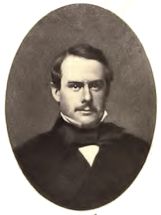
Boston, September 3, 1861
I Persuaded Hale to insert a leading article about Russell in the Advertiser, which I send to Henry. The folly of our press in assaulting so savagely an agency so formidable as Russell has troubled me, and I’m glad to see that McClellan is wiser and spares a few civil words where they can be so useful. In fact I think McClellan is showing a tact and power of managing men which reminds me of Seward. For already, even at this distance, I see that he has moulded Russell, Wilson and Sumner like wax in his fingers. This is very important and I expect before this reaches you McClellan’s finger will have been seen and wondered at in the columns of the Times. . . .
Civil War Day-By-Day
September 3, 2021
September 3, 1861
- In response to a federal build-up in the West, Leonidas Polk orders Gideon Pillow to lead a force into Kentucky to take Columbus, Kentucky, on September 3, 1861, violating Kentucky’s declared “neutrality” and provoking the State and the majority of its citizens to adhere to the Union.
- Bushwhackers from northwestern Missouri undermine the structure of a bridge on the Hannibal and St. Joseph Railroad. The train derails and falls into the Platte River east of St. Joseph, Missouri, killing as many as 20 passengers, including civilians, and results in the loss of Union-controlled freight and mail. The event temporarily shuts down the Hannibal and St. Joseph Railroad, which is the only east-west rail connection in the state.
A Chronological History of the Civil War in America1
- Massacre on Hannibal and St. Joseph Railroad; the rebels having burned the Platte Bridge, the train fell into the river—17 lives lost.
- A Chronological History of the Civil War in America by Richard Swainson Fisher, New York, Johnson and Ward, 1863
Mary Chesnut’s Diary.— “No discouragement now felt at the North. They take our forts and are satisfied for a while. Then the English are strictly neutral.”
September 2, 2021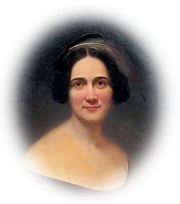
September 2d.–Mr. Miles says he is not going anywhere at all, not even home. He is to sit here permanently–chairman of a committee to overhaul camps, commissariats, etc., etc.
We exchanged our ideas of Mr. Mason, in which we agreed perfectly. In the first place, he has a noble presence–really a handsome man; is a manly old Virginian, straightforward, brave, truthful, clever, the very beau-ideal of an independent, high-spirited F. F. V. If the English value a genuine man they will have one here. In every particular he is the exact opposite of Talleyrand. He has some peculiarities. He had never an ache or a pain himself; his physique is perfect, and he loudly declares that he hates to see persons ill; seems to him an unpardonable weakness.
It began to grow late. Many people had come to say good-by to me. I had fever as usual to-day, but in the excitement of this crowd of friends the invalid forgot fever. Mr. Chesnut held up his watch to me warningly and intimated “it was late, indeed, for one who has to travel tomorrow.” So, as the Yankees say after every defeat, I “retired in good order.”
Not quite, for I forgot handkerchief and fan. Gonzales rushed after and met me at the foot of the stairs. In his foreign, pathetic, polite, high-bred way, he bowed low and said he had made an excuse for the fan, for he had a present to make me, and then, though “startled and amazed, I paused and on the stranger gazed.” Alas! I am a woman approaching forty, and the offering proved to be a bottle of cherry bounce. Nothing could have been more opportune, and with a little ice, etc., will help, I am sure, to save my life on that dreadful journey home.
No discouragement now felt at the North. They take our forts and are satisfied for a while. Then the English are strictly neutral. Like the woman who saw her husband fight the bear, “It was the first fight she ever saw when she did not care who whipped.”
Mr. Davis was very kind about it all. He told Mr. Chesnut to go home and have an eye to all the State defenses, etc., and that he would give him any position he asked for if he still wished to continue in the army. Now, this would be all that heart could wish, but Mr. Chesnut will never ask for anything. What will he ask for? That’s the rub. I am certain of very few things in life now, but this is one I am certain of: Mr. Chesnut will never ask mortal man for any promotion for himself or for one of his own family.