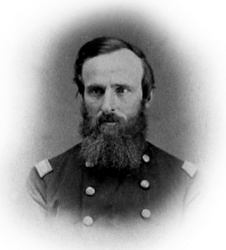
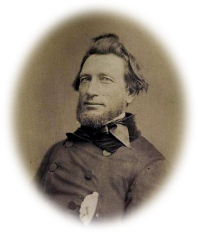
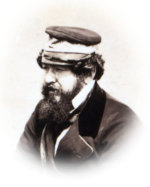
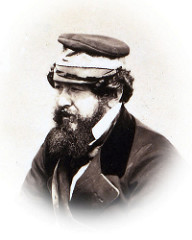
“Why should you in Europe have all the fighting to yourself?”—William Howard Russell’s Diary.

My Diary North and South – William Howard Russell

October 12th.–The good people of New York and of the other Northern cities, excited by the constant reports in the papers of magnificent reviews and unsurpassed military spectacles, begin to flock towards Washington in hundreds, where formerly they came in tens. The woman-kind are particularly anxious to feast their eyes on our glorious Union army. It is natural enough that Americans should feel pride and take pleasure in the spectacle; but the love of economy, the hatred of military despotism, and the frugal virtues of republican government, long since placed aside by the exigencies of the Administration, promise to vanish for ever.

The feeling is well expressed in the remark of a gentleman to whom I was lamenting the civil war: “Well, for my part, I am glad of it. Why should you in Europe have all the fighting to yourself? Why should we not have our Moody battles, and our big generals, and all the rest of it? This will stir up the spirits of our people, do us all a power of good, and end by proving to all of you in Europe, that we are just as good and first-rate in fighting as we are in ships, manufactures, and commerce.”

But the wealthy classes are beginning to feel rather anxious about the disposal of their money: they are paying a large insurance on the Union, and they do not see that anything has been done to stop the leak or to prevent it foundering. Mr. Duncan has arrived; to-day I drove with him to Alexandria, and I think he has been made happy by what he saw, and has no doubt “the Union is all right.” Nothing looks so irresistible as your bayonet till another is seen opposed to it.

0 comments

“The papers mentioned the capture of a vessel called “The Fanny,” on the coast of North Carolina, laden with blankets, greatcoats, arms and ammunition.”—Diary of a Southern Refugee, Judith White McGuire.

Diary of a Southern Refugee During the War by Judith White McGuire

12th.—M. P. and myself drove to Millwood for the mail, and then made an agreeable visit to Mr. and Mrs. J. We found several letters from family and friends; one from my sister, Mrs. C, who with her whole family (except her sons,) married daughters and single, are about to rent the Presbyterian Parsonage, in Hanover, and keep house. As they are all refugees, and have the means, it is a most pleasant idea. The Rev. Mr. H., who was the occupant of the house, has gone to the army as captain of a company which he raised for the purpose.

The papers mentioned the capture of a vessel called “The Fanny,” on the coast of North Carolina, laden with blankets, greatcoats, arms and ammunition. A most valuable prize.

0 comments

Civil War Day-By-Day

Civil War Day-by-Day

October 12, 1861

  • The Theodora leaves Charleston Harbor for Havana Cuba. On board are the Confederate States of America commissioners to England (James Mason) and France (John Slidell).

A Chronological History of the Civil War in America1

  • Attack by a rebel gun-boat fleet and five ships from New Orleans on the Union blockading squadron, at the head of the Mississippi passes. The rebel vessels were beaten off and their iron-clad “turtle” considerably damaged.
  • Rebels advanced in force toward Prospect Hill, but retired on finding Gen. McCall ready for battle.

  1. A Chronological History of the Civil War in America by Richard Swainson Fisher, New York, Johnson and Ward, 1863
0 comments

A new lieutenant—Rhode Island Light Artillery

Diary of Battery A, First Regiment, Rhode Island Light Artillery, by Theodore Reichardt

Friday, October 11.—A new lieutenant for our battery arrived to-day. Jeffrey Hassard, our First Lieutenant’s brother.

0 comments

Multi-state and multi-national.–Alexander G. Downing.

Diary of Alexander G. Downing; Company E, Eleventh Iowa Infantry

Friday, 11th–My company, E, has ninety-seven men. They are of several different nationalities, as follows: Three from Canada, four from Ireland, two from England, two from Germany, and one from France; the rest are American-born, as follows: Twenty-three from Ohio, twenty-one from Pennsylvania, sixteen from New York, eight from Indiana, six from Iowa, two each from Michigan and Vermont, and one each from Maryland and Maine. The average age is less than twenty years, and there are eight married men.

0 comments

“Troops are moveing about & ‘big things” are expected.—Horatio Nelson Taft

Diary of US patent clerk Horatio Nelson Taft.

FRIDAY 11

Succeeded today in seeing the Sec’y of the Treasury after geting a card from the Prests private Sec’y, Mr Hay. But the interview was of little account. I called upon Mrs Lincoln this evening with Julia and had quite a long conversation with her. She was quite indignant that I had not been restored to office. The Pensacola left the Navy Yard last evening and droped down to Alexandria where she now lies. Troops are moveing about & “big things” are expected.

______

The three diary manuscript volumes, Washington during the Civil War: The Diary of Horatio Nelson Taft, 1861-1865, are available online at The Library of   Congress.

0 comments

Rebel War Clerk

Civil War Day-by-Day

OCTOBER 11th.—And Wise has had bloody fighting with Rosecrans in Western Virginia. He can beat the enemy at fighting; but they beat him at manœuvring, with the use of the guides Gen. Winder has sent them from our prisons here.

0 comments

I could not bear the disgrace of leaving the army because I was not eighteen years old.

Civil War Day-by-Day

MANASSAS JUNCTION, October 11, 1861

Dear Mother:
I would have written as soon as I received your letter if the box had come with it, but as the captain could not bring them with him, he had to get them transported on freight, which did not arrive until yesterday. You never saw such a mess in your life, cakes molded, meat spoiled, etc. Everything was safe and sound in our box, which we rejoiced at very much, for we have not been faring the best for the last week or two. Tom Stith got a box which was full of cake and nearly every bit of it was spoiled.

I am thankful for the boots, which are a trifle too large but I reckon by the time that I put on two or three pairs of stockings, they will nearly fit me. We were all very glad to see the captain and we were also pleased to see the things he brought with him, which added so much to our comfort. Times are all very quiet about here. We hear firing on the Potomac nearly every day, though I heard some of the boys say that Mr. Christman was collecting goods to bring to the soldiers. If such be the case I wish you would send me an old quilt or something as somebody has stolen my shawl and I think I shall need one this winter, but you need not send anything unless some one can bring it, for it will cost too much to get anything here. We are all well and if we had been sick our boxes would have cured us. Concerning what Jeff Davis says, I don’t think I shall take any notice of it at all, for there are already too many healthy young men skulking around home and I could not bear the disgrace of leaving the army because I was not eighteen years old, but shall stay in the service until the war is over. I must close now, give my love to all and tell them to write.

Goodbye.

Your loving son,
GEORGE.


Letters from two brothers who served in the 4th North Carolina Infantry during the Civil War are available in a number of sources online.  Unfortunately, the brothers are misidentified in some places as Walter Lee and George Lee when their names were actually Walter Battle and George Battle. See The Battle Brothers for more information on the misidentification.

0 comments

Curtis to Lincoln about Fremont—The Letters of Samuel Ryan Curtis

The Letters of Samuel Ryan Curtis

Head-Quarters Camp of Instruction,
Benton Barracks, (near St. Louis, Mo.,)
Oct 11th 1861

Honored and dear Sir1

Your excellency’s letter2 the 7th Ins’t desiring me to express my views, in regard to Genl Fremont frankly and Confidentially to the Secretary of War ; was presented by him this morning, and I have complied with your Excellencys request.3

I have complained of assaults on the General, because I considered it our duty to sustain and correct errors which I supposed grew out of embarrassments in a new avocation to which he is called, and a consequent ignorance of details and laws relating to the service, and I still reproach some who were early associated in intimate terms with him.

But he has been surrounded with strangers, and adopted citizens, who do not know our language or laws, and for myself, although I tried to be agreeable, I have had very little opportunity to make suggestions to him. In the meantime things seemed at loose ends and utterly inconsistant with law and usage.

Since I was placed in Command here, I have become more acquainted with the erratic course and irregularity of his orders, and I am greatly obliged to your Excellencys letter which breaks the restraints of military etiquette & enables me to relieve myself of a painful silence.

In my judgement General Fremont lacks the intelligence the experiance the sagacity and regard for system and economy necessary to such a command as he now holds. I have arrived at this conclusion reluctantly and gradually. There is a kind of reserve which he maintains that evinces embarrassment or vanity which I never could overcome so as to fully ascertain his views. He would talk of plans, but when he attempted to explain them they were trifling movements of a General here or there “to drive away the enemy” with no relation to a general purpose, which I have finally believed he never conceived.

Forces are scattered and isolated without being [continue reading…]

0 comments

Fremont’s Hundred Days in Missouri.

The Atlantic Monthly

Camp Asboth, near Tipton, October 11th. For the last twenty-four hours it has rained violently, and the prairie upon which we are encamped is a sea of black mud. But the tents are tight, and inside we contrive to keep comparatively warm.

The camp is filled with speculations as to our future course. Shall we follow Price, who is crossing the Osage now, or are we to garrison the important positions upon this line and return to St. Louis and prepare for the expedition down the river? The General is silent, his reserve is never broken, and no one knows what his plans are, except those whose business it is to know. I will here record the plan of the campaign.

Our campaign has been in some measure decided by the movements of the Rebels. The sudden appearance of Price in the West, gathering to his standard many thousands of the disaffected, has made it necessary for the General to check his bold and successful progress. Carthage, Wilson’s Creek, and Lexington have given to Price a prestige which it is essential to destroy. The gun-boats cannot be finished for two months or more, and we cannot go down the Mississippi until the flotilla is ready; and from the character of the country upon each side of the river it will he difficult to operate there with a large body of men. In Southwestern Missouri we are sure of fine weather till the last of November, the prairies are high and dry, and there are no natural obstacles except such as it will excite the enthusiasm of the troops to overcome. Therefore the General has determined to pursue Price until he catches him. He can march faster than we can now, but we shall soon be able to move faster than it is possible for him to do. The Rebels have no base of operations from which to draw supplies; they depend entirely upon foraging; and for this reason Price has to make long halts wherever he finds mills, and grind the flour. He is so deficient in equipage, also, that it will be impossible for him to carry his troops over great distances. But we can safely calculate that Price and Rains will not leave the State; their followers are enlisted for six months, and are already becoming discontented at their continued retreat, and will not go with them beyond the borders. This is the uniform testimony of deserters and scouts. Price disposed of, either by a defeat or by the dispersal of his army, we are to proceed to Bird’s Point, or into Arkansas, according to circumstances. A blow at Little Rock seems now the wisest, as it is the boldest plan. We can reach that place by the middle of November; and if we obtain possession of it, the position of the enemy upon the Mississippi will be completely turned. The communications of Pillow, Hardee, and Thompson, who draw their supplies through Arkansas, will be cut off, they will be compelled to retreat, and our flotilla and the reinforcements can descend the river to assist in the operations against Memphis and the attack upon New Orleans.

This campaign may be difficult, the army will have to encounter hardships and perils, but, unless defeated in the field, the enterprise will be successful. No hardships or perils can daunt the spirit of the General, or arrest the march of the enthusiastic army his genius has created.

Our column is composed of five divisions, under Generals Hunter, Pope, Sigel, McKinstry, and Asboth, and numbers about thirty thousand men, including over five thousand cavalry and eighty-six pieces of artillery, a large proportion of which are rifled. The infantry is generally well, though not uniformly armed. But the cavalry is very badly armed. Colonel Carr’s regiment has no sabres, except for the commissioned and non-commissioned officers. The men carry Hall’s carbines and revolvers. Major Waring’s fine corps, the Fremont Hussars, is also deficient in sabres, and some of the companies are provided with lances,–formidable weapons in skilful hands, but only an embarrassment to our raw troops.

Lane and Sturgis are to come from Kansas and join us on the Osage, and Wyman is to bring his command from Rolla and meet us south of that river.

Paducah, Cairo, Bird’s Point, Cape Girardeau, and Ironton are well protected against attack, and the commanders at those posts are ordered to engage the enemy as soon as we catch Price; and if the Rebels retreat, they are to pursue them. Thus our expedition is part of a combined and extended movement, and, instead of having no purpose except the defeat of Price, we are on the road to New Orleans.

Next Monday we are to start. Asboth will go from here, Hunter by way of Versailles, McKinstry from Syracuse, Pope from his present position in the direction of Booneville, and Sigel from Sedalia. We are to cross the Osage at Warsaw; and as Sigel has the shortest distance to march, he is expected to reach that town first.

Precious time has already been lost because of a lack of transportation and supplies. Foraging parties have been scouring the country, and large numbers of wagons, horses, and mules have been brought in. This property is all appraised, and when taken from Union men it is paid for. In doubtful cases a certificate is given to the owner, which recites that he is to be paid in case he shall continue to be loyal to the Government. We thus obtain a hold upon these people which an oath of allegiance every day would not give us.


Fremont’s Hundred Days in Missouri was published in three installments in The Atlantic Monthly. The anonymous author appears to have been a member of Fremont’s staff with a disdainful bias towards Missourians, even those who were pro-Union.
0 comments

War Diary of Luman Harris Tenney.

War Diary of Luman Harris Tenney.

11th. Rainy and unpleasant in the morning. Cleared up rather cold in the afternoon. Fannie, Libbie, and Fannie Hudson came to camp. So surprised, but glad.

0 comments

Diary of Rutherford B. Hayes.

Diary and Letters of Rutherford Birchard Hayes

October 11, Camp Ewing. – Wet, cold. We hear of enemy back at Camp Lookout and rumors of, over New River. On this road are many deserted homes – great Virginia taverns wasted. The people are for the most part a helpless and harmless race. Some Massachusetts people have come in and made pleasant homes. We are on a turnpike leading up the Kanawha to White Sulphur Springs and so on to eastern Virginia.

0 comments

Extreme vandalism: “…the wanton destruction here beggars everything I have before witnessed.”–Journal of Surgeon Alfred L. Castleman.

Journal of Surgeon Alfred L Castleman.

11th.–Sent off ambulances to-day to commence bringing forward the sick of my regiment, and whilst they were gone, after having put my hospital in good order for their reception, I stepped over again to Commodore Jones’ house to see how the guards stationed there had succeeded in carrying out their orders. Till I entered the house, I thought I had seen evidences of extreme vandalism, but the wanton destruction here beggars everything I have before witnessed. Furniture broken; feather beds opened, and their contents emptied over house and yard; even those beautiful family pictures were ground to atoms and thrown to the winds. But I need not describe here, for the impression is deeply stamped in memory, more durable and more accurate than words and letters can ever make. Everything destructable was destroyed. [1]

In handling over the papers I picked up the Commodore’s “Journal of a cruise in the U. S. ship Relief–bearing the broad pennant of Commodore Jones–Thos. A. Downer, Esq., Commander,” which I have preserved, and also a letter from a son of Commodore Tatnall (late of the rebel Merrimac) to Commodore Jones, written from the Meditterranean, asking to be relieved from duty there, and to be permitted to return to America.[2]

As it will be a matter of interest to me, in future, to study my predictions as to the course and conduct of this war–to rejoice and be vain over those which prove correct, and to laugh at or be ashamed of those which prove false, I shall continue to record them as I have begun; and here I enter one in which I hope to take interest a long time hence. As I have constantly predicted, we have had no fight here nor shall we have; and I now very much doubt whether we shall have a fight even at Manassas, and for this reason: “After all the feints of the enemy here to draw Gen. Banks from Harper’s Ferry had failed, they, seeing that we have got foot-hold in North Carolina, will fall back on their fortifications at Centerville and Manassas, and then presenting a bold front with a small body, will cover the withdrawal of the larger part of their force, which they will distribute in Kentucky, Missouri, Tennessee and Western Virginia, and I very much doubt whether they will retain enough at Manassas to make a respectable fight. Kentucky and Tennessee are to become the theatre of war; and if I am not greatly mistaken, Kentucky will have trying times between this and the first of January. I hope that Gen. McClellan is taking the same view of things, and is preparing to meet it.” What I have here marked as a quotation is a copied from a letter this day written to a friend on the prospects of the war.


[1] It is worthy of remark here, that thus whilst this wanton destruction was going on, a half a mile away, everything on the place of Mr. Johnson, (a loyalist, whose house and garden were in the very midst of the encampments,) though unguarded was unmolested ; every article he had to dispose of was bought and paid for, at high prices, by the soldiers. Even thus early could we read the soldier’s aversion to guarding, or having guarded the property of rebels.

[2] This letter I handed to a lady connection of the Tatnall family, who was with me at the time, and she found means of restoring it to them.

0 comments

“I am more detested in New Orleans than I am in New York.”—William Howard Russell’s Diary.

My Diary North and South – William Howard Russell

October 11th.–Mr. Mure, who has arrived here in wretched health from New Orleans, after a protracted and very unpleasant journey through country swarming with troops mixed with guerillas, tells me that I am more detested in New Orleans than I am in New York. This is ever the fate of the neutral, if the belligerents can get him between them. The Girondins and men of the juste milieu are ever fated to be ground to powder. The charges against me were disposed of by Mr. Mure, who says that what I wrote of in New Orleans was true, and has shown it to be so in his correspondence with the Governor, but, over and beyond that, I am disliked, because I do not praise the peculiar institution. He amused me by adding that the mayor of Jackson, with whom I sojourned, had published “a card,” denying point blank that he had ever breathed a word to indicate that the good citizens around him were not famous for the love of law, order, and life, and a scrupulous regard to personal liberty. I can easily fancy Jackson is not a place where a mayor suspected by the citizens would be exempted from difficulties now and then; and if this disclaimer does my friend any good, he is very heartily welcome to it and more. I have received several letters lately from the parents of minors, asking me to assist them in getting back their sons, who have enlisted illegally in the Federal army. My writ does not run any further than a Federal judge’s.

0 comments

Diary of a Southern Refugee, Judith White McGuire.

Diary of a Southern Refugee During the War by Judith White McGuire

11th.—Every thing apparently quiet, and we, in the absence of bad news, are surrounded by a most peaceful and pleasant atmosphere. Our communication with the outer world cut off by the freshet in the Shenandoah, so that we had no mail yesterday. Mr. _____ has gone to Richmond on business. He wrote from Culpeper CourtHouse, at which place he stopped to see J., a most pleasing account of the hospitals, and the care taken of the sick.

0 comments

Civil War Day-By-Day

Civil War Day-by-Day

October 11, 1861

  • William S. Rosecrans assumes command of the Federal Department of Western Virginia.

A Chronological History of the Civil War in America1

  • Rebel steamer “Nashville” escaped from Charleston Harbor.
  • Missouri State Convention met.
  • Marshal Kane sent to Fort Lafayette.

  1. A Chronological History of the Civil War in America by Richard Swainson Fisher, New York, Johnson and Ward, 1863
0 comments

“Our troops are makeing advances frequently on the other side but I think that no important battle will take place very soon.”—Horatio Nelson Taft

Diary of US patent clerk Horatio Nelson Taft.

THURSDAY, OCTOBER 10, 1861.

This has been a wet dreary day but the streets have been quite lively and the Ave crowded as usual. I saw a large body of cavalry moveing over the River from this side this morning. Our troops are makeing advances frequently on the other side but I think that no important battle will take place very soon. I looked at gas-fixtures on the Ave with a view of purchaseing some. Spent part of the day fixing up matters about the House. Willie has been quite smart all day spinning his top & whitling. He is sick nights.

______

The three diary manuscript volumes, Washington during the Civil War: The Diary of Horatio Nelson Taft, 1861-1865, are available online at The Library of   Congress.

0 comments

Rebel War Clerk

Civil War Day-by-Day

OCTOBER 10th.—A victory—but not in the East. I expect none here while there is such a stream of travel flowing Northward. It was in Missouri, at Lexington. Gen. Price has captured the town and made several thousand prisoners, whom he dismissed on parole.

0 comments

“War has come home to the Bradford neighborhood!”—Susan Bradford Eppes

Through Some Eventful Years by Susan Bradford Eppes
Susa Bradford Eppes

October 10th, 1861.—War has come home to the Bradford neighborhood! . . . Last night, October 9th, Captain Richard H. Bradford was shot in the breast and instantly killed, while leading his men in an attack on Santa Rosa Island. He was everybody’s darling. We were so proud of him, too. Father went to bear the sad news to Uncle Richard and Aunt Nancy. May God help them for this is hard to bear. Cousin Edward Bradford, his brother, is bringing his body home. The telegram said they would stop over a few hours in Madison and the casket would lie in state in the court house there, that Madison might do him honor. Then they will come on and he will be buried in God’s Acre at Pine Hill.

Mr. William Routh was killed also, he was engaged to be married to Cousin Sallie and she fainted dead away when she heard the terrible news. Oh! War is worse even than I thought.


Susan Bradford is 15 years old when this entry was made.

0 comments

John McCune to Curtis—The Letters of Samuel Ryan Curtis

The Letters of Samuel Ryan Curtis

[Copy]

St Louis Oct 10th/61

Brig Geni Saml. R. Curtis

Sir

Your[s] of the 9th in relation to Mr. Taylor,1 Mail Agt is recd. You say you are informed that I have reproached a Mail Agt for expressing Union Sentiments, and denouncing Secession; in this you are misinformed, the Captain of the boat informed me that he (Mail Agt) was neglectful of his business and would have his mail bags put off & recd by unauthorized Deck Hands or Watchmen, and at times would leave his room door unprotected, and instead of attending to his duties was annoying passengers by making speaches. I then said to Mr Taylor that I have been requested by the Asst Post Master General to see that the Mail Agts. discharged their duties & when they were remiss to report to him. You also wish to know whether I am going to conduct the boats in such a way as to foster sentiments of Secession or rebellion.

I would answer, that I have done all in my power to assist the Union cause, since the war commenced, but it has not been my habit to make much noise in any of my business relations, but feel safe in saying that I have done more than many others, similarly situated, and am still doing all in my power for the cause.

Hoping the above will be Satisfactory

I remain
Yours Respectfully
J. S. McCune
President


1. Hawkins Taylor, Keokuk, Iowa, who was nominated for the post by Curtis when the latter was in Congress, spring of 1861.

0 comments

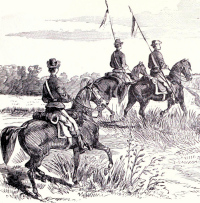
On the March

Frank Leslie’s Illustrated Newspaper
General Fremont's Army on its March from Tipton to Warsaw, over the Prairies to Haw Creek

General Fremont’s Army on its March from Tipton to Warsaw, over the Prairies to Haw Creek

from Frank Leslie’s Illustrated History of the Civil War…, edited by Louis Shepheard Moat, Published by Mrs. Frank Leslie, New York, 1895

0 comments

Diary of Rutherford B. Hayes.

Diary and Letters of Rutherford Birchard Hayes

October 10, Camp Ewing, seven miles above Gauley Bridge. – A pretty day in a pleasant camp, surrounded by mountain scenery. We had a false alarm in Camp Lookout; formed in line of battle. I was at the hospital but rode rapidly up and was on hand before the line was ready. Some men at hospital fled. Some were suddenly well and took [their] place in line of battle.

0 comments

Downing’s Civil War Diary.–Alexander G. Downing.

Diary of Alexander G. Downing; Company E, Eleventh Iowa Infantry

Thursday, 10th–The Thirteenth Iowa are building their new barracks just north of ours. The weather is getting quite cool, especially at night.

0 comments

“…much trouble and vexation to-day in establishing medical headquarters for the regiments of our brigade..,–Journal of Surgeon Alfred L. Castleman.

Journal of Surgeon Alfred L Castleman.

10th.–We have commenced moving our camp equipage from Camp Vanderwerken to this place, to be named Camp Griffin–I suppose for Capt. Griffin, of one of the batteries of the regular army. Capt. G., with his battery, has been one of us and with us since we crossed the Potomac. We have had much trouble and vexation to-day in establishing medical headquarters for the regiments of our brigade, but after much ordering of us and changing of orders, we are at last to take charge of the stone house of Mr. Jno. N. Johnson, in which, and in the tents we are able to pitch, we hope to make comfortable all the sick of our brigade.

0 comments

McClellan’s policy.—William Howard Russell’s Diary.

My Diary North and South – William Howard Russell

October 10th.–I got hold of McClellan’s report on the Crimean war, and made a few candid remarks on the performance, which does not evince any capacity beyond the reports of our itinerant artillery officers who are sent from Woolwich abroad for their country’s good. I like the man, but I do not think he is equal to his occasion or his place. There is one little piece of policy which shows he is looking ahead–either to gain the good will of the army, or for some larger object. All his present purpose is to make himself known to the men personally, to familiarize them with his appearance, to gain the acquaintance of the officers; and with this object he spends nearly every day in the camps riding out at nine o’clock, and not returning till long after nightfall, examining the various regiments as he goes along, and having incessant inspections and reviews. He is the first Republican general who could attempt to do all this without incurring censure and suspicion. Unfortunate McDowell could not inspect his small army without receiving a hint that he must not assume such airs, as they were more becoming a military despot than a simple lieutenant of the great democracy.

0 comments