AUGUST 17th.—We have also news from Missouri of indications of an uprising which will certainly clear the State of the few Federal troops remaining there. The draft will accelerate the movement. And then if we get Kentucky, as I think we must, we shall add a hundred thousand to our army!
American Civil War Chronicles
Journal of Surgeon Alfred L. Castleman.
August 17, 2022
17th.–Left Charles City at 5 1-2 o’clock this A. M. Beautiful day; clear, windy and cool, but terribly dusty. At 3 P. M., crossed the Chickahominy near the mouth, on a pontoon bridge.[1] * Pontoon bridges are a success. To-night we lie at the mouth of the Chickahominy, under protection of our gun boats. What a commercial world this State of Virginia should be. Its navigable waters are nearly equal to that of all the Free States combined; yet there are single cities in the North which have a larger commerce than the whole of the Slave States. Why is this? Has the peculiar institution any thing to do with it? If so, God, nature– everything speaks aloud against it as a curse. The ground which we now occupy is one of the most beautiful, as well as one of the most desirable sites for a city in America, high and dry, with an easy ascent from the water, presenting three fronts to the navigable rivers, with fine water views in all directions, as extensive as the range of vision, with business amounting to one house and a few cords of dry pine wood, which seems to be the article of export from this part of the State.
There is no longer a doubt that we are leaving the Peninsula. What now becomes of the statement that our retreat was only “a change of base?”
[1]A pontoon bridge is thus built: Narrow, flat-bottomed boats, about twenty-five feet long, are anchored in the stream. They lie side by side, from ten to fifteen feet apart, so as to make a row of boats from one bank to the other. From one to the other, clear across the stream are tied stringers, on which are laid down heavy planks, about sixteen feet long, which makes the bridge, and which is sufficient to bear up any number of teams which can be crowded on it.
Downing’s Civil War Diary.–Alexander G. Downing.
August 16, 2022
Saturday, 16th–Ten men from each company are detailed every morning to stand on picket, while the others patrol the railroad tracks. The first thing we do is to form a line of battle every morning at 4 o’clock.
War Diary of Luman Harris Tenney.
August 16, 2022
16th. Saturday. Kept up our march till morning at nine. Crossed the Osage. At nine A. M. stopped to feed and breakfast. Marched on through Johnstown. All the day the boys made for every melon patch, orchard or beehive to be seen. Had a good eat from melons and apples. Saw very few people. Encamped at sundown. For the first time had a night’s sleep. Very little water. Expected somewhat an attack before morning. Ordered to sleep on our arms. 1 slept soundly, as I usually do. Johnnie Devlin and I devoured a nice large watermelon. Enemy supposed to be six miles away.
Robert M. McGill
August 16, 2022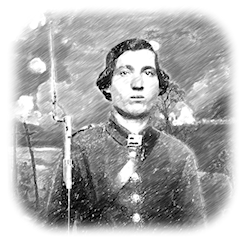
Saturday, 16th.—Received orders to cook four days’ rations. Started towards Cumberland Gap, 8 P. M. Marched six miles, and halted until daylight.
(Note: picture is of an unidentified Confederate soldier.)
Rebel War Clerk
August 16, 2022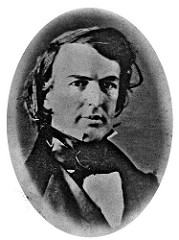
AUGUST 16th.—We have intelligence from the West of a simultaneous advance of several of our columns. This is the work of Lee. May God grant that our blows be speedy and effectual in hurling back the invader from our soil!
Journal of Surgeon Alfred L. Castleman.
August 16, 2022
16th.–Morning came, and found us still waiting orders, whilst immense trains of teams and masses of soldiery, sick and well, are pushing past us. Our division are again to bring up the rear, and receive the attack, if one is made. j This is said to be the post of honor; but we are beginning to feel that we may be ” honored over-much.”
At 5 P. M. came the expected and anxiously looked-for order, and we are on the road down James River. Not being a military man, I may be hypercritical, but it does seem to me that it should not require the forty-eight hours which we have taken for that purpose, to get out of camp with an army no larger than ours; or, that if so much time is required, the leaders should adopt some system in leaving, so as to call the divisions successively to get ready; not to call all at once, and wear out the rear guard with watching and with expectation, whilst the-advance is passing. Two days ago our division was ordered to be ready to march at an hour fixed, and to have two days’ rations to march on. The two days expired without further order to prepare rations, and the hour of starting found our rear guard, which is to stand the brunt of battle, worn out, and without rations to march on! “Shiftless.”
At 11 p. M. we reached Charles City, an extensive capital of of one of the oldest and richest counties in Virginia. This Charles City contains one dwelling house, with three or four , buildings for “negro quarters,” and a court house of about 20×35 feet, and one story high. In Virginia, they must have very little legal justice or very little need of it. From the direction of our march so far, I judge we go to Fort Monroe, and that we shall cross the Chickahominy at its main junction with the James.
Downing’s Civil War Diary.–Alexander G. Downing.
August 15, 2022
Friday, 15th–There was a very heavy rainstorm last night. We pitched our tents and built the bunks in them today, and are again quite well settled in camp. This is my birthday–twenty years old, and I have done a hard day’s work, setting up our tent and building bunks, after having been all night on picket. I have now served almost a year in the army and it has been an active year’s work, too.
War Diary of Luman Harris Tenney.
August 15, 2022
15th. Stopped a little while in the morning to feed the horses. Moved on and passed through “Ball Town.” Stopped to get some breakfast. Received a letter from home. The prairie took fire several times and kept the boys busy fighting it. Colonel, Capt. Smith, Majors Miner and Purington rested under a tent fly we pitched. Marched again at 3 P. M. Passed Pappinsville. All these places in Mo. are little stingy trading posts. Over prairies and through woods and ravines we went. Sometimes slow, sometimes fast. Tired of jolting. Made a bed of the blankets. 2nd Ohio mounted and in advance under Major Purington. Stopped about 2 A. M. and fed horses. Roasted corn.
Rebel War Clerk
August 15, 2022
AUGUST 15th.—Moved my office to an upper story of the Bank of Virginia, where the army intelligence office is located—an office that keeps a list of the sick and wounded.
“…we have lost 226 men, killed and died from their wounds, since the day before we went into the fight at ‘Seven Pines.'”
August 15, 2022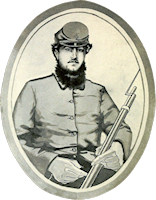
HEAD QUARTERS, ANDERSON BRIGADE,
August 15, 1862.
My Dear Mother:
As Mr. Parker will leave in the morning for home, I thought I would avail myself of the opportunity to let you hear from me. There is nothing new to write in the way of “War News.” You hear everything that we do, and that’s in the papers. Everything on our lines is quiet. We were put under marching orders a day or two ago, with the expectation of making another march to “Malvern Hill,” but the Yankees left and it saved us the trouble of running them away. Eight hundred of the Brigade are still working on the breastworks, some two miles below here. I am in hopes the Yankees will never get near enough to Richmond for us to have to fight behind them. The other regiment in the Brigade has received their conscripts, ours is the smallest one and we haven’t received a single one, and I hope we won’t.
General Anderson was making a calculation this morning and he says that we have lost 226 men, killed and died from their wounds, since the day before we went into the fight at “Seven Pines.” The Regiment is now under command of Pat Simms. All of our company are in very good health. I don’t believe that we have a single man on the sick list, and I believe it is owing in a great degree to the good water we get. It is the best we have had since we’ve been in Virginia. I am getting along very well indeed, enjoying excellent health, and have a very pleasant time.
We have very little writing to do, not half as much as we had at Manassas. General Anderson has no Adj. General yet. I would not be surprised if he was not waiting for Dunham to get well. I believe he likes Dunham better as an officer than any man in the Brigade. He has one of his brothers (Walker) as one of his Aides. I wish you would please look in my trunk and send me that brown veil that you will find. I want it to put over my face when I take a nap in the morning, to keep off the flies. You never saw any flies yet, you can measure them by the bushel here. The mosquitoes are terrible here, too. I shall put it over my face when I sleep out of doors, and that’s every night that it don’t rain. I’ve just learned from Mr. Parker that little Leon was dead. Poor little fellow, I never thought that when I left home it would be the last time I should see him.
Give my love to all the family, my respects to all my friends. Write soon, tell me all the news.
Your affectionate son,
WALTER.
P. S. Please send the veil by the first one coming to our camp. Give my respects to all the boys that you see.
Letters from two brothers who served in the 4th North Carolina Infantry during the Civil War are available in a number of sources online. Unfortunately, the brothers are misidentified in some places as Walter Lee and George Lee when their names were actually Walter Battle and George Battle. See The Battle Brothers for more information on the misidentification.
Journal of Surgeon Alfred L. Castleman.
August 15, 2022
15th.–Called up at 2 A. M., to be ready to move at daylight. Eight o’clock comes, but no order for us to march; 10, 12, 2, 4, 8, 10 o’clock at night, and still here. One day’s rations consumed, men wearied with watching and impatient expectation; no tents, no comforts, men dropped on the ground to rest, whilst other regiments, brigades, divisions, are marching by. Many fires kept brightly burning through the night, and many soldiers would not lie down, but kept watch, momentarily expecting a call to march. This excitement and waiting, I find, is more wearing to the soldier than active duty.
“…he must not think of returning to camp.”
August 15, 2022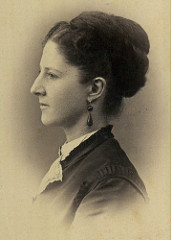
Eliza Woolsey Howland to her Mother.
Fishkill, Aug. 15.
Dear Mother: In answer to my letter Dr. Draper came up yesterday noon and stayed till this afternoon. . . . The visit was part professional and part for pleasure and was satisfactory in both ways. He finds Joe improving, though more slowly than he had hoped, but he says he must not think of returning to camp. That if fever got hold of him again he would stand very little chance of recovery. It would permanently break down his constitution, if it was not immediately fatal. . . . It is very disappointing. He hoped to gain fast enough to go back the end of this month, and is greatly depressed about it, for he has made up his mind that under the circumstances it is great injustice to the regiment and to Major Seaver to continue to hold his commission, getting the credit as it were, while the Major has all the care and responsibility. He wishes to do only what is most for the interests of the service.
Joseph Howland resigned from the service by the advice of Dr. W. H. Draper of New York, whose medical certificate stated that he was suffering from extreme nervous exhaustion and debility, and was unfit for duty. The resignation was received by his superior officers with expressions of great regret, and letters full of affection poured in upon him.
General Bartlett, commanding the brigade, writes:
Headquarters 2d Brigade.
Sept. 4th, 1862, “Camp Franklin,” VA.
Dear Howland: I received your papers just as we were embarking at Newport News, and you cannot imagine how badly I felt at the thought that perhaps we should never be associated together in the field again, and perhaps never again see each other. We all agreed that you ought not to come back, all seemed actuated by the same feeling of love for you and all expressed their sorrow that you would no longer be with us. . . .
The old 16th are still “A. No. 1.”
General Bartlett writes again:
Headquarters 2d Brigade,
Near Bakersville, Md.
Oct. 1st, .1862
My dear Howland: I enclose to you the acceptance of your resignation and honorable discharge from the service.
I had much rather it had been your appointment as brigadier, for I don’t believe the service can afford to lose many such officers, and yet I would rather see you recover your health and strength than to be made a major-general, myself.
“We are raking in about 100 bales of cotton per day and could get more if we had the transportation.”–Army Life of an Illinois Soldier, Charles Wright Wills.
August 14, 2022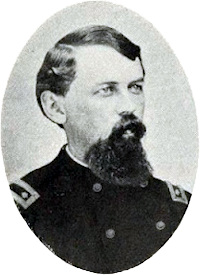
Tuscumbia, Ala., August 14, 1862.
Things are progressing here swimmingly. Seldom have more than two bridges burned in the same night, or lose more than five or six men in one day. Scared a little though, now. The 7th went down yesterday through Moulton, where they were encamped but a few days since, and gained us the information that they had evacuated that post. People here are considerably scared about the free and easy way we are gobbling up their little all. We are raking in about 100 bales of cotton per day and could get more if we had the transportation. It makes the chivalry howl, which is glorious music in our ears, and the idea of considering these confederacies something else than erring brothers is very refreshing. But I can’t talk the thing over with them with any pleasure, for they all pretend so much candor and honesty in their intentions, and declare so cheerfully, and (the women) prettily, that they will do nothing opposed to our interest, and express so much horror and detestation of guerrillas and marauders of all kinds, that one can’t wish to do them any harm or take and destroy their property. But the murders of Bob McCook, a dozen of men in this command, and hundreds in the army, all tend to disipate such soft sentiments, for we are satisfied that citizens do ten-elevenths of such work; and nothing less than the removal of every citizen beyond our lines, or to north of the Ohio river, will satisfy us. We are all rejoicing that “Abe” refuses to accept the negroes as soldiers. Aside from the immense disaffection it would create in our army, the South would arm and put in the field three negroes to our one. [continue reading…]
Downing’s Civil War Diary.–Alexander G. Downing.
August 14, 2022
Thursday, 14th–The Eleventh Iowa was ordered to move across the river, which we did this afternoon and went into camp on a low piece of ground. Our regiment is to guard the railroad track for four miles. We have to go on duty every other day and have to see that the rebels do not come and tear up the track.
War Diary of Luman Harris Tenney.
August 14, 2022
14th. Thursday. Put some stripes on my pants, and gave my poor wardrobe a good looking over and repairing. Should not like playing old bachelor for life–not any. Like company and society too well. In the afternoon orders came for the 2nd Ohio to be ready to march at 8 P. M. with 5 days’ rations. Under way at nine P. M. 1st Brigade and 6th and 9th Kansas marched from town at ten with the 2nd Ohio in the rear. The dismounted men and 9th Wisconsin rode in the wagons. Marched all night. I got Major’s permission and rode in baggage wagon. Most sick with the bloody flux. All were ignorant of our destination, but supposed and hoped to fight.
Rebel War Clerk
August 14, 2022
AUGUST 14th.—Lee has gone up the country to command in person. Now let Lincoln beware, for there is danger. A mighty army, such as Napoleon himself would have been proud to command, is approaching his capital. This is the triumph Lee has been providing for, while the nations of the earth are hesitating whether or not to recognize our independence.
Journal of Surgeon Alfred L. Castleman.
August 14, 2022
14th.–At 9 P. M., received orders to be ready to move at daylight to-morrow morning, with two days’ rations in haversacks. The crisis approaches, and whilst the men are cooking their rations, I note this, and then go to packing.
A Confederate Girl’s Diary
August 13, 2022
August 13th.
I am in despair. Miss Jones, who has just made her escape from town, brings a most dreadful account. She, with seventy-five others, took refuge at Dr. Enders’s, more than a mile and a half below town, at Hall’s. It was there we sent the two trunks containing father’s papers and our clothing and silver. Hearing that guerrillas had been there, the Yankees went down, shelled the house in the night, turning all those women and children out, who barely escaped with their clothing, and let the soldiers loose on it. They destroyed everything they could lay their hands on, if it could not be carried off; broke open armoirs, trunks, sacked the house, and left it one scene of devastation and ruin. They even stole Miss Jones’s braid! She got here with nothing but the clothes she wore.
This is a dreadful blow to me. Yesterday, I -thought myself beggared when I heard that our house was probably burnt, remembering all the clothing, books, furniture, etc., that it contained; but I consoled myself with the recollection of a large trunk packed in the most scientific style, containing quantities of nightgowns, skirts, chemises, dresses, cloaks, – in short, our very best, – which was in safety. Winter had no terrors when I thought of the nice warm clothes; I only wished I had a few of the organdie dresses I had packed up before wearing. And now? It is all gone, silver, father’s law papers, without which we are beggars, and clothing! Nothing left!
I could stand that. But as each little article of Harry’s came up before me (I had put many in the trunk), I lost heart. . . . They may clothe their negro women with my clothes, since they only steal for them; but to take things so sacred to me! O my God, teach me to forgive them! [continue reading…]
Downing’s Civil War Diary.–Alexander G. Downing.
August 13, 2022
Wednesday, 13th–The weather is very hot. I was on camp guard today when one of the guards suddenly became sick. I was number 24 in the first relief, and the man next to me, number 25, got sick. He called out to me, “Corporal the guard number 25.” It then became my duty to repeat the same call, “Corporal the guard number 25,” to the guard next to me, number 23, who made the same call to the guard next to him, and in this way the call went down the line to guard No. 1. Guard number 1 then sent the same call to the corporal of the guardhouse, who went out to guard number 25 to see what he wanted. When he was found to be sick another guard was brought out to relieve guard number 25.
War Diary of Luman Harris Tenney.
August 13, 2022
13th. Wednesday. Did very little in the morning. In the afternoon Lt. Carter was buried. Capt. Nettleton rode up to our tent and told me he would like to see me a minute. I went aside and he said he was going home. I asked him if he were going home for good. He said that was about the only way men could get out of the department at this time. Finally after deceiving me he told me he was going on regiment business. Wrote lines to Fannie and home.
Robert M. McGill
August 13, 2022
Wednesday, 13th.—Company F, on picket one mile west of Tazewell. Deer came running by our picket post. Went back to camp.
(Note: picture is of an unidentified Confederate soldier.)
Rebel War Clerk
August 13, 2022
AUGUST 13th.—McClellan is gone, bag and baggage, abandoning his “base;” to attain which, he said he had instituted his magnificent strategic movements, resulting in an unmolested retreat from the Peninsula and flight to Washington, for the defense of his own capital. So the truth they crushed to earth on the Chickahominy has risen again, and the Yankees, like the Cretans, are to be known henceforth as a nation of liars.
Scotland and Ireland furnished several good soldiers to that company.
August 13, 2022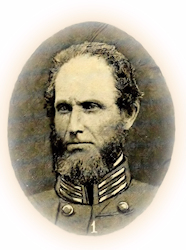
Aug. 13—Visit sick at Division and Winder Hospital. Lieutenants Davis, Jackson and Johnson, and privates Jackson, Jenkins, Hester and Merritt doing well. Marshall Teachy will hardly live. Lieutenant McLeod hardly can recover. Peter Stanley out of his head, imagines himself on Lockwood’s Folly. Says he has seen his wife and children! Perhaps he has. Prays right intelligently. Poor old Mr. Graham will hardly go in ranks again. My private roll says: Samuel W. Graham, born in Ireland was living in Chatham County, North Carolina, when he enlisted in Company “H” September 23, 1861, was forty-six years old and left two motherless children. He died next day. Scotland and Ireland furnished several good soldiers to that company. Dennis Carr and Andrew McFarland were born in Ireland. James Rogers, William McCulloch and A. D. McGill were born in Scotland. McCulloch was thirty-seven when he enlisted, and left two motherless children when he was lost, or reported “missing”; McGill was nineteen. He has lived to be a blessing to North Carolina. He has been heard in the halls of her Legislature. Graham seemed to know me the day before he died. Teachy called me “Brother Betts,” as usual though he had recognized no one for some days. Died August 14, 1862, leaving a wife and five children. After supper I call to see Revs. L. and B. Culbreth, A. Maxwell and D. Ray at Hotel. (Love and Blackman Culbreth were brothers, local preachers, raised in Sampson County, North Carolina. Blackman died early. Love, a sweet singer and a fine preacher, had given a son to the North Carolina Conference in 1859, and lived till 1896.) Return to Pa’s by moonlight, praying and meditating, and receive a blessing on my soul.
Journal of Surgeon Alfred L. Castleman.
August 13, 2022
13th. We are now all packed ready for a move, awaiting only the final order to march. Where or how we go, we do not yet know. We learn, however, beyond a doubt, that the regiments which disappeared so mysteriously a few nights since, embarked on transports under cover of the darkness, and have gone down the river. Their destination is not certainly known to us. From present appearances the plan seems to be, that the army, with the exception of Smith’s Division, or perhaps Franklin’s Corps, are to embark on transports, leaving us to escort and protect our immense transportation train overland to Fortress Monroe. Should this conjecture be true, we shall have a hazardous time, unless General Pope shall succeed in keeping the enemy so busily engaged as to relieve us. I have full confidence that he will exert himself to the utmost to relieve us in this manner.
Our leaders here are rapidly losing the confidence of the army and becoming objects of ridicule to the enemy. At White Oak Bridge, when we retreated, we left our pickets at their posts, without notifying them of our movements. They were of course taken prisoners. They have been paroled and are returning to camp. They say that immediately on being captured, they were being examined by a rebel Colonel, when Stonewall Jackson came up and upbraided the Colonel for spending time with the prisoners. “Let the prisoners go,” said he, and “press on after the enemy. So accustomed have they become to digging that if you give them twelve hours’ rest, they will dig themselves clear under ground.” Flattering, truly! I hope General McClellan will note it. But these things must not be talked about. Oh, no! We must see army after army sacrificed, the bones of hundreds of thousands of our bravest men bleaching on the plains, the nation draped in mourning, and not speak of it lest we shake confidence in our Generals, who through selfishness or incompetency, I will not yet say treason, are so frequently subjecting us to such contumely and sacrifices. History will make sad revelations of this war. I verily believe that, could its abuses be fully told, it would arouse the people to an enthusiasm which no acts of the enemy can excite. Under our present leaders, God knows what is to become of us. I have lost all confidence in them. In only four months from the time we landed on the Peninsula we had lost nearly two-thirds of the vast army brought with us, without one decisive battle! Since the 20th March we have landed here about 160,000 men. I doubt whether we could to-day bring 45,000 into action! At any time between October and June last, it has been in the power of this army to crush out this rebellion in a month; and yet the rebellion is more formidable to-day than at any previous time. Even now we are receiving reports of the discomfiture of Pope’s army, and, notwithstanding that its struggles are for our relief, it is unmistakeably evident that the report gives pleasure to the staffs of McClellan and Hancock. It may be so with other staffs; these are the only ones I have seen. Jealousy, jealousy–what will be the end of this? God preserve us.
Whilst I am noting down these abuses, a strange feeling possesses me; I lose all sense of my determination to abandon this rotten thing, and I resolve here to fight to the bitter end. Oh, if we had a Wellington, a Napoleon, a Scott, or even a Jackson, to do–something–anything, but dig and watch and –! falsely report!
Just as I close this journal of the day, a man rides up and tells me that General Pope has had a fight, and “holds his own.” I hope this is true, but I cannot forget that on the 26th of June, General McClellan made the army boisterously joyful by his assertion that McCall had thoroughly whipped Stonewall Jackson. On the next morning at daylight, it was claimed that McCall had only “held his own.” Two hours later we find that instead of even holding his own, he had retreated four miles, but it was only a “strategic movement,” and next day it became necessary for the whole army to–not retreat–but–”change its base.” All this it required to tell the simple truth that we were overpowered, whipped, and on the retreat. I hope it may not now be the beginning of a like history of General Pope’s movements.