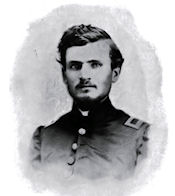
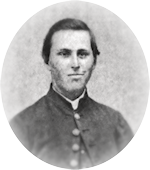
Diary of David L. Day.

David L Day – My diary of rambles with the 25th Mass

I Get On The Retired List.

August 20. Until recently I have been quite a popular commander of Sunday church parties. The boys would get up their parties and get me a pass to take them into town to church. I would take them in and, halting on some convenient corner, would deliver myself of a little speech. I would say, “Boys, I have always believed in the largest tolerance in matters of religion and politics, and as much as I should like to have you attend church with me, if you have any preferences you are at liberty to enjoy them; far be it from me to impose my authority on your feelings or conscience. I shall expect you on the corner at the appointed time that we may report back in camp in season for dress parade.” Now, if they couldn’t have had a tolerably good time under those conditions, it certainly was no fault of mine. But this, like every other good thing, could not always last. One Sunday afternoon, when we gathered on the corner, one of the party failed to put in an appearance. After waiting beyond a reasonable time, he was defaulted and we returned to camp. About night he came in, showing unmistakable signs of having been on the hardest kind of fatigue duty. Instead of going to his quarters as he was told to, he thought it was his duty to interview the captain. That interview resulted in a court martial, before which I was ordered to appear. I was asked numerous questions, all of which I answered to the best of my knowledge and belief, and my evidence not only convicted the prisoner but reflected somewhat on myself, for in summing it up, they somehow fixed it up in such a way as to make it appear that I was in the practice of taking parties into town on Sundays, ostensibly to church and then letting them go wherever they pleased, and inquired of me if that was not about the true solution of the problem. Wishing to avoid controversy, I assented. I was then told that I could retire from that august presence, a privilege of which I availed myself immediately, but what I noticed as being rather singular, after that little interview I was in command of no more Sunday parties.

0 comments

Robert M. McGill

Robert M. Magill – Personal Reminiscences of a Confederate Soldier Boy, 39th Georgia Regiment of Infantry

Wednesday, 20th.—Company F sent out as reserve pickets. Feds made as though they would charge our picket line with cavalry.


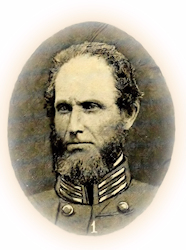
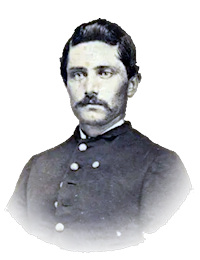
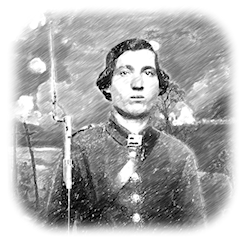
(Note: picture is of an unidentified Confederate soldier.)

0 comments

Rebel War Clerk

Civil War Day-by-Day
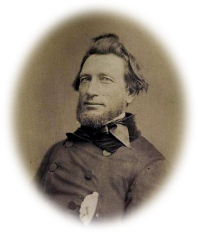
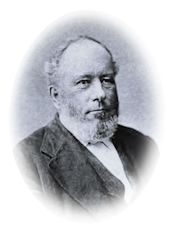
A likeness of Jones when he was editor and majority owner of the Daily Madisonian during President John Tyler’s administration.

AUGUST 20th.—We have now a solution of the secret of Pope’s familiarity with the country. His guide and pilot is the identical Robt. Stewart who was sent here to the Provost Marshal—a prisoner. How did he get out? They say money did it.

0 comments

August 14 to 20, 1862

Experience of a Confederate Chaplain—Rev. A. D. Betts, 30th N. C. Regiment

Aug. 14th—Go to Female Institute Hospital and find no entry of the name of my Brother Grier, who died there during my visit to North Carolina. Find his valise, etc. Will send his brother for it. Col. May, of Georgia, says Brother Grier died between midnight and day, July 26, no one knowing when he died. Holy angels knew.

Aug. 15—Ride to see Regimental Work Squad with Chaplains Long, Moore and Hill.

Aug. 16—Morning in camp. Supper in Richmond, and return and hear Brother J. G. Barkley preach. (This dear man raised his children in Nash county North Carolina, and lived to be very old. Died April 16, 1896. He said to me in his house in 1887 or 1888: “Brother Betts, the happiest day in my life was one day in 1840, when I saw my oldest daughter marry a young man and start to Africa!” Glory to God for such religion!)

Sunday, Aug. 17—Brother Barkley preaches in morning and I in evening. Receive marching orders.

Aug. 19—Rise at 4 with orders to march to Gordonsville. Leave some sick in camp. Others, not able to march, start and have to fall out. Division passes through Richmond. I stop and buy flannel and overtake regiment six and one-half miles out. Sleep on ground.

Aug. 20—Rise at 4 and march. Night at Taylorsville. At 10 at night brigade called to arms and marched off—weary, weary. I remain on the ground praying for our soldiers.

0 comments

Journal of Surgeon Alfred L. Castleman.

Journal of Surgeon Alfred L Castleman.

20th.–These men, who were yesterday worn out and abused, who needed all the rest they could get, were ordered up this morning at half-past 2, to march at 4, and then, after being formed into line, were kept waiting till 6. The Surgeons dare not say, “General, permit me to suggest that this is rapidly exhausting the nervous energies of the men, and that last night, we had to leave over sixty, overcome by the fatigue of the day.” It would have been deemed insolent and insubordinate in a Surgeon to have suggested that the two hours which the soldiers spent on their feet, waiting for their officers to get ready, might have been spent with great benefit to their health and energies, in bed, and the Surgeons must be dumb and the men sick.

We are to-day passing over some of the places of our former defeats–Big and Little Bethel, and the localities of some of our unsuccessful skirmishes.

0 comments

“choking with dust, parched with thirst, melting by day and freezing by night, poorly fed and with nothing but the sky to cover us.”

Woolsey family letters during the War for the Union

On the 14th of August–McClellan’s attempt to reach Richmond via the Chickahominy swamps having proved a disastrous failure–the transfer of the army to Washington began.

Lieutenant Robert Wilson of J. H.’s regiment wrote home at the time a letter which might easily have come from any regiment in the Army of the Potomac. “Six days’ march,” he says, “to Newport News, choking with dust, parched with thirst, melting by day and freezing by night, poorly fed and with nothing but the sky to cover us. You can judge of our exhausted condition when I tell you that six miles before we reached the camp at Newport News the 16th Regiment, N. Y. Vols., numbered only 184 men in the ranks, though men straggled in, so that there were 400 in the morning, and the 16th is no straggling regiment. Next day embarked on transports and arrived at Alexandria, sorrowful and humiliated when looking back over a year and finding ourselves on the same ground as then. The debris of the Grand Army had come back to its starting place with its ranks decimated, its men disspirited, its morale failing, while the thousands who sleep their last sleep on the Peninsula demand the cause of their sacrifice.”

0 comments

CSS Arkansas

Journal of Meta Morris Grimball
Meta Morris Grimball

19 August

       We have received a long letter from John giving an account of the 3 engagements in which he was in the Arkansas they were most brilliant and the vessel did wonderfully for the Machinery evidently was not of sufficient force to make the vessel effective. The Majestic way in which she moved was as fast as she could go. The end of this was naturally the destruction of the vessel. We are now most anxious to hear from John he sent us a drawing of the vessel and which he wishes photographed and we saw by the Papers that the last engagement of the poor Arkansas ended in her being blown up by her own crew they all escaped to the shore.—

       Mr & Mrs Vanderhorst are up here for change of air they remained a few days in the Village spent an evening with us, were at the Palmetoe house, and then to the Cherokee Springs. Arnoldus Vanderhorst has had a duel with Alfred Rhett, neither of them hurt, the bench of honor managing the affair.

0 comments

“Paine is going to clean out the country and make it Union if there is nothing but desert left.”–Army Life of an Illinois Soldier, Charles Wright Wills.

Civil War Day-by-Day
Note: This letter–a document written in 1862–includes terms and topics that may be offensive to many today.   No attempt will be made to censor or edit 19th century material to today’s standards.

Tuscumbia, Ala., August 19, 1862.

Tis the old, old, story, burning railroad bridges, skirmishing between our scouts and theirs, etc. They opened on a new program by firing into a train, two days since, wounding five men only, though they put 200 shots into the engine and cars. They are burning cotton in very good style. Night before last eight fires were visible from our headquarters, and last night four. They destroyed about $300,000 in the two nights. They’re getting scared about their negroes, and are carrying them off to the mountains as fast as possible. The blacks are scrambling in this direction to a very lively tune. Over 100 came in on one road within the last 24 hours. About 50 can be used in a regiment to advantage, but I am thoroughly opposed to receiving any more than we have work for within our lines. You have no idea what a miserable, horrible-looking, degraded set of brutes these plantation hands are. Contempt and disgust only half express one’s feelings toward any man that will prate about the civilizing and christianizing influence of slavery. The most savage, copper savage, cannot be below these field hands in any brute quality. Let them keep their negroes though, for we surely don’t want our Northern States degraded by them, and they can’t do the Southerners any good after we get them driven a few degrees further down. These nigs that come in now, say that their masters were going to put them in the Southern Army as soldiers. I’m sure the Southerners are too smart for that, for a million of them aren’t worth 100 whites. General Paine is gobbling up these secesh here and starting them North kiting. How they are shaking in their boots. Paine is going to clean out the country and make it Union if there is nothing but desert left. There are a number of very fine people here, such men as Jacob H. Bass, highly honorable, conscientious, etc., but strong believers in State sovereignty, and because their State has seceded, they are secessionists, and for no other reason. Paine is going to make them walk the plank with the rest. It looks a little hard to me, as they are willing to be paroled, but I’ll never say stop when anybody is pounding the secesh.

0 comments

0

Civil War Day-by-Day

We sailed August 13th from New Orleans, and reached Forts Jackson and St. Philip, where we remained over night, and received a salute for the Admiral. We got under way on the following morning, and proceeded to Pilot Town. We found several fine U. S. ships here, among them the U. S. ship Pampero, with which we slightly collided, doing little damage. We here took in our spare spars and rigging, which we had stripped off on entering the river, and also removed the chain cable from our ship’s side.

On the 16th we left for Ship Island, getting aground on the bar as we went out, and arrived off Ship Island on the same evening. We went into port on the following morning, and found lying here the U. S. frigate Potomac, and U. S. sloop-of-war Richmond. The Rhode Island arrived on the 19th, and we left the same day for Pensacola, via Mobile Bay. On arriving off Mobile we found on the blockade the U. S. frigate Susquehanna, with several gunboats. We received and returned a salute from the Susquehanna, and passed on to Pensacola. We arrived off the place in the evening, and went into the harbor on the following morning, and moored the ship off the Navy Yard.


0 comments

A Confederate Girl’s Diary

Civil War Day-by-Day

August 19th.

Yesterday, two Colonels, Shields and Breaux, both of whom distinguished themselves in the battle of Baton Rouge, dined here. Their personal appearance was by no means calculated to fill me with awe, or even to give one an idea of their rank; for their dress consisted of merely cottonade pants, flannel shirts, and extremely short jackets (which, however, is rapidly becoming the uniform of the Confederate States).

– – – – – – – – – – –

Just three lines back, three soldiers came in to ask for molasses. I was alone downstairs, and the nervous trepidation with which I received the dirty, coarsely clad strangers, who, however, looked as though they might be gentlemen, has raised a laugh against me from the others who looked down from a place of safety. I don’t know what I did that was out of the way. I felt odd receiving them as though it was my home, and having to answer their questions about buying, by means of acting as telegraph between them and Mrs. Carter. I confess to that. But I know I talked reasonably about the other subjects. Playing hostess in a strange house! Of course, it was uncomfortable! and to add to my embarrassment, the handsomest one offered to pay for the milk he had just drunk! Fancy my feelings, as I hastened to assure him that General Carter never received money for such things, and from a soldier, besides, it was not to be thought of! He turned to the other, saying, “In Mississippi we don’t meet with such people! Miss, they don’t hesitate to charge four bits a canteen for milk. They take all they can. They are not like you Louisianians.” I was surprised to hear him say it of his own State, but told him we thought here we could not do enough for them.

0 comments

Downing’s Civil War Diary.–Alexander G. Downing.

Diary of Alexander G. Downing; Company E, Eleventh Iowa Infantry

Tuesday, 19th–We received orders that two companies are to go out every three days about four miles east of the camp, to guard the railroad at the deep cut. On the third day they are to be relieved by two other companies from the regiment. It is a dangerous place to be on picket.

0 comments

War Diary of Luman Harris Tenney.

War Diary of Luman Harris Tenney.

19th. Tuesday. Breakfasted at Johnstown. As usual boys went for chickens, corn and anything to eat. People have felt our march through their country. Report came that the enemy were at Osceola, 30 miles southeast. Continued our march Osceolaward. Stopped two or three miles from Johnstown and fed mules and ourselves–three hours. Moved on. Report came that Cloud’s advance was fighting with rear guard of the enemy. One man killed on the prairie, just buried. Changed our course towards Stubbleville. Reached that place in the morning, sunrise. In the afternoon my horse troubled me so getting away that I got on bareback. Got a saddle and rode all night. Very sleepy. Slept on my horse. Major Miner fell from his horse. Pat Collopy fell twice. It was almost impossible for the rear guard to get the sleeping ones awake and along.

0 comments

Rebel War Clerk

Civil War Day-by-Day
A likeness of Jones when he was editor and majority owner of the Daily Madisonian during President John Tyler’s administration.

AUGUST 19th.—Day and night our troops are marching; they are now beyond the right wing of Pope, and will soon be accumulated there in such numbers as to defy the combined forces of Pope, Burnside, and McClellan!

0 comments

Journal of Surgeon Alfred L. Castleman.

Journal of Surgeon Alfred L Castleman.

19th.–Moved at 7 this morning. Marched to-day over much of the same ground which we travelled over on our way to Richmond. But strange! There was scarcely a spot which I could recognize. Heretofore my memory of places has been almost wonderful. Why could I not now recognize? Has age impaired my memory, or was my mind at the time of passing so occupied with weightier matters that ordinary scenes and circumstances made no impression!

At 12 M. to-day we reached Yorktown. How wonderfully our minds deceive us in estimates of places and things associated with great events! Whoever heard of Yorktown, that city on the banks of the noble York River, on the sacred soil of the great State of Virginia? The famous city where Lord Cornwallis took his stand to crush out the American rebellion–the city in which was fought the last great battle for American independence–the mother of a nation, and which lives to have witnessed the growth of that nation through youth to maturity, from the feeble efforts of infancy to the power of a giant, and still lives to look on her offspring: sent by the convulsive struggles of its own strength, perhaps to final dissolution. I ask what mind can contemplate a city associated with all these events and recollections, without being possessed of ideas of its vastness and its splendor? But what the reality? Yorktown is a little dilapidated old village, which never contained a population of over 200 or 300, and at the commencement of this war not over 150. When I look on its insignificance, or rather on its significant littleness, I find it difficult not to detract from the ideas of greatness, associated with the great men who figured there. How wonderfully have the great advantages which nature has lavished on this State been prostituted to the one great idea of maintaining her peculiar institution, which she has nursed and defended against the approaches of the world, as she would protect and encourage the whims and weakness of a sickly girl.[1]

A circumstance occurred to-day so painful that I should like to forget it, yet so suggestive of the trials of this army and of the discouragements which has occasioned much of their indifference to events, that I feel it a duty to record it, that it may not be forgotten. On the late retreat from Richmond, most of the men found it necessary to throw away everything which impeded their progress, even their canteens. During our stay at Harrison’s Point they had not been fully replaced. This morning we started early. The day has been intensely hot, the dust almost insufferable. Gen. H–– was in command of his brigade. We had made a rapid march of about ten miles. The men were fatigued, foot-sore and thirsty. In many instances, two or three having to depend on one canteen, it was soon emptied, and when we stopped to rest after the ten mile march, we were in sight of a large spring of beautiful cold water. But the General ordered that not a man should leave the ranks to fill his canteen. It was hard to bear, but the men submitted in patience till they saw the soldiers from other brigades passing from the spring with their canteens filled. This was too much, and they commenced crying out “Water, water.” Immediately the General dashed amongst them, proclaiming “mutiny,” and demanding the offenders. Of course no one could tell who they were. He then turned upon the Regimental and Company officers, “damned them to hell,” and spent some time in consigning the soldiers to the same comfortable quarters. After he had got them all labeled for that kingdom, he told them that their officers were “not worth a G–d d–n,” and having exhausted his vocabulary of gentlemanly expletives, calculated to encourage subordination, he called the men into line and put them through the evolutions of a brigade drill for about half an hour, and thus were they rested to resume the march. These men–this remnant of a fine army, who had been dragged through the putrid swamps of the Chickahominy till they were more like ghosts than men, were thus rested, thus drilled, thus marched, thus abused. Surely the end is not yet.


[1] I think that all the towns on this noble river, from its source to its mouth, will not amount in the aggregate to a population of 2,000 souls! And the same may be said of the James River, from Richmond to its outlet; and yet these rivers pass through one of the finest agricultural regions in the world. There is not a spot of earth, the wheat from which can compete in market with that of the James River.
0 comments

0

Civil War Day-by-Day
Charles Lynch

August 18th. Monday. Regiment mustered into the United States service, William G. Ely, Colonel, having been promoted from Lieutenant-Colonel of the 6th Connecticut Regiment. A resident of Norwich. The remaining days in camp brought many visitors and peddlers. Those were sad and very exciting days while we were preparing for the life of a soldier. The weather hot and dry in camp.

0 comments

Downing’s Civil War Diary.–Alexander G. Downing.

Diary of Alexander G. Downing; Company E, Eleventh Iowa Infantry

Monday, 18th–We are having some very hot weather. Since coming to Bolivar, each man is permitted to cook his rations in his own way, and so every man has a frying pan of some sort, and a tin peach can in which to boil his coffee. One man in our company, “Long John,” as the boys have nicknamed him, is a great coffee drinker. He carries a two-quart peach can strapped to his haversack, and every day buys up one or two rations of coffee from the boys who do not use much.

0 comments

War Diary of Luman Harris Tenney.

War Diary of Luman Harris Tenney.

18th. Monday. After the moon rose, so that the teams could pick their way, we started on. Moved back on the same road we went up. Col. Cloud and Warren’s forces took another route and went faster than we. Passed through “Index” and “Rose Hill” and stopped after passing the big mill. Awful place for baggage to cross. Got a little supper. Hard bread and coffee, then moved on– the dismounted men and infantry on foot. The report came in that Cloud met the enemy at Johnstown–so Blunt hastened. Mules and horses tired out. As we marched boys would fall asleep, walk on and frequently tumble down. Major Burnett said he rode the whole length of train and every mule driver but two were asleep–most in their wagons. Train moved on well.

0 comments

Robert M. McGill

Robert M. Magill – Personal Reminiscences of a Confederate Soldier Boy, 39th Georgia Regiment of Infantry

Monday, 18th.—Took position in line of battle this A. M. Pickets skirmishing a little. Reported that General Ledbetter is on the other side of the mountain, and the Yanks are hemmed in.


(Note: picture is of an unidentified Confederate soldier.)

0 comments

Rebel War Clerk

Civil War Day-by-Day
A likeness of Jones when he was editor and majority owner of the Daily Madisonian during President John Tyler’s administration.

AUGUST 18th.—From Texas, West Louisiana, and Arkansas, we shall soon have tidings. The clans are gathering, and 20,000 more, half mounted on hardy horses, will soon be marching for the prairie country of the enemy. Glorious Lee! and glorious Jackson! They are destined to roll the dark clouds away from the horizon.

0 comments

Journal of Surgeon Alfred L. Castleman.

Journal of Surgeon Alfred L Castleman.

18th.–Left camp this morning at 6 o’clock, on the Williamsburg road, and at 12 to 1, passed in retreat over the scenes of our first hard fight, where my regiment, by its firm and unyielding bravery, won the promise that it “should have Williamsburg inscribed on its banner;” a promise richly merited but never fulfilled.

When passing through Williamsburg I, in company with Surgeon Frank H. Hamilton, stepped aside to take a stroll through the halls and rooms of old William and Mary, the oldest college, I believe, except Yale, on this continent. There still stood the students’ desks and seats, at which Virgil and Ovid and Horace had kindled whatever spark they possessed of poetic fire, and Livy had evoked many a curse at his dry detail. There were the black-boards on which the mysteries of Euclid were solved into the unwavering language of distance and of measure, and there was the old chapel, with the benches still in situ, from which for more than a century, hopeful youths had sat and listened to prayers for their usefulness and prosperity, whilst they laid plans of mischief against the supplicators for their good. But the places of the Professors were now filled with the inevitable Commissary and his aids, with their barrels and their boxes, whilst the benches of the students were crowded with clamors for their bacon, beef and beans. I mused for awhile over thoughts of the learned men who had passed forever from these ancient halls, and of the influences they have left behind them.

.

“Their heads may sodden in the sun,
Their limbs be strung to city gates and walls;
But still their spirits walk Abroad.”

.

They certainly do not walk here. The sight would be too painful for sensitive and sensible spirits to bear. But these thoughts were dissipated as I looked again on the places where for the first time any number of our regiment had met death on the battle field, and on which it won laurels which shall be green forever!

At 2 o’clock we encamped on the east bank of King’s Creek, a small stream about three miles from Williamsburg, on the banks of which repose the bodies of thousands of the Federal army–of those brave men, who, flushed with hope and patriotic enthusiasm, rushed boldly to the contest, and were permitted to be swept away by hundreds, unsupported by commanders, who, with their hosts unengaged, stood calmly watching the slaughter.

0 comments

0

Civil War Day-by-Day
Charles Lynch

August 17th. Sunday in camp. Most of the members of the regiment were allowed to leave camp and visit homes and the city. It would be our last Sunday in the state. I was detailed for guard duty and could not leave camp. Many visitors in camp during the day. I was on duty two hours and off four during the day and night.

0 comments

A Confederate Girl’s Diary

Civil War Day-by-Day

August 17th.

Another Sunday. Strange that the time, which should seem so endless, flies so rapidly! Miriam complains that Sunday comes every day; but though that seems a little too much, I insist that it comes twice a week. Let time fly, though; for each day brings us so much nearer our destiny, which I long to know.

Thursday, we heard from a lady just from town that our house was standing the day before, which somewhat consoled us for the loss of our silver and clothing; but yesterday came the tidings of new afflictions. I declare we have acted out the first chapter of Job, all except that verse about the death of his sons and daughters. God shield us from that! I do not mind the rest. “While he was yet speaking, another came in and said, ‘Thy brethren and kinsmen gathered together to wrest thine abode from the hand of the Philistines which pressed sore upon thee; when lo! the Philistines sallied forth with fire and sword, and laid thine habitation waste and desolate, and I only am escaped to tell thee.’” Yes! the Yankees, fearing the Confederates might slip in unseen, resolved to have full view of their movements, so put the torch to all eastward, from Colonel Matta’s to the Advocate. That would lay open a fine tract of country, alone; but unfortunately, it is said that once started, it was not so easy to control the flames, which spread considerably beyond their appointed limits. Some say it went as far as Florida Street; if so, we are lost, as that is a half-square below us. For several days the fire has been burning, but very little can be learned of the particulars. I am sorry for Colonel Matta. Such a fine brown stone front, the finest in town. Poor Minna! poverty will hardly agree with her. As for our home, I hope against hope. I will not believe it is burnt, until somebody declares having been present on that occasion. Yet so many frame houses on that square must have readily caught fire from the sparks.

Wicked as it may seem, I would rather have all I own burned, than in the possession of the negroes. Fancy my magenta organdie on a dark beauty! Bah! I think the sight would enrage me! Miss Jones’s trials are enough to drive her crazy. She had the pleasure of having four officers in her house, men who sported epaulets and red sashes, accompanied by a negro woman, at whose disposal all articles were placed. The worthy companion of these “gentlemen” walked around selecting things with the most natural airs and graces. “This,” she would say, “we must have. And some of these books, you know; and all the preserves, and these chairs and tables, and all the clothes, of course; and yes! the rest of these things.” So she would go on, the “gentlemen” assuring her she had only to choose what she wanted, and that they would have them removed immediately. Madame thought they really must have the wine, and those handsome cut-glass goblets. [continue reading…]

0 comments

Downing’s Civil War Diary.–Alexander G. Downing.

Diary of Alexander G. Downing; Company E, Eleventh Iowa Infantry

Sunday, 17th–Nothing of importance. We had company inspection early this morning. Because of the hot weather, all men not on duty stay close to their tents in the shade.

0 comments

War Diary of Luman Harris Tenney.

War Diary of Luman Harris Tenney.

17th. Sunday. Breakfasted and under way at 5 A. M. Passed through Rose Hill, a very pretty little town. Hugh Watson and I went ahead and got apples, watermelons, plums and wild grapes. Had a good time. Passed through “Index,” another little town. Major rode with us in the wagon all day, good time. Reached “Lone Jack,” where the enemy were, at sundown an hour before. A man came up and reported 1500 enemy in our rear. Major Purington with rear guard, watched them and kept near them. Fired a good deal and tried to detain them. Proved to be the enemy retreating the way we had come. Major sent word for reinforcements. Some went but did not follow fast enough till dark set in. Commenced to rain. Command moved. Baggage soon could not go, it was so dark. So the enemy escaped us, so slickly through the gap. General Salomon had advised and entreated Blunt to keep flankers and scouts out through the woods near “Lone Jack.” They had intelligence from Warren that they were surely there, and we were passing within a mile. The ground was favorable for their retreat from the town–unseen. They kept a large picket about town and thus fooled our men. Warren could not believe that they had gone. So they left us, as a mouse from a trap. All the officers were enraged and disgusted with Blunt’s mistake, still hoped to overtake them. I went out a mile and got an old mare to ride. The history of the fight of the day previous was as follows: The day before, Quantrell, with 1200 men burned Independence and then skedaddled; Capt. Burns from Kansas City, with two companies of cavalry, four of infantry and two pieces of artillery, followed; at night overtook them and shelled their camp. They ran. The next morning Quantrell met Coffee and turned back. Lay in the brush and waited for them, coming through a lane. When the Feds came along they rose up and poured volley after volley into them. They hurried back to the village and there fought desperately. Finally overpowered, spiked one of the guns, destroyed the ammunition and ran. Warren, who had followed Coffee from Butler, watched them here that and the next day, till we came up confident that they would stand a fight. About 60 killed and many wounded on each side. Rebels burned ten of our wounded men in a house used as a hospital.

0 comments

Robert M. McGill

Robert M. Magill – Personal Reminiscences of a Confederate Soldier Boy, 39th Georgia Regiment of Infantry

Sunday 17th.—At 9 A. M., we were in three miles of Cumberland Gap, when the Federals began shelling us; continued slowly throughout the day; one man slightly wounded; after dark fell back half mile.


(Note: picture is of an unidentified Confederate soldier.)

0 comments