A Rebel War Clerk’s Diary

Civil War Day-by-Day
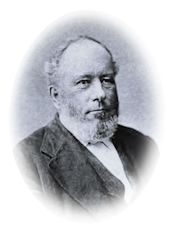
A likeness of Jones when he was editor and majority owner of the Daily Madisonian during President John Tyler’s administration.


MARCH 19th.—Snowing. It is estimated that we lost 250 men, killed, wounded, and taken, in the fight on the Rappahannock; the enemy’s loss is not known, but certainly was heavy, since they were defeated, and fled back, hotly pursued.

Confederate money still depreciates, in spite of the funding act. Some of the brokers are demanding ten dollars Confederate notes for one in gold! That is bad, and it may be worse.

The enemy are advancing from Corinth, and there are not sufficient troops to resist them. Gen. Johnston says if men are taken from Bragg, his army may be destroyed; and none can be ordered from Mobile, where there are only 2500 for land defense.

0 comments

“’Twas certainly censurable in our post commander’s sending so light a guard with so large a train..,”–Army Life of an Illinois Soldier, Charles Wright Wills.

Civil War Day-by-Day

Camp 103d Illinois Infantry, Lagrange, Tenn.,
March 19, 1863.

Nine whole days of the most beautiful sunshiny weather imaginable. Warm as our home June, almost. The boys bathe in the river that runs near our camp. The little birds warble in the trees, the beautiful young ladies walk out to enjoy the gentle spring breezes. Seldom now do we hear those gloomy omens of cold in the head, viz.: sneezes, and nature, grand old mother nature, almost in human tongue proclaims this balmy Southern spring atmosphere, a sure cure for the wheezes. Poetry, my dear, is the soul of—Sis, I’m getting under the influence of this weather, as happy as a clam, and as lazy as I can be, that is when I have nothing to do. I enjoy it intensely. Lieutenant Nick’s resignation has been accepted and he will be at home within a few days. I send this by him, probably. I came pretty near having a fight a few days since. I had 40 men out guarding a forage train of some 125 wagons. There was also about 50 cavalry. We stationed the cavalry as pickets while the teams were loading, and 50 guerrillas attacked and drove our cavalry in (only 20 of our boys). We got ready for a muss, but the other thirty of our horsemen charged secesh and scattered them, wounding several and capturing two. ‘Twas certainly censurable in our post commander’s sending so light a guard with so large a train, which was over a mile long. My men showed the right spirit. That is the nearest to a fight any of the 103d have yet been.

10 p.m.–I want you to be sure and get “Harpers Weekly” of March 14th, and read that army story about the officers captured by pretended guerrillas. It is all true and happened near Waterford, Miss., while we were there. I know the two women well. Don’t fail to get the paper or you’ll miss one of the best things of the war. I have just returned from a whist party. Colonel Wright, Dr. Morris and Dr. Shaw, of the 6th Iowa, and no liquor. I don’t drink any, and intend to continue my habits in that respect. Very few of our officers drink.

0 comments

—passed all of our Cavalry on retreat

Diaries and Letters of Belle Edmondson
March THURSDAY 19, 1863
 

Left Senatobia very late, having to wait for the Ambulance. Arrived at Hernando at 3 OC—passed all of our Cavalry on retreat, at Cold Water Ferry.1 Bivouaced for the night at MrChristophers ten miles from Hernando. Mrs B. and I have been quite buisy making preparations to enter the Federal lines to morrow.


  1. The area, from the Coldwater River to Nonconnah Creek, 3 miles from the Edmondson home, was a region where cavalry from both sides skirmishes nad raided.
0 comments

0

News of the Day

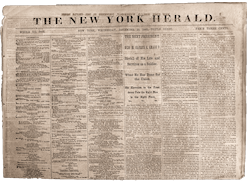
March 19, 1863, The New York Herald

FORTRESS MONROE, March 18, 1863.

The rebels made an attack on Newbern, N.C., last Friday, but were repulsed. This attack was, no doubt, made under the direction of the rebel General D. H. Hill, who has just been placed in command of the rebel troops in North Carolina. The Union troops are under the command of Major General Foster.

There was fighting on the Blackwater yesterday, but no particulars are received at this point.

DETAILS OF THE BATTLE ON THE BLACKWATER.

SUFFOLK, Va., March 17, 1863.

At one o’clock this morning two sections of Capt. Davis’ Seventh Massachusetts battery and the Eleventh Pennsylvania cavalry were despatched by Major General Peck, under command of Colonel Spear, to attack the enemy in his intrenchments on this side of the Blackwater, opposite Franklin.

We were to make the attack at daylight, but, owing to the bad condition of the roads, found it impossible to do so until nine A. M.. At this hour the attack was made in good earnest. Small arms, heavy guns and cavalry were used on both sides.

The fight lasted for nearly an hour, and was highly spirited in its character. Two separate cavalry charges were made on the fortifications. These were found to be literally lined with infantry, who poured a deadly fire into our ranks, wounding many in the first charge, which was made by Major Stratton. The major was wounded in the shoulder, also Lieut. [continue reading…]

0 comments

0

News of the Day

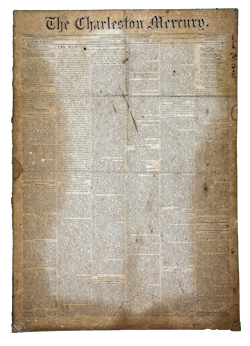
March 19, 1863, The Charleston Mercury

We are rejoiced to hear from all quarters of the wonderful healthfulness of our soldiers in the field. While the enemy is from time to time shipping from Stafford and Murfreesboro’ such large bodies of sick and demoralized troops as to induce the belief that he is changing his base, our men are enjoying a vigor unprecedented. This difference in the sanitary condition of the hostile armies is easily accounted for. The Yankees are unwilling warriors, and they sleep in tents. The hearts of our soldiers are in the contest, and having, fortunately, worn out all their tents, and being unable to procure new ones, they take their rest in the open air, with nothing above them but their blankets and the canopy of heaven, and in their universally robust condition is seen the wisdom of the words of the great NAPOLEON, that […..] destroyed armies, and not artillery.’

0 comments

0

News of the Day

March 19, 1863, The New York Herald

Attack on Port Hudson and the Reported Repulse of the Union Naval Force.

The following important telegraphic despatch was received last evening:–

FORTRESS MONROE, March 18, 1863.

The Richmond papers of the 17th say that on the 14th Admiral Farragut attacked Port Hudson and was repulsed. The Mississippi was burnt. Admiral Farragut went down the river in his flagship, which was disabled. The land force did not join in the attack.

Whether or not this news be true, of course remains to be proved by the arrival of the despatches from our forces at New Orleans and the Lower Mississippi.

There is, however a shadow of probability that a portion of the report may be true, so far as the attack upon the place is concerned. But there is also a fact that stands out clearly in the above despatch, and that is that the land forces were not engaged. It therefore shows that the movement was a mere reconnoissance to draw the fire of the rebels preparatory to a general attack; and even if it has cost us the loss of a vessel, as stated by the rebels, it may have also given us the desired information that will be the means of entirely subduing the rebel stronghold – for strong it certainly is both naturally and by the aid of art. The force at the place is also variously estimated between 10,000 and 70,000; but there is little doubt but that the rebels have at least from 15,000 to 20,000 men at Port Hudson, independent of the force they may have at Vicksburg, Natchez, Jackson and other intermediate places. From New Orleans we learn that the rebel cavalry but recently patroled and scoured the district in the vicinity of the Amite river, back of Port Hudson.

One of the facts that gives a degree of probability to the rebel despatch is, that General Banks left the city of New Orleans on the night of March 7, in company with his staff and General Grover, who had but recently left Baton Rouge for [continue reading…]

0 comments

0

News of the Day

March 19, 1863, The Charleston Mercury

The warm sunshine and the genial breezes of Spring have now released the mud-brown armies and the bloody work seems about to begin. From Tennessee we hear that the condition of the roads is the only consideration that postpones the conflict between the armies of BRAGG and ROSECRANS. A week of such weather as we now have will effectually remove the obstacle, and the doubtful struggle for Murfreesboro’ will be fought over again. The condition of our army at Tullahoma is said to be excellent. The Conscription Act has been rigidly enforced in that section of the country by General PILLOW, and its operation has increased the strength of the army to an extent which exceeds the hopes of the most sanguine advocates of the measure. So that, when we next encounter the army of ROSECRANS, it will be without the fearful disparity of numbers, under which our men have hitherto fought in that department. From the lines of the Rappahannock, the wires bring us the news of another fight. It is the old story of Southern troopers against the Yankees. But skirmishes like these must soon give place to more important conflicts. It is a time for every man to be at his post. The results of the fighting during the next ninety days will probably have an important influence upon the duration of the war. Let the skulkers everywhere be driven back to the ranks in time to take their proper places in the picture.

0 comments

0

News of the Day

March 19, 1863, The New York Herald

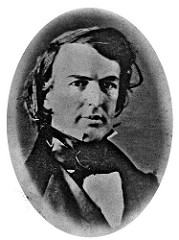
News of much importance, if it be true, reaches us from Fortress Monroe, based upon the statements of rebel newspapers at Richmond, to the effect that the fleet of Admiral Farragut has been repulsed by the rebels at Port Hudson, the frigate Mississippi burned and the flagship Hartford disabled. It would appear from the account of this affair, that our land forces were not engaged, and it may have been merely a naval reconnoissance, attended probably with some disaster, which has been considerably exaggerated at the rebel sources of information – the only ones from which we derive any intelligence so far. We give today a map of the locality and sketches of the vessels engaged.

Despatches from Cairo state that the report of the capture of Yazoo City is premature. the conviction, however, exists there that a decisive collision has occurred on the Yazoo.

A very spirited battle took place on the Blackwater on Tuesday morning. General Peck despatched the Eleventh Pennsylvania cavalry and two sections of the Seventh Massachusetts battery to attack the enemy’s intrenchments, commanded by General Jenkins, of South Carolina, opposite Franklin. The fight commenced at nine o’clock A.M., and was carried on briskly for an hour. Two separate cavalry charges were made on the fortifications. These were found to be literally lined with infantry, who poured a deadly fire into our ranks, wounding many in the first charge, which was made by Major Stratton, who was wounded in the shoulder. The second charge was conducted by Major Cornog, who led his men up to the fortifications to try and jump the ditch, but the move was soon found to be impracticable. The enemy opposed a heavy force of infantry and cavalry to the right and left of our position, in order to try and outflank our troops, but without success. The fight had not ended when our correspondent left the field. The enemy’s reinforcements were coming up to defend the pass.

The rebels have recently been considerably reinforced from Petersburg, and a battle had been expected in that quarter. They made an attack on Newbern, N.C., last Friday, but were repulsed. The attack was most likely directed by General D.H. Hill, who has just been placed in command of the rebel troops in North Carolina.

Some skirmishing is going on upon the Rappahannock. On Monday a rebel camp was discovered in the vicinity of Hartwood church, near Stafford Court House, and a force of cavalry and artillery was sent in that direction to reconnoitre. Heavy firing was heard in that direction on Tuesday, which would indicate that a fight was going on. A body of General Averill’s cavalry had a brush with the enemy near Kelley Ford, five miles above Falmouth, capturing twenty-five of them. A short distance from the shore General Averill’s command encountered the rebel cavalry under Stuart and Fitzhugh Lee, who had hastened from Culpepper to prevent our passage. They made some dashing charges upon our troops, who repulsed and in turn charged them with fatal effect, using sabres only in the conflict. The battle lasted five hours, and was a series of charges and hand to hand conflicts, resulting in the falling back of the enemy. The forces were about two thousand on each side.

By the arrival of the supply steamer Union, from Galveston and other points on the Gulf, we learn that the rebels have erected some formidable batteries at Galveston, which are mounted with the guns taken off the Harriet lane and Westfield. Three batteries are on the island on which the city is located, while Pelican island is fortified equally strong. Our fleet, which consists of four gunboats and the frigate Brooklyn approach to within a mile and a half of the town, where they anchor, and occasionally throw shells into the town and forts; but they cannot bring their broadsides to bear, and have to operate exclusively with their rifled pivot guns. On the 12th ult. the Brooklyn steamed up to easy range of Pelican Island, and threw a number of shells into the fort, shooting down the flagstaff, and on the 24th she sent a few shells into the town and fired the city in three different places, which was soon put out. The Brooklyn had to withdraw, however, as the forts began to send shot from their fifteen-inch rifles, one of which cut her rigging.

It has been ascertained from deserters from the rebels, who came off to our fleet from Mobile a few days since, that an attempt was made by Admiral Buchanan, with four steamers and a ram, about four weeks ago, to attack our vessels at midwatch, and was only prevented by one of his vessels running on a snag. The attempt, however, is to be made again, and we trust that, our fleet being now forwarned, will be ready for the emergency. Five rebel gunboats are being constructed at Selma, Ala., two of which are now on their way to Mobile.

The rebel privateers are still moving in the Gulf. Captain Ames, of the bark Mollie Metcalf, reports when at St. Thomas, that the bark Sarah A. Nichols, from Buenos Ayres for Cuba, was chased into port by the rebel privateer Florida. The authorities at St. Thomas detained the Florida twenty-four hours after the bark sailed.

The highly important intelligence of the capture of the City of Mexico by the French army is announced in the Richmond papers of the 17th instant, and probably reached Richmond on the 16th inst. by telegraph from Houston, Texas, by way of Port Hudson, on the Mississippi; having come to Houston across the Rio Grande by some of the trains that are now continually passing to and from Mexico across the Rio Grande.

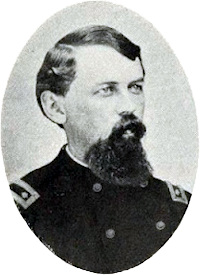
Mexico was splendidly defended, and unless the French reduced Puebla on their march to the capital – which they could hardly do without meeting a stubborn resistance – the capture of Mexico looks problematical. We give a fine map of the vicinity today.
0 comments

0

Cruise of the U.S. Flag-Ship Hartford -Wm. C. Holton

March 18th. This morning, at five o’clock, got under way, and proceeded on up the river, No act of violence occurred to our ship during last night while laying off Natchez. During the day the ship’s company have been engaged in making preparations to prevent the enemy’s steamers from coming alongside to board us, by securing chain cable out to the lower yard-arms; also preparing boarding nettings. At six P. M. came to anchor for the night, about seven miles below Grand Gulf.

0 comments

Downing’s Civil War Diary.–Alexander G. Downing.

Diary of Alexander G. Downing; Company E, Eleventh Iowa Infantry

Wednesday, 18th–We now have company drill four hours a day. The fatigue duty at this camp has not been very laborious, as the officers put negroes to work, very few of our men working any toward the last. The lake is still rising and already overflowing the bottom land at places. We are expecting to receive orders to leave soon. The weather is warm, the trees are all leafed out, and everything is growing fine.

0 comments

War Diary of Luman Harris Tenney.

War Diary of Luman Harris Tenney.

Wednesday, 18th. Day passed about as usual. In the morning answered Fannie’s letter. In the evening at class and at chess with Capt. and Case. Washerwoman was out. I pity the poor laborer for her daily bread and two poor little children. God help the poor in these times.

0 comments

Diary of David L. Day.

David L Day – My diary of rambles with the 25th Mass

We Leave for Plymouth.

Newbern, Wednesday, March 18. After months of idleness in camp, at last comes a change. At 4 o’clock p. m., orders came to break camp, pick up our traps and be ready to march in half an hour. Dark found seven companies of us on board the steamer Escort, bound for Plymouth. Companies A, E and II were left to follow on another boat. The night being dark and stormy we waited till morning before leaving.

0 comments

Diary of a Southern Refugee, Judith White McGuire.

Diary of a Southern Refugee During the War by Judith White McGuire

March 18th.—This evening, when leaving Richmond, we were most unexpectedly joined at the cars by our friend N. P. Dear child, we had not seen her since her father’s family left their home, some weeks before we left ours. Well do I remember the feeling of misery which I experienced at seeing them go off. We have all suffered since that time, but none of us can compare with them in that respect. They are living in desolated Fauquier. There they have buried their lovely little Kate, and N’s principal object in visiting this country now is to see the grave of her eldest brother, a victim of the war, and to see the lady at whose house he died, and who nursed him as though he had been her son. We enjoy her society exceedingly, and linger long over our reminiscences of the past, and of home scenes. Sadly enough do we talk, but there is a fascination about it which is irresistible. It seems marvellous that, in the chances and changes of war, so many of our “Seminary Hill” circle should be collected within the walls of this little cottage. Mrs. P. has once been, by permission of the military authorities, to visit her old home; she found it used as a bakery for the troops stationed around it. After passing through rooms which she scarcely recognized, and seeing furniture, once her own, broken and defaced, she found her way to her chamber. There was her wardrobe in its old place; she had left it packed with house-linen and other valuables, and advanced towards it, key in hand, for the purpose of removing some of its contents, when she was roughly told by a woman sitting in the room not to open that wardrobe, “there was nothing in it that belonged to her.” Oh, how my blood would have boiled, and how I should have opened it, unless put aside by force of arms, just to have peeped in to see if my own things were still there, and to take them if they were! But Mrs. P., more prudently, used a gentle remonstrance, and finding that nothing could be effected, and that rudeness would ensue, quietly left the room. We bide our time.

0 comments

A Rebel War Clerk’s Diary

Civil War Day-by-Day
A likeness of Jones when he was editor and majority owner of the Daily Madisonian during President John Tyler’s administration.

MARCH 18th.—I sent an extract from my Diary of yesterday to the Hon. T. H. Watts, Minister of Justice. I know not whether he will appreciate its importance; but he has professed friendship for me.

The city is in some excitement to-day, for early this morning we had intelligence of the crossing of the Rappahannock by a portion of the Federal army. During the day the division of Hood defiled through the streets, at a quick pace, marching back to Lee’s army. But the march of troops and the rumbling of artillery have ceased to be novel spectacles to our community. Some aged ladies ran out as they passed, calling the bronzed Texans their “children,” and distributed loaves of bread and other food among them. I never saw a merrier set than these brave soldiers, who have been through the “fire and the flood” numberless times. Some of them had three or four loaves on their bayonets.

Gen. Lee himself left early this morning, on an extra train, having been “caught napping” here, the first time. The enemy crossed the river yesterday.

But during the day a dispatch was received from Gen. J. E. B. Stuart (cavalry), stating that he had attacked the enemy on this side of the river, and beaten him back, forcing him to recross with loss. The particulars of the fight were not stated; but it is believed we lost a brigadier-general, killed.

0 comments

0

News of the Day

March 18, 1863, The New York Herald

The news from the Army of the Potomac reports the enemy to be massed upon the right; but that all is at present quiet along the river.

It is currently believed in Washington that, although official documents have not yet been published to confirm the statements already given to the public relative to the capture of Yazoo City, the statements are nevertheless true. The rebel sympathizers in the national capital are said to have conceded the fact.

The Americans in Chile, South America, have raised a fund which they have contributed towards the relief of the sick and wounded soldiers of the United States.

0 comments

0

News of the Day

March 18, 1863, The Charleston Mercury

The presses of the United States still rely upon the superior physical power of the North to subject the Southern States. In their view, our conquest is a simple affair of arithmetic. As eighteen is greater than eight, therefore eighteen millions of people must subdue eight. They ignore all moral influences. They ignore God. Material and sensual, they regard a struggle for liberty and independence as an affair of mechanics, in which a longer lever or a stronger pulley will lift the load. So corrupted are they by the prosperity which they wrung from the South, that they seem to have forgotten history – their own history, and the history of the people that are striving to subdue. FREDERICK the Great, with but five millions of inhabitants in Prussia, in a seven years’ war, beat back Austria, Russia and France combined – each of them being five times as great numerically as Prussia. In the Revolution of 1776 we were but two millions and a half of people, against the most powerful nation, by land and sea, at that time in Europe. Since this war began we have repulsed the Northern armies in every pitched battle, although they have had their own time for their preparations and superior numbers. Yet they still argue that, because they are numerically greater than we are, they must subdue us.

BONAPARTE very truly observed that the morale of an army is three-fourths of its strength. An army is not the mere bones, flesh and blood which compose it. It consists of men – with all the passions, feelings, and motives which actuate men. Men may enter an army simply to obtain bread, which is the case with one-half of the present army of the United States; and when brought into battle they will fight, perhaps, under circumstances, very bravely. Men may enter an army on a speculation of robbery. They want the country they invade either as a source of future gain or of present occupancy. A large portion of the United States army really believed, when they invaded the South, that they were only going down to select fat farms; another portion came to coerce us as their future tributaries. But there is one thing all robbers prefer to robbery – and that is life. In the game of robbery, there is a reasonable limit to all adventures. But what are these motives for conquering us, compared with those which must actuate the people of the Confederate States in defending themselves? The land invaded is their land. The property to be appropriated is their property. The homes [continue reading…]

0 comments

0

News of the Day
1860s newsprint

March 18, 1863, Dallas Herald

We learn that the Indians are committing depredations constantly on our North Western frontier, in some instances killing as they go. A good many families are moving in from the frontier counties. A letter to the editor from Weatherford says “The Indians are doing more murdering and stealing on the frontier at this time than they have done in twelve months.”

0 comments

0

Cruise of the U.S. Flag-Ship Hartford -Wm. C. Holton

March 17th. This morning at four o’clock we left our anchorage at the mouth of Red River, and proceeded up the Mississippi. We arrived off Natchez at six P. M. and brought ship to anchor. This is our fifth appearance at this place. As soon as we arrived our Admiral sent a boat on shore under a flag of truce, with a despatch to the Mayor, stating that if our ship was fired into during the night, that he would burn the city down. The citizens at this place are of the strongest kind of secesh. We have been able through their daily journals, to see the regard which they have for us; and we are well aware that if there were no restraint placed upon the people at this place, they would instantly resort to some means to destroy our vessels as they pass up and down, or at least would make some effort towards it.

0 comments

Downing’s Civil War Diary.–Alexander G. Downing.

Diary of Alexander G. Downing; Company E, Eleventh Iowa Infantry

Tuesday, 17th–The Third Brigade got orders to drill four hours today. Three transports went up the river today. The water in the lake is rapidly rising since the canal is cut through and our regimental camp along the edge of the lake will, in a few days, have to be moved to higher ground.

0 comments

A Confederate Girl’s Diary

Civil War Day-by-Day

March 17th.

On dit the Yankees have gone back to Baton Rouge, hearing we had sixty thousand men coming down after them. I believe I am positively disappointed! I did want to see them soundly thrashed! The light we thought was another burning house was that of the Mississippi. They say the shrieks of the men when our hot shells fell among them, and after they were left by their companions to burn, were perfectly appalling.

Another letter from Lilly has distressed me beyond measure. She says the one chicken and two dozen eggs Miriam and I succeeded in buying from the negroes by prayers and entreaties, saved them from actual hunger; and for two days they had been living on one egg apiece and some cornbread and syrup. Great heavens! has it come to this? Nothing to be bought in that abominable place for love or money. Where the next meal comes from, nobody knows.

0 comments

War Diary of Luman Harris Tenney.

War Diary of Luman Harris Tenney.

17th. Day passed very quietly, like others. Soon Camp Chase will be very pleasant, as soon as the sun comes out and dries up the mud. More orders to march, I believe. No arms yet. Some talk that we will be kept in the state to help enforce the coming draft. Boys would like to go at the “Crisis” again.

0 comments

0

News of the Day
A likeness of Jones when he was editor and majority owner of the Daily Madisonian during President John Tyler’s administration.

MARCH 17th.—On Saturday, the enemy’s lower Mississippi fleet attacked our batteries at Port Hudson. The result reported is that only one of their gunboats got past, and that in a damaged condition. The frigate Mississippi, one of the best war steamers of the United States, was burned, and the rest retired down the river, badly repulsed. We sustained no loss.

To-day, the Secretary of War sent in a paper indorsing Judge Meredith’s  opinion in regard to foreigners who have accepted service in our country,  viz., that they are liable to conscription. This is in the teeth of the decision of the Assistant Secretary, Judge Campbell, Col. Lay’s father-in-law, and upon which the bureau has been acting, although Gen. Rains, the  Superintendent, permitted it with reluctance, upon the assurance of Col. L.  that such was the will of the department. This business may produce an explosion.

I walked with Gen. Rains this afternoon in Capitol Square. He is annoyed at the action of Col. Lay in following the instructions of the Assistant Secretary of War in regard to foreigners. The decision had not the sanction of the  Secretary of War, Mr. Seddon. He thinks several thousand men may have been permitted to escape military service by it. He intended to lay Judge  Campbell’s decision before the President, but it disappeared very mysteriously from his desk. And to-day it reappeared just as mysteriously.  And, simultaneously, and quite as mysteriously, a paper appeared, signed by Mr. Seddon, Secretary of War, suggesting that the bureau act in conformity with Judge Meredith’s opinion, directly in the teeth of Mr.  Assistant Secretary Campbell’s decision! And it was dated March 13th, full four days before. What delayed it, and who brought it, no one seemed to know. Col. Lay suggested that it be sent back, with an indorsement that the  bureau had been already acting under the decision of Judge Campbell (just  the reverse of the opinion), Assistant Secretary of War, “by order of the  Secretary of War.”

To this Gen. R. demurred, and said the bureau would conform its action to  Mr. Seddon’s suggestions; and he charged a clerk to preserve that paper.  Col. L. grumbled awfully at Mr. Seddon’s off-hand decision, without mature reflection.

Gen. Stewart (of Maryland) was at the office a short time before, and advocated Mr. Seddon’s views; for he knew how many Marylanders would be embraced in the decision, as well as other foreigners.

Lieut.-Col. A. C. Jones, Assistant Adjutant-General, had, in the name of the bureau, notified Gen. Winder, this morning, that Marylanders, etc. were not liable to bear arms for the South after being in the service two years!

The general says he will have all the commandants of conscripts written to immediately; and that he will have an interview with the Secretary of War in relation to the matter.

Every man we can put in the field is demanded; and many fear we shall not have a sufficient number to oppose the overwhelming tide soon to be surging over the land. At such a crisis, and in consideration of all the circumstances attending this matter, involving the loss of so many men, one is naturally startled at Judge Campbell’s conduct.

0 comments

0

News of the Day

March 17, 1863, The Charleston Mercury

COMPLETE REPULSE OF THE ENEMY’S FLEET.

A YANKEE STEAM SLOOP-OF-WAR BURNED TO THE WATER’S EDGE.

PORT HUDSON, March 15 – 3 a.m. – The bombardment of this place began at 2 p.m., yesterday, and was continued for three hours. The enemy fired slowly, and our batteries did not reply.

At 12 o’clock last night a most desperate engagement took place. The enemy endeavored to pass our batteries under cover of the darkness. For two hours the firing was terrific.

One gunboat succeeded in passing the batteries, in a damaged condition.

The United States sloop-of-war Mississippi was set on fire and burned to the water’s edge, just in front of our batteries.

One large vessel was completely riddled. Another was badly crippled, and, with the rest, was driven back.

At 2 o’clock this morning the enemy withdrew.

Our victory is complete and glorious. So far as known, there are no casualties on our side.

Our cavalry has brought in thirty-six men and one midshipman of the destroyed steamer [continue reading…]

0 comments

0

News of the Day

March 17, 1863, The Charleston Mercury

While Mr. NILES has taken up the question of Navigation, we see that Mr. CLAY, of Alabama, has taken up that of Citizenship. The object of the one is to prevent the South being inundated after the war by a host of Yankee emigrants, possessed of the rights of citizenship, and exercising a baleful influence upon our institutions, domestic and political. The object of the other is to cut off the navigation privileges hitherto accorded to our Northern foes in the waters of the South, to compel all foreign nations trading with us to trade direct, and not through Yankees or British, and also to build up, as far as practicable, a shipping interest of our own. We regard both these subjects as of great importance to the future well-being of the Confederate States. We are pleased to see that there is a disposition to urge measures upon the consideration of the body. We trust the temporizing, dilatory disposition of Congress will give way to straightforward statesmanship, which has some view to the time which is coming. Action of this kind is absolutely necessary to our substantial independence and prosperity. It will exercise no influence upon the duration of the war. Our success in arms will best determine that question; and when the North is satisfied by experience, and has had enough of unsuccessful fighting, we will get our own terms. Until then, so far as their volition is concerned, we will get no peace. So, too, if the French Emperor is to end the struggle by raising the blockade, measures of the kind proposed by Messrs. MILES and CLAY to protect the South from Yankees would certainly not retard his operations in behalf of the laws of nations, justice, and the mutual interests of France and the Confederate States. On the contrary, they would indicate earnestness and sagacity in the secession of these States. We invite the Southern Press to the consideration of these great topics. Few subjects are more important in the settlement of our affairs.

0 comments

0

News of the Day

March 17, 1863, The New York Herald

There is stirring news from the Southwest today, and although it may appear somewhat indistinct and mysterious in the shape it reaches us, is evidently based upon substantial facts.

A despatch was received in Washington yesterday from Admiral Porter, dated before Vicksburg on the 7th inst., stating that he had received the signal agree upon between him and Commander Smith, of the Yazoo expedition, to be fired as soon as the latter officer entered the Yazoo river, which signal was to be nine minute guns, and three guns afterwards in quick succession. A despatch from Vicksburg to Cincinnati yesterday says that the Yazoo Pass expedition has captured twenty-six steamboats, eighteen of which were destroyed. The gunboats have arrived above Haines’ Bluff and would soon commence the attack. Rumors were rife of the evacuation of Vicksburg, and it was supposed that the greater part of the rebel force would go to Chattanooga and endeavor to overwhelm General Rosecrans. General McClernand’s troops were compelled to embark for Milliken’s Bend, sixteen miles above Vicksburg, owing to high water. Recent operations at Lake Providence and elsewhere resulted in inundating more than one hundred miles of Louisiana territory, destroying millions of dollars worth of property. The rebel guerillas suffered fearfully by the flood. In fact, they were completely driven out. The same intelligence was received at Chicago. It is said that the authorities in Washington are confident of the success of our military movements in the West, and are in high spirits over the late news. The success of the Yazoo expedition, and possibly the evacuation of Vicksburg, may therefore receive confirmation any moment.

We are in receipt of Richmond papers from the 9th to the 13th instant. The rapid decrease of food in the South is creating the utmost solicitude. A resolution was offered on the 11th instant in the Congress of the Confederacy by Mr. Conrad, proposing terms of peace, and was referred to the Committee on Foreign Affairs. In effect it provides that […..] Senate and House of Representatives of the Confederate States do therefore resolve that they will cordially co-operate with the Executive in any measures it may adopt, consistent with the honor, the dignity and independence of these States, tending [continue reading…]

0 comments