A Rebel War Clerk’s Diary

A Rebel War Clerk’s Diary at the Confederate States Capital, By John Beauchamp Jones
A likeness of Jones when he was editor and majority owner of the Daily Madisonian during President John Tyler’s administration.

JULY 12th.—Clear and warm—the earth refreshed.

Gen. Johnston telegraphs to Gen. Bragg to have the United States prisoners at Andersonville “distributed immediately.” He does not allege a reason for the necessity. It may be danger of an outbreak—or that the yellow fever has broken out among them.

I think Grant is about to have a race with Lee for Washington. The news from the Northern frontier is interesting.

A slight shower in the evening—heavy a few miles distant.

0 comments

0

Civil War Diary of Charles H. Lynch, 18th Conn. Vol’s.
Charles Lynch

July 12th. A fine morning. When relieved from duty went to the large spring for a bath. Called on Mrs. Shults, my wash-woman. A fine old German woman. Always did my washing and the mending of my clothes. Her old father lived with her. Owned a small home on the Winchester Pike, close to the town. They were pleased to see the Union soldiers in the town again. So far all things remain quiet. The enemy must be in this section.

0 comments

Our troops have fallen back to Okolona, the Yanks were in 15 miles of them today.

Diaries and Letters of Belle Edmondson

July, Tuesday 12, 1864

A cloudy, gloomy morning. Therese came over early after breakfast for us to go with her to the Depot, and assist in feeding the Soldiers, Hal and Tate would not go. I went, Mr. Pugh walked with me, I promised him if he would be a good boy, I would speak well of him, he is by far, one of the kindest young men I ever met. It repaid us for all of our labor and fatigue to see how the poor Soldiers enjoyed the food, they had nothing to eat since breakfast yesterday morning, their horses were broken down, they had to take the train here, did not get off until 4 o’clock this eve, will have to fight as Infantry. Our troops have fallen back to Okolona, the Yanks were in 15 miles of them today. Our troops are confident of success, God grant they may be Victorious. Hal & I spent the evening with Therese—the Dr. McKim came to see Mamie, she is quite sick.

0 comments

Diary of Horatio Nelson Taft.

Diary of US patent clerk Horatio Nelson Taft.

Washington July 12th 1864

Well, the day has passed away and no serious attack has been made upon the City. But there has been constant skirmishing along the line of work north of the City and today the rebels have cut and destroyed the Rail Road for some miles betwen here and Baltimore, Burning the Bridge at Laurel &c. It is said that they occupy Bladensburgh tonight. It is also reported that a rebel force has appeared on the Virginia side of the Potomac not many miles south of the City. I have heard considerable heavy firing this evening about sundown and for two hours from that direction. The reports might have been from from [sic] some of our Forts getting the range by practice. The Militia of the District has been called out and the Clerks in the Departments are prepareing for duty. We had reports of fighting today near Tennallytown, Fort Reno &c. I went up to Georgetown and took the Stage and went to Tennallytown (three miles from Georgetown) this afternoon. In the hope of seeing something of the fight, a Shell burst &c, but was not gratified because there was no fighting going on nearby, and consequently no Shells flying, and more than that I was not allowed to remain but a few minutes, all civilians being ordered presumptorily to leave forthwith. As I did not expect to stay any longer than the Stage did the order did not disappoint me much. To the East from a half a mile to two miles I could hear the constant report of musketry and see the puffs of smoke. I returned to G[eorge].town about 5 o’clock. After my return to this City I went on top of the Patent office with a good glass but could see nothing.

0 comments

Downing’s Civil War Diary.–Alexander G. Downing.

Diary of Alexander G. Downing; Company E, Eleventh Iowa Infantry

Tuesday, 12th–I was taken with the other sick and the wounded to Rome, to the field hospital of the Fifteenth, Sixteenth and Seventeenth Army Corps. We left Marietta at 10 a. m. and arrived at Rome at 6 p. m. No news.

0 comments

War Diary of Luman Harris Tenney.

War Diary of Luman Harris Tenney.

11th. Was busy in the morning. Went to Q. M.’s and C. S.’s. Thought some of going to see John, but gave up the idea. Wrote home. Thede wrote too. Read some in Atlantic. Played game of “Seven Up” with Lukins.

0 comments

0

Civil War Diary of Charles H. Lynch, 18th Conn. Vol’s.
Charles Lynch

July 11th. Called up early this morning. Orders to march. Left Back Creek. After a slow march of about seven miles we came to Martinsburg. We call this our home town, having served in this section of the Shenandoah Valley for two years. Marched through the town, meeting a few old friends. Camped on the south side, near the Winchester Pike. The enemy left town early this morning. Our knapsacks, with extra clothing, left here when we began our march up the valley in May, were taken by the rebs, so we lost our clothing that we expected to find here on our return. On picket. Strict orders for tonight, as the enemy is reported a short distance south. Keep a sharp lookout.

0 comments

First shell from Federal fort

Experience of a Confederate Chaplain—Rev. A. D. Betts, 30th N. C. Regiment

July 11—Pass R.1 and see Rev. Leach. Move on through excessive heat to the “Blair House2,” near fortifications around Washington City. First shell from Federal fort falls in a grove near us about 2 p. m.3


  1. Rockville
  2. Silver Springs area
  3. Battle of Fort Stevens
0 comments

0

Louise Wigfall Wright — A Southern Girl in ’61

(excerpts)

“MACON, July 11th, 1864.

        “. . . You see by the heading of my letter that already we have been forced to leave Atlanta—not that it has fallen, but Mrs. Johnston received a letter from the General in which he advised her to send us off at once—to remain until the fate of the city was decided either one way or the other. Col. Brewster and Brother (who came from camp near Atlanta for a conference) agreed with her in thinking it best for us to go as the machinery, government stores and wounded from the hospitals were being removed, and there was no telling how soon it might be exceedingly difficult if not impossible to get away. Mrs. Johnston will remain till the last moment practicable, and then, in case of a rush to the cars, she has her carriage in which she can come. The plan is now, if Atlanta falls, for her to come immediately to Macon, and try to get a house. Col. Ewell (of Gen. Johnston’s staff) is obliged to have an office in the rear of the Army, and this will be as convenient a place as he can procure. If she fails in getting the house or rooms here, she will try to be accommodated at some little village on the way between here and Atlanta; and I rather think she would prefer this arrangement as it would bring her nearer the army. If au contraire Atlanta should not fall, we will return to her as soon as that fact is decided; and the same will be done as soon as she gets settled in her new quarters, (wherever they may be) if obliged to move. In the meantime we are with Mrs. Clay.”

0 comments

A Rebel War Clerk’s Diary

A Rebel War Clerk’s Diary at the Confederate States Capital, By John Beauchamp Jones
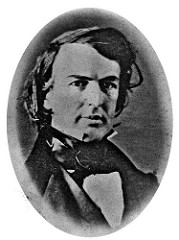
A likeness of Jones when he was editor and majority owner of the Daily Madisonian during President John Tyler’s administration.

JULY 11th.—Hot and dry, and the famine continues.

The Secretary of War intimated on Saturday that if the clerks of the bureaus would raise a fund and send an agent South to buy provisions, he would insure them transportation, etc. To-day he denies that he made the promise, and refuses to aid them.

The government now proposes to increase its schedule of prices from 300 to 500 per cent., thus depreciating its own credit. Before harvest the impressing agents allowed about $40 per barrel for flour; now, that we have a good harvest, about $130 will be paid, thus raising the price everywhere. Transportation is the expensive item.

A dispatch from Gen. Johnston, at Atlanta, says the enemy having flanked him with his cavalry, he has fallen back across the Chattahoochee.

Dispatches from Gen. S. D. Lee, Tupelo, state that a column of the enemy, 20,000 strong, is about marching from New Orleans against Mobile, and he fears he cannot spare men to resist them. The reserve class is not ready. Also that 15,000 of the enemy are marching from Lagrange, and he will have to dismount some of Forrest’s cavalry. Gen. E. K. Smith will not cross the Mississippi to assist in repelling the foe without orders. Orders have been sent from the Secretary of War—I fear too late!

Northern papers of the 8th inst. indicate a state of high excitement. Some there believe we have an army of 60,000 pouring into Pennsylvania. Gold was $2.65 for one.

There is some commotion in Grant’s army, and it is believed by some that he is about to retire down the river.

It is rumored that the prisoners heretofore confined at Point Lookout have been removed by the Federal Government.

At 7 P.M. we had a gentle shower, lasting more than an hour.
0 comments

Diary of Horatio Nelson Taft.

Diary of US patent clerk Horatio Nelson Taft.

Washington July 11th 1864. Monday.

Yesterday we thought the rebels were at or near Baltimore, today we find them in large force within from four to six miles of this City. Considerable skirmishing has been going on just outside of the line of Fortifications north of the City. But as yet there has been no general engagement. It is expected that there will be an attack upon the City tomorrow. It seems that they abandoned the idea of taking Baltimore and have turned their attention to Washington. But I think they have waited too long and have allowed troops to concentrate here in sufficient numbers within the past three or four days to defeat them in any attempt to take the City. It was reported in the papers this morning that my nephew Lieut Col E P Taft was killed on Saturday in the Battle at Monocacy Junction near Frederick, M.D. I wrote his Father today, should have sent a Telegraphic dispatch, but the wires were out. The Rail Road is also out betwen Baltimore and Phila so that a letter may be a long time reaching any point far north. I went to the State Department at once after seeing the report to see Mr Seward knowing that his son went to Baltimore yesterday with the intention of reaching his Brother Col Seward, who was reported wounded in the same Battle. But the son could not get beyond Baltimore and Mr S. could give me no further information in reference to the report of the Death of Col E. P. but thought the report was true. It will be sad intelligence to his family and friends in Lyons. He leaves an amiable wife and three small children. May God “Temper the wind to the shorn lambs” in this sad case. Capt Lyman Rogers died last evening at the Armory Square Hospital. I am soon going to bed but rather expect to be disturbed by the report of Cannon before my usual hour for rising – 6 o’clock. If the rebels make an attack on the Forts at all, I think that it will be by tomorrow morning. It is said today that they are Forty thousand strong now in Maryland and threatening the City. Should they make an attack it will be a bloody fight. If they do not attack tomorrow I think it will be because their object is not so much Washington or Baltimore as to obtain Horses, Cattle, and provisions and then they will attempt to slide off over the Potomac into Virginia and escape. We shall know soon. Should they succeed in taking any of the Forts we may be treated to a few Shells from our own Cannon. The City has been in great excitement all day. I have worked in my office as usual. I never saw such a crowd of people on P.a. Ave as on this afternoon. Excited crowds were listening to some new comer from the northern Forts, or surrounding a soldier or swallowing the most absurd stories from some sober faced wag. Troops were marching up from the River and hurrying through the City to the Forts north. The whole of the 6th Corps have come up now from the Army of the Potomac and many other troops have arrived. Mr Lincoln and Sec’y Stanton passed in a carriage thinking (perhaps) that it was necessary to show the people that they were not frightened. I mentaly wondered why or how a rebel Army of Thirty or forty thousand could leave Richmond, and get across the Potomac, and be almost knocking at the gates of the City and they know nothing about it, or at least think it only a “raid” of a few hundred Troopers!!

0 comments

War Diary of Luman Harris Tenney.

War Diary of Luman Harris Tenney.

10th. Took the inspected horses to Quartermaster Stone and turned them in–79 to be receipted for by Lt. Spangler. Had a good bath. Read several articles in the Atlantic. My eyes are occasioning me considerable trouble. Have thought of home a good deal today. Many of the officers are thinking of going home when their three years’ term expires. Of course it would be pleasant to go home as soon as possible, but many officers promised their men that they would remain with them. I don’t know what I shall do. I could not go to Oberlin to stay and I have no desire to go elsewhere and I think for the present every man able should bear arms.

0 comments

Village Life in America

Village Life in America, 1852 – 1872, by Caroline Cowles Richards

July 10.–We have had word of the death of Spencer F. Lincoln. One more brave soldier sacrificed.

0 comments

Diary of David L. Day.

David L Day – My diary of rambles with the 25th Mass

18th Corps Hospital, Point or Rocks, Sunday, July 10, 1864. I have been here a little more than a week and begin to feel a little rested. I have not written a letter for more than a month and about everything has been neglected. I hung around the regiment as long as Ass’t Surgeon Hoyt would allow me to, and the first of the month he piled me into an ambulance and sent me here, saying 1 could have a much better celebration here than I could in the trenches. This was my first ride in an ambulance and I didn’t enjoy it worth a cent. I have always had a strong aversion to that kind of conveyance and have always clung to the hope that I might be spared from it. My health began to fail early in the spring. I said nothing about it, thinking I should improve as the weather grew warmer, but instead of improving I grew worse, until now I am unfit for anything. At first I was terribly afflicted with piles, then chills and fever, and now I have a confirmed liver complaint which no amount of blue mass, calomel or acids affect in the least unless it is to help it along. 1 reckon if I can keep pretty quiet and can hold out till I get home I shall stand a chance to recover from it, but it will be a slow job.

0 comments

Skedaddle–“Every Rebel is across the river..,”–Army Life of an Illinois Soldier, Charles Wright Wills.

Army Life of an Illinois Soldier, Charles Wright Wills, (8th Illinois Infantry)

July 10, 1864, a.m.

The Rebels evacuated last night, and our flags are on their works and our skirmishers at the river. A number of Johnnies were left on this side. I believe they have every time left on Saturday night or Sunday. Their works here are the best I have seen. Three lines and block houses ad libitum. P.M.— Every Rebel is across the river, and our 23d and 16th Corps are also over, away up to the left. It is intimated though that they will only hold their position a few days. We are expecting orders to join them.

0 comments

A Rebel War Clerk’s Diary

A Rebel War Clerk’s Diary at the Confederate States Capital, By John Beauchamp Jones
A likeness of Jones when he was editor and majority owner of the Daily Madisonian during President John Tyler’s administration.

JULY 10th.—The drought continues; vegetation wilting and drying up. There is no war news, save some shelling by the enemy at Petersburg.

The raiders have caused many who were hiding and hoarding their meat and grain to bring them to market, for fear of losing them. This has mitigated the famine, and even produced a slight reduction of prices.

But the gardens are nearly ruined, and are only kept alive by watering freely. Mine has repaid me. The tomatoes are growing apace, and seem to endure the drought pretty well; also the lima beans. We are now eating the last of the cherries. We began to pull them about one month ago.

Some of the members of the Tredegar Battalion have been detected endeavoring to pass over to the enemy. It is said (maliciously) Jos. R. Anderson’s works (the Tredegar) would not be destroyed if the enemy were to capture the city, nor Crenshaw’s nor Haxall’s mills, all having an understanding that the party in power shall enjoy the benefits of them. The fall of Richmond would exhibit strange developments among men of wealth. The poor could not get away, and would have no alternative but submission. But Richmond will not be taken.

0 comments

Bro. G. left for the front to join Forrest, and Bruce has recovered from his wounds and gone to report to Johnston in Ga.

Diaries and Letters of Belle Edmondson

July, Sunday 10, 1864

A long, long weary day this has been for our little party. I went over to see Therese directly after breakfast and staid until dinner time. We had a long talk, she is a sweet girl, and I believe a good friend of mine. I did not get to bid either Bro. Geo. or Bruce Good bye—Bro. G. left for the front to join Forrest, and Bruce has recovered from his wounds and gone to report to Johnston in Ga. Dispatches say the Yankees are in force in Pontotoc on yesterday, our boys will have some terible fighting.  God grant they may be victorious, oh! heaven hear our prayers, spare our friends and Bros, and shield our Gens. from danger, drive our wicked, heartless enemies back to their own hearth stones, smile upon, and prosper and bless once more our Sunny land. We had a hard rain this eve, Tate went to Church. Therese came over—our land lord is a very pleasant gentleman, Mamie is sick, he came up and sit with us awhile. Hal & I sleep in Tate’s room.

0 comments

Near Rockville

Experience of a Confederate Chaplain—Rev. A. D. Betts, 30th N. C. Regiment

Sunday, July 10—Move all day and camp near Rockville. Baptize three children for Robert J. Henly, Middle Brook, Md., and one for S. Mullican, Forest Oak, Md. We marched all that Sabbath, but I took time to stop and dedicate those children to the Lord.

0 comments

0

Civil War Diary of Charles H. Lynch, 18th Conn. Vol’s.
Charles Lynch

July 10th. Back Creek, seven miles from Martinsburg. Some of the companies are out scouting about all the time. The enemy must be near. All sorts of rumors are in circulation. Our scouts do not run up against the Confederates. Bridge over this creek has been destroyed. When we cross it, must wade. We are well acquainted in this section, having done much duty along the line of this railroad.

0 comments

Diary of Horatio Nelson Taft.

Diary of US patent clerk Horatio Nelson Taft.

Washington Sunday July 10th 1864

I went this morning over to Georgetown Heights, “Clifton” (the late Col Ellet place), and have spent the day with Chas and family very quietly. I could hear the Drums beating most of the day in Washington and on my return tonight about eight o’clock in the “Cars” the street was nearly full of people and soldiers. We met five Regiments going west or through Georgetown and it was quite an impressive sight to see so many bright bayonets gleaming in the dim gaslight and to listen to the measured tread upon the pavement. An “Extra” appeared about four o’clock this afternoon stating that the Rebels were within fifteen miles of Baltimore. There will be a fight tomorrow and they will be defeated or Baltimore captured, it is said that the rebels are at least 20,000 strong. They must be greatly outnumbered by our troops, but they are mostly raw troops. Another Extra was “out” about seven o’clock this evening which stated that the rebels were marching on Washington. This is making the matter more interesting still. It promises lively times here tomorrow, and may account for the movement of troops which I saw this evening. I suppose our wise men here know what they are about and have taken sufficient precautions to ensure the safty of the City. This demonstration on the part of the Rebels is just what might have been expected if it was possible for them to make it and should have been provided for if it has not been. I have expected it ever since Grant crossed the James River and refered to it at the time he crossed in these pages as quite probable. I have no idea how many men there are in the fortifications around the City. But there should never have been less than thirty or forty thousand in and around the City, at any time.

0 comments

Downing’s Civil War Diary.–Alexander G. Downing.

Diary of Alexander G. Downing; Company E, Eleventh Iowa Infantry

Sunday, 10th–The sick and wounded were all moved today from the division hospital to Marietta. This could safely be done, now that the rebels have fallen back across the river. Marietta is not likely to be within the lines of a fierce battle, in case the rebels should come around on either flank of our army. It is very quiet all along the lines today.

0 comments

War Diary of Luman Harris Tenney.

War Diary of Luman Harris Tenney.

9th. Finished a letter to Uncle Albert. Not as neat and concise as I wish it were. I am too apt to hurry my work of all kinds–I must be more guarded. Thede went down to see John.

0 comments

Downing’s Civil War Diary.–Alexander G. Downing.

Diary of Alexander G. Downing; Company E, Eleventh Iowa Infantry

Saturday, 9th–The rebels left their rifle pits in the night and crossed the Chattahoochee river.[1]


[1] General Sherman always moved his army by the right or left flank when he found the Confederate fortifications in front too strong to make a charge, and in that way the enemy had to fall back, leaving their strong position.—A. G. D.

0 comments

“The heavy firing this evening was our folks knocking down some block houses at the railroad bridge.”–Army Life of an Illinois Soldier, Charles Wright Wills.

Army Life of an Illinois Soldier, Charles Wright Wills, (8th Illinois Infantry)

Nine miles from Atlanta, two and one-half miles
southwest of railroad crossing,
July 9, 1864.

On the evening of the 7th, just dark, a Rebel battery in a fort which our guns had been bursting shells over all day, suddenly opened with eight 20-pound Parrotts, and for one-half an hour did some of the most rapid work I ever heard. They first paid their attention to our batteries, then demolished some half-dozen wagons and 20 mules for the 4th Division of the 17th Army Corps half a mile to our right, and then began scattering their compliments along our line, wherever I suppose they had detected our presence by smoke or noise. They kept getting closer and closer to us, and finally, a shell burst in front of our regiment. The next one went 50 yards past us and dropped into the 40th Illinois. Neither of them did any damage, and no more came so close. An hour afterward we fell in, and moving a mile to the left and onehalf a mile to the front, occupied a ridge which we fortified by daylight, so they might shell and be hanged.

The Rebel skirmishers heard us moving as we came over, and threw more than a thousand bullets at us, but it was so pitchy dark that fortunately they did us no damage. From our colors we can see the fort that fired so the night of the 7th. They are about three-fourths of a mile distant. There have not been any bullets or shells passed over us since we got our works up, though the skirmish line at the foot of the hill, has a lively time. We have it very easy. I was on the 8th in charge of a line of skirmishers on the left of our brigade. The Rebels were seemingly quite peaceable, so much so, that I thought I’d walk over to some blackberry bushes 50 yards in front of our right.

I got about half way out when they sent about a dozen bullets at me. I retired in good order, considering. In the p.m. of the 7th, the skirmishers in front of a brigade of the 20th Corps, and the Rebel line, left their guns, and went out and were together nearly all the afternoon; 13 of the Rebels agreed to come into our line after dark. At the time appointed, heavy firing commenced on the Rebel side, and our boys, fearing foul play, poured in a few volleys. Through the heaviest of the fire two of the Rebels came running in. They said that the 13 started, and that the Rebels opened on them. The rest were probably killed. One of my men has just returned from visiting his brother in the 20th Corps. It is reported there that the 23d Corps crossed the river this p.m. without losing a man. The heavy firing this evening was our folks knocking down some block houses at the railroad bridge. The 4th Corps to-night lays right along the river bank.

0 comments

A Rebel War Clerk’s Diary

A Rebel War Clerk’s Diary at the Confederate States Capital, By John Beauchamp Jones
A likeness of Jones when he was editor and majority owner of the Daily Madisonian during President John Tyler’s administration.

JULY 9th.—Dry and pleasant.

We have a rumor to-day of the success of a desperate expedition from Wilmington, N. C., to Point Lookout,Md., to liberate the prisoners of war (20,000) confined there and to arm them. If this be confirmed, the prisoners will probably march upon Washington City, and co-operate with Gen. Early, who has taken Martinsburg (with a large supply of stores), and at last accounts had driven Sigel back to Washington, and on the 6th inst. was (by Northern accounts) at Hagerstown, Md. Much excitement prevails there. Lincoln has called for the militia of the surrounding States, etc.

We have British accounts of the sinking of the Alabama, near Cherbourg, by the United States steamer Kearsarge, but Semmes was not taken, and his treasure, etc. had been deposited in France.

0 comments