A Rebel War Clerk’s Diary

A Rebel War Clerk’s Diary at the Confederate States Capital, By John Beauchamp Jones
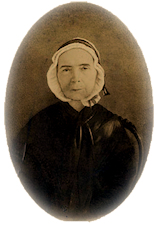
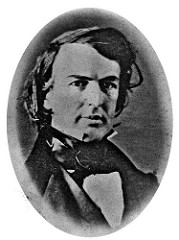
A likeness of Jones when he was editor and majority owner of the Daily Madisonian during President John Tyler’s administration.

SEPTEMBER 21ST.–Cloudy and somber.

We have authentic intelligence of the defeat of our forces under Gen. Early, near Winchester. Two generals, Rhodes and Godwin, were killed. We lost some guns, and heavily in killed and wounded. The enemy have Winchester, and Early has retreated, bringing off his trains, however. This has caused the croakers to raise a new howl against the President, for they know not what.

Mr. Clapman, our disbursing clerk (appointed under Secretary Randolph), proposed, to-day, to several in his office–jestingly, they supposed–revolution, and installing Gen. Lee as Dictator. It may be a jest to some, but others mean it in earnest.

I look for other and more disastrous defeats, unless the speculators are demolished, and the wealthy class put in the ranks. Many of the privates in our armies are fast becoming what is termed machine soldiers, and will ere long cease to fight well–having nothing to fight for. Alas, the chivalry have fallen! The lagging land proprietors and slaveowners (as the Yankees shrewdly predicted) want to be captains, etc. or speculators. The poor will not long fight for their oppressors, the money-changers, extortioners, etc., whose bribes keep them out of the service.

Mr. Foote openly advocates a convention; and says the other States will have one certainly: and if Virginia declines to unite in it, she will be “left out in the cold.” This is said of him; I have not heard him say it. But I believe a convention in any State or States, if our disasters continue, will lead to reconstruction, if McClellan be elected. If emancipation, confiscation, etc. be insisted on, the war will never terminate but in final separation.
0 comments

The end has come. No doubt of the fact.—A Diary From Dixie.

A Diary From Dixie by Mary Boykin Miller Chesnut.

September 21st.—Went with Mrs. Rhett to hear Dr. Palmer. I did not know before how utterly hopeless was our situation. This man is so eloquent, it was hard to listen and not give way. Despair was his word, and martyrdom. He offered us nothing more in this world than the martyr’s crown. He is not for slavery, he says; he is for freedom, and the freedom to govern our own country as we see fit. He is against foreign interference in our State matters. That is what Mr. Palmer went to war for, it appears. Every day shows that slavery is doomed the world over; for that he thanked God. He spoke of our agony, and then came the cry, ” Help us, O God! Vain is the help of man.” And so we came away shaken to the depths.

The end has come. No doubt of the fact. Our army has so moved as to uncover Macon and Augusta. We are going to be wiped off the face of the earth. What is there to prevent Sherman taking General Lee in the rear? We have but two armies, and Sherman is between them now.[1]


[1] During the summer and autumn of 1864 several important battles had occurred. In addition to the engagements by Sherman’s army farther south, there had occurred in Virginia the battle of Cold Harbor in the early part of June; those before Petersburg in the latter part of June and during July and August; the battle of Winchester on September 19th, during Sheridan’s Shenandoah campaign, and the battle of Cedar Creek on October 19th

0 comments

Special wounded furlough

Experience of a Confederate Chaplain—Rev. A. D. Betts, 30th N. C. Regiment

Sept. 21—Go to Woodstock to carry Capt. Allen’s furlough. He had been wounded and told me he did not wish to be sent to a hospital. I made application for special wounded furlough, that he might go to his parents and sisters in N. C. I took it to the Regimental, Brigade, Division and Corps Commanders and secured each signature and was very glad when I could make him happy by starting him home. This Capt. D. C Allen was a brave, wicked man, but he lived to be a Christian and his daughter is wife of Rev. E. C. Sell, of the N. C. Conference.

0 comments

0

Civil War Diary of Charles H. Lynch, 18th Conn. Vol’s.
Charles Lynch

September 20th. Great excitement and talk among our boys over Sheridan’s great victory. It is now our gallant Phil Sheridan who is master of the Shenandoah Valley. Early has run up against a good soldier who has the men at his command. Too small a force has been in the valley for the past three years. Sheridan has a good cavalry corps, just what is needed here. We cheer and sing for our gallant Phil Sheridan. Keep a good watch for the large number of wagons, horses, and mules parked at this point. That’s our duty, to care for them.

0 comments

Robert M. McGill

Robert M. Magill – Personal Reminiscences of a Confederate Soldier Boy, 39th Georgia Regiment of Infantry

Tuesday, 20th.—Passed through Palmetto and formed in line of battle three miles from town. Throwing up breastworks.


(Note: picture is of an unidentified Confederate soldier.)

0 comments

Downing’s Civil War Diary.–Alexander G. Downing.

Diary of Alexander G. Downing; Company E, Eleventh Iowa Infantry

Tuesday, 20th–Rain most all day. More of the wounded from the field hospital out east of town started home today on thirty-day furloughs. The sick here are being transferred to temporary hospitals down town, while the remainder of the wounded from the field hospital are taking the places vacated by them.

0 comments

War Diary of Luman Harris Tenney.

War Diary of Luman Harris Tenney.

20th. Followed up, picking up stragglers. Halted near Front Royal.

0 comments

A Rebel War Clerk’s Diary

A Rebel War Clerk’s Diary at the Confederate States Capital, By John Beauchamp Jones
A likeness of Jones when he was editor and majority owner of the Daily Madisonian during President John Tyler’s administration.

SEPTEMBER 20TH.–Bright and pleasant.

An order has been given to impress all the supplies (wheat and meat) in the State, and Gen. Kemper has been instructed to lend military aid if necessary. This is right, so that speculation may be suppressed. But, then, Commissary-General Northrop says it is all for the army, and the people–non-producers–may starve, for what he cares. If this unfeeling and despotic policy be adopted by the government, it will strangle the Confederacy–strangle it with red-tape.

I learned, to-day, that Gen. Preston, Superintendent of the Bureau of Conscription, resigned upon seeing Gen. Bragg’s and the President’s indorsements on the bureau papers; but the Secretary and the President persuaded him to recall the resignation. He is very rich.

A practical railroad man has sent to the Secretary a simple plan, by which twenty-five men with crowbars can keep Sherman’s communications cut.

There is a rumor that Sherman has invited Vice-President Stephens, Senator H. V. Johnson, and Gov. Brown to a meeting with him, to confer on terms of peace–i.e. the return of Georgia to the Union. The government has called for a list of all the Georgians who have sailed from our ports this summer.

A letter from Hon. R. W. Barnwell shows that he is opposed to any conference with the enemy on terms of peace, except unconditional independence. He thinks Hood hardly competent to command the army, but approves the removal of Johnston. He thinks Sherman will go on to Augusta, etc.

The raid toward Gordonsville is now represented as a small affair, and to have returned as it came, after burning some mills, bridges, etc.

I saw a letter, to-day, written to the President by L. P. Walker, first Secretary of War, full of praise. It was dated in August, before the fall of Atlanta, and warmly congratulated him upon the removal of Gen. Johnston.

Gov. Bonham sent a telegram to the Secretary of War, to-day, from Columbia, asking if the President would not soon pass through that city; if such were his intentions, he would remain there, being very anxious to see him.

Beauregard is at Wilmington, while the whole country is calling for his appointment to the command of the army in Georgia. Unless some great success crowns our arms before Congress reassembles, the President will be assailed with great bitterness, and the consequences may be fatal.

0 comments

Robert M. McGill

Robert M. Magill – Personal Reminiscences of a Confederate Soldier Boy, 39th Georgia Regiment of Infantry

Monday, 19th.—Marched seventeen miles and camped four miles from Palmetto.


(Note: picture is of an unidentified Confederate soldier.)

0 comments

0

Civil War Diary of Charles H. Lynch, 18th Conn. Vol’s.
Charles Lynch

September 19th. Roused up at daylight by heavy cannonading in the direction of Winchester. The battle was on. Those of us who were off duty, with some of the towns-people, went to the top of a high hill to listen to the roar of musketry and the field guns. It was something frightful as it continued. We were ordered to hold ourselves ready to fall in at any moment. The inhabitants as well as the soldiers wore an anxious look as the battle was on. After a time the firing ceased and we began to wonder how the battle was going on. Later we heard it again but knew from the sound that it was farther away. Then we began to rejoice and the inhabitants, with a sad face, went to their homes. Late in the afternoon the news came that Early was routed and was fleeing up the valley. Then our boys began to wish that we were in it. Sheridan placed us at Charlestown to guard and care for the wagon train. It is not our fault to miss the battle.

0 comments

Downing’s Civil War Diary.–Alexander G. Downing.

Diary of Alexander G. Downing; Company E, Eleventh Iowa Infantry

Monday, 19th–The sick in the hospitals are getting along well. Part of the men here received two months’ pay today, $32.00. The pay of soldiers has been raised to $16.00 per month since May 1, 1864.[1]


[1] The $32.00 I received was the first pay I got since leaving Davenport on Sunday, April 24, 1864.—A. G. D.

0 comments

War Diary of Luman Harris Tenney.

War Diary of Luman Harris Tenney.

(Battle of Winchester)

19th. Monday. Moved at 2 A. M. Slept with Houghton. Reached the Opequon about daylight, 2nd N. Y. charging. After this, constant charging till we drove a rebel brigade of infantry from fortified position. Very hard fighting. Gen. McIntosh always in the van. When Gen. Sheridan came up he patted Mc. on shoulder and said, “You have done nobly.” Moved to left. More charging on flank. Gen. Mc. and Chapman wounded. Purington in command. Just before dark whole rebel force was routed. Followed 8 miles and camped.

0 comments

A Rebel War Clerk’s Diary

A Rebel War Clerk’s Diary at the Confederate States Capital, By John Beauchamp Jones
A likeness of Jones when he was editor and majority owner of the Daily Madisonian during President John Tyler’s administration.

SEPTEMBER 19TH.—Clear and pleasant.

We have nothing yet explanatory of the shelling yesterday.

To-day we have news of an expedition of the enemy crossing Rapidan Bridge on the way toward Gordonsville, Charlottesville, etc. Gen. Anderson’s division, from Early’s army, is said to be marching after them. We shall learn more of this business very soon.

Mrs. D. E. Mendenhall, Quaker, Jamestown, N. C., has written a “strictly confidential” letter to Mr. J. B. Crenshaw, of this city (which has gone on the files of the department), begging him to use his influence with Mr. Secretary Seddon (which is great) to get permission for her to send fourteen negroes, emancipated by her late husband’s will, to Ohio. She says there is but one able to bear arms, and he is crazy; that since the enemy uses negro soldiers, she will withhold the able-bodied ones; that she has fed our soldiers, absolutely starving some of her stock to death, that she might have food for our poor men and their families, etc. etc.

No news from our flour.

I saw Nat Tyler to-day, and told him to call upon the farmers, in the Enquirer, to send their provisions to the city immediately, or they may lose their crops, and their horses too. He said he would.

The only news of interest is contained in the following official dispatch from Gen. Lee:

“HEADQUARTERS ARMY NORTHERN VIRGINIA,
“September 17th, 1864.

“HON. J. A. SEDDON, SECRETARY OF WAR.
“At daylight yesterday the enemy’s skirmish line west of the Jerusalem Plank Road was driven back upon his intrenchments along their whole extent. Ninety prisoners were taken by us in the operation.
“At the same hour Gen. Hampton attacked the enemy’s position north of the Norfolk Railroad, near Sycamore Church, and captured about three hundred prisoners, some arms and wagons, a large number of horses, and twenty-five hundred cattle.
“Gen. Gregg attacked Gen. Hampton, on his return in the afternoon, at Belchess’ mill, on the Jerusalem Plank Road, but was repulsed and driven back. Everything was brought off safely.
“Our entire loss does not exceed fifty men.                           R. E. LEE.”

Gen. Preston, Superintendent Bureau of Conscription, has made a labored defense (written by Colonels Lay and August) of the bureau against the allegations of Gen. Bragg. This was sent to the President by the Secretary of War, “for his information.” The President sent it back, to-day, indorsed, “the subject is under general consideration.”

The “Bureau,” by advertisement, to-day, calls upon everybody between the ages of sixteen and fifty to report at certain places named, and be registered, and state the reasons why they are not now in the army and in the field. What nonsense! How many do they expect to come forward, voluntarily, candidates for gunpowder and exposure in the trenches?

0 comments

A Diary From Dixie.

A Diary From Dixie by Mary Boykin Miller Chesnut.

September 19th.–My pink silk dress I have sold for $600, to be paid for in instalments, two hundred a month for three months. And I sell my eggs and butter from home for two hundred dollars a month. Does it not sound well –four hundred dollars a month regularly. But in what? In Confederate money. Hélas!

0 comments

Gen. Rodes killed

Experience of a Confederate Chaplain—Rev. A. D. Betts, 30th N. C. Regiment

Sept. 19—Engage the enemy fiercely near Winchester and drive them, and they drive us. Gen. Rodes killed. Went into private house to see his body after he was brought into Winchester. His wife had spent some time in camp during preceding winter. We fall back to Strasburg, marching all night. Riding alone and very sad, at midnight, I overtake one or two thousand Federal prisoners. They began to sing, “We are going home to die no more.” My heart was touched. I shed tears as I thought many of them would die in Southern prisons. Get fifty Testaments, etc. Take position on breastworks near Strasburg.

0 comments

Diary of a Southern Refugee, Judith White McGuire.

Diary of a Southern Refugee During the War by Judith White McGuire

18th.—Nothing yet from Mr. –– about our rooms. All the furnished rooms that I have seen, except those, would cost us from $100 to $110 per month for each room, which, of course, we cannot pay; but we will try and not be anxious overmuch, for the Lord has never let us want comforts since we left our own dear home, and if we use the means which He has given us properly and in His fear, He will not desert us now.

I went with Mr. –– as usual this morning to the “Officers’ Hospital,” where he read a part of the service and delivered an address to such patients among the soldiers as were well enough to attend. I acted as his chorister, and when the services were over, and he went around to the bedsides of the patients, I crossed the street, as I have done several times before, to the cemetery—the old “Shockoe Hill Cemetery.” It is, to me, the most interesting spot in the city. It is a melancholy thought, that, after an absence of thirty years, I am almost a stranger in my native place. In this cemetery I go from spot to spot, and find the names that were the household words of my childhood and youth; the names of my father’s and mother’s friends; of the friends of my sisters, and of my own school-days. The first that struck me was that of the venerable and venerated Bishop Moore, on the monument erected by his church; then, that of his daughter, the admirable Miss Christian; then the monument to Colonel Ambler, erected by his children. Mrs. Ambler lies by him. Mr. and Mrs. Chapman Johnson, Judge and Mrs. Cabell, Mr. and Mrs. John Wickham, surrounded by their children, who were the companions of my youth; also, their lovely grand-daughter, Mrs. W. H. F. Lee, who [continue reading…]

0 comments

0

Civil War Diary of Charles H. Lynch, 18th Conn. Vol’s.
Charles Lynch

September 18th. Relieved from picket. Late in the day long wagon trains passed through town, some being parked here. Those passing on went to Harper’s Ferry. Things begin to take on a mysterious look which created much comment and talk among the boys. Either a battle was coming or Sheridan was to fall back. We had heard that Early was holding a strong position between the towns of Berryville and Winchester. All is quiet with us tonight.

0 comments

Downing’s Civil War Diary.–Alexander G. Downing.

Diary of Alexander G. Downing; Company E, Eleventh Iowa Infantry

Sunday, 18th–Have had a week of very pleasant weather. Our store of supplies here is small, as the army is to evacuate the place as soon as possible.[1]


[1] This proved to be my last Sunday at Rome, Georgia, for which I was very thankful. While there I saw more sick and wounded men than I ever wish to see again. While I was a convalescent working among the sick, giving out different kinds of medicine to forty or fifty men, I was under great responsibility, and it cost me many a night’s sleep and rest.—A. G. D.

0 comments

War Diary of Luman Harris Tenney.

War Diary of Luman Harris Tenney.

18th. Sent regt. wagons loaded to Ferry. Preparations to move. 2nd Ohio made a reconnoissance, driving rebs across the Opequon. All Q. M.s ordered to Ferry with wagons. Houghton told me there was business on hand and the General would like me for aide. Soon an order came for me to report. I was pleased. Moved out and then back into camp over night.

0 comments

A Rebel War Clerk’s Diary

A Rebel War Clerk’s Diary at the Confederate States Capital, By John Beauchamp Jones
A likeness of Jones when he was editor and majority owner of the Daily Madisonian during President John Tyler’s administration.

SEPTEMBER 18TH–Cool and cloudy; symptoms of the equinoctial gale.

We have intelligence of another brilliant feat of Gen. Wade Hampton. Day before yesterday he got in the rear of the enemy, and drove off 2500 beeves and 400 prisoners.       This will furnish fresh meat rations for Lee’s army during a portion of the fall campaign. I shall get some shanks, perhaps; and the prisoners of war will have meat rations.

Our people generally regard McClellan’s letter of acceptance as a war speech, and they are indifferent which succeeds, he or Lincoln, at the coming election; but they incline to the belief that McClellan will be beaten, because he did not announce himself in favor of peace, unconditionally, and our independence. My own opinion is that McClellan did what was best for him to do to secure his election, and that he will be elected. Then, if we maintain a strong front in the field, we shall have peace and independence. Yet his letter convinces me the peace party in the United States is not so strong as we supposed. If it shall appear that subjugation is not practicable, by future success on our part, the peace party will grow to commanding proportions.

Our currency was, yesterday, selling $25 for $1 in gold; and all of us who live on salaries live very badly: for food and everything else is governed by the specie value. Our $8000 per annum really is no more than $320 in gold. The rent of our house is the only item of expense not proportionably enlarged. It is $500, or $20 in gold. Gas is put up to $30 per 1000 feet.

Four P.M. We hear the deep booming of cannon again down the river. I hope the enemy will not get back the beeves we captured, and that my barrel of flour from North Carolina will not be intercepted!

J. J. Pollard’s contract to bring supplies through the lines, on the Mississippi, receiving cotton therefor, has been revoked, it being alleged by many in that region that the benefits reaped are by no means mutual.

And Mr. De Bow’s office of Cotton Loan Agent has been taken away from him for alleged irregularities, the nature of which is not clearly stated by the new Secretary of the Treasury, who announces his removal to the Secretary of War.

The President has had the porch of his house, from which his son fell, pulled down.

A “private” letter from Vice-President Stephens was received by Mr. Secretary Seddon to-day.

The cannonading ceased at sundown. The papers, to-morrow, will inform us what it was all about. Sunday is not respected in war, and I know not what is. Such terrible wars as this will probably make those who survive appreciate the blessings of peace.

0 comments

Diary of Belle Edmondson

Diaries and Letters of Belle Edmondson

September, Sunday 18, 1864

All went to Church his morning except Lou, Mary Lou and I, we had a nice, quiet time. I fixed poor Lou’s afflicted head, and am really distressed she has taken that terible eruption.

Mr. and Mrs. Hamilton came down to Tea. We all walked down to the Tombigbee, had a delightful drink from the Artesian Well.

0 comments

September 1 to 18, 1864

Experience of a Confederate Chaplain—Rev. A. D. Betts, 30th N. C. Regiment

Sept. 1—Regiment on picket.

Friday, Sept. 2—Fast and pray.

Sept. 3—Day spent in line of battle.

Sept. 4—Move to Jordan’s Springs and spend p. m. in line of battle.

Sept. 5—Move and drive enemy on Pike and camp near Washington’s Farm.

Sept. 6—Rain, rain.

Sept. 7, 8, 9—In camp. Meet Rev Hetrick.

Sept. 10—Rodes and Ramseur move early to Bunker Hill.

Sept. 11—Rain. Division moves back and camps midway between Winchester and Bunker Hill.

Sept. 12—Meet Revs. Heterick, Rogers and Pitzer. Hold prayer meeting.

Sept. 13—Sup with Mrs. Silver. Meet Chaplain Stringfield and have prayer meeting at night.

Sept. 15—Regiment on picket.

Sept. 16—Fast and pray. Hold prayers.

Sunday, Sept. 18—Preach in a. m.


0 comments

0

Civil War Diary of Charles H. Lynch, 18th Conn. Vol’s.
Charles Lynch

September 17th. Pleasant morning. Detailed for picket duty. Located northeast of town, between the Harper’s Ferry Pike and the Shenandoah River, on the ground where old John Brown was hung in 1859. About noontime saw a company of cavalrymen come flying down the pike from Harper’s Ferry. Wondered what it meant. Later we learned that General Grant and General Sheridan were in town. Caused much excitement and comment as they held a conference at a large house just southeast of town. The company I saw from our picket post was General Grant and his escort. All is quiet tonight.

0 comments

Downing’s Civil War Diary.–Alexander G. Downing.

Diary of Alexander G. Downing; Company E, Eleventh Iowa Infantry

Saturday, 17th–The fight is all over and no one was hurt. The troops remained under arms all night to be in readiness for the rebels should they come across the river. Everything is quiet today.

0 comments

War Diary of Luman Harris Tenney.

War Diary of Luman Harris Tenney.

17th. Saturday. Got officers to sign papers. Forges get back loaded.

0 comments