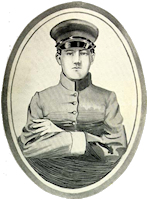
Through Some Eventful Years

Through Some Eventful Years by Susan Bradford Eppes
Susa Bradford Eppes

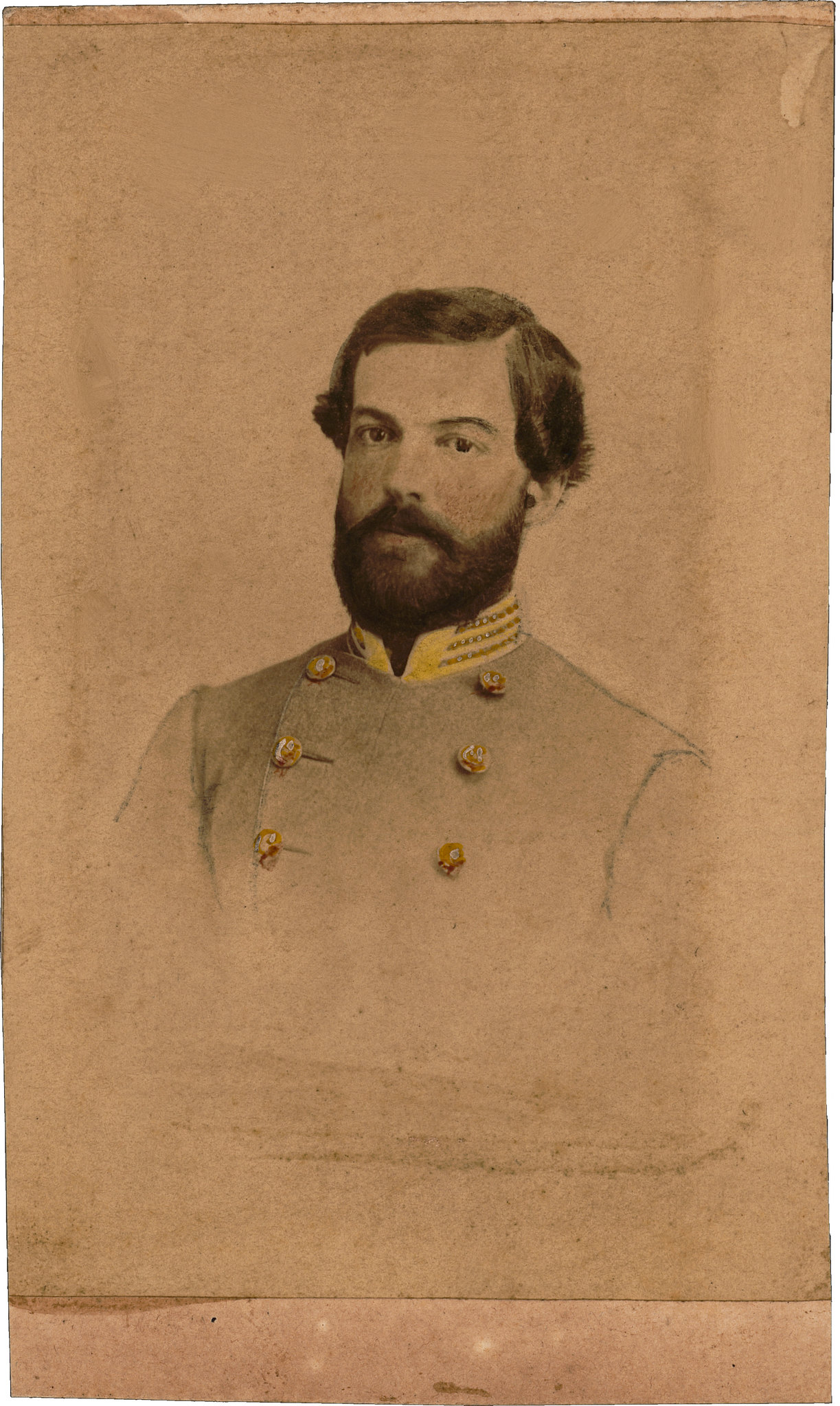
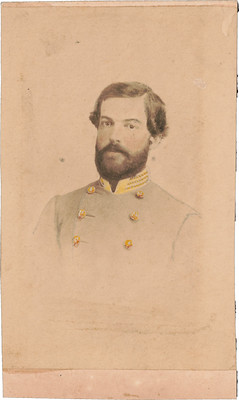
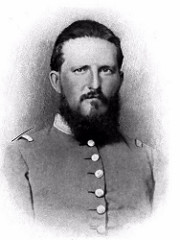
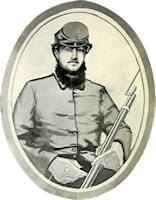
June 17th, 1865.—We had our first riding lesson yesterday and we had quite a respectable company, fifteen young ladies and as many gentlemen. Best of all, they, the gentlemen, came dressed in our beloved gray. We are so proud of the Confederate Army and we love the gray uniform. We love and reverence our captive President; we place the name of Jefferson Davis at the head of all martyred heroes. Our hearts throb with pride when we think of General Robert E. Lee and we love every officer and every man who served under him. We love, and we admire the courage of the Army of the West, which so stubbornly and so hopelessly, fought Sherman, inch by inch, in his hateful “March to the Sea”—and now, an insult has been offered these “heroes of the gray.”

These men have given their parole and a Southerner’s word of honor means everything to him and yet, afraid of men they have conquered; afraid of the men whose sworn promise they hold, an order comes from headquarters, that Confederate soldiers, both officers and privates, must remove from their uniforms all brass buttons and every insignia of rank.

At first, I have been told, it was the intention of the military to order the gray uniform to be discarded, but realizing that many of these men had nothing else to wear, this present order was issued. The cowards! They ought to be ashamed of themselves! [continue reading…]

0 comments

Downing’s Civil War Diary.—Alexander G. Downing.

Diary of Alexander G. Downing; Company E, Eleventh Iowa Infantry

Saturday, 17th—Still pleasant. We have not yet received our pay. A part of the Fifteenth Corps has been paid, and the paymaster is paying the men of the First Brigade.

0 comments

Village Life in America

Village Life in America, 1852 – 1872, by Caroline Cowles Richards

June 16.—The census man for this town is Mr. Jeudevine. He called here to-day and was very inquisitive, but I think I answered all of his questions although I could not tell him the exact amount of my property. Grandmother made us laugh to-day when we showed her a picture of the Siamese twins, and I said, “ Grandmother, if I had been their mother I should have cut them apart when they were babies, wouldn’t you?” The dear little lady looked up so bright and said, “ If I had been Mrs. Siam, I presume I should have done just as she did.” I don’t believe that we will be as amusing as she is when we are 82 years old

0 comments

Downing’s Civil War Diary.—Alexander G. Downing.

Diary of Alexander G. Downing; Company E, Eleventh Iowa Infantry

Friday, 16th—Pleasant weather. We cleaned up our camping ground today and built “ranches” covering them with our rubber ponchos. General Hinkenlooper, a West Pointer, is in command of our brigade and has given orders to put on camp guard.

0 comments

0

Civil War Diary of Charles H. Lynch, 18th Conn. Vol’s.
Charles Lynch

June 15th. Nothing special has taken place since the last date. Public auction in town today. All government property must be sold. An agent here in charge. Horses, mules, saddles, wagons, ambulances. Some of our company have been on duty and in charge of the corral for several days. Will be glad to see the thing closed up. Some of the horses and mules were kickers, as well as some of our boys, who did not like that kind of work.

0 comments

Through Some Eventful Years

Through Some Eventful Years by Susan Bradford Eppes
Susa Bradford Eppes

June 15th, 1865.—Once more the family are every one well and this is a truly delightful state of affairs. Ever “sence freedom drapped,” as the negroes say, we have not been permitted to ride horseback without a gentleman with us. Sometimes it was not convenient to find one and often we could not go but we young folks have determined to turn over a new leaf. We have made up our minds to drown our troubles in a sea of gaiety and with that end in view, we have organized a Riding Company, a Shakespeare Club, a Bezique Club and once a month a regular Dancing Party. This party to be held at whichever home in the neighborhood wanted us most.

The Riding Company will be commanded by Major Henry Bradford, late of the Confederate States Army. Being a cavalryman, he will be able to give us lessons in the cavalry drill.

The Bezique Club is a very informal affair. We have a handsome imported set of Bezique and any number can play it, but we also play any other game, which my be desired. Sad to relate, cards are looked upon with great disfavor in the neighborhood. Only at Pine Hill can the Bezique Club meet. It meets just any time the members please, the only proviso being that the cards must be put aside before eleven o’clock.

The Club, par excellence, is the Shakespeare Club; nobody objects to this as classical knowledge never comes amiss. To be a student of the Bard of Avon is a hall mark in the literary world. We have arranged to meet every two weeks, first at one house in the Bradford neighborhood and next and next, until the round has been made. The various housekeepers have volunteered to provide a fine supper for the Shakespeare Club at all their meetings.

Here is a secret, to be told to none, just yet; the Bezique Club will have suppers provided, too; not only on stated nights, but whenever they chance to meet. Father and Mother are the very most indulgent parents in the world.


Susan Bradford is 19 years old when this entry was made.

0 comments

Downing’s Civil War Diary.—Alexander G. Downing.

Diary of Alexander G. Downing; Company E, Eleventh Iowa Infantry

Thursday, 15th—The men found so much fault with our camp on the low ground and made so much complaint about it at headquarters that our division was ordered to move to higher ground. We moved today to a large piece of sparsely-timbered land, high and rolling, where we will have a fine camp. It is about two miles south of Louisville. The Fourteenth Army Corps and one division of the Twentieth Corps, with the exception of the eastern men in these two corps, have arrived at Louisville.

0 comments

A Confederate Girl’s Diary

A Confederate Girl’s Diary by Sarah Morgan Dawson

June 15th.

Our Confederacy has gone with one crash — the report of the pistol fired at Lincoln.

THE END

Reading this for the first time, in all these many years, I wish to bear record that God never failed me, through stranger vicissitudes than I ever dared record. Whatever the anguish, whatever the extremity, in His own good time He ever delivered me. So that I bless Him to-day for all of life’s joys and sorrows — for all He gave — for all He has taken —and I bear witness that it was all Very Good.

Sarah Morgan Dawson.

July 23d, 1896.

Charleston,

South Carolina.

0 comments

Downing’s Civil War Diary.—Alexander G. Downing.

Diary of Alexander G. Downing; Company E, Eleventh Iowa Infantry

Wednesday, 14th—The weather is sultry. We occupied the day in cleaning our clothing and accouterments. The long journey of eight hundred miles on coal cars and transports was pretty hard on our clothes as well as trying on the men, for we had no protection from the hot sun nor shelter from the rain. The farmers around here are harvesting, and the grain looks fine.

0 comments

Village Life in America

Village Life in America, 1852 – 1872, by Caroline Cowles Richards

June 13.–Van Amburgh’s circus was in town to-day and crowds attended and many of our most highly respected citizens, but Grandmother had other things for us to consider.

0 comments

Downing’s Civil War Diary.—Alexander G. Downing.

Diary of Alexander G. Downing; Company E, Eleventh Iowa Infantry

Tuesday, 13th—We had a thunder shower early this morning. The Eleventh Iowa signed the muster rolls this morning and we expect to get our pay in a few days. The Army of the Tennessee is in camp in and around Louisville. The veterans are becoming very much dissatisfied, as they were expecting to be discharged as soon as the war was over, but there is no sign of their being discharged very soon; besides that, we are kept in ignorance of it all, not knowing what they are going to do with us. Some of the boys think that we shall be sent down to Texas on duty, while others believe that we shall receive our discharge within a month or six weeks.

0 comments

Downing’s Civil War Diary.—Alexander G. Downing.

Diary of Alexander G. Downing; Company E, Eleventh Iowa Infantry

Monday, 12th—The boats ran all night, and we passed Cincinnati about 1 a. m. At daylight we landed at Ornod, Indiana, remaining there about two hours, till the fog lifted. We arrived at Louisville about 4 p. m., and disembarking, marched out about eight miles below town where we went into bivouac. This is a miserable place for the troops to camp, being very low, the next thing to a swamp, and heavily timbered; we cannot remain here long without its resulting in a great deal of sickness.

0 comments

A Diary From Dixie.

A Diary From Dixie by Mary Boykin Miller Chesnut.

June 12th.—Andy, made lord of all by the madman, Booth, says, “Destruction only to the wealthy classes.” Better teach the negroes to stand alone before you break up all they leaned on, O Yankees! After all, the number who possess over $20,000 are very few.

Andy has shattered some fond hopes. He denounces Northern men who came South to espouse our cause. They may not take the life-giving oath. My husband will remain quietly at home. He has done nothing that he had not a right to do, nor anything that he is ashamed of. He will not fly from his country, nor hide anywhere in it. These are his words. He has a huge volume of Macaulay, which seems to absorb him. Slily I slipped Silvio Pellico in his way. He looked at the title and moved it aside. “Oh,” said I, ” I only wanted you to refresh your memory as to a prisoner’s life and what a despotism can do to make its captives happy!”

Two weddings—in Camden, Ellen Douglas Ancrum to Mr. Lee, engineer and architect, a clever man, which is the best investment now. In Columbia, Sally Hampton and John Cheves Haskell, the bridegroom, a brave, one-armed soldier.

A wedding to be. Lou McCord’s. And Mrs. McCord is going about frantically, looking for eggs “to mix and make into wedding-cake,” and finding none. She now drives the funniest little one-mule vehicle.

•    •    •    •    •    •    •    •    •    •

I have been ill since I last wrote in this journal. Serena’s letter came. She says they have been visited by bushwhackers, the roughs that always follow in the wake of an army. My sister Kate they forced back against the wall. She had Katie, the baby, in her arms, and Miller, the brave boy, clung to his mother, though he could do no more. They tried to pour brandy down her throat. They knocked Mary down with the butt end of a pistol, and Serena they struck with an open hand, leaving the mark on her cheek for weeks.

Mr. Christopher Hampton says in New York people have been simply intoxicated with the fumes of their own glory. Military prowess is a new wrinkle of delight to them. They are mad with pride that, ten to one, they could, after five years’ hard fighting, prevail over us, handicapped, as we were, with a majority of aliens, quasi foes, and negro slaves whom they tried to seduce, shut up with us. They pay us the kind of respectful fear the British meted out to Napoleon when they sent him off with Sir Hudson Lowe to St. Helena, the lone rock by the sea, to eat his heart out where he could not alarm them more.

Of course, the Yankees know and say they were too many for us, and yet they would all the same prefer not to try us again. Would Wellington be willing to take the chances of Waterloo once more with Grouchy, Blücher, and all that left to haphazard? Wigfall said to old Cameron[1] in 1861, “Then you will a sutler be, and profit shall accrue.” Christopher Hampton says that in some inscrutable way in the world North, everybody “ has contrived to amass fabulous wealth by this war.”

There are two classes of vociferous sufferers in this community: 1. Those who say, “If people would only pay me what they owe me!” 2. Those who say, “If people would only let me alone. I can not pay them. I could stand it if I had anything with which to pay debts.”

Now we belong to both classes. Heavens! the sums people owe us and will not, or can not, pay, would settle all our debts ten times over and leave us in easy circumstances for life. But they will not pay. How can they?

We are shut in here, turned with our faces to a dead wall. No mails. A letter is sometimes brought by a man on horseback, traveling through the wilderness made by Sherman. All railroads have been destroyed and the bridges are gone. We are cut off from the world, here to eat out our hearts. Yet from my window I look out on many a gallant youth and maiden fair. The street is crowded and it is a gay sight. Camden is thronged with refugees from the low country, and here they disport themselves. They call the walk in front of Bloomsbury “the Boulevard.”

H. Lang tells us that poor Sandhill Milly Trimlin is dead, and that as a witch she had been denied Christian burial. Three times she was buried in consecrated ground in different churchyards, and three times she was dug up by a superstitious horde, who put her out of their holy ground. Where her poor, old, ill-used bones are lying now I do not know. I hope her soul is faring better than her body. She was a good, kind creature. Why supposed to be a witch? That H. Lang could not elucidate.

Everybody in our walk of life gave Milly a helping hand. She was a perfect specimen of the Sandhill “tackey” race, sometimes called “country crackers.” Her skin was yellow and leathery, even the whites of her eyes were bilious in color. She was stumpy, strong, and lean, hard-featured, horny-fisted. Never were people so aided in every way as these Sandhillers. Why do they remain Sandhillers from generation to generation? Why should Milly never have bettered her condition?

My grandmother lent a helping hand to her grandmother. My mother did her best for her mother, and I am sure the so-called witch could never complain of me. As long as I can remember, gangs of these Sandhill women traipsed in with baskets to be filled by charity, ready to carry away anything they could get. All are made on the same pattern, more or less alike. They were treated as friends and neighbors, not as beggars. They were asked in to take seats by the fire, and there they sat for hours, stony-eyed, silent, wearing out human endurance and politeness. But their husbands and sons, whom we never saw, were citizens and voters! When patience was at its last ebb, they would open their mouths and loudly demand whatever they had come to seek.

One called Judy Bradly, a one-eyed virago, who played the fiddle at all the Sandhill dances and fandangoes, made a deep impression on my youthful mind. Her list of requests was always rather long, and once my grandmother grew restive and actually hesitated. “Woman, do you mean to let me starve?” she cried furiously. My grandmother then attempted a meek lecture as to the duty of earning one’s bread. Judy squared her arms akimbo and answered, “And pray, who made you a judge of the world? Lord, Lord, if I had ‘er knowed I had ter stand all this jaw, I wouldn’t a took your ole things,” but she did take them and came afterward again and again.


[1] Simon Cameron became Secretary of War in Lincoln’s Administration, on March 4, 1861. On January 11, 1862, he resigned and was made Minister to Russia.

0 comments

Downing’s Civil War Diary.—Alexander G. Downing.

Diary of Alexander G. Downing; Company E, Eleventh Iowa Infantry

Sunday, 11th—Our boats ran all night. This is a bright sunshiny Sunday. All went well and everything was quiet until about 4 p. m. when our boat struck a snag. We were nearing Manchester, Ohio, when we ran upon an old sunken stone barge, the bottom of our boat was torn off and it sank in less than three minutes. The captain, quick to see the danger of our going down in midstream, ordered the boat turned toward the Kentucky side of the river, and we were within twenty feet of the bank when it sank stern first, going down at an angle of about forty-five degrees. In the excitement several men jumped overboard, but were rescued by men in canoes from Manchester. Tears were shed by the ladies of Manchester, thinking that, of course, a great many would be lost, but all were saved in one way or another. Regardless of the danger some of the boys on the sinking boat broke into the steward’s pantry and filled their haversacks with the good things in store. Our regiment was now divided, and put on the other already crowded boats. Company E, with H, G and B, went upon the “Nord” —and as usual, Company E got the hurricane deck.

0 comments

Downing’s Civil War Diary.—Alexander G. Downing.

Diary of Alexander G. Downing; Company E, Eleventh Iowa Infantry

Saturday, 10th—We had a heavy thunderstorm and rain early this morning, which made it very disagreeable for us on our open coal cars. We arrived at Parkersburg on the Ohio at daylight and left the cars. We cooked and ate our breakfast and then at about 8 o’clock went aboard the transports, and at 4 o’clock in the afternoon we left for Louisville, Kentucky. The Eleventh Iowa and the Thirty-second Illinois Regiments are on board the transport “Empress.” We have a fleet of five boats, which besides the “Empress” are the “Nord,” “America,” “Revenue” and “Edinburgh,” the headquarters boat. All the boats are heavily loaded and we are crowded, but it is much more pleasant than in the open coal cars, and while the sun is hot, it is not so oppressive as on the railroad.

0 comments

Jayhawkers, marauders, robbers

Civil War Irregulars: Rangers, Scouts, Guerrillas, and Others, War of the Rebellion: from the Official Records of the Union and Confederate Armies and Navies
A scouting party

Quitman, Van Buren County, Ark., June 10, 1865.

Lieutenant Colonel John Levering,
Assistant Adjutant-General, Seventh Army Corps,
Department of Arkansas, Little Rock, Ark:

General: I dislike very much to so often trespass upon your time, knowing the vast amount of business that necessarily comes before a district commander and of greater importance than this can possibly be, but seeing from your letter of the 25th ultimo that you did not understand me in regard to the kind of commands I wish disarmed, hence it is I trouble you again. It is not your home colony companies, composed of good, honest citizens, whose antecedents are clear and will do justice to all parties, I object to. Something of this kind I hope will soon be established for our protection, as we have been paroled in good faith and wish to return to our homes and again resume our several avocations unmolested; but it is these squads or companies that you call jayhawkers or marauders, which are very numerous in our country, and call themselves independent companies, I object to, headed by Chris. Denton, Thomas Kampton, Dick or Nath. Williams, and others, who say what they do is under the direction of the U. S. authorities. About the 1st of this month, after I had ordered my men to gather up all arms and U. S. property and report at Jacksonport, in pursuance to General Orders, No. 8, issued from General M. Feff. Thompson’s headquarters, for the purpose of being paroled, some of these illegal bands above spoken of caught one of my men, held him as a prisoner of war, and perhaps have killed him; did not at least permit him to report and be paroled; took four or five guns that had been collected, pillaged a house, and even took out of it feather beds. These are the squads or kind of men that our paroles are no protection for us in any way whatever, and when we lay down our arms at the same time we lay down our lives, should we offer to return to our homes. And these are the bands we are so desirous and respectfully ask that you disarm, and not any legal body of men that you may authorize, for we well know the position you occupy, and your better judgment would dictate that such men would not restore order and peace in the country, and, of course, are not recognized by you.

I am, general, very respectfully, Your obedient servant,

A. R. WITT,
Colonel Tenth Arkansas Regiment

[Indorsement.]

Headquarters U. S. Forces
Searcy, Ark., June 11, 1865.

Upon consultation with Colonel Witt, who desired me to indorse this paper without sending it through his intermediate commanders, to whom I generally report, I have the honor, in complying with his desire, to respectfully indorse his within-given opinion in regard to these bands calling themselves “independent companies. ” I have no doubt whatever that these depredators are jayhawkers and not members of home colonies properly authorized. These robbers are very quiet at present, but if some protection is not granted, paroled insurgents and other peaceably disposed men will be, to say the least, insecure in the pursuit of agriculture, &c. The case is therefore respectfully submitted to You.

…………..Very respectfully,

OTTO F. DREHER,
Captain, Third Minnesota Veteran Volunteer infantry,
Commanding Detachment, and Acting Assistant Provost- Marshal.

0 comments

Through Some Eventful Years

Through Some Eventful Years by Susan Bradford Eppes
Susa Bradford Eppes

June 9th, 1865.—Nellie went away today and the parting between her and Sister Mag was pitiful. She has nursed Eddie all his life and for three weeks now, the three weeks Sister Mag has been so ill, she has been almost constantly at her side, while I took care of Eddie. He is sorely distressed but it is as nothing compared to his mother’s grief at giving her up.

Nellie knelt on the floor and put her arms about sister, both were sobbing and both faces were wet with tears.

“I wouldn’t leave you Miss Mag,” she gasped out, “but my husband says I got ter go. He says if I don’t go with him now I shant never come and he says I b’longs ter him now an’ so I’ll have ter go.”

“Can’t you persuade him to stay here with you, Nellie?” pleaded the almost heart-broken mistress, but no, he did not like country life, he had work in the iron foundry and would not give it up.

From the porch, just outside, Emperor Dulan’s loud voice was heard, “Come on, Nellie—I shore is tired waiting.”

He was evidently impatient and she could stay no longer.

“God bless you, Miss Mag, God bless Marse Amos an’ de sweet chillun an’, over everything else, may the Lord bless Marse Ned an’ Mis’ Patsey.”

Another link broken and it is only the beginning of the end. [continue reading…]

0 comments

Downing’s Civil War Diary.—Alexander G. Downing.

Diary of Alexander G. Downing; Company E, Eleventh Iowa Infantry

Friday, 9th—Our train ran all night, except for two or three times when we were standing on some sidetrack. Arriving at the foot of the Cumberland mountains our train was divided and another engine put on to pull one-half the train up the mountains. The train moved up very slowly, which gave us a chance to get off and cut some sassafras bushes, which we nailed on the sides of the cars for shade, for the sun was terribly hot, and the weather was very sultry. By noon we reached the top of the mountains. At 4 p. m. we arrived at Grafton, Virginia, where we received hot coffee from the Sanitary Commission. Here we left the Baltimore & Ohio road for Parkersburg, Virginia, over the Ohio & Virginia Railroad. We passed through a great many tunnels between Grafton and Parkersburg, one being four thousand one hundred and thirty-eight feet long. The citizens along our route today seemed to be very loyal, cheering us all along the way. It reminded us of our home folks.

0 comments

Village Life in America

Village Life in America, 1852 – 1872, by Caroline Cowles Richards

June 8.—There have been unusual attractions down town for the past two days. About 5 PM. a man belonging to the Ravel troupe walked a rope, stretched across Main street from the third story of the Webster House to the chimney of the building opposite. He is said to be Blondin’s only rival and certainly performed some extraordinary feats. He walked across and then returned backwards. Then took a wheel-barrow across and returned with it backwards. He went across blindfolded with a bag over his head. Then he attached a short trapeze to the rope and performed all sorts of gymnastics. There were at least 1,000 people in the street and in the windows gazing at him. Grandmother says that she thinks all such performances are wicked, tempting Providence to win the applause of men. Nothing would induce her to look upon such things. She is a born reformer and would abolish all such schemes. This morning she wanted us to read the 11th chapter of Hebrews to her, about faith, and when we had ?nished the forty verses, Anna asked her what was the difference between her and Moses. Grandmother said there were many points of difference. Anna was not found in the bulrushes and she was not adopted by a king’s daughter. Anna said she was thinking how the verse read, “Moses was a proper child,” and she could not remember having ever done anything strictly “proper” in her life. I noticed that Grandmother did not contradict her, but only smiled.

0 comments

Downing’s Civil War Diary.—Alexander G. Downing.

Diary of Alexander G. Downing; Company E, Eleventh Iowa Infantry

Thursday, 8th—We left Washington City at 1 a. m. and arrived at the junction of the Baltimore & Ohio railroad about 8 o’clock, where we changed to the line running through Harper’s Ferry, which place we passed through. Our brigade is in the rear, the Eleventh Iowa being on the rear train, as we were the last regiment to leave Washington, D. C. The day was very hot and many of us being crowded on the open cars suffered terribly under the hot sun. We arrived at Cumberland about midnight, where we were served with hot coffee by the Sanitary Commission Society.

0 comments

Downing’s Civil War Diary.—Alexander G. Downing.

Diary of Alexander G. Downing; Company E, Eleventh Iowa Infantry

Wednesday, 7th—The First Brigade of our division left at 5 o’clock this morning for Louisville. Our brigade left camp at 3 o’clock this afternoon and marched to the Baltimore & Ohio station, where we boarded the cars. We were put on open coal cars, and there were so many to the car that we could not lie down and straighten out.[1]


[1] It was nothing short of disgraceful for the Government to treat the soldiers that way after the war. The War Department should have taken more time to move the soldiers from the city.—A. G. D.

0 comments

Downing’s Civil War Diary.—Alexander G. Downing.

Diary of Alexander G. Downing; Company E, Eleventh Iowa Infantry

Tuesday, 6th—We received orders to leave for Louisville, and drawing four days’ rations turned over to the general quartermaster our regimental teams and wagons. We expect to start in the morning. The Third Division of our corps started this morning, while the First Division left yesterday morning. The troops are leaving Washington as fast as the railroads can furnish cars; they even bring in all the open cars not in use and crowd the soldiers onto them until there is no standing room. Large numbers of soldiers have already left for their homes, while others are going to different cities to remain in camp for a while.

0 comments

0

Civil War Diary of Charles H. Lynch, 18th Conn. Vol’s.
Charles Lynch

June 5th. The anniversary of the battle of Piedmont. Thank God the cruel war is over. Playing ball, pitching quoits, helping the farmers, is the way we pass the time while waiting for orders to be mustered out. We have many friends in this town and vicinity. Helping in various kinds of work and also in the churches.

0 comments

Downing’s Civil War Diary.—Alexander G. Downing.

Diary of Alexander G. Downing; Company E, Eleventh Iowa Infantry

Monday, 5th—This forenoon we had a temperance speech by Wm. Roach of Iowa at the headquarters bivouac of the Eleventh Iowa. Blank pledges of the Washington Temperance Society were distributed and a good many of the boys signed the blanks after they were filled out.[1] The men mustered out from our division, the Fourth, started for their homes this afternoon. The Government furnishes them transportation to their home states.


[1] Mr. Downing was among the number.—Ed.

0 comments

Downing’s Civil War Diary.—Alexander G. Downing.

Diary of Alexander G. Downing; Company E, Eleventh Iowa Infantry

Sunday, 4th—We had company inspection this morning. The weather is very hot and we all remained close to our “ranches” today. We could not go to the city anyway, for without a pass it is difficult to get by the provost guard.

0 comments