A Rebel War Clerk’s Diary

A Rebel War Clerk’s Diary at the Confederate States Capital, By John Beauchamp Jones
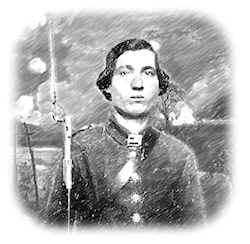
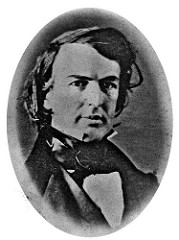
A likeness of Jones when he was editor and majority owner of the Daily Madisonian during President John Tyler’s administration.

November 23d.–Snowed last night three inches. Clear and cold this morning; ground frozen.

Had a dream last night–that meeting a few men in my wood and coal-house, I nominated R. Tyler for the Presidency, and it was well received. I must tell this to Mr. T.

I narrated my dream to Mr. T. Before I left, he said a clerkship was at the disposal of my son Thomas; but Thomas is clerk in the conscription service, getting rations, etc. etc., better than the $4000 per annum. But still that dream may be realized. He is the son of President Tyler, deceased.

John Mitchel is now editor of the Examiner, and challenged Mr. Foote yesterday–the note was borne by Mr. Swan, of Tennessee, Mr. Foote’s colleague. Mr. Foote would not receive it; and Mr. S. took offense and assaulted Mr. F. in his own house, when Mrs. F. interposed and beat Mr. S. away.

Gen. Winder has been appointed, by Gen. Cooper, commander of all prisons east of the Mississippi.

Gen. Winder has been made Commissary-General of all prisons and prisoners of war. The Bureau of Conscription is yet sustained in power. All this is done by Gen. Cooper,–unwise, probably fatal measures!

0 comments

0

Civil War Diary of Charles H. Lynch, 18th Conn. Vol’s.
Charles Lynch

November 23d. Called up early this morning. Sorry to leave our good camp in the Faulkner’s woods, Martinsburg. Our boys often repeat, “There is no rest for the wicked.” Soldiers must obey orders and not ask questions. Left camp, on the march for Halltown. After an uneventful march of about eighteen to twenty miles we reached Halltown at night, tired, foot-sore, marching over rough roads. This town consists of a railroad station and a few old houses, which show the effect of the war. General Sheridan will open up the Harper’s Ferry and Winchester Railroad, as it is reported his army will go in winter quarters at Winchester. Our regiment must hold this point, owing to scouting parties of the enemy, who may attempt to capture his supply trains.

0 comments

War Diary of Luman Harris Tenney.

War Diary of Luman Harris Tenney.

23rd. Wednesday. Resumed our backward march, the rebs following as far as Fisher’s Hill. Very cold. Walked till sore footed. Went into old camp.

0 comments

“Old grey-haired and weakly-looking men and little boys, not over 15 years old, lay dead or writhing in pain.”–Army Life of an Illinois Soldier, Charles Wright Wills.

Army Life of an Illinois Soldier, Charles Wright Wills, (8th Illinois Infantry)

Near Griswoldville, November 22, 1864.

Has been a gay day for our brigade. The other two brigades of our division went to work on the railroad this morning, and we on a reconnoisance toward Macon. Found Rebel cavalry at once. My Companies A and B, were thrown out as skirmishers. Forty of us drove at least 400 Rebel cavalry at least four miles, and kept them a mile ahead of the brigade. I think we killed and wounded at least 20 of them. We finally charged them out of a rail barricade and thoroughly stampeded them. It was the richest thing I ever saw. We got highly complimented on the way we drove them. Griswoldville was the point we started for, and having reached it we lay there an hour or so, and were then ordered back to the brigade. We found it in line along an open field, building a rail barricade along the front. We had a nice open field without even a fence on it, full 600 yards wide in our front. We were getting dinner, not dreaming of a fight, when lively musketry opened on the picket line, and in a minute more our pickets came in flying. A fine line of Johnnies pushed out of the woods after them, and then started for us. We commenced throwing up logs in our front and did not fire a shot until they were within 250 yards of us, by which time our works would protect us from musketry. We all felt that we had a sure thing, and had there been but one line of Rebels, we would have let them come up close to us. But, by the time the first line had got within 250 yards of us, three other lines had emerged from the woods, and they had run two batteries out on the field further to our right which opened on us. Our artillery returned the fire, but was silenced almost immediately. We then let loose on them with our muskets, and if we did not interest them, it is queer. One after another their lines crumbled to pieces, and they took the run to save themselves. There was a ravine 50 yards in front of us, and as the Rebels did not dare to run back over that field, they broke for the ravine. It was awful the way we slaughtered those men. Once in the ravine most of them escaped by following it up, the willows and canes screening them. We let a skirmish line into the ravine, which gobbled some 50 prisoners, a number of Africans among them. It was a most complete repulse, and when the numbers alone are considered, a glorious thing for us. Only our little brigade of say 1,100 muskets ware engaged on our side and no support was nearer than four miles (and then but one brigade), while the Rebels had four brigades and two regiments, about 6,000 men. But the four brigades were “Militia.” We estimate their loss at 1,000, and I do not think it an overestimate. Ours is 14 killed and 42 wounded in the whole brigade; four killed and seven wounded in the regiment; two in my company; 25 out of 30 Rebel bullets went 20 feet over our heads. Not one of ours went higher than their heads. Gen. C. C. Wolcutt was wounded much as Colonel Wright was, but more severely. No officers in our regiment were wounded. Two Rebel generals were either killed or wounded—General George, who formerly commanded in north Mississippi, and General Hall or Call. I was never so affected at the sight of wounded and dead before.

Old grey-haired and weakly-looking men and little boys, not over 15 years old, lay dead or writhing in pain. I did pity those boys, they almost all who could talk, said the Rebel cavalry gathered them up and forced them in.

We took all inside our skirmish line that could bear moving, to our hospital, and covered the rest with the blankets of the dead. I hope we will never have to shoot at such men again. They knew nothing at all about fighting, and I think their officers knew as little, or else, certainly knew nothing about our being there. About dark we moved back to this place, two miles from the battle field. The Johnnies drew off before we did, I think.
0 comments

Downing’s Civil War Diary.–Alexander G. Downing.

Diary of Alexander G. Downing; Company E, Eleventh Iowa Infantry

Tuesday, 22d–The weather has turned cold. We left our bivouac early this morning with the wagon train and at 10 o’clock caught up with our division at Gordon, where they were in camp last night. Gordon is fifteen miles from Milledgeville and is the junction of the railroad running from there to Savannah. General Sherman with the left wing of our army passed through here ahead of us, remaining in the town three or four days. We left Gordon about noon and marched ten miles on a byroad off to the right of our corps, going into bivouac near Irwinton, the county seat of Wilkinson county. This is a nice little town, but like all other places we passed through, is deserted, the citizens running away on the approach of our army, and leaving everything with the negroes. All is quiet at the front.

0 comments

A Rebel War Clerk’s Diary

A Rebel War Clerk’s Diary at the Confederate States Capital, By John Beauchamp Jones
A likeness of Jones when he was editor and majority owner of the Daily Madisonian during President John Tyler’s administration.

November 22d.–Rained in torrents last night; cold this morning and cloudy.

All quiet below. But there was an alarm, night before last, growing out of a stampede of some 50 of the enemy’s beeves. They charged upon our line, regardless of the fire of cannon and musketry, and were all captured after penetrating our works. Brave cattle!

Gov. Vance writes that if Wilmington be attacked by a large force in the rear of Fort Fisher, its fall is inevitable, unless two brigades of veteran troops be sent from Gen. Lee’s army. He says the defense of Wilmington is as important as that of Richmond. The President directs the Secretary of War to communicate with Gen. Lee on the subject.

We learn that Gen. Grant is on a visit to his family at Burlington, N. J.; and yet the departmental troops (clerks) are still kept in the trenches. It is said the President’s family keep them there by the most imploring appeals to Gen. Lee, and that the President himself does not feel altogether safe while the Federal army is so near him. His house is on the side of the city most exposed, if a sadden attack were made, of which, however, there seems to be no danger at present. Several brigades of Gen. Early’s troops have arrived from the Yalley.

Gold sells to-day at $42 for $1. And it rises in the United States. This produces trepidation in the cabinet.

Snowed a few few minutes to-day, 4 P.M. The clouds are breaking–cold.

What appetites we have! Shin-soup and bean-soup alternately are relished with shark-like appetites.

0 comments

0

Civil War Diary of Charles H. Lynch, 18th Conn. Vol’s.
Charles Lynch

November 22d. Everything has been quiet with us up to this date. The daily routine comes and goes on from day to day. Weather good for this time of the year. Late today, marching orders received. Must leave here for Halltown, four miles south of Harper’s Ferry.

0 comments

War Diary of Luman Harris Tenney.

War Diary of Luman Harris Tenney.

22nd. Went on to Mt. Jackson and found the whole of Early’s army posted two miles beyond. Quite lively skirmishing. 2nd Ohio in rear at the creek. Had charge of 3rd Battalion, broken as soon as rebs charged through town. Colors in front. Charged back several times. Infantry kept close on heels of the cavalry. Lyons, poor boy, is missing. Camped on old ground at Woodstock. A very cold night.

0 comments

…the alarm was given that more Yankees were coming.

Dolly Sumner Lunt Burge – A Woman’s Wartime Journal.

November 22, 1864.

After breakfast this morning I went over to my grave-yard to see what had befallen that. To my joy, I found it had not been disturbed. As I stood by my dead, I felt rejoiced that they were at rest. Never have I felt so perfectly reconciled to the death of my husband as I do to-day, while looking upon the ruin of his lifelong labor. How it would have grieved him to see such destruction! Yes, theirs is the lot to be envied. At rest, rest from care, rest from heartaches, from trouble.). . .

Found one of my large hogs killed just outside the grave-yard.

Walked down to the swamp, looking for the wagon and gear that Henry hid before he was taken off. Found some of my sheep; came home very much wearied, having walked over four miles.

Mr. and Mrs. Rockmore called. Major Lee came down again after some cattle, and while he was here the alarm was given that more Yankees were coming. I was terribly alarmed and packed my trunks with clothing, feeling assured that we should be burned out now. Major Lee swore that he would shoot, which frightened me, for he was intoxicated enough to make him ambitious. He rode off in the direction whence it was said they were coming. Soon after, however, he returned, saying it was a false alarm, that it was some of our own men. Oh, dear! Are we to be always living in fear and dread! Oh, the horrors, the horrors of war!

0 comments

Robert M. McGill

Robert M. Magill – Personal Reminiscences of a Confederate Soldier Boy, 39th Georgia Regiment of Infantry

November 21st.—Marched nine miles. Snowing. Rather rough way to celebrate birthday.


(Note: picture is of an unidentified Confederate soldier.)

0 comments

“We are afraid at this writing that Sheaff Herr was captured to-day.”–Army Life of an Illinois Soldier, Charles Wright Wills.

Army Life of an Illinois Soldier, Charles Wright Wills, (8th Illinois Infantry)

Near Macon, Ga., November 21, 1864.

This makes seven days from Atlanta, 114 miles by the roads we have marched. I think that time for an army like ours, over bad roads, too, for at least four days, is unprecedented.

Our cavalry had a little skirmish at Macon last evening and were driven back. I heard some cannonading, but don’t think it amounted to much. There was a little skirmish about the rear of our division at 4 this p.m., but beside racing and maybe capturing some half-dozen of our foragers, it amounted to nothing. Our left occupied Milledgeville. Governor Brown is here at Macon, also Beauregard, and they have scraped together some ten or a dozen things to defend the town with. I don’t think from looks at present, that “Pap” is going to try the town, but can’t tell. We have thrown up a little rail barricade this evening, which looks as if we were intending to destroy the Macon and Savannah railroad, on which rests the right of our brigade. We are afraid at this writing that Sheaff Herr was captured to-day. He was foraging where that little skirmish took place this p.m., and Rebels were seen after, and within 75 yards of him. It has rained steadily all day and for the last 60 hours, but has turned cold and is now clear.

0 comments

Downing’s Civil War Diary.–Alexander G. Downing.

Diary of Alexander G. Downing; Company E, Eleventh Iowa Infantry

Monday, 21st–We started on our march this morning in a rain which continued all day. We marched fifteen miles and went into camp. The artillery have the preference of the road and because of the muddy roads our division wagon train could not keep up. Our regiment was on train guard. We corralled the wagons four miles in the rear, where the First Division of the Seventeenth Corps went into bivouac, to safeguard the train, since the rebels’ cavalry have appeared both in front and in the rear.

0 comments

A Rebel War Clerk’s Diary

A Rebel War Clerk’s Diary at the Confederate States Capital, By John Beauchamp Jones
A likeness of Jones when he was editor and majority owner of the Daily Madisonian during President John Tyler’s administration.

November 21st.–Wet, dark, and dismal. Quiet below.

In Congress, Mr. Staples, of Virginia, unfortunately exhibited a statement obtained from the Bureau of Conscription, to the effect that while 1400 State officers, etc. were exempted in Virginia, there were 14,000 in North Carolina. This produced acrimonious debate, which is not the end of it, I fear. I don’t believe the statement. Gov. Smith, of Virginia, is exempting a full share of constables, etc. etc. The Bureau of Conscription strikes, perhaps, at Gen. Bragg, a North Carolinian. It is not the end.

An anonymous letter to Gov. Bonham states that Capt. Hugener and all his officers at Fort Sumter are drunkards or gamblers, and that the place is in great danger. Gov. B. sends the letter to the President, who directs the Secretary of War to make inquiry, etc. Perhaps it will be done in time–since the fall of Plymouth.

Gold, to-day, brings $40 for $1.

Oak wood sells to-day at $100 per cord.

A large amount of apple-brandy has been made this year. A lady, whose husband is a prisoner in the North, writes to the Secretary, asking the release of her apple-brandy (in Virginia) from the clutches of the impressing officer. She and her daughters had distilled 500 gallons, upon which they depended to procure other supplies, etc. Brandy is selling at $75 per gallon–$37,500. Pretty well for the old woman and her three daughters! Apples are worth $100 per barrel; but the currency (Confederate) is nearly worthless.

0 comments

Diary of a Southern Refugee, Judith White McGuire.

Diary of a Southern Refugee During the War by Judith White McGuire

21st.—We attended hospital services yesterday as usual. There are few patients, and none are very ill. On Friday night a most unexpected death took place, under very painful circumstances. A young adjutant lost his life by jumping out of a window at the head of his bed, about ten feet from the ground. His attendants were a sister, brother, and two servants. His suffering with a wound in his foot had been so intense that he would not allow any one to touch it except the ward-master, who handled it with the greatest tenderness. Yet while his attendants were asleep (for they thought it unnecessary to be up with him all night) he managed to get up, raise the window, and throw himself out, without disturbing one of them. His mind was no doubt unsettled, as it had been before. He lived about an hour after being found. His poor sister was wild with grief and horror, and his other attendants dreadfully shocked.

0 comments

War Diary of Luman Harris Tenney.

War Diary of Luman Harris Tenney.

21st. Monday. Out before daylight and moved at 6 A. M., 2nd and 3rd Divisions. A rainy, cold, disagreeable day. Camped just beyond Woodstock.

0 comments

They had a narrow escape, however, and only got away by knowing the country so much better than the soldiers did.

Dolly Sumner Lunt Burge – A Woman’s Wartime Journal.

November 21, 1864.

We had the table laid this morning, but no bread or butter or milk. What a prospect for delicacies! My house is a perfect fright. I had brought in Saturday night some thirty bushels of potatoes and ten or fifteen bushels of wheat poured down on the carpet in the ell. Then the few gallons of syrup saved was daubed all about. The backbone of a hog that I had killed on Friday, and which the Yankees did not take when they cleaned out my smokehouse, I found and hid under my bed, and this is all the meat I have.

Major Lee came down this evening, having heard that I was burned out, to proffer me a home. Mr. Dorsett was with him. The army lost some of their beeves in passing. I sent to-day and had some driven into my lot, and then sent to Judge Glass to come over and get some. Had two killed. Some of Wheeler’s men came in, and I asked them to shoot the cattle, which they did.

About ten o’clock this morning Mr. Joe Perry [Mrs. Laura’s husband] called. I was so glad to see him that I could scarcely forbear embracing him. I could not keep from crying, for I was sure the Yankees had executed him, and I felt so much for his poor wife. The soldiers told me repeatedly Saturday that they had hung him and his brother James and George Guise. They had a narrow escape, however, and only got away by knowing the country so much better than the soldiers did. They lay out until this morning. How rejoiced I am for his family! All of his negroes are gone, save one man that had a wife here at my plantation. They are very strong Secesh [Secessionists]. When the army first came along they offered a guard for the house, but Mrs. Laura told them she was guarded by a Higher Power, and did not thank them to do it. She says that she could think of nothing else all day when the army was passing but of the devil and his hosts. She had, however, to call for a guard before night or the soldiers would have taken everything she had.

0 comments

“I think there is less pillaging this trip than I ever saw before.”–Army Life of an Illinois Soldier, Charles Wright Wills.

Army Life of an Illinois Soldier, Charles Wright Wills, (8th Illinois Infantry)

Near Clinton, November 20, 1864.

Struck out foraging before daylight this morning. Almost any house on the road to-day would furnish pork and potatoes enough for a brigade. I got to the regiment about 8 p.m. last night. They say our brigade marched until 3 a.m., and the reveille sounded before the men got through supper. We passed over the scene of Stoneman’s fighting and surrender last August. Some of our men found two of our dead soldiers unburied, which don’t speak well for the Rebels, and is charged against them. I think there is less pillaging this trip than I ever saw before.

0 comments

Downing’s Civil War Diary.–Alexander G. Downing.

Diary of Alexander G. Downing; Company E, Eleventh Iowa Infantry

Sunday, 20th–It is still raining and the roads have become so muddy that it is impossible for the artillery to keep up with the infantry. There are some well-improved plantations along the way which have had good crops this season and we find plenty of sweet potatoes and fresh pork. We are on short rations now and therefore have to forage a great deal. We also find enough forage for the horses and mules in the command.

0 comments

A Rebel War Clerk’s Diary

A Rebel War Clerk’s Diary at the Confederate States Capital, By John Beauchamp Jones
A likeness of Jones when he was editor and majority owner of the Daily Madisonian during President John Tyler’s administration.

November 20th, Sunday.–Rained all night–raining this morning A dispatch from Gen. Wheeler, 18th, at Forsyth, Ga., says: “The enemy rapidly advancing.”

It is said Gov. Brown has called out the men en masse. I think Sherman is in danger. Mr. Foote made what is called “a compromise speech” in Congress yesterday. But although there is vacillation in the government, no compromise measures will be tolerated yet–if ever. Everything still depends upon events in the field. I think the government at Washington and the people of the United States are very weary of the war, and that peace of some sort must ensue. We shall be recognized by European powers upon the first symptoms of exhaustion in the United States; and there soon will be such symptoms, if we can only keep up a determined resistance.

Besides, the seizure of our cruiser Florida in a neutral port (Brazil) will furnish a pretext for a quarrel with the United States by the maritime powers.

I am amused by our fireside conversations at night. They relate mostly to the savory dishes we once enjoyed, and hope to enjoy again.

Gen. Butler’s speech in New York, suggesting that the rebels be allowed a last chance for submission, and failing to embrace it, that their lands be divided among the Northern soldiers, has a maddening effect upon our people.

0 comments

0

Civil War Diary of Charles H. Lynch, 18th Conn. Vol’s.
Charles Lynch

November 15th. Nothing special just at this time. We enjoy our camp and this town. Hope we go into winter quarters and remain here for duty. The town and railroad must be protected. No bad winter weather so far. Regular duty is kept up from day to day. Picket, guard, drilling, cutting wood for camp. The health of our regiment, at this time, is good.

0 comments

0

Civil War Diary of Charles H. Lynch, 18th Conn. Vol’s.
Charles Lynch

November 13th. Arrived in camp early this morning. Pleased with our trip to Connecticut. Happy that our regiment was selected. Again on duty. Hope to remain here during the coming winter. In camp in the Faulkner’s Woods, a good place.

0 comments

0

Civil War Diary of Charles H. Lynch, 18th Conn. Vol’s.
Charles Lynch

November 11th. Had a very pleasant short visit at home. The regiment assembled this forenoon, soon in line, on the march through New Haven, to the railroad station. We received a great send off by the citizens of New Haven, cheering and wishing us good luck. Soon on board train bound for New York. Made good time. Marched through the city. All quiet. No toughs in sight. Mr. Lincoln’s election made things quiet. Crossed the Cortlandt Street ferry to Jersey City. Soon on board train, bound for Martinsburg, which we were anxious to reach.

0 comments

War Diary of Luman Harris Tenney.

War Diary of Luman Harris Tenney.

20th. Sunday. Rest of regt. on picket. Wrote to Lizzie Cobb. Drew rations and ammunition.

0 comments

I feel so thankful that I have not been burned out…

Dolly Sumner Lunt Burge – A Woman’s Wartime Journal.

November 20, 1864.

This is the blessed Sabbath, the day upon which He who came to bring peace and good will upon earth rose from His tomb and ascended to intercede for us poor fallen creatures. But how unlike this day to any that have preceded it in my once quiet home. I had watched all night, and the dawn found me watching for the moving of the soldiery that was encamped about us. Oh, how I dreaded those that were to pass, as I supposed they would straggle and complete the ruin that the others had commenced, for I had been repeatedly told that they would burn everything as they passed.

Some of my women had gathered up a chicken that the soldiers shot yesterday, and they cooked it with some yams for our breakfast, the guard complaining that we gave them no supper. They gave us some coffee, which I had to make in a tea-kettle, as every coffeepot is taken off. The rear-guard was commanded by Colonel Carlow, who changed our guard, leaving us one soldier while they were passing. They marched directly on, scarcely breaking ranks. Once a bucket of water was called for, but they drank without coming in.

About ten o’clock they had all passed save one, who came in and wanted coffee made, which was done, and he, too, went on. A few minutes elapsed, and two couriers riding rapidly passed back. Then, presently, more soldiers came by, and this ended the passing of Sherman’s army by my place, leaving me poorer by thirty thousand dollars than I was yesterday morning. And a much stronger Rebel!

After the excitement was a little over, I went up to Mrs. Laura’s to sympathize with her, for I had no doubt but that her husband was hanged. She thought so, and we could see no way for his escape. We all took a good cry together. While there, I saw smoke looming up in the direction of my home, and thought surely the fiends had done their work ere they left. I ran as fast as I could, but soon saw that the fire was below my home. It proved to be the gin house [cotton gin] belonging to Colonel Pitts.

My boys have not come home. I fear they cannot get away from the soldiers. Two of my cows came up this morning, but were driven off again by the Yankees.

I feel so thankful that I have not been burned out that I have tried to spend the remainder of the day as the Sabbath ought to be spent. Ate dinner out of the oven in Julia’s [the cook’s] house, some stew, no bread. She is boiling some corn. My poor servants feel so badly at losing what they have worked for; meat, the hog meat that they love better than anything else, is all gone.

0 comments

“It is the first house I have been in for the last three months.”–Army Life of an Illinois Soldier, Charles Wright Wills.

Army Life of an Illinois Soldier, Charles Wright Wills, (8th Illinois Infantry)

Near Hillsboro, November 19, 1864.

Have been foraging to-day. Crossed the Ocmulgee at Ocmulgee Mills, on pontoons. This river is much like the Chattahoochie, but not so broad. I am lost from the division tonight and camped near the 2d Division. By the kindness of Mrs. Elizabeth Celia Pye, I occupy a feather bed to-night. It is the first house I have been in for the last three months. She understood from the Rebels that we burned all houses and she took all her things out and hid them in the woods. The foragers found them and brought them in to her. Had an excellent supper with the boys. This is a level, fine country, and has been well cultivated

0 comments