A Rebel War Clerk’s Diary

A Rebel War Clerk’s Diary at the Confederate States Capital, By John Beauchamp Jones
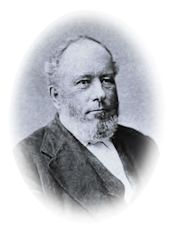
A likeness of Jones when he was editor and majority owner of the Daily Madisonian during President John Tyler’s administration.

FEBRUARY 1st.—Hazy, misty weather. Gen. Lovell (who lost New Orleans) has applied for a command in the West, and Gen. Johnston approves it strongly. He designs dividing his army into three corps, giving one (3d division) to Gen. Hardee; one (2d division) to Gen. Hindman; and one (1st division) to Lovell. But the Secretary of War (wide awake) indorses a disapproval, saying, in his opinion, it would be injudicious to place a corps under the command of Gen. Lovell, and it would not give confidence to the army. This being sent to the President, came back indorsed, “opinion concurred in.—J. D.”

Gen. Pillow has applied for the command of two brigades for operations between Gen. Johnston’s and Gen. Polk’s armies, protecting the flanks of both, and guarding the coal mines, iron works, etc. in Middle Alabama. This is strongly approved by Generals Johnston, Polk, Gov. Watts & Co. But the President has not yet decided the matter.

The Commissary-General is appointing many ladies to clerkships. Old men, disabled soldiers, and ladies are to be relied on for clerical duty, nearly all others to take the field. But every ingenuity is resorted to by those having in substitutes to evade military service.

There is a great pressure of foreigners (mostly Irish) for passes to leave the country.

0 comments

A Diary From Dixie.

A Diary From Dixie by Mary Boykin Miller Chesnut.

February 1st.–Mrs. Davis gave her “Luncheon to Ladies Only” on Saturday. Many more persons there than at any of these luncheons which we have gone to before. Gumbo, ducks and olives, chickens in jelly, oysters, lettuce salad, chocolate cream, jelly cake, claret, champagne, etc., were the good things set before us.

To-day, for a pair of forlorn shoes I have paid $85. Colonel Ives drew my husband’s pay for me. I sent Lawrence for it (Mr. Chesnut ordered him back to us; we needed a man servant here). Colonel Ives wrote that he was amazed I should be willing to trust a darky with that great bundle of money, but it came safely. Mr. Petigru says you take your money to market in the market basket, and bring home what you buy in your pocket-book.

0 comments

0

Civil War Diary of Charles H. Lynch, 18th Conn. Vol’s.
Charles Lynch

January 31st. The weather for the past few days has been very bad, making our duty very severe. Picket and guard must be done. These cold storms make the life of a soldier a bitter one. Wood must be brought to camp, trees cut down, then worked up into fire-wood. Must go out about five miles from camp for the wood. All must take a hand at the axe. Teams and woodchoppers must be kept well guarded. Each tent is provided with a small cylinder stove set on the ground, pipe up, out the top of the tent. Once in a while a tent takes fire, which makes lively work for the boys. We keep prepared for such an emergency. Manage to keep comfortable in our tents when off duty. Visit the town quite often when off duty.

Orders received that our old commander, General Robert H. Milroy, will visit our camp this afternoon and review our regiment. Much excitement getting everything in order. All are happy and pleased at the prospect of seeing the General, whom we have not seen since the battle of Winchester, June 13th, 14th, 15th, 1863. At 4 P. M. the General, with staff and escort, came into camp. The regiment being in line, received him with hearty cheers and a welcome and a salute. He addressed the regiment, which I copy.

Soldiers of the Eighteenth. Since I last saw you, you have suffered captivity in rebel prisons. We have been separated since then, but I have come to see you and to praise you for your gallantry.

I saw you in the second day’s fight, as you charged the enemy from your rifle-pits and drove them back upon their reserves, holding them in check until night, when you fell back but with your face to the foe. Again I saw you the next morning facing as hot a fire as I ever witnessed. I looked in vain to see you waver. Boys, it was a hot place – a hot place. I saw you go where none but brave men dare to go, saw you make three successful charges, preserving your line as well as if on dress parade. I witnessed it all. I saw you as you broke the first line of rebel infantry, and charged up to their batteries, driving away their gunners, still pressing on and breaking their reserves. But a third line was too strong for you. I knew it was. Only then did you fall back, when your lines were broken, and many brave Connecticut men lay bleeding on the field. But you only fell back to re-form, and give them another taste of your steel. I knew it was madness to order you forward again, it was ordering you to death and annihilation. But I watched you with pride as you charged the third time, but when I saw your ranks withering, and your comrades falling, it made my heart grow sad within me, and I ordered you to fall back. You know the rest. You were surrounded and there was no escape.

But I miss your noble commander, Colonel Ely, may he soon return to you.

Boys, to your valor I owe my safety. You come from a state whose soldiers never disgrace themselves nor their flag. I am proud of you.

0 comments

Downing’s Civil War Diary.–Alexander G. Downing.

Diary of Alexander G. Downing; Company E, Eleventh Iowa Infantry

Sunday, 31st–Regimental inspection today and the usual dress parade. All things are quiet in camp and no news. I attended church services in the afternoon. Since the arrival here of the large number of reinforcements, the rebels have all left this vicinity, retiring beyond the Black river. In all probability they are informed as to our contemplated expedition and are concentrating their forces to dispute every mile of the way to Meridian.

0 comments

War Diary of Luman Harris Tenney.

War Diary of Luman Harris Tenney.

31st. The day in camp. Read in Atlantic and wrote a letter home. Mr. Brown and a friend made a formal Sunday call. Disgusting–his preaching and practice.

0 comments

A Rebel War Clerk’s Diary

A Rebel War Clerk’s Diary at the Confederate States Capital, By John Beauchamp Jones
A likeness of Jones when he was editor and majority owner of the Daily Madisonian during President John Tyler’s administration.

JANUARY 31st.—It rained moderately last night, and is cooler this morning. But the worst portion of the winter is over. The pigeons of my neighbor are busy hunting straws in my yard for their nests. They do no injury to the garden, as they never scratch. The shower causes my turnips to present a fresher appearance, for they were suffering for moisture. The buds of the cherry trees have perceptibly swollen during the warm weather.

A letter from Gen. Cobb (Georgia) indicates that the Secretary of War has refused to allow men having employed substitutes to form new organizations, and he combats the decision. He says they will now appeal to the courts, contending that the law putting them in the service is unconstitutional, and some will escape from the country, or otherwise evade the law. They cannot go into old companies and be sneered at by the veterans, and commanded by their inferiors in fortune, standing, etc. He says the decision will lose the service 2000 men in Georgia.

The Jews are fleeing from Richmond with the money they have made.

0 comments

January 10 to 31, 1864

Experience of a Confederate Chaplain—Rev. A. D. Betts, 30th N. C. Regiment

Sunday, Jan. 10—Cold. Prayer meetings in Company quarters.

Jan 11—Get a few poles for my chapel.

Jan 12—Meet Chaplains at Pisgah. Get poles all cut for chapel.

Jan. 13—Haul poles and begin my chapel.

Jan. 14—Still at work on chapel. Chaplains of this division met in my tent yesterday.

Jan. 16—Get roof and chimneys finished. Having labored with my detail and conducted prayer meeting every night, I feel very much wearied.

Jan. 17—Preach in chapel a. m. Bible class in p. m. Prayer meeting in Co. I at night.

Jan. 20—Rev. Henry Hardie calls and prays with me. Bible class at night.

Jan. 21—Ride by Kirkland’s Brigade and see Bros. Webb, Lacy and Smith. Chapel up. Meet Bros. Hines and Paris on their way to North Carolina with Hoke’s Brigade. Go late to Lane’s Brigade, looking for Bro. Westbrook. Night with Bro. Kennedy.

Jan. 22—Return to Regiment and find Col. Parker arrived yesterday.

Jan. 23—Ride with Bro. N. B. Cobb to see Johnston’s Brigade and also see Bro. Gwaltney in First North Carolina Regiment. Bro. Robbins, (J. H.) 12th Regiment, arrives and preaches for me.

Jan. 24—Bro. Harding preaches for me in a.m. Bible class in p. m. Bro. Gwaltney preaches for me at night Bro. Robbins spends night with me.

Jan. 25—In camp. Prayer meeting in Co. A. at night.

Jan. 26—Meet Chaplains at Bro. Booker’s chapel in Jones’ Brigade. Bro. Cobb preaches. About fifteen Chaplains present. Near twenty chapels being built in this army. Bro. Robbins moves to his Regiment.

Jan. 27—Exceedingly warm.

Jan. 28—Bros. Anderson, Robbins and I visit the provost guard and prisoners in Rodes’ Division. One prisoner is to be shot.

Jan. 29—Bro. Robbins and I walk to Bro. Gwaltney’s Regiment. I preach.

Jan. 30—Right unwell. Bro. Robbins spends night with me. Regiment goes on picket.

Sunday, Jan. 31—Bro. Evans and I visit and preach to provost guard and prisoners. New prison. Visit prisoners also.

0 comments

Downing’s Civil War Diary.–Alexander G. Downing.

Diary of Alexander G. Downing; Company E, Eleventh Iowa Infantry

Saturday, 30th–We cleaned up our camp for inspection. Troops are still landing here for the purpose of going out on the raid.

0 comments

War Diary of Luman Harris Tenney.

War Diary of Luman Harris Tenney.

30th. Barracks fitted up as comfortable as possible. “I” and “C” officers together. Wrote a line home and to Fannie. Paroled. Moved.

0 comments

A Rebel War Clerk’s Diary

A Rebel War Clerk’s Diary at the Confederate States Capital, By John Beauchamp Jones
A likeness of Jones when he was editor and majority owner of the Daily Madisonian during President John Tyler’s administration.

JANUARY 30th.—The Senate has passed a new Conscription Act, putting all residents between the ages of eighteen and fifty-five in the military service for the war. Those over forty-five to be detailed by the President as commissary quartermasters, Nitre Bureau agents, provost guards, clerks, etc. This would make up the enormous number of 1,500,000 men! The express companies are to have no detail of men fit for the field, but the President may exempt a certain class for agricultural purposes, which, of course, can be revoked whenever a farmer refuses to sell at schedule prices, or engages in speculation or extortion. Thus the President becomes almost absolute, and the Confederacy a military nation. The House will pass it with some modifications. Already the Examiner denounces it, for it allows only one owner or editor to a paper, and just sufficient printers,—no assistant editors, no reporters, no clerks, etc. This will save us, and hasten a peace.

Mr. G. A. Myers, the little old lawyer, always potential with the successive Secretaries of War, proposes, in a long letter, that the Department allows 30 to 40 foreigners (Jews) to leave the Confederate States, viaMaryland, every week!

Mr. Goodman, President of the Mississippi Railroad, proposes to send cotton to the Yankees in exchange for implements, etc., to repair the road, and Lieut.-Gen. (Bishop) Polk favors the scheme.

Commissary-General Northrop likewise sent in a proposal from an agent of his in Mississippi, to barter cotton with the Yankees for subsistence, and he indorses an approval on it. I trust we shall be independent this summer.

To-day it is cool and cloudy, but Custis has had no use for fire in his school—room of nights for a week—and that in January. The warm weather saved us a dollar per day in coal. Custis’s scholars are paying him $95 the first month.

I shall hope for better times now. We shall have men enough, if the Secretary and conscription officers do not strain the meshes of the seine too much, and the currency will be reduced. The speculators and extortioners, in great measure, will be circumvented, for the new conscription will take them from their occupations, and they will not find transportation for their wares.

The 2000 barrels of corn destroyed by the enemy on the Peninsula, a few days ago, belonged to a relative of Col. Ruffin, Assistant Commissary-General! He would not impress that—and lo! it is gone! Many here are glad of it.

0 comments

Diary of David L. Day.

David L Day – My diary of rambles with the 25th Mass

A Change of Commanders.

Jan. 29. Today we were paraded and invited to give our attention to orders. Major Mulcay of the 139th New York volunteers appeared on the ground, and read his orders relieving Capt. Parkhurst of the command. He then assumed command, and had a short drill and dress parade. Of course we put the best side out, to give the major a favorable impression. He complimented us for our good drill and neat appearance. Orders were read for a long and rapid march; of course that is one of our kind and we are expected to go on it. The major tells us we shall stay here a few days and then be assigned to his regiment.

0 comments

Downing’s Civil War Diary.–Alexander G. Downing.

Diary of Alexander G. Downing; Company E, Eleventh Iowa Infantry

Friday, 29th–Everything is working fine here at present. We can hear nothing about the army in the East. Some of the brigades have moved out to Black river bridge, since there is a better camping ground at that place; they also have good water there and plenty of wood and provisions. But we are still lying in camp with plenty to live on and our duty is very light.

0 comments

War Diary of Luman Harris Tenney.

War Diary of Luman Harris Tenney.

29th. Passed through Cincinnati before daylight. Left for Columbus at 7:30. Stopped opposite Camp Chase and walked over. Got supper at boarding house. Boys poor accommodations.

0 comments

0

Civil War Diary of Charles H. Lynch, 18th Conn. Vol’s.
Charles Lynch

January 28th. This morning the Pennsylvania boys are packing up to leave, they having received marching orders. Ordered to New Creek, West Virginia. Our boys lined up, bid them good bye, good luck, with hearty cheers. These regiments, the 3d and 4th were known as the reserves and the Buck Tails, they having seen hard service. We found them a good lot of boys, and visited back and forth very much while they were in camp near us.

0 comments

Downing’s Civil War Diary.–Alexander G. Downing.

Diary of Alexander G. Downing; Company E, Eleventh Iowa Infantry

Thursday, 28th–Some of the troops that are going out on an expedition to Meridian, started on their way this morning. It is rumored that the Seventeenth and Sixteenth Army Corps are to make a raid across the State of Mississippi for the purpose of destroying the railroad running from Vicksburg to Meridian, and that General Sherman is to be in command of the expedition.

0 comments

War Diary of Luman Harris Tenney.

War Diary of Luman Harris Tenney.

27th. Concluded to bury Extell’s remains in city. Went to Gait House for breakfast. Bought a pair of boots. Evening saw Corsican Brothers, went with company.

0 comments

A Rebel War Clerk’s Diary

A Rebel War Clerk’s Diary at the Confederate States Capital, By John Beauchamp Jones
A likeness of Jones when he was editor and majority owner of the Daily Madisonian during President John Tyler’s administration.

JANUARY 28th.—The beautiful, pleasant weather continues.

It is said Congress passed, last night, in secret session, the bill allowing increased compensation to civil officers and employees.

Mr. Davidson, of fifty years of age, resigned, to-day, his clerkship in the War Department, having been offered $5000 by one of the incorporated companies to travel and buy supplies for it.

Mr. Hubbard, of Alabama, suggests to the Secretary to buy 500,000 slaves, and give one to every soldier enlisting from beyond our present lines, at the end of the war. He thinks many from the border free States would enlist on our side. The Secretary does not favor the project.

Gen. Whiting writes for an order for two locomotive boilers, at Montgomery, Ala., for his torpedo-boats, now nearly completed. He says he intends to attack the blockading squadron off Wilmington.

The weather is still warm and beautiful. The buds are swelling.

0 comments

Diary of David L. Day.

David L Day – My diary of rambles with the 25th Mass

Visitors.

Jan. 27. We had been here only two days when our common sense and judgment were still further imposed upon by three of our former officers from the News, soliciting enlistments. They probably thought that a fifty mile march and being in a strange city had perhaps taken the stiffening out of us somewhat, but they were not long in finding out that that was a delusion. Capt. Parkhurst laughed at them, telling them they had come to the wrong market to peddle their wares; the boys crowded around them, giving them scarcely breathing room, and jokingly told them they had picked some chickens the night before, but had got no tar, but perhaps molasses would answer for a substitute. Finding they had come on a fool’s errand, they then wanted Surgeon Hoyt to put as many of us on the sick list as possible, thereby increasing the working force at the News. The surgeon told them that men who could make a fifty mile march, carrying heavy knapsacks, were not supposed to be very seriously indisposed. Finding the leopard hadn’t changed his spots, they left, taking with them two captives.

0 comments

Downing’s Civil War Diary.–Alexander G. Downing.

Diary of Alexander G. Downing; Company E, Eleventh Iowa Infantry

Wednesday, 27th–We have battalion drill now every afternoon, and today our regiment was reviewed by General Chambers. A division of the Sixteenth Army Corps from Chattanooga landed here last night.

0 comments

A Rebel War Clerk’s Diary

A Rebel War Clerk’s Diary at the Confederate States Capital, By John Beauchamp Jones
A likeness of Jones when he was editor and majority owner of the Daily Madisonian during President John Tyler’s administration.

JANUARY 27th.—Last night, the weather being very pleasant, the President’s house was pretty well filled with gentlemen and ladies. I cannot imagine how they continue to dress so magnificently, unless it be their old finery, which looks well amid the general aspect of shabby mendicity. But the statures of the men, and the beauty and grace of the ladies, surpass any I have seen elsewhere, in America or Europe. There is high character in almost every face, and fixed resolve in every eye.

The President was very courteous, saying to each, “I am glad to meet you here to-night ” He questioned me so much in regard to my health, that I told him I was not very well; and if his lady (to whom he introduced us all) had not been so close (at his elbow), I might have assigned the cause. When we parted, he said, “We have met before.” Mrs. Davis was in black—for her father. And many of the ladies were in mourning for those slain in battle.

Gen. Lee has published the following to his army:

“HEADQUARTERS ARMY OF NORTHERN VIRGINIA,
“January 22d, 1864.

“GENERAL ORDERS No 7.

“The Commanding General considers it due to the army to state that the temporary reduction of rations has been caused by circumstances beyond the control of those charged with its support. Its welfare and comfort are the objects of his constant and earnest solicitude; and no effort has been spared to provide for its wants. It is hoped that the exertions now being made will render the necessity but of short duration: but the history of the army has shown that the country can require no sacrifice too great for its patriotic devotion.

“Soldiers! you tread, with no unequal steps, the road by which your fathers marched through suffering, privation, and blood to independence!

“Continue to emulate in the future, as you have in the past, their valor in arms, their patient endurance of hardships, their high resolve to be free, which no trial could shake, no bribe seduce, no danger appal: and be assured that the just God, who crowned their efforts with success, will, in His own good time, send down His blessings upon yours.

“(Signed)                                                              R. E. LEE, General.

An eloquent and stirring appeal!

It is rumored that the writ of habeas corpus has been suspended—as the President has been allowed to suspend it—by Congress, in secret session. But Congress passed a resolution, yesterday, that after it adjourns on the 18th February, it will assemble again on the first Monday in May.

Mr. Lyons, chairman of the Committee on Increased Compensation to the civil officers, had an interview with the Secretary of War yesterday. The Secretary told him, it is said, that unless Congress voted the increase, he would take the responsibility of ordering them rations, etc. etc. And Mr. Smith, of North Carolina, told me, to-day, that something would be done. He it was who moved to lay the bill on the table. He said it would have been defeated, if the vote had been taken on the bill.

Gov. Smith sent to the Legislature a message, yesterday, rebuking the members for doing so little, and urging the passage of a bill putting into the State service all between the ages of sixteen and eighteen and over forty-five. The Legislature considered his lecture an insult, and the House of Delegates contemptuously laid it on the table by an almost unanimous vote. So he has war with the Legislature, while the President is in conflict with the Confederate States Senate.
0 comments

0

Civil War Diary of Charles H. Lynch, 18th Conn. Vol’s.
Charles Lynch

January 26th. In camp today we have a visitor, a minister from Woodstock, Connecticut, Rev. Mr. White. The day being fine, our regular routine was carried out. At dress parade, Mr. White delivered an address, a message from home. A pleasure to hear direct from old Connecticut.

0 comments

Downing’s Civil War Diary.–Alexander G. Downing.

Diary of Alexander G. Downing; Company E, Eleventh Iowa Infantry

Tuesday, 26th–I went on picket today. The weather is quite warm. Vicksburg, on the east bank of the Mississippi, is built on very high ground. It is quite rough and rolling here. There are some nice buildings here—a very fine court house, six good church buildings and a number of very nice dwellings, besides some large warehouses and stores. During the siege the houses were all more or less damaged, there being scarcely a single building that was not in some way injured. There are very few of the old citizens living here at present, as the military rule of the Union army is not good for their peace of mind.

0 comments

War Diary of Luman Harris Tenney.

War Diary of Luman Harris Tenney.

26th. Found Extell under seats dead, poor boy. Has suffered much, not been alive for months. Procured coffin. Started from Bowling Green before noon. Slow work. At Louisville at 10:30 P. M. Went to Barracks in city, coffee and bread, poor and nasty barracks.

0 comments

You don’t know how selfish men become by soldiering two or three years.

Civil War Letters of Walter and George Battle

CAMP FOURTH NORTH CAROLINA REG’T.,
NEAR ORANGE COURT HOUSE, Jan. 26, 1864.

My Dear Folks:
Your letter of the 16th inst. received a few days ago. Mr. Christman and the boxes got here Sunday night. Everything came safely, with the exception of Tom Stith’s box, that got stolen passing through Richmond; the practiced thieves around Richmond can steal anything.

You can’t tell how I prize that middling of meat. It came in the very nick of time. I had just finished the ham and sausages which you sent by Nixson. The things which you have sent me will last me several weeks; with what I draw will give me just as much as I want by mixing rations. You don’t know how selfish men become by soldiering two or three years. Two years ago when one received a box from home he was expected to ask the whole company up and tell them to help themselves, but that custom has played out. Now when a fellow buys anything or has anything sent him from home, the rest of the company don’t expect to be asked to help themselves. Whoever one is messing with he is all that expects to share it with him; the whole company is messed off in pairs to suit themselves. I have been messing with Lang Mixson since we left Morton’s Ford. He is the best messmate I have ever had. I will never mess with more than one at a time again. When two are together it enables them to cook and draw the rations for each other, when either is on duty. Mr. Winstead, our orderly, will leave in the morning for home. I shall send this by Wm. Barnes, who will leave with Mr. Christman. Give my love to all.

Yours,
WALTER.


Letters from two brothers who served in the 4th North Carolina Infantry during the Civil War are available in a number of sources online.  Unfortunately, the brothers are misidentified in some places as Walter Lee and George Lee when their names were actually Walter Battle and George Battle. See The Battle Brothers for more information on the misidentification.

0 comments

A Rebel War Clerk’s Diary

A Rebel War Clerk’s Diary at the Confederate States Capital, By John Beauchamp Jones
A likeness of Jones when he was editor and majority owner of the Daily Madisonian during President John Tyler’s administration.

JANUARY 26th.—Gen. Lee recommends the formation of several more brigades of cavalry, mostly from regiments and companies in South Carolina, and to this he anticipates objections on the part of the generals and governors along the Southern seaboard; but he deems it necessary, as the enemy facing him has a vastly superior cavalry force.

The prisoners on Belle Isle (8000) have had no meat for eleven days. The Secretary says the Commissary-General informs him that they fare as well as our armies, and so he refused the commissary (Capt. Warner) of the prisoners a permit to buy and bring to the city cattle he might be able to find. An outbreak of the prisoners is apprehended: and if they were to rise, it is feared some of the inhabitants of the city would join them, for they, too, have no meat—many of them—or bread either. They believe the famine is owing to the imbecility, or worse, of the government. A riot would be a dangerous occurrence, now: the city battalion would not fire on the people—and if they did, the army might break up, and avenge their slaughtered kindred. It is a perilous time.

My wife paid $12, to-day, for a half bushel of meal; meantime I got an order for two bushels, from Capt. Warner, at $10 per bushel.

The President receives visitors to-night; and, for the first time, I think I will go.

Mr. Foote, yesterday, offered a resolution that the Commissary-General ought to be removed; which was defeated by a decided vote, twenty in the affirmative. Twenty he relied on failed him. Letters from all quarters denounce the Commissary-General and his agents.

0 comments