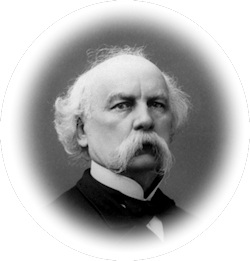
William Henry Trescot[i] to Howell Cobb. E.
(Private and confidential.)
Barnwell Island, Near Beaufort, So. Ca., Jany. 14, 1861.
My Dear Mr. Cobb, I reached home on Friday last with the intention of returning to Charleston today; but having been too late for the railroad I find time enough to do what I have been wanting to do for some weeks—write you a long letter. It would indeed have to be a very long one to give you the history of the events in Washington since you left it. A strange, sad, history it is, and if ever truly written will exhibit a marvellous example of folly in high places. . . .
The papers will have given you by this time Floyd’s[ii] letter of resignation, the correspondence with the Carolina Commissioners, Thompson’s resignation and the President’s special message; and I think they tell their tale. But very few persons will ever know how earnestly and faithfully Mr. Buchanan’s best friends strove to save him, and I believe would have saved him but for Holt and Black. But you were gone, Floyd had resigned Thompson and Thomas sure to go, and Black, Holt, Stanton and Toucey inflexible. That the Union was gone was clear, and their home position had to be secured. As Black said to me the morning I left, “You beat us all the way through, and came very near carrying your last point but fortunately our last card was a trump”—which I suppose means that they threatened resignation. Mr. Buchanan’s position was undoubtedly a difficult one. . . . If, when Anderson moved to Fort Sumter, he had said to the commissioners—”this is against my orders. I would have corrected it but you have taken the forts and I cannot restore the status. I am willing to act in good faith, meet me half way,” he would have had any facility furnished him. On Sunday the ______ I went to him at one o’clock and plead with him for an hour. Unfortunately Toucey[iii] was there. And when I left, I went to Hunter of Virginia and asked him to go to the President and say, “If your only difficulty is the occupation of the forts, say to the commissioners that you will withdraw Anderson from Sumter if they will evacuate the others and restore them to you, to be held as property until this question is settled; say so now, altho four days have passed, and it will be accepted.” Hunter did go and when he came back, he said, “It is useless to repeat what passed. The case is hopeless. The President has changed his ground and will maintain it to the last extremity. Telegraph your people to sink vessels in the entrance of the harbour immediately. They have no time to lose.”
It was not until after this and a great deal more that the letter of the commissioners was written, and then it was meant to be not a diplomatic note to the President but a protest against bad faith and a vindication before the country.
The events which have transpired since, you know—the attempt to send reinforcements; the fire upon them; and civil war depending upon the guns at Fort Sumter. Anderson did not fire but took to writing, and as a matter of course put himself in the wrong, and another chance has thus been afforded Mr. Buchanan. God knows if he is wise enough or strong enough to use it. I hope so. Late on the night before I left, the Governor sent for me to go to Washington, but I declined. I did not see what good was to be done there, and I could not tell what might be done at home while I was away. All things are, I believe, working for good; but neither the government at Washington nor Charleston is helping it forward much. It really does seem that a revolution works its way through the blunders of those who attempt to direct it.
I was not one of the commissioners[iv] officially, but the convention upon my return passed a vote of thanks for services, etc., and put me on the footing of a commissioner. I have not seen their resolution, don’t understand it exactly, but as it was meant kindly have no criticism to make upon it.
I believe you were right from the beginning, altho circumstances so far have helped us all on wonderfully. You will be glad to know that you made a very pleasant and wholesome impression upon our people, and the convention paid you a compliment which I think is a very great one from that body. When the election of a commissioner to Georgia came up, a member rose and stated that you had expressed a wish that Orr should be sent, and he was unanimously elected. But whatever policy it may have been wise to urge a month ago, I am sure you will agree with me that now it is all important to take Georgia out at once and organize a Southern government immediately. We must meet Lincoln with a President of our own. We want the military resources of the South concentrated at once; and above all, our foreign relations ought to be assured as quickly as possible. No attempt at foreign negociations ought to be made by single states. I trust that these are your views. I deem them all important. The condition of weakness and confusion which will result from four or five states floating about is indescribable. Weld them together while they are hot.
As to the Presidency, I will say nothing as yet. If you have anything to say, let me know. You will understand me. I have only one favour to ask—let me have a hand in organising the State Department. There are a great many things I don’t understand, but that I do.
I will be very glad to hear from you.
P. S.—I go to Charleston tomorrow—direct to me there care of Messrs. Barnwell & Son, Factors.
[i] U. S. Assistant Secretary of State, 1860, author of ” The Position and Course of the South ” (1850), ” Diplomatic History of the Administrations of Washington and Adams ” (1857), etc.
[ii] John B. Floyd of Virginia, Secretary of War in Buchanan’s cabinet.
[iii] Isaac Toucey, of Connecticut, Secretary of the Navy in Buchanan’s cabinet.
[iv] From South Carolina.
From Annual Report of the American Historical Association for the Year 1911.
William Henry Trescot was an American diplomatist born in Charleston, South Carolina, on November 10, 1822. From 1852 to 1854 he was secretary of the U.S. legation in London. In June 1860 he was appointed assistant secretary of state, and he was acting secretary of state in June–October, during General Lewis Cass’s absence from Washington, and for a few days in December after Cass’s resignation. His position was important, as the only South Carolinian holding anything like official rank, because of his intimacy with President James Buchanan, and his close relations with the secession leaders in South Carolina. He opposed the reinforcement of Fort Sumter, used his influence to prevent any attack on the fort by South Carolina before the meeting of the state’s convention called to consider the question of secession, and became the special agent of South Carolina in Washington after his resignation from his position as United States Assistant Secretary of State in December. He returned to Charleston in February 1861.
Howell Cobb was an American political figure. A southern Democrat, Cobb was a five-term member of the United States House of Representatives and Speaker of the House from 1849 to 1851. He also served as the 40th Governor of Georgia and as a Secretary of the Treasury under President James Buchanan. Cobb is, however, probably best known as one of the founders of the Confederacy, having served as the President of the Provisional Congress of the Confederate States.