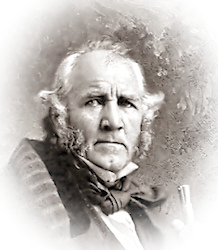
8. Governor Houston to Mr. Floyd.
Executive Department,
Austin, April 14, 1860.
Austin, April 14, 1860.
Sir: Actuated by a sense of duty, as well as impelled by the helpless condition of our frontier people, I again address your department. Did the condition of things afford any hope that the shocking barbarities, which I have already reported to you, would cease at an early period, I would be loth to press upon the federal government a subject of even this importance, deeming that my former communications were sufficient to convince all of the importance, as well as the necessity, of immediate action.
The misfortunes to which we have been subject, since annexation, have, I think, demonstrated the fact that it is entirely useless to think of rendering protection to Texas by the regular army. In the first place, it is a description of service which they heartily detest. In the next place, the Indians move in their forays with wonderful celerity, and it is ridiculous to suppose that infantry can afford any protection against such a foe, because they cannot go in pursuit, and if they did, it would be useless, and a subject of amusement and ridicule to the Indians. No one doubts the value of our regulars, or the skill of our officers. Both are a subject of pride to the country; but unless the Indians are fools enough to go up to a garrison and be shot down, garrisons will be of no use, only to shelter the inmates. If cavalry are sent to the frontier, they are generally mounted on fine American horses, accustomed to being fed on grain, which cannot be procured even at an enormous price; and if they could be grain-fed, they must be shod, or they are unable to give pursuit after Indians for more than a day, without becoming “tender-footed,” which is exceedingly detrimental to success.
Were a regiment of Texas volunteers called out, and the ten companies stationed at ten different points on the line of our frontier, and patrols made to pass between the different stations, no Indians could pass into the settlements without their trails being discovered, and pursuit given before they would have an opportunity to massacre and depredate upon our people.
The only question, then, arising is, as to what description of troops will be most efficient for purposes of protection against the Indians. It is evident to my mind that Texas rangers stand pre-eminent on the score of economy and usefulness. I have, I think, named reasons why the troops of the regular army are not effective in Indian warfare. I now propose to render reasons why the Texas rangers are superior, and the only class of troops fitted for such service.
They are excellent horsemen, accustomed to hardships, and the horses of Texas, having been raised on grass, can perform service without requiring grain to subsist them, except to recruit their strength for a few days when returned from a hard scout. The Texans are acquainted with Indian habits, and also their mode of warfare. They are woodsmen and marksmen. They know where to find the haunts of the savage, and how to trail and make successful pursuit after them. They, too, have their families, their kindred, and their neighbors to protect. They have the recollection of a thousand outrages, committed upon those dear to them by the savage, to impel them onward; and if, in the pursuit of the foe, they get out of rations, they can subsist on game, being dexterous hunters. What are privations, suffering, and danger to them, in comparison with the plaudits of their fellow citizens, which follow their success 2 They are accustomed to the heat of the prairies, and the severe northers to which we are subject. They need no tents to shield their hardy frames from the night winds, but are content with the earth for a bed, and a blanket for a covering. Such a force as this, continually on the alert, will be a terror to the savage. The certainty of detection and punishment will keep him away from our settlements.
The executive of Texas has sought most sedulously to avoid any appearance of being captious or complaining in his intercourse with the federal government, nor does he intend to render himself obnoxious to the imputation, at the same time it is his duty to lay before the Executive of the United States such facts as he may deem worthy of consideration and attention.
Within the past few hours expresses have arrived from Eastland and Palo Pinto counties, announcing the murder of three men and two boys, one ten and the other eight years of age, with all the attendant barbarities of scalping and mutilation. The Indians are in small parties along our frontier, and penetrate with unparalleled audacity to within forty miles of this place. They are ravaging the German settlements on the Medina, within thirty miles of San Antonio. Not content with murdering the settlers and carrying off their horses, they shoot all the cattle in their path. Hid in the dense brakes or mountain fastnesses, they wait an opportunity to make a foray. The consequence is, that the people are quitting whole neighborhoods and forting up at the county sites. Their little cabins are deserted, their fields of corn and wheat are left to waste. In many counties there is no bread and but a scanty subsistence for the women and children, while their men are in pursuit of the foe. Starvation is staring them in the face. Many of them, attracted to the frontier by the inducements held out by the land policy of Texas, are poor and unable to procure good arms to defend themselves and their families; a large portion of them are emigrants from the western States, mostly from Indiana, Illinois, and Ohio, and unused to the dangers of an Indian frontier life. They emigrated at a time when there was no apprehension, and are not prepared for the terrible realities which are now upon them. Their horses have been stolen, and they are unable to make pursuit.
The country has been so recently settled, and until then the range of the Indians, that their familiar acquaintance with it affords them every advantage. They can surprise the settlements at any moment, and can readily elude pursuit, unless it be of the most determined character. If not overtaken, they shelter themselves and wait another opportunity of surprise.
It will be asked, what is Texas doing as a State to repel this enemy? I cannot believe that any will be so lost to humanity as to declare, in the face of the facts before the world, that Texas has a mercenary object in view; but it will be asked, is Texas waiting the aid of the federal government, and leaving her frontier citizens to a fate so horrid as that pictured? Not by any means. There are now in active Indian service, under the orders of the executive, twenty-three minute detachments of fifteen men each, with a reserve of ten men each.
There are also three companies of seventy men each. Four of forty men each, and three of twenty-five men each. A force of four companies of 90 men each will rendezvous at Fort Worth on the 13th instant, preparatory to making a determined effort to pursue and punish the Indians. Justice would demand that the government to whom we have a right to look for protection should not impose upon us the burden of sustaining this force in the field. Nor is this all. Every available man in the frontier counties is in the saddle, and has been for months. The citizens, without reward or hope of reward, have placed their wives and children in security and gone to the relief of their more oppressed neighbors.
It must be remembered that the distance from the Red river to the Rio Grande is not less than seven hundred miles, and this latter line is exposed. The whole distance is to be regarded in the disposition made of our troops, as the regulars, being in garrison, do not intercept the Indians when coming into the country.
I deplore the misfortunes of our bleeding frontier, and fear that some of those who have it in their power to render us aid misapprehend the motives which induced me to appeal to your department for arms, as well as for an organized and efficient force for the protection of our frontier. It affords me pleasure to say that you have given abundant evidence of your desire to succor Texas, in this her time of need, as your late recommendations to Congress testify; but there still seems to be a suspicion in the minds of some that Texas has a covert design upon Mexico, and the same has been used as a pretext for not authorizing the raising of an adequate force. The disposition of the troops asked for, as set forth in my former communication, as well as my assurance to the department, I had hoped would have set at rest all such apprehensions in the mind of the intelligent. I have never yet stooped so far as to substitute a pretext for manly action. If any yet entertain such suspicion, it is a matter of sincere regret to me.
The facts reported by the citizens west of San Antonio, in authentic form, assure the executive that Indians domiciliated in Mexico, the Muscaleros and Lipans, have but recently crossed into Texas, and, besides stealing a number of horses, murdered no less than four of our citizens. They were pursued on their flight across the Rio Grande, This surely furnishes a just cause of pursuit of them into Mexico and there punishing them; and should the Mexican authorities declare their inability to repress such outrages upon our people, it would be our duty, as well as our right under the law of nations, to hold the country until we had an assurance that similar wrongs would not be inflicted.
Yet in the face of these things, as well as those which have occurred in the past few months on the Rio Grande, the executive has deferred to the federal authority, neither seeking a pretext nor availing himself of a right to invade Mexico.
The department must be aware that the executive of Texas has sought to avert the storm by every possible means, and if possible prevent the necessity for an invasion of Mexico to obtain reclamation for the many wrongs that country has inflicted upon us. He desires to see the honor of our country maintained in a legitimate manner by the government, and at the same time to visit alone upon the bandits who have annoyed us the punishment they deserve, leaving the unoffending inhabitants secure in their persons and property. But recently it was communicated to him from undoubted sources that a force was assembled near the Rio Grande to invade Mexico. In view of the pendency of a treaty with that government which had been submitted by the President to the Senate, as well as other considerations, he felt it his duty to admonish and implore his fellow-citizens not to engage in any unauthorized expedition against Mexico. At the same time he felt fully assured that if the United States does not interfere, and by some means restore order to that distracted and wretched country, the spirit of the age, as well as the genius of our people, will not be content to let it remain in its present condition, but some one, possessing capacity to plan its regeneration and will to accomplish it, will deem it his manifest destiny to build up there a nationality.
The documents submitted by your department to the chairman of Committee on Military Affairs, of House of Representatives, being of a nature calculated to give rise to the impression that no further troops are necessary on the Rio Grande, and that from General Winfield Scott being calculated to prejudice Texas in her efforts to obtain protection, I deem it my duty to lay before you such additional information in my possession as may serve to disabuse the mind of Congress upon the subject.
If General Scott, in his despatch of March 19, has relied upon the statements made by Col. Brown, he has been misled, as can be proven by the reports of every officer engaged in the government service upon the Rio Grande. So far as the condition of things on that border at the date of his leaving is concerned, he is correct. But as to whether the mere fact of the retiring of an outlaw who has been committing gross outrages upon our soil is to be considered as ample reparation for the wrong, and a reason why Major Heintzelman “needs no reinforcements,” is a question. What guards, then, exist against the contingency of his returning? That the opinion entertained by Major Heintzelman at the time of Col. Brown’s departure afterwards proved to be premature is evidenced by the fact that on the 14th of March the United States cavalry, under command of Capt. George Stoneman, and the Texas rangers, under command of Capt John S. Ford, both acting under orders of Major Heintzelman, crossed the Rio Grande to attack the outlaw, Cortinas, at the musa, of whose whereabouts information had been given by the commanding officer at Matamoras.
The particulars of the conflict at that place, and the subsequent action of the troops, will be found in the documents annexed, marked “A” and “B,” Notwithstanding that the executive of Texas has been exceedingly candid in all of his communications with the War Department, and has furnished it with positive information as to the invasion of our territory from Mexico, there yet seems to be a doubt upon the subject. General Scott, in his communication of March 19, says:
“The recent disturbances on our side of the lower Rio Grande were commenced by Texans, and carried on (vainly) by and between them. Cortinas himself, and most of his brigands are natives of Texas. A brother horse-thief burned a house belonging to the mother of Cortinas, living in Texas, consequent on a quarrel about dividing the stolen property. Cortinas retaliated, and hence our side of the river for many miles has been devastated. But few, if any, Mexicans from the opposite side took part in the disturbances. There was no attack from the Mexican side upon our boat, the Ranchero, loaded with provisions. Her colors were not rent with bullets,” &c.
I am happy to be able to state that this opinion is not entertained by yourself, for in your communication to Congress of March 5, 1860, you state:
“But upon this call of the governor of Texas, and upon undeniable proof of outrages committed upon our soil, I did not hesitate to order a concentration of all the force upon that frontier which the exigencies of the service elsewhere would allow.”
Nor was the opinion, “that few, if any, Mexicans from the opposite side took part in the disturbances,” entertained by Major Heintzelman. In his note to the Texan commissioners of February 2, 1860, he says:
“I have but one company of cavalry at my disposal, and this force I consider entirely inadequate for the security of the frontier, as I am not authorized to cross the river into Mexico, where the marauders recruit and organize, and to where they flee for safety when pursued.”
Sworn testimony taken by the Texan commissioners, going to show that much the larger portion of the forces under Cortinas came from the Mexican side of the river, has also been submitted to your department.
No property belonging to the mother of Cortinas has been destroyed, except a jacal burnt by the command of Major Heintzelman during the engagement of the 24th of December.
Cortinas had, previous to that occasion, entered Brownsville and murdered several citizens. He had intrenched himself, and at the head of a band of outlaws, mostly from Mexico, bid defiance to the American authorities. How Colonel Brown, in the face of these facts, could report that these disturbances were commenced by Texans and carried on (mainly) by and between them, I am at a loss to know.
With reference to the attack made upon the “Ranchero,” Colonel Brown is again at fault. General Scott in his note, says:
“There was no attack from the Mexican side upon our boat, the Ranchero, loaded with provisions. Her colors were not rent by bullets,” &c.
The report of Major Tobin and Captain Ford, herewith submitted, marked “C” and “D,” will furnish your department with authentic information in relation to that affair. Major Tobin says:
“On Friday, on my march from Rio Grande city to this place, at the same time guarding the steamer Ranchero, on her way also from Rio Grande city to this place, she was fired into from the Mexican bank of the river, at a rancho called the Balsa.”
This account is sustained by Major Heintzelman in his letter to the military commandant of the line of the Bravo, dated Fort Brown, February 9, 1860, which is respectfully submitted, marked “E.”
Major Heintzelman says: “After his defeat, as above stated, he fled for safety to the Mexican side of the river and there found it. He was received with sympathy; he was there allowed to recruit his forces, arm and equip them, and watch for a favorable opportunity to make another attack.
“This attack he made by firing across the river, mortally wounding a man of our troops, and by firing upon the steamboat.”
Texas willingly yields to the federal government the settlement of the Rio Grande difficulties. Its entire means of defence now in the field is inadequate to the protection of the country from Indians. Believing that when the facts are presented to Congress the dictates of humanity will rise above all party or personal considerations, I yet look for aid from that quarter. The American heart must feel for a people of like race and kindred; and though sectional considerations may prevail at times, they will, I believe, be forgotten when the catalogue of barbarities, by which our frontier has been devastated, is remembered.
The lives of over seventy of our citizens, the violated persons of delicate females, brutally ravished and then turned loose naked in the wilderness to starve, the victims carried into captivity, appeal too strongly to the sympathies, where reason has not been convinced, to be resisted. I have to express my regret that I have not had the pleasure to be advised by the department of the locality of the United States troops, as well as the programme of their operations against the Indians. Anxious at all times to co-operate with their officers in the defence of the country, a want of communication with them has, perhaps, rendered both classes of troops less effective than they would otherwise have been.
I have the honor to be your most obedient servant,
The misfortunes to which we have been subject, since annexation, have, I think, demonstrated the fact that it is entirely useless to think of rendering protection to Texas by the regular army. In the first place, it is a description of service which they heartily detest. In the next place, the Indians move in their forays with wonderful celerity, and it is ridiculous to suppose that infantry can afford any protection against such a foe, because they cannot go in pursuit, and if they did, it would be useless, and a subject of amusement and ridicule to the Indians. No one doubts the value of our regulars, or the skill of our officers. Both are a subject of pride to the country; but unless the Indians are fools enough to go up to a garrison and be shot down, garrisons will be of no use, only to shelter the inmates. If cavalry are sent to the frontier, they are generally mounted on fine American horses, accustomed to being fed on grain, which cannot be procured even at an enormous price; and if they could be grain-fed, they must be shod, or they are unable to give pursuit after Indians for more than a day, without becoming “tender-footed,” which is exceedingly detrimental to success.
Were a regiment of Texas volunteers called out, and the ten companies stationed at ten different points on the line of our frontier, and patrols made to pass between the different stations, no Indians could pass into the settlements without their trails being discovered, and pursuit given before they would have an opportunity to massacre and depredate upon our people.
The only question, then, arising is, as to what description of troops will be most efficient for purposes of protection against the Indians. It is evident to my mind that Texas rangers stand pre-eminent on the score of economy and usefulness. I have, I think, named reasons why the troops of the regular army are not effective in Indian warfare. I now propose to render reasons why the Texas rangers are superior, and the only class of troops fitted for such service.
They are excellent horsemen, accustomed to hardships, and the horses of Texas, having been raised on grass, can perform service without requiring grain to subsist them, except to recruit their strength for a few days when returned from a hard scout. The Texans are acquainted with Indian habits, and also their mode of warfare. They are woodsmen and marksmen. They know where to find the haunts of the savage, and how to trail and make successful pursuit after them. They, too, have their families, their kindred, and their neighbors to protect. They have the recollection of a thousand outrages, committed upon those dear to them by the savage, to impel them onward; and if, in the pursuit of the foe, they get out of rations, they can subsist on game, being dexterous hunters. What are privations, suffering, and danger to them, in comparison with the plaudits of their fellow citizens, which follow their success 2 They are accustomed to the heat of the prairies, and the severe northers to which we are subject. They need no tents to shield their hardy frames from the night winds, but are content with the earth for a bed, and a blanket for a covering. Such a force as this, continually on the alert, will be a terror to the savage. The certainty of detection and punishment will keep him away from our settlements.
The executive of Texas has sought most sedulously to avoid any appearance of being captious or complaining in his intercourse with the federal government, nor does he intend to render himself obnoxious to the imputation, at the same time it is his duty to lay before the Executive of the United States such facts as he may deem worthy of consideration and attention.
Within the past few hours expresses have arrived from Eastland and Palo Pinto counties, announcing the murder of three men and two boys, one ten and the other eight years of age, with all the attendant barbarities of scalping and mutilation. The Indians are in small parties along our frontier, and penetrate with unparalleled audacity to within forty miles of this place. They are ravaging the German settlements on the Medina, within thirty miles of San Antonio. Not content with murdering the settlers and carrying off their horses, they shoot all the cattle in their path. Hid in the dense brakes or mountain fastnesses, they wait an opportunity to make a foray. The consequence is, that the people are quitting whole neighborhoods and forting up at the county sites. Their little cabins are deserted, their fields of corn and wheat are left to waste. In many counties there is no bread and but a scanty subsistence for the women and children, while their men are in pursuit of the foe. Starvation is staring them in the face. Many of them, attracted to the frontier by the inducements held out by the land policy of Texas, are poor and unable to procure good arms to defend themselves and their families; a large portion of them are emigrants from the western States, mostly from Indiana, Illinois, and Ohio, and unused to the dangers of an Indian frontier life. They emigrated at a time when there was no apprehension, and are not prepared for the terrible realities which are now upon them. Their horses have been stolen, and they are unable to make pursuit.
The country has been so recently settled, and until then the range of the Indians, that their familiar acquaintance with it affords them every advantage. They can surprise the settlements at any moment, and can readily elude pursuit, unless it be of the most determined character. If not overtaken, they shelter themselves and wait another opportunity of surprise.
It will be asked, what is Texas doing as a State to repel this enemy? I cannot believe that any will be so lost to humanity as to declare, in the face of the facts before the world, that Texas has a mercenary object in view; but it will be asked, is Texas waiting the aid of the federal government, and leaving her frontier citizens to a fate so horrid as that pictured? Not by any means. There are now in active Indian service, under the orders of the executive, twenty-three minute detachments of fifteen men each, with a reserve of ten men each.
There are also three companies of seventy men each. Four of forty men each, and three of twenty-five men each. A force of four companies of 90 men each will rendezvous at Fort Worth on the 13th instant, preparatory to making a determined effort to pursue and punish the Indians. Justice would demand that the government to whom we have a right to look for protection should not impose upon us the burden of sustaining this force in the field. Nor is this all. Every available man in the frontier counties is in the saddle, and has been for months. The citizens, without reward or hope of reward, have placed their wives and children in security and gone to the relief of their more oppressed neighbors.
It must be remembered that the distance from the Red river to the Rio Grande is not less than seven hundred miles, and this latter line is exposed. The whole distance is to be regarded in the disposition made of our troops, as the regulars, being in garrison, do not intercept the Indians when coming into the country.
I deplore the misfortunes of our bleeding frontier, and fear that some of those who have it in their power to render us aid misapprehend the motives which induced me to appeal to your department for arms, as well as for an organized and efficient force for the protection of our frontier. It affords me pleasure to say that you have given abundant evidence of your desire to succor Texas, in this her time of need, as your late recommendations to Congress testify; but there still seems to be a suspicion in the minds of some that Texas has a covert design upon Mexico, and the same has been used as a pretext for not authorizing the raising of an adequate force. The disposition of the troops asked for, as set forth in my former communication, as well as my assurance to the department, I had hoped would have set at rest all such apprehensions in the mind of the intelligent. I have never yet stooped so far as to substitute a pretext for manly action. If any yet entertain such suspicion, it is a matter of sincere regret to me.
The facts reported by the citizens west of San Antonio, in authentic form, assure the executive that Indians domiciliated in Mexico, the Muscaleros and Lipans, have but recently crossed into Texas, and, besides stealing a number of horses, murdered no less than four of our citizens. They were pursued on their flight across the Rio Grande, This surely furnishes a just cause of pursuit of them into Mexico and there punishing them; and should the Mexican authorities declare their inability to repress such outrages upon our people, it would be our duty, as well as our right under the law of nations, to hold the country until we had an assurance that similar wrongs would not be inflicted.
Yet in the face of these things, as well as those which have occurred in the past few months on the Rio Grande, the executive has deferred to the federal authority, neither seeking a pretext nor availing himself of a right to invade Mexico.
The department must be aware that the executive of Texas has sought to avert the storm by every possible means, and if possible prevent the necessity for an invasion of Mexico to obtain reclamation for the many wrongs that country has inflicted upon us. He desires to see the honor of our country maintained in a legitimate manner by the government, and at the same time to visit alone upon the bandits who have annoyed us the punishment they deserve, leaving the unoffending inhabitants secure in their persons and property. But recently it was communicated to him from undoubted sources that a force was assembled near the Rio Grande to invade Mexico. In view of the pendency of a treaty with that government which had been submitted by the President to the Senate, as well as other considerations, he felt it his duty to admonish and implore his fellow-citizens not to engage in any unauthorized expedition against Mexico. At the same time he felt fully assured that if the United States does not interfere, and by some means restore order to that distracted and wretched country, the spirit of the age, as well as the genius of our people, will not be content to let it remain in its present condition, but some one, possessing capacity to plan its regeneration and will to accomplish it, will deem it his manifest destiny to build up there a nationality.
The documents submitted by your department to the chairman of Committee on Military Affairs, of House of Representatives, being of a nature calculated to give rise to the impression that no further troops are necessary on the Rio Grande, and that from General Winfield Scott being calculated to prejudice Texas in her efforts to obtain protection, I deem it my duty to lay before you such additional information in my possession as may serve to disabuse the mind of Congress upon the subject.
If General Scott, in his despatch of March 19, has relied upon the statements made by Col. Brown, he has been misled, as can be proven by the reports of every officer engaged in the government service upon the Rio Grande. So far as the condition of things on that border at the date of his leaving is concerned, he is correct. But as to whether the mere fact of the retiring of an outlaw who has been committing gross outrages upon our soil is to be considered as ample reparation for the wrong, and a reason why Major Heintzelman “needs no reinforcements,” is a question. What guards, then, exist against the contingency of his returning? That the opinion entertained by Major Heintzelman at the time of Col. Brown’s departure afterwards proved to be premature is evidenced by the fact that on the 14th of March the United States cavalry, under command of Capt. George Stoneman, and the Texas rangers, under command of Capt John S. Ford, both acting under orders of Major Heintzelman, crossed the Rio Grande to attack the outlaw, Cortinas, at the musa, of whose whereabouts information had been given by the commanding officer at Matamoras.
The particulars of the conflict at that place, and the subsequent action of the troops, will be found in the documents annexed, marked “A” and “B,” Notwithstanding that the executive of Texas has been exceedingly candid in all of his communications with the War Department, and has furnished it with positive information as to the invasion of our territory from Mexico, there yet seems to be a doubt upon the subject. General Scott, in his communication of March 19, says:
“The recent disturbances on our side of the lower Rio Grande were commenced by Texans, and carried on (vainly) by and between them. Cortinas himself, and most of his brigands are natives of Texas. A brother horse-thief burned a house belonging to the mother of Cortinas, living in Texas, consequent on a quarrel about dividing the stolen property. Cortinas retaliated, and hence our side of the river for many miles has been devastated. But few, if any, Mexicans from the opposite side took part in the disturbances. There was no attack from the Mexican side upon our boat, the Ranchero, loaded with provisions. Her colors were not rent with bullets,” &c.
I am happy to be able to state that this opinion is not entertained by yourself, for in your communication to Congress of March 5, 1860, you state:
“But upon this call of the governor of Texas, and upon undeniable proof of outrages committed upon our soil, I did not hesitate to order a concentration of all the force upon that frontier which the exigencies of the service elsewhere would allow.”
Nor was the opinion, “that few, if any, Mexicans from the opposite side took part in the disturbances,” entertained by Major Heintzelman. In his note to the Texan commissioners of February 2, 1860, he says:
“I have but one company of cavalry at my disposal, and this force I consider entirely inadequate for the security of the frontier, as I am not authorized to cross the river into Mexico, where the marauders recruit and organize, and to where they flee for safety when pursued.”
Sworn testimony taken by the Texan commissioners, going to show that much the larger portion of the forces under Cortinas came from the Mexican side of the river, has also been submitted to your department.
No property belonging to the mother of Cortinas has been destroyed, except a jacal burnt by the command of Major Heintzelman during the engagement of the 24th of December.
Cortinas had, previous to that occasion, entered Brownsville and murdered several citizens. He had intrenched himself, and at the head of a band of outlaws, mostly from Mexico, bid defiance to the American authorities. How Colonel Brown, in the face of these facts, could report that these disturbances were commenced by Texans and carried on (mainly) by and between them, I am at a loss to know.
With reference to the attack made upon the “Ranchero,” Colonel Brown is again at fault. General Scott in his note, says:
“There was no attack from the Mexican side upon our boat, the Ranchero, loaded with provisions. Her colors were not rent by bullets,” &c.
The report of Major Tobin and Captain Ford, herewith submitted, marked “C” and “D,” will furnish your department with authentic information in relation to that affair. Major Tobin says:
“On Friday, on my march from Rio Grande city to this place, at the same time guarding the steamer Ranchero, on her way also from Rio Grande city to this place, she was fired into from the Mexican bank of the river, at a rancho called the Balsa.”
This account is sustained by Major Heintzelman in his letter to the military commandant of the line of the Bravo, dated Fort Brown, February 9, 1860, which is respectfully submitted, marked “E.”
Major Heintzelman says: “After his defeat, as above stated, he fled for safety to the Mexican side of the river and there found it. He was received with sympathy; he was there allowed to recruit his forces, arm and equip them, and watch for a favorable opportunity to make another attack.
“This attack he made by firing across the river, mortally wounding a man of our troops, and by firing upon the steamboat.”
Texas willingly yields to the federal government the settlement of the Rio Grande difficulties. Its entire means of defence now in the field is inadequate to the protection of the country from Indians. Believing that when the facts are presented to Congress the dictates of humanity will rise above all party or personal considerations, I yet look for aid from that quarter. The American heart must feel for a people of like race and kindred; and though sectional considerations may prevail at times, they will, I believe, be forgotten when the catalogue of barbarities, by which our frontier has been devastated, is remembered.
The lives of over seventy of our citizens, the violated persons of delicate females, brutally ravished and then turned loose naked in the wilderness to starve, the victims carried into captivity, appeal too strongly to the sympathies, where reason has not been convinced, to be resisted. I have to express my regret that I have not had the pleasure to be advised by the department of the locality of the United States troops, as well as the programme of their operations against the Indians. Anxious at all times to co-operate with their officers in the defence of the country, a want of communication with them has, perhaps, rendered both classes of troops less effective than they would otherwise have been.
I have the honor to be your most obedient servant,
Sam Houston.
____________________
8 a.
8 a.
Lo Balsa, February 4, 1860.
Sir: At this point to day, on the Rio Grande, the forces of Cortinas fired on us from the Mexican side and mortally wounded one of my men. Almost at the same time the steamer Ranchero, then about a half mile above, was fired into from the same side, one of the balls passing through the American flag at her masthead.
Upon their fire being returned, the enemy retired in the chaparral on the Mexican side. There is a numerous force lying in wait along the river, on the Mexican side, to capture the boat, or at least attempt it. I do not think it is practicable to protect the steamer with forces upon one side of the river only. I shall pass over, this evening, afoot, and beat the bush in the neighborhood. To-morrow morning I will pass over my horses and, with the whole force under my command, go down upon the Mexican side, keeping, as near as possible, even pace with the boat. I would suggest that you detach a force to come up on the Texas side to escort her down. I think by this cooperation only can the life and property in her be secured.
Upon their fire being returned, the enemy retired in the chaparral on the Mexican side. There is a numerous force lying in wait along the river, on the Mexican side, to capture the boat, or at least attempt it. I do not think it is practicable to protect the steamer with forces upon one side of the river only. I shall pass over, this evening, afoot, and beat the bush in the neighborhood. To-morrow morning I will pass over my horses and, with the whole force under my command, go down upon the Mexican side, keeping, as near as possible, even pace with the boat. I would suggest that you detach a force to come up on the Texas side to escort her down. I think by this cooperation only can the life and property in her be secured.
John S. Ford,
Capt., Com’dg Squadron Texas Rangers.
Capt., Com’dg Squadron Texas Rangers.
Major S. Heintzelman,
1st Infantry, Com’dg Brownsville Expedition, Brownsville, Texas,
1st Infantry, Com’dg Brownsville Expedition, Brownsville, Texas,
____________________
8 b.
8 b.
Headquarters Brownsville Expedition,
Fort Brown, Texas, February 4, 1860.
Fort Brown, Texas, February 4, 1860.
Captain: Your letter of this date, informing me of the attack on the boat and the firing upon your men, is received. Captain Stoneman’s company has, ere this, reached the boat, and will co-operate with you in protecting it on its way down.
It is of the utmost importance that you preserve the most rigid discipline amongst your troops, and that no injury, that can be avoided is done to the inhabitants or their property. Don’t allow yourself to be drawn from the river, but confine your operations strictly to the protection of the boat.
I will communicate with General Garcia, the Mexican commandant, and should he, in accordance with his instructions, furnish a force to co-operate in dispersing these bands of marauders, I will inform you.
I am, sir, very respectfully, your obedient servant,
It is of the utmost importance that you preserve the most rigid discipline amongst your troops, and that no injury, that can be avoided is done to the inhabitants or their property. Don’t allow yourself to be drawn from the river, but confine your operations strictly to the protection of the boat.
I will communicate with General Garcia, the Mexican commandant, and should he, in accordance with his instructions, furnish a force to co-operate in dispersing these bands of marauders, I will inform you.
I am, sir, very respectfully, your obedient servant,
S. P. Heintzelman,
Major 1st Infantry, Com’dg Brownsville Expedition.
Major 1st Infantry, Com’dg Brownsville Expedition.
Captain John S. Ford,
Com’dg Texas Rangers, near Bastone, Texas.
Com’dg Texas Rangers, near Bastone, Texas.
____________________
8 c.
8 c.
Brownsville, February 6, 1860.
Sir: I avail myself of a few moments’ time, before the departure of the steamer, to advise you of an engagement with the outlaw Cortinas.
On Friday, on my march from Rio Grande city to this place, at the same time guarding the steamer Ranchero, also on her way from Rio Grande city to this place, she was fired into from the Mexican bank of the river, at a rancho called the Balsa. The fire was promptly returned from the steamer with a small piece of artillery which she had on board, after which she landed on this side of the river. Just at this time I met Captains Ford and Littleton, with their companies, on their march up the river, when a hasty consultation was had, and it was resolved that the troops should cross to the American side of the Rio Grande. Our commands are at present encamped between Agua Negra and the rancho Zacetal.
Cortinas is said to be at Bengos, some ninety miles back of Reynosa.
I have the honor to be your obedient servant,
On Friday, on my march from Rio Grande city to this place, at the same time guarding the steamer Ranchero, also on her way from Rio Grande city to this place, she was fired into from the Mexican bank of the river, at a rancho called the Balsa. The fire was promptly returned from the steamer with a small piece of artillery which she had on board, after which she landed on this side of the river. Just at this time I met Captains Ford and Littleton, with their companies, on their march up the river, when a hasty consultation was had, and it was resolved that the troops should cross to the American side of the Rio Grande. Our commands are at present encamped between Agua Negra and the rancho Zacetal.
Cortinas is said to be at Bengos, some ninety miles back of Reynosa.
I have the honor to be your obedient servant,
John S. Ford,
Captain, Commanding Rio Grande Squadron Texas Rangers.
Captain, Commanding Rio Grande Squadron Texas Rangers.
Major S. P. Heintzelman,
Commanding Brownsville Expedition.
Commanding Brownsville Expedition.
____________________
8 d.
8 d.
Headquarters Brownsville Expedition,
Fort Brown, Texas, February 9, 1860.
Fort Brown, Texas, February 9, 1860.
Sir: I yesterday had the honor of receiving your communication of the day before, making reclamations for the burning of the jacals of the rancho of “La Bolsa,” and calling upon me to “thus rectify, in part, the offence made against the prerogatives of a country by those who had no right to transgress it even under the pretext of transit.” [Y per ultimo se refere a si enparte la offensa hecho robre las regalias de einpais que no se ha tenido desicho explicito para translimitar ni auna titalo transitoria.] You are right in saying that this burning was not authorized by Captain Ford, nor was it done by his forces. Had the act been done by his order, it is justified by the law of nations. (See Vattal, B. III, chap. vii, sec. 133.) This rancho “La Bolsa” was notoriously occupied for near a month, ever since his defeat at Rio Grande City, by Cortinas and his bands, and for the avowed object of intercepting the steamer Ranchero on her return from up the river with a valuable freight, as well as being a convenient point for the purpose of crossing the stock stolen by him from the ranchos on the American side of the river.
Only the day before several hundred head of such cattle were taken from a party of his men, close by this place, and below a few more, and seven of his men killed.
After his defeat, as before stated, he fled for safety to the Mexican side of the river, and there found it.
He was received with sympathy; he was there allowed to remain and recruit his forces, arm and equip them, and watch for a favorable opportunity to make another attack. This attack he made by firing across the river, materially wounding a man of our troops, and by firing upon the steamboat.
During the time that he occupied “La Bolsa,” he prepared a picket fence for defence and cover, and one of the jacals to store his arms and supplies, and the others for shelter. To protect the boat from this attack the troops crossed, drove him from his defences with heavy loss, and some person along fired the jacals.
The fact of the authorities of Mexico having failed to prevent these outrages, justified the crossing of our troops, and they alone must be answerable for the consequences. The troops that crossed behaved with great forbearance, and took every pains not to molest or disturb the peaceable inhabitants or their property.
Whilst at this place, (“La Bolsa,”) Cortinas, with a small party, crossed to the American side, and at a place called “Los Reusias,” on the 24th January, intercepted the United States mail carrier, took his mail, cut the bag and rifled the contents. He threatened the mail carrier with hanging for serving the Americans, but let them off be cause the contractor is a Mexican. He, however, took him across to “La Bolsa,” and there kept him a prisoner till he escaped on Saturday, February 4, during the confusion of the fight. During his stay there it was a frequent subject of conversation, the intercepting and robbing of the steamer. There were $60,000 in specie and bullion on board, besides a valuable cargo. Cortinas was at this time in constant communication with the inhabitants of Matamoras, and of the small towns above.
Cortinas, between the 28th of September and October, retired to Matamoras, and was there seen by some of our more prominent citizens. Cabrera, his second in command, was captured by the sheriff and his posse near Cortinas’s ranche.
Immediately after the capture of Cabrera, Cortinas, who was then at or near Matamoras, sent a peremptory message to the citizens of Brownsville, demanding his immediate release, and threatening to burn the town.
This was refused. Shortly thereafter Cortinas crossed the river from Mexico with a well armed force. From that time to the present he has depended upon Mexican aid for men and arms, and supplies. The whole frontier he has laid waste as far as Rio Grande City, one hundred and twenty miles, and there is not an American living on any property belonging to an American that could be destroyed on this long line, and but very few Mexicans. Nearly all the Americans he caught he murdered.
Cortinas himself is a Mexican, and most of the men who have composed his bands are Mexican citizens; and as he has organized and armed them openly, and without opposition or interruption from the authorities, we are entitled to make reclamations for our devastated frontier and for our murdered citizens.
There are many other facts I might adduce, but it is unnecessary to enlarge the discussion of these points at present, as I am here with my forces for the purpose of dispersing those outlaws and defending the frontier from further outrages, as well as to aid the civil authorities in bringing the offenders to justice.
I have the honor to be, sir, very respectfully, your obedient servant,
Only the day before several hundred head of such cattle were taken from a party of his men, close by this place, and below a few more, and seven of his men killed.
After his defeat, as before stated, he fled for safety to the Mexican side of the river, and there found it.
He was received with sympathy; he was there allowed to remain and recruit his forces, arm and equip them, and watch for a favorable opportunity to make another attack. This attack he made by firing across the river, materially wounding a man of our troops, and by firing upon the steamboat.
During the time that he occupied “La Bolsa,” he prepared a picket fence for defence and cover, and one of the jacals to store his arms and supplies, and the others for shelter. To protect the boat from this attack the troops crossed, drove him from his defences with heavy loss, and some person along fired the jacals.
The fact of the authorities of Mexico having failed to prevent these outrages, justified the crossing of our troops, and they alone must be answerable for the consequences. The troops that crossed behaved with great forbearance, and took every pains not to molest or disturb the peaceable inhabitants or their property.
Whilst at this place, (“La Bolsa,”) Cortinas, with a small party, crossed to the American side, and at a place called “Los Reusias,” on the 24th January, intercepted the United States mail carrier, took his mail, cut the bag and rifled the contents. He threatened the mail carrier with hanging for serving the Americans, but let them off be cause the contractor is a Mexican. He, however, took him across to “La Bolsa,” and there kept him a prisoner till he escaped on Saturday, February 4, during the confusion of the fight. During his stay there it was a frequent subject of conversation, the intercepting and robbing of the steamer. There were $60,000 in specie and bullion on board, besides a valuable cargo. Cortinas was at this time in constant communication with the inhabitants of Matamoras, and of the small towns above.
Cortinas, between the 28th of September and October, retired to Matamoras, and was there seen by some of our more prominent citizens. Cabrera, his second in command, was captured by the sheriff and his posse near Cortinas’s ranche.
Immediately after the capture of Cabrera, Cortinas, who was then at or near Matamoras, sent a peremptory message to the citizens of Brownsville, demanding his immediate release, and threatening to burn the town.
This was refused. Shortly thereafter Cortinas crossed the river from Mexico with a well armed force. From that time to the present he has depended upon Mexican aid for men and arms, and supplies. The whole frontier he has laid waste as far as Rio Grande City, one hundred and twenty miles, and there is not an American living on any property belonging to an American that could be destroyed on this long line, and but very few Mexicans. Nearly all the Americans he caught he murdered.
Cortinas himself is a Mexican, and most of the men who have composed his bands are Mexican citizens; and as he has organized and armed them openly, and without opposition or interruption from the authorities, we are entitled to make reclamations for our devastated frontier and for our murdered citizens.
There are many other facts I might adduce, but it is unnecessary to enlarge the discussion of these points at present, as I am here with my forces for the purpose of dispersing those outlaws and defending the frontier from further outrages, as well as to aid the civil authorities in bringing the offenders to justice.
I have the honor to be, sir, very respectfully, your obedient servant,
S. P. Heintzelman,
Major 1st U. S. Infantry, Comdg. U. S. Troops, Lower Rio Grande.
Major 1st U. S. Infantry, Comdg. U. S. Troops, Lower Rio Grande.
Joaquin Angeielis, Esq.,
Military Commander of the line of the Bravo, Matamoras, Mexico,
[Note.—For letter from Captains Stoneman and Ford, of March 18, 1860, see No. 3 a of these papers.]
Military Commander of the line of the Bravo, Matamoras, Mexico,
[Note.—For letter from Captains Stoneman and Ford, of March 18, 1860, see No. 3 a of these papers.]
____________________
8 e.
8 e.
Brownsville, March 24, 1860.
Major: In obedience to your order, I have the honor to report the operations of the forces commanded by Captain Stoneman and myself, since our joint report of the affair at the Mesa.
On the 15th instant, the steamer Ranchero arrived at our encampment, and we escorted her to the rancho of Solisena. At the Bolsa the advance guard of the rangers came upon Faustin, “captain of the Indians,” a murderer of Americans and an officer of Cortinas, and they killed him. At La Palina we found the Reynosa troops under Captain Benerides; they appeared friendly.
From the Solisena we moved to the rancho Maguey, 27 miles from Matamoras, where we learnt from our Mexican guide, Cortinas would probably be found.
In the evening, when close to the rancho, we heard firing which we supposed was Lieutenant Kimmit, engaged with Cortinas. We marched up at the gallop and met a party who were celebrating Saint Joseph’s day, by a procession and other ceremonies. A man not in the procession ran and was requested to stop, with assurances that he would not be molested; he refused, made the chaparral, and fired upon the rangers. They killed him.
On the next morning we made the Cayetano rancho, at daylight, forty-two miles from the Rio Grande. Here, as at the Maguey, we learnt Cortinas had been, but was gone.
From here we made for San Lorenzo, on the same day. At the Ratomites, some twelve miles nearer the river, we found Captains Wargas and Reniredes, with part of the Mexican troops. They said they were hunting Cortinas. On the 21st, as ordered by you, we crossed the river in pursuit of the enemy, which resolution was promptly executed, and about 60 men, consisting of detachments from Tomlinson’s, Ford’s, and Littleton’s companies, crossed to the Mexican side and attacked the enemy in his position, which consisted of a barricade, and after a sharp conflict of about one hour and a half, completely routed him. The enemy had about 200 men, and I think lost about 25 or 30 men. No Americans were killed; one wounded mortally and two slightly.
I had, on my way down, (previous to the firing into the Ranchero,) several skirmishes with the enemy on this side, and took from him some two hundred head of beeves.
The time is so short that I cannot furnish details; by next steamer I will transmit you a detailed report.
I am, very respectfully, your obedient servant,
On the 15th instant, the steamer Ranchero arrived at our encampment, and we escorted her to the rancho of Solisena. At the Bolsa the advance guard of the rangers came upon Faustin, “captain of the Indians,” a murderer of Americans and an officer of Cortinas, and they killed him. At La Palina we found the Reynosa troops under Captain Benerides; they appeared friendly.
From the Solisena we moved to the rancho Maguey, 27 miles from Matamoras, where we learnt from our Mexican guide, Cortinas would probably be found.
In the evening, when close to the rancho, we heard firing which we supposed was Lieutenant Kimmit, engaged with Cortinas. We marched up at the gallop and met a party who were celebrating Saint Joseph’s day, by a procession and other ceremonies. A man not in the procession ran and was requested to stop, with assurances that he would not be molested; he refused, made the chaparral, and fired upon the rangers. They killed him.
On the next morning we made the Cayetano rancho, at daylight, forty-two miles from the Rio Grande. Here, as at the Maguey, we learnt Cortinas had been, but was gone.
From here we made for San Lorenzo, on the same day. At the Ratomites, some twelve miles nearer the river, we found Captains Wargas and Reniredes, with part of the Mexican troops. They said they were hunting Cortinas. On the 21st, as ordered by you, we crossed the river in pursuit of the enemy, which resolution was promptly executed, and about 60 men, consisting of detachments from Tomlinson’s, Ford’s, and Littleton’s companies, crossed to the Mexican side and attacked the enemy in his position, which consisted of a barricade, and after a sharp conflict of about one hour and a half, completely routed him. The enemy had about 200 men, and I think lost about 25 or 30 men. No Americans were killed; one wounded mortally and two slightly.
I had, on my way down, (previous to the firing into the Ranchero,) several skirmishes with the enemy on this side, and took from him some two hundred head of beeves.
The time is so short that I cannot furnish details; by next steamer I will transmit you a detailed report.
I am, very respectfully, your obedient servant,
Wm. G. Tobin,
Major, Commanding Rangers.
Major, Commanding Rangers.
His Excellency, Governor Sam. Houston, Austin, Texas.