2nd. Thursday. Commenced to rain early. Our div. in advance. Massed just before reaching S. Reached our old camp at Waynesboro at 3 P. M. The Va. Brigade formed mounted. We formed dismounted. Went out where we could see the rebel line on a hill and in the woods, running almost around W. 2nd Ohio in advance as skirmishers. Forward was given and the 2nd went forward until it carried the woods and the hill, driving the Johnnies pell-mell. I was mounted and went in on the muscle, when the rebs gave way. Took a great many prisoners myself. Captured 1,300 prisoners, 10 guns and 150 wagons and 10 stands of colors. Advance charged through the gap and burned a heavy amount of supplies at Greenville. Gen. Early barely escaped capture. It is a wonder to me how the boys stood it so well. Gen. Custer gave us great credit. Camped just through the gap. Raining.
American Civil War Chronicles
0
March 2, 2025
March 2d. Last night a shot was heard beyond our outpost. Could not learn the cause. It seemed to be in the direction of Charlestown. About nine o’clock this morning I received a call from Captain Kibbe, Officer of the Guard, asked for any information that I could give. I could not give him any as it was beyond our outpost. Putting a man in charge of the outpost, the Captain ordered me to go with him for an investigation. The people we called on had not noticed it. They became used to the report of a gun and did not pay any attention to it. At the home of a Mr. Snyder we were invited in and received very pleasantly. As it came time for us to go, as it was getting near noon, they urged us to remain to dinner. The invitation was accepted. The family consisted of Mr. and Mrs. Snyder and two young daughters. Mrs. Snyder was in very poor health, the daughters doing the house work. A fine chicken dinner was served for which we were very thankful. After dinner Mr. Snyder invited us out to take a look over his place. He was the owner of a grist and saw mill, and a large farm. We were treated very kindly by the whole family. All expressed sorrow over the war. The location was near Charlestown. When the time came for us to go, we received a very cordial invitation to call again. We made our way back to the picket post after our very enjoyable time and good dinner, on Sunday, March 2d, 1865.
At 3 P. M. we were relieved from picket duty. Made our way to camp with pleasant recollections of the good time that came to us on this Sunday on picket duty along the line of the Harper’s Ferry and Winchester Railroad.
A Rebel War Clerk’s Diary
March 2, 2025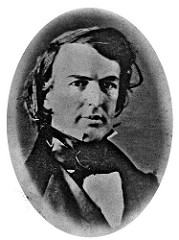
March 2d.–Raining. No well-authenticated news; but by many it is believed Staunton is in the hands of the enemy, and Lynchburg menaced. Nevertheless, the government is sending a portion of the archives and stores to Lynchburg!
The clergymen are at work begging supplies for the soldiers; and they say the holding of Richmond and the success of the cause depend upon the success of their efforts, the government being null! A large per cent. of these preachers is of Northern birth–and some of them may possibly betray the cause if they deem it desperate. This is the history of such men in the South so far. But the President trusts them, and we must trust the President.
Hon. Wm. C. Rives has resigned his seat in Congress. Alleged causes, ill health and great age–over 70. The Negro bill still hangs fire in Congress.
Roger A. Pryor is to be exchanged. He was the guest of Forney in Washington, and had interviews with President Lincoln.
The government is impressing horses in the streets, to collect the tobacco preparatory for its destruction in the event of the city falling into the hands of the enemy. This fact is already known in the North and published in the papers there. A pretty passport and police system, truly!
I saw a paper to-day from Mr. Benjamin, saying it had been determined, in the event of burning the tobacco, to exempt that belonging to other governments–French and Austrian; but that belonging to foreign subjects is not to be spared. This he says is with the concurrence of the British Government. Tobacco is being moved from the city with all possible expedition.
“I wish he’d organize an expedition and bring us some late papers.”–Army Life of an Illinois Soldier, Charles Wright Wills.
March 1, 2025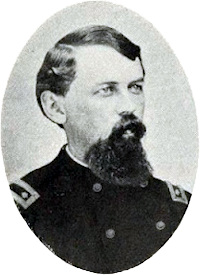
Left Bank Lynch’s Creek, March 1, 1865.
We have finally got across this deuced creek. It has delayed us fully four days, more than any three rivers did before. Our division train is yet to cross and may not get over in 24 hours. We are getting hungry for the first time, having foraged the country out for 15 miles around. The 4th division started to-day on the Cheraw road. Prisoners taken to-day report that Wilmington was being evacuated when Schofield with the 23d Corps, dropped in and took the town and a brigade of prisoners. I wish he’d organize an expedition and bring us some late papers. Everybody is speculating on a big time with the enemy crossing the Great Pedee, but I don’t believe they will trouble us as much as this confounded creek has.
Downing’s Civil War Diary.—Alexander G. Downing.
March 1, 2025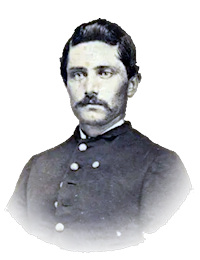
Wednesday, 1st–March came in with an all-day drizzling rain. We remained in bivouac all day. Large foraging parties were sent out, but did not succeed in getting anything, not even enough for the teams and the men that went out. The country is very thinly settled and the people here can hardly raise enough to live on. The soil is very sandy and the country is very heavily timbered, the trees being mostly pitch pine. There are some large turpentine camps about here.
War Diary of Luman Harris Tenney.
March 1, 2025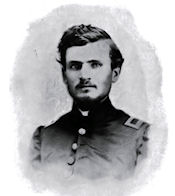
1st. Wednesday. By mistake up before daylight. Brigade in rear of column. Did not move out till 9 A. M. Advance captured the two bridges between Harrisburg and Staunton. Several prisoners captured. Camped six miles from Staunton. Wagons captured.
0
March 1, 2025
March 1st. Since the last date we have been visited by a cold rain, hard wind, hail, snow, mud. Very disagreeable weather for army life, but it must all be endured by soldiers. On picket duty. Corporal in charge of the outpost, about one half of a mile from the reserve quarters. On duty twenty-four hours from 3 P. M. We like the change from 9 A. M., the old custom.
A Rebel War Clerk’s Diary
March 1, 2025
March 1st.–Cloudy, cold, and dismal. We have no news, except from the North, whence we learn Lieut. Beall, one of our Canada raiders, has been hung; that some little cotton and turpentine were burnt at Wilmington; and that the enemy’s columns are approaching us from all directions. They say the rebellion will be crushed very soon, and really seem to have speedy and accurate information from Richmond not only of all movements of our army, but of the intentions of the government. They say Lynchburg and East Tennessee now occupy the mind of Gen. Lee; and they know every disposition of our forces from day to day sooner than our own people! What imbecile stolidity! Will we thus blunder on to the end?
Congress has passed an act organizing the artillery force of Lee’s army–submitted by Gen. Pendleton (Episcopal clergyman), who writes the Secretary that Col. Pemberton (Northern man and once lieutenant-general) is making efforts to induce the President to withhold his approval of the bill, which he deprecates and resents, as the bill is sanctioned by the judgment of Gen. Lee. From this letter I learn we have 330 guns and 90 mortars under Lee; enough to make a great noise yet!
Lieut.-Gen. Grant has directed Col. Mulford, Agent of Exchange, to say that some 200 prisoners escaped from us, when taken to Wilmington for exchange, and now in his lines, will be held as paroled, and credited in the general exchange. Moreover, all prisoners in transitu for any point of exchange, falling into their hands, will be held as paroled, and exchanged. He states also that all prisoners held by the United States, whether in close confinement, in irons, or under sentence, are to be exchanged. Surely Gen. Grant is trying to please us in this matter. Yet Lieut. Beall was executed!
A Diary From Dixie.
March 1, 2025
February 29th.1 –Trying to brave it out. They have plenty, yet let our men freeze and starve in their prisons. Would you be willing to be as wicked as they are? A thousand times, no! But we must feed our army first–if we can do so much as that. Our captives need not starve if Lincoln would consent to exchange prisoners; but men are nothing to the United States–things to throw away. If they send our men back they strengthen our army, and so again their policy is to keep everybody and everything here in order to help starve us out. That, too, is what Sherman’s destruction means–to starve us out.
Young Brevard asked me to play accompaniments for him. The guitar is my instrument, or was; so I sang and played, to my own great delight. It was a distraction. Then I made egg-nog for the soldier boys below and came home. Have spent a very pleasant evening. Begone, dull care; you and I never agree.
Ellen and I are shut up here. It is rain, rain, everlasting rain. As our money is worthless, are we not to starve? Heavens! how grateful I was to-day when Mrs. McLean sent me a piece of chicken. I think the emptiness of my larder has leaked out. To-day Mrs. Munroe sent me hot cakes and eggs for my breakfast.
1 While the date is given as February 29th in the book, it couldn’t have been as the leap year during the war was 1864. — Mike Goad, October 5, 2013
“Only five and one-half months more to serve.”–Army Life of an Illinois Soldier, Charles Wright Wills.
February 28, 2025
February 28, 1865.
High water still keeps us here. We will probably get off to-morrow. It is thought we will cross the Great Peedee at Cheraw; there is so much swamp lower down that might trouble us.
A thousand rumors afloat to-day. The citizens have it that Grant has whipped Lee since the Hatcher Run affair. It rained some last night and is now—8 p.m.—sprinkling again. If it rains hard to-night we will have to give up crossing here and go higher up. The 17th is across. The left wing is reported near Charlotte, N. C., but don’t know that it is so. We have heard that Davis’ commissioners have returned to Washington.
We are having a time sure. They say now that we will not get across to-morrow. I heard some outrageous jokes to-day about a Golden Christ which was stolen by some of our thieves in Columbia, and in an inspection on the 26th it was found in a department headquarter’s wagon. They are too wicked to tell. This army has done some awful stealing. Inspectors pounce down on the trains every day or two now and search them. Everything imaginable is found in the wagons. The stuff is given to citizens or destroyed. Our last winter campaign ends to-day. Only five and one-half months more to serve.
Downing’s Civil War Diary.—Alexander G. Downing.
February 28, 2025
Tuesday, 28th–We moved forward, in an all-day rain. The First Division took the advance, while the Third was in the center, and the Fourth in the rear. Our regiment was rear guard of the corps, and did not get into bivouac till 10 p. m. The corps upon going into bivouac late this afternoon threw up fortifications, for we are twenty miles in advance of the left wing, and have to lie here till they catch up. The Fifteenth Corps is away off to our right.
A Rebel War Clerk’s Diary
February 28, 2025
February 28th.–Raining; warm. The Northern papers announce the capture of Wilmington. No doubt the city has fallen, although the sapient dignitaries of this government deem it a matter of policy to withhold such intelligence from the people and the army. And wherefore, since the enemy’s papers have a circulation here–at least their items of news are sure to be reproduced immediately.
The Governor of Mississippi has called the Legislature of the State together, for the purpose of summoning a convention of the people. Governor Brown, of Georgia, likewise calls for a convention. One more State calling a convention of all the States may be the consequence–if, indeed, rent by faction, the whole country does not fall a prey to the Federal armies immediately. Governor Brown alleges many bitter things in the conduct of affairs at Richmond, and stigmatizes the President most vehemently. He denounces the President’s generalship, the Provost Marshals, the passport system, the “Bureau of Conscription,” etc. etc. He says it is attempted to establish a despotism, where the people are sovereigns, and our whole policy should be sanctioned by popular favor. Instead of this it must be admitted that the President’s inflexible adherence to obnoxious and incompetent men in his cabinet is too well calculated to produce a depressing effect on the spirits of the people and the army.
T. N. Conrad, one of the government’s secret agents, says 35,000 of Thomas’s army passed down the Potomac several weeks ago. He says also that our telegraph operator in Augusta, Ga., sent all the military dispatches to Grant!
Diary of a Southern Refugee, Judith White McGuire.
February 28, 2025
28th.—Our new Commissary-General is giving us brighter hopes for Richmond by his energy. Not a stone is left unturned to collect all the provisions from the country. Ministers of the Gospel and others have gone out to the various county towns and court-houses, to urge the people to send in every extra bushel of corn or pound of meat for the army. The people only want enlightening on the subject; it is no want of patriotism which makes them keep any portion of their provisions. Circulars are sent out to the various civil and military officers in all disenthralled counties in the State,—which, alas! when compared with the whole, are very few,—to ask for their superfluities. All will answer promptly, I know, and generously.
Since I last wrote in my diary, our Essex friends have again most liberally replenished our larder just as they did this time last year—if possible, more generously. The Lord reward them!
“The Rebels are losing, I should think, about 3 or 4 men to our one..,”–Army Life of an Illinois Soldier, Charles Wright Wills.
February 27, 2025
Tillersville, February 27, 1865.
We have half a mile of bridging to build before we can get across this Lynch’s creek, the rains have swollen it so much. Our 6th Iowa foragers we thought captured are all right. They got across this creek before the freshet and it cut them off. The 97th Indiana men are gone up. All of the 20 killed or captured but 3; 11 dead Rebels were found on their little battle field, so the report comes from General Corse, I understand. The Rebels are losing, I should think, about 3 or 4 men to our one, but they are showing more manhood than those who opposed our march in Georgia. It isn’t the “militia,” for the 360 prisoners our corps have taken within four days surrendered without firing a shot. They were S. C. chivalry, proper. The men who are most active on their side, I think, belong to Butler’s or Hampton’s command from the Potomac. They are cavalry and don’t amount to anything as far as infantry is concerned, but only think they venture a little closer than Wheeler does. (You are expected to emit a sarcastic ha! ha!! and remark: “They don’t know Sherman’s army as well as Wheeler does.”) They say we can’t cross here until the water falls, and as there is an excellent prospect for more rain, we are thinking of building cabins in which to pass the rainy season. All our wounded are doing excellently. The surgeons say that the wounded do much better being transported in ambulances than in stationary hospitals. They escape the foul air is the main reason.
Downing’s Civil War Diary.—Alexander G. Downing.
February 27, 2025
Monday, 27th–The day was clear and pleasant. About midnight last night our regiment was detailed to tear down an old mill to get material for the engineers with the pontoniers to build a bridge across the Big Lynches creek. We worked till 4 a. m., when we came in for a rest. This morning we took the advance again with the teams and worked all day in building corduroy to help the artillery and wagons across. When one layer of logs would go under in the mud, we had to put on another till all the teams had passed over. Our division got across late in the evening and went into camp about a mile beyond the creek.
War Diary of Luman Harris Tenney.
February 27, 2025
27th. Reveille at 3 A. M. Moved at 6. Moved through Winchester. Formed several times in crossing streams, etc. Seemed good to see Gen. Sheridan along on his black horse. Halted many times. Went into camp at 10 P. M. Very good rest. Woodstock. 28th. Reveille at 4 A. M. Brigade moved out in advance at 6. Waited at the Shenandoah for the pontoons to come up. Most of our brigade forded. One 3rd N. J. man drowned. Our regt. did nicely. Camped at Lacey’s Springs.
A Rebel War Clerk’s Diary
February 27, 2025
February 27th.–Bright and windy. The Virginia Assembly has passed resolutions instructing the Senators to vote for the negro troops bill–so Mr. Hunter must obey or resign.
It is authoritatively announced in the papers that Gen. J. E. Johnston has taken command of the army in front of Sherman (a perilous undertaking), superseding Beauregard.
Grant is said to be massing his troops on our right, to precipitate them upon the South Side Railroad. Has Hill marched his corps away to North Carolina? If so, Richmond is in very great danger.
The Examiner to-day labors to show that the evacuation of Richmond would be fatal to the cause The Sentinel says it has authority for saying that Richmond will not be given up. “Man proposes–God disposes.” It is rumored that Fayetteville, N. C., has fallen into the hands of the enemy.
I saw Col. Northrop, late Commissary-General, to-day. He looks down, dark, and dissatisfied. Lee’s army eats without him. I see nothing of Lieut.-Col. Ruffin. He always looks down and darkly. Gen. Breckinridge seems to have his heart in the cause–not his soul in his pocket, like most of his predecessors.
I saw Admiral Buchanan to-day, limping a little. He says the enemy tried to shoot away his legs to keep him from dancing at his granddaughter’s wedding, but won’t succeed. [continue reading…]
February 8 to February 27, 1865
February 27, 2025
Feb. 8—”Peace Commission” fails.
Feb. 9—Regiment get away.
Feb. 10—Fast and pray.
Feb. 11—After prayer-meeting in Co. B, I am taken suddenly and seriously ill and stay in bed three days and nights.
Feb. 14—Revs. Ira T. Wyche and J. A. Cunninggim arrive in our Brigade. Bro. W. stops with me; Bro. C. with Rev. B. F. Lacy. Each preaches at night.
Feb. 20—Brigade goes on picket.
Feb. 21—Division moves to Sullivan’s depot. I attend Chaplain’s meeting.
Feb. 25—Brigade returns to camp. I carry John (Capt. Allen’s negro servant) to hospital with typhoid fever.
Feb. 26 (Sunday)—I preach.
Feb. 27—Visit my brother, Allen Betts.
3000 miles of campaigning.–Army Life of an Illinois Soldier, Charles Wright Wills.
February 26, 2025
Fullersville, S. C., Sunday, February 26, 1865.
Sixty hours of rain terminated at daylight this morning, but it has not hurt the sandy roads a particle. We made 11 miles in four and one quarter hours, and are now waiting for a bridge to be completed over this creek, “Lynch’s.” We think now we are on the road to Wilmington. The map shows a good deal of railroad to be destroyed on the way, but I think we will get through by the 15th of March. Expect “you uns” are getting anxious about “we uns” again. This is, I think, a much longer thing than the Savannah campaign. Our 4th division took 103 prisoners here last night and our 2d took 200 more to-day. They are State Line Troops and muchly demoralized. It is a fact about that murdering yesterday. Sherman is out in a big retaliation order to-day. Wilmington is reported ours. Thunder and lightning last evening. Hear that the rain has raised the creek until it is three-quarters of a mile wide, and we won’t get across to-morrow. I think I’ll put down our principal campaigns:
1st. Dec, 1862, The Tallahatchie River Campaign 120 miles.
2nd. April, 1863, The Panola, Miss., 9 day’s march 180 miles.
3rd. July, 1863, Jackson, Miss., Campaign… 100 miles.
4th. Oct. & Nov., ’63, Memphis to Chattanooga, and in
5th. Dec. to Maryville, Tenn., and back to Scottsboro, Ala 800 miles.
6th. Jan., ’64, Wills Valley Campaign 100 miles.
7th. Feb. & March, ’64, Dalton, Ga., Campaign 300 miles.
8th. May until Sept., Atlanta Campaign 400 miles.
9th. Oct., 1864, Atlanta to Gadsden, Ala., and return 300 miles.
10th. Nov. & Dec, Atlanta to Savannah…. 300 miles.
Jan., Feb. & March, ’65, The Carolina Campaign 400 miles.
Total 3,000 miles.
A captain and seven men who went foraging yesterday are still missing, supposed to be captured or killed. And 20 men of the 97th Indiana who went out this morning are reported all killed by a 46th Ohio man, who was wounded and left for dead by the Rebels. He says the 97th boys paid for themselves in dead Rebels before they were overpowered. Our corps has now 500 prisoners, three times as many as we have lost.
Downing’s Civil War Diary.—Alexander G. Downing.
February 26, 2025
Sunday, 26th–We had another all-night rain, but it cleared off this morning. We started at 8 a. m. and marched ten miles, going into camp near the Big Lynches creek. Our division is still in the advance; the First Division did not yet come up with us. We have level country now, but for about twenty-five miles on each side of the Wateree river the land is very rough and covered with pine timber.
War Diary of Luman Harris Tenney.
February 26, 2025
26th. Every preparation made to move. Ordnance and Q. M. stores condemned and turned in. Several orders and circulars came around. All bustle and commotion. Wrote home.
A Rebel War Clerk’s Diary
February 26, 2025
February 26th.–Cloudy and cool; rained all night. No news from the South, this morning. But there is an ugly rumor that Beauregard’s men have deserted to a frightful extent, and that the general himself is afflicted with disease of mind, etc.
Mr. Hunter is now reproached by the slaveowners, whom he thought to please, for defeating the Negro bill. They say his vote will make Virginia a free State, inasmuch as Gen. Lee must evacuate it for the want of negro troops.
There is much alarm on the streets. Orders have been given to prepare all the tobacco and cotton, which cannot be removed immediately, for destruction by fire. And it is generally believed that Lieut.-Gen. A. P. Hill’s corps has marched away to North Carolina. This would leave some 25,000 men to defend Richmond and Petersburg, against, probably, 60,000.
If Richmond be evacuated, most of the population will remain, not knowing whither to go.
The new Secretary of War was at work quite early this morning.
The “Bureau of Conscription” and the Provost Marshal’s office are still “operating,” notwithstanding Congress has abolished them both.
A Diary From Dixie.
February 26, 2025
February 26th.–Mrs. Munroe offered me religious books, which I declined, being already provided with the Lamentations of Jeremiah, the Psalms of David, the denunciations of Hosea, and, above all, the patient wail of Job. Job is my comforter now. I should be so thankful to know life never would be any worse with me. My husband is well, and has been ordered to join the great Retreater. I am bodily comfortable, if somewhat dingily lodged, and I daily part with my raiment for food. We find no one who will exchange eatables for Confederate money; so we are devouring our clothes.
Opportunities for social enjoyment are not wanting. Miss Middleton and Isabella often drink a cup of tea with me. One might search the whole world and not find two cleverer or more agreeable women. Miss Middleton is brilliant and accomplished. She must have been a hard student all her life. She knows everybody worth knowing, and she has been everywhere. Then she is so high-bred, high-hearted, pure, and true. She is so clean-minded; she could not harbor a wrong thought. She is utterly unselfish, a devoted daughter and sister. She is one among the many large-brained women a kind Providence has thrown in my way, such as Mrs. McCord, daughter of Judge Cheves; Mary Preston Darby, Mrs. Emory, granddaughter of old Franklin, the American wise man, and Mrs. Jefferson Davis. How I love to praise my friends!
As a ray of artificial sunshine, Mrs. Munroe sent me an Examiner. Daniel thinks we are at the last gasp, and now England and France are bound to step in. England must know if the United States of America are triumphant they will tackle her next, and France must wonder if she will not have to give up Mexico. My faith fails me. It is all too late; no help for us now from God or man.
Thomas, Daniel says, was now to ravage Georgia, but Sherman, from all accounts, has done that work once for all. There will be no aftermath. They say no living thing is found in Sherman’s track, only chimneys, like telegraph poles, to carry the news of Sherman’s army backward.
In all that tropical down-pour, Mrs. Munroe sent me overshoes and an umbrella, with the message, “Come over.” I went, for it would be as well to drown in the streets as to hang myself at home to my own bedpost. At Mrs. Munroe’s I met a Miss McDaniel. Her father, for seven years, was the Methodist preacher at our negro church. The negro church is in a grove just opposite Mulberry house. She says her father has so often described that fine old establishment and its beautiful lawn, live-oaks, etc. Now, I dare say there stand at Mulberry only Sherman’s sentinels –stacks of chimneys. We have made up our minds for the worst. Mulberry house is no doubt razed to the ground.
Miss McDaniel was inclined to praise us. She said: “As a general rule the Episcopal minister went to the family mansion, and the Methodist missionary preached to the negroes and dined with the overseer at his house, but at Mulberry her father always stayed at the ‘House,’ and the family were so kind and attentive to him.” It was rather pleasant to hear one’s family so spoken of among strangers.
So, well equipped to brave the weather, armed cap-a-pie, so to speak, I continued my prowl farther afield and brought up at the Middletons’. I may have surprised them, for “at such an inclement season” they hardly expected a visitor. Never, however, did lonely old woman receive such a warm and hearty welcome. Now we know the worst. Are we growing hardened? We avoid all allusion to Columbia; we never speak of home, and we begin to deride the certain poverty that lies ahead.
How it pours! Could I live many days in solitary confinement? Things are beginning to be unbearable, but I must sit down and be satisfied. My husband is safe so far. Let me be thankful it is no worse with me. But there is the gnawing pain all the same. What is the good of being here at all? Our world has simply gone to destruction. And across the way the fair Lydia languishes. She has not even my resources against ennui. She has no Isabella, no Miss Middleton, two as brilliant women as any in Christendom. Oh, how does she stand it! I mean to go to church if it rains cats and dogs. My feet are wet two or three times a day. We never take cold; our hearts are too hot within us for that.
A carriage was driven up to the door as I was writing. I began to tie on my bonnet, and said to myself in the glass, “Oh, you lucky woman!” I was all in a tremble, so great was my haste to be out of this. Mrs. Glover had the carriage. She came for me to go and hear Mr. Martin preach. He lifts our spirits from this dull earth; he takes us up to heaven. That I will not deny. Still he can not hold my attention; my heart wanders and my mind strays back to South Carolina. Oh, vandal Sherman! what are you at there, hard-hearted wretch that you are! A letter from General Chesnut, who writes from camp near Charlotte under date of February 28th:
“I thank you a thousand, thousand times for your kind letters. They are now my only earthly comfort, except the hope that all is not yet lost. We have been driven like a wild herd from our country. And it is not from a want of spirit in the people or soldiers, nor from want of energy and competency in our commanders. The restoration of Joe Johnston, it is hoped, will redound to the advantage of our cause and the reestablishment of our fortunes! I am still in not very agreeable circumstances. For the last four days completely water-bound.
“I am informed that a detachment of Yankees were sent from Liberty Hill to Camden with a view to destroying all the houses, mills, and provisions about that place. No particulars have reached me. You know I expected the worst that could be done, and am fully prepared for any report which may be made.
“It would be a happiness beyond expression to see you even for an hour. I have heard nothing from my poor old father. I fear I shall never see him again. Such is the fate of war. I do not complain. I have deliberately chosen my lot, and am prepared for any fate that awaits me. My care is for you, and I trust still in the good cause of my country and the justice and mercy of God.”
It was a lively, rushing, young set that South Carolina put to the fore. They knew it was a time of imminent danger, and that the fight would be ten to one. They expected to win by activity, energy, and enthusiasm. Then came the wet blanket, the croakers; now, these are posing, wrapping Caesar’s mantle about their heads to fall with dignity. Those gallant youths who dashed so gaily to the front lie mostly in bloody graves. Well for them, maybe. There are worse things than honorable graves. Wearisome thoughts. Late in life we are to begin anew and have laborious, difficult days ahead.
We have contradictory testimony. Governor Aiken has passed through, saying Sherman left Columbia as he found it, and was last heard from at Cheraw. Dr. Chisolm walked home with me. He says that is the last version of the story. Now my husband wrote that he himself saw the fires which burned up Columbia. The first night his camp was near enough to the town for that.
They say Sherman has burned Lancaster–that Sherman nightmare, that ghoul, that hyena! But I do not believe it. He takes his time. There are none to molest him. He does things leisurely and deliberately. Why stop to do so needless a thing as burn Lancaster courthouse, the jail, and the tavern? As I remember it, that description covers Lancaster. A raiding party they say did for Camden.
No train from Charlotte yesterday. Rumor says Sherman is in Charlotte.
Downing’s Civil War Diary.—Alexander G. Downing.
February 25, 2025
Saturday, 25th–It rained all night, but today it is clear. We marched fifteen miles today through the mud. Our regiment is on train guard. We found Little Lynches creek flooded and we had to wade it, the water being waist deep. The Twentieth Corps crossed the creek above us, the day before, and we learned that they raised the floodgates of a dam, letting the water in on us before we could get across. Our supply train had a hard time crossing. The water came up into the wagon boxes and a great deal of our hard bread got wet. We lost several beef cattle in the flood. The First Division did not come across this evening. The hills on this side of the creek are frightful and the mud is deep; when a wagon once settles in one of the holes, it takes a final rest, for no effort of man or beast can extricate it.
“Gen. J. E. Smith, commanding, shot four of his prisoners in retaliation.”–Army Life of an Illinois Soldier, Charles Wright Wills.
February 25, 2025
February 25, 1865.
Have not moved to-day. Rebels captured 15 men of the 29 Missouri to-day. Our foragers have been straggling for seven or eight miles in every direction; three of our regiment captured a refugee camp of seven men, ten guns, two revolvers, some pistols and 25 mules. Ordered to keep men well in hand this p.m., as Rebel cavalry is demonstrating on our front and flanks. I think it must be at a respectful distance. Rumor says Longstreet is somewhere around. Think we are waiting for the left of the army to get up with us. Our foragers have been to Camden, 13 miles; pretty tall straggling. Others have been out southeast 11 miles, and saw our 2d and 4th divisions moving on a big road, side by side, going east. Nobody can yet decide what our destination is. It is reported to-day that 13 of our 2d division foragers were found by the roadside dead, with a card marked “Fate of foragers;” also four of the 3d division killed. Gen. J. E. Smith, commanding, shot four of his prisoners in retaliation. Colonel Catterson says as we were marching to this camp to-day he had pointed out to him the tree under which Baron DeKalb died at the battle of Camden. Have had 48 hours of rain with a prospect of continuance.