Monday, 27th–We cleaned up our camp today, and are building “ranches” with the expectation of staying here a while. We have a fine camp ground and plenty of water. Large foraging parties are sent out for corn and fodder. All is quiet in the front. No news of any importance.
American Civil War Chronicles
War Diary of Luman Harris Tenney.
March 27, 2025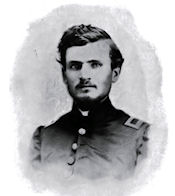
27th. A beautiful day. Clear and warm and somewhat dusty. Crossed the Appomattox. Moved along the line to the Norfolk R. R. Seemed natural to hear the continuous firing once more. Few changes in appearance. Woods all gone.
Extracts from the daily report
March 27, 2025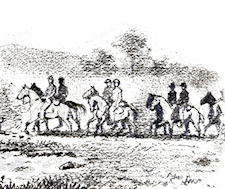
Hdqrs. Military Division of West Mississippi,
Office of the Chief Signal Officer,
New Orleans, La., March 27, 1865.
Major General S. A. Hurlbut,
Commanding Department of the Gulf:
…………..General: I have the honor to submit for your information the following extracts from the daily report from this office dated March 27, 1865: Mrs. Reiley reports to Colonel F. A. Starring, provost-marshal-general Department of the Gulf, from Bayou Sara, March 18, that the crews of the gun-boats drink and carouse with the rebels stationed at that point when on shore. The rebel pickets demand a tax of $10 per bale on all cotton coming into town. They have taken all males able to bear arms to their camp, one mile from town. Their pickets number about fifty men. It is reported that all troops from East Louisiana are ordered to the Tombigbee River (probably to join Forrest). Lieutenant Curtiss reports from Baton Rouge, March 24, that General Hodge had received orders, from Forrest to join him with his whole force, but refused to do so, and went to Richmond to get the order countermanded. It is the general understanding that all the territory west of Pearl River is to be abandoned for the present. The above statement not only corresponds with the report from Bayou Sara with regard to movements of troops from East Louisiana, but with that of a scout who recently passed through Mississippi and Louisiana. A deserter from Kirby Smith’s army, who has been engaged in the commissary department for the last two years collecting tithes and purchasing supplies, states that in the Trans-Mississippi Department rations were issued for 90,000 men in February last, including rations for those in hospital and all ineffectives. Out of this 90,000 not more than 50,000 are or could be made able for duty. There is no place except on Red River where they could subsist a large army for any length of time. A special courier who deserted from General Parsons’ headquarters states that he saw an order from Richmond to General Kirby Smith directing him to cross his entire available force to the east bank of the Mississippi. The determination of the command was general not to cross under any circumstance. A great many deserters are reported lying in the vicinity of the mouth of Black River, La., and if a gun-boat was stationed there a great many would avail themselves of the opportunity to escape. The rebel gun-boat Missouri, lying at Shreveport, is very strong, but unable to make headway against the current. A report by telegram from Baton Rouge, March 26, states that General Hodge has gone to Jackson, Miss., instead of Richmond. The sub-districts in Forrest’s command have been discontinued by him, and all commanders ordered to report direct to him. The Fourth Louisiana Cavalry, Colonel Powers, and the Eleventh Arkansas Mounted Infantry, Colonel Griffith, are ordered to join him, leaving only a few independent scouts and jayhawkers in East Louisiana. Dates from North Carolina of the 19th and 20th instant through rebel papers report continued fighting on those days between Johnston and Sherman at Bentonville, N. C., in which, on the 19th, our forces were forced back one mile. On the 20th the battle was renewed, and finally our forces apparently resumed the offensive. Confederate loss, 500; Federal loss, 5,000. Report from Mobile through same source March 22 states that a column 2,000 strong is about to move from Pensacola, and another 10,000 strong from Milton, Fla., under Canby; destination, Selma. Thomas is to make a simultaneous movement from Vicksburg. Other accounts place the entire force operating against Mobile and Selma at 30,000. West Point, Miss., March 17, General Forrest’s scouts report 6,000 Federals camped at Buzzard’s Roost, eighteen miles west of Tuscumbia, and one brigade of cavalry camped between Iuka and Eastport. General Forrest has been promoted to be lieutenant-general. Colonel N. N. Cox, of Forrest’s command, and Colonel Alexander W. Campbell, of Forrest’s staff, have been promoted to be brigadier-generals.
…………..I have the honor to be, very respectfully, your obedient servant,
A. M. JACKSON,
Major, Tenth U. S. Colored Heavy Artillery.
(In absence of Captain S. M. Eaton, chief signal officer, Military Division of West Mississippi.)
(Same to Colonel C. T. Christensen.)
- War of the Rebellion: Serial 101 Page 1268 LOUISIANA AND THE TRANS-MISSISSIPPI. Chapter LX.
A Diary From Dixie.
March 27, 2025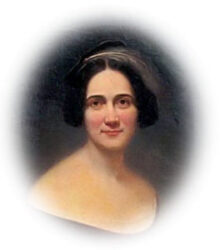
March 27th.–I have moved again, and now I am looking from a window high, with something more to see than the sky. We have the third story of Dr. Da Vega’s house, which opens on the straight street that leads to the railroad about a mile off.
Mrs. Bedon is the loveliest of young widows. Yesterday at church Isaac Hayne nestled so close to her cap-strings that I had to touch him and say, “Sit up!” Josiah Bedon was killed in that famous fight of the Charleston Light Dragoons. The dragoons stood still to be shot down in their tracks, having no orders to retire. They had been forgotten, doubtless, and they scorned to take care of themselves.
In this high and airy retreat, as in Richmond, then in Columbia, and then in Lincolnton, my cry is still: If they would only leave me here in peace and if I were sure things never could be worse with me. Again am I surrounded by old friends. People seem to vie with each other to show how good they can be to me.
To-day Smith opened the trenches and appeared laden with a tray covered with a snow-white napkin. Here was my first help toward housekeeping again. Mrs. Pride has sent a boiled ham, a loaf of bread, a huge pancake; another neighbor coffee already parched and ground; a loaf of sugar already cracked; candles, pickles, and all the other things one must trust to love for now. Such money as we have avails us nothing, even if there were anything left in the shops to buy.
We had a jolly luncheon. James Lowndes called, the best of good company. He said of Buck, “She is a queen, and ought to reign in a palace. No Prince Charming yet; no man has yet approached her that I think half good enough for her.”
Then Mrs. Prioleau Hamilton, nêe Levy, came with the story of family progress, not a royal one, from Columbia here: “Before we left home,” said she, “Major Hamilton spread a map of the United States on the table, and showed me with his finger where Sherman was likely to go. Womanlike, I demurred. ‘But, suppose he does not choose to go that way?’ ‘Pooh, pooh! what do you know of war?’ So we set out, my husband, myself, and two children, all in one small buggy. The 14th of February we took up our line of march, and straight before Sherman’s men for five weeks we fled together. By incessant hurrying and scurrying from pillar to post, we succeeded in acting as a sort of avant-courier of the Yankee army. Without rest and with much haste, we got here last Wednesday, and here we mean to stay and defy Sherman and his legions. Much the worse for wear were we.”
The first night their beauty sleep was rudely broken into at Alston with a cry,” Move on, the Yanks are upon us!” So they hurried on, half-awake, to Winnsboro, but with no better luck. There they had to lighten the ship, leave trunks, etc., and put on all sail, for this time the Yankees were only five miles behind. “Whip and spur, ride for your life!” was the cry. “Sherman’s objective point seemed to be our buggy,” said she; “for you know that when we got to Lancaster Sherman was expected there, and he keeps his appointments; that is, he kept that one. Two small children were in our chariot, and I began to think of the Red Sea expedition. But we lost no time, and soon we were in Cheraw, clearly out of the track. We thanked God for all his mercies and hugged to our bosoms fond hopes of a bed and bath so much needed by all, especially for the children.
“At twelve o’clock General Hardee himself knocked us up with word to ‘March! march!’ for ‘all the blue bonnets are over the border.’ In mad haste we made for Fayetteville, when they said: ‘God bless your soul! This is the seat of war now; the battle-ground where Sherman and Johnston are to try conclusions.’ So we harked back, as the hunters say, and cut across country, aiming for this place. Clean clothes, my dear? Never a one except as we took off garment by garment and washed it and dried it by our camp fire, with our loins girded and in haste.” I was snug and comfortable all that time in Lincolnton.
– – – – – – – – – – –
To-day Stephen D. Lee’s corps marched through–only to surrender. The camp songs of these men were a heartbreak; so sad, yet so stirring. They would have warmed the blood of an Icelander. The leading voice was powerful, mellow, clear, distinct, pathetic, sweet. So, I sat down, as women have done before, when they hung up their harps by strange streams, and I wept the bitterness of such weeping. Music? Away, away! Thou speakest to me of things which in all my long life I have not found, and I shall not find. There they go, the gay and gallant few, doomed; the last gathering of the flower of Southern pride, to be killed, or worse, to a prison. They continue to prance by, light and jaunty. They march with as airy a tread as if they still believed the world was all on their side, and that there were no Yankee bullets for the unwary. What will Joe Johnston do with them now?
The Hood melodrama is over, though the curtain has not fallen on the last scene. Cassandra croaks and makes many mistakes, but to-day she believes that Hood stock is going down. When that style of enthusiasm is on the wane, the rapidity of its extinction is miraculous. It is like the snuffing out of a candle; “one moment white, then gone forever.” No, that is not right; it is the snow-flake on the river that is referred to. I am getting things as much mixed as do the fine ladies of society.
Lee and Johnston have each fought a drawn battle; only a few more dead bodies lie stiff and stark on an unknown battle-field. For we do not so much as know where these drawn battles took place.
Teddy Barnwell, after sharing with me my first luncheon, failed me cruelly. He was to come for me to go down to the train and see Isabella pass by. One word with Isabella worth a thousand ordinary ones! So, she has gone by and I’ve not seen her.
Old Colonel Chesnut refuses to say grace; but as he leaves the table audibly declares, “I thank God for a good dinner.” When asked why he did this odd thing he said: “My way is to be sure of a thing before I return thanks for it.” Mayor Goodwyn thanked Sherman for promised protection to Columbia; soon after, the burning began.
I received the wife of a post-office robber. The poor thing had done no wrong, and I felt so sorry for her. Who would be a woman? Who that fool, a weeping, pining, faithful woman? She hath hard measures still when she hopes kindest. And all her beauty only makes ingrates!
A Rebel War Clerk’s Diary
March 26, 2025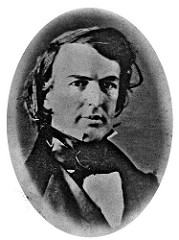
March 26th.–Frost last night. Cloudy, cold, and windy to-day.
Suffered much yesterday and last night with disordered bowels –from cold. This, however, may relieve me of the distressing cough I have had for months.
After all, I fear Lee’s attempt on the enemy’s lines yesterday was a failure. We were compelled to relinquish the fort or battery we had taken, with all the guns we had captured. Our men were exposed to an enfilading fire, not being supported by the divisions intended to co-operate in the movement. The 600 prisoners were completely surprised–their pickets supposing our troops to be merely deserters. This indicates an awful state of things, the enemy being convinced that we are beaten, demoralized, etc.
There was a communication for the Secretary this morning, from “headquarters;” but being marked “confidential,” I did not open it, but sent it to Gen. Breckinridge.
Pickett’s division has been marching for Petersburg all the morning.
Downing’s Civil War Diary.—Alexander G. Downing.
March 26, 2025
Sunday, 26th–Pleasant weather. The Eleventh Iowa was sent out with a foraging train to get corn and fodder for the mules and horses of our brigade. They had to go a distance of thirteen miles to get the feed. I being on camp duty did not go. A train of cars came in from Newbern loaded with supplies for the army, and our quartermaster received some clothing for the regiment.
War Diary of Luman Harris Tenney.
March 26, 2025
26th. Had a very good view of McClellan’s defensive works. Good. Moved up the river and crossed at Deep Bottom. An occasional shot. Heard of taking in 2,700 rebs in front of Petersburg. Camped, at Bermuda Hundred.
Army Life of an Illinois Soldier, Charles Wright Wills.
March 25, 2025
Goldsboro, N. C., March 25, 1865.
We were two days coming back from Bentonville. Have a nice camp ground and will enjoy ourselves, I think. Town don’t amount to anything.
A Rebel War Clerk’s Diary
March 25, 2025
March 25th.–Clear and cool.
It is reported that Grant is reinforcing Sherman, and that the latter has fallen back upon Goldsborough. This is not yet confirmed by any official statement. A single retrograde movement by Sherman, or even a delay in advancing, would snatch some of his laurels away, and enable Lee to obtain supplies. Yet it may be so. He may have been careering the last month on the unexpended momentum of his recent successes, and really operating on a scale something more than commensurate with the forces of his command. Should this be the case, the moral effect on our people and the army will be prodigious, and a series of triumphs on our side may be the consequence.
The Northern papers chronicle the rise in flour here–to $1500 per barrel–a few days ago, and this affords proof of the fact that every occurrence of military importance in Richmond is immediately made known in Washington. How can success be possible? But our authorities are confirmed in their madness.
There were some movements yesterday. Pickett’s division was ordered from this side of the river to the Petersburg depot, to be transported in haste to that town; but it was countermanded, and the troops now (9 A.M.) are marching back, down Main Street. I have not learned what occasioned all this.
The marching and countermarching of troops on this side of the river very much alarmed some of the people, who believed Lee was about to evacuate the city.
Eleven A.M. Gen. Lee attacked the enemy’s fort (Battery No. 5) near Petersburg this morning, the one which has so long been shelling the town, and captured it, with 600 prisoners, and several guns. This may interfere with Gen. Grant’s projects on his left wing, against the railroad.
It is rumored that Gen. Grant is moving heavy bodies of troops toward Weldon, to reinforce Sherman.
Downing’s Civil War Diary.—Alexander G. Downing.
March 25, 2025
Saturday, 25th–We remained in camp all day. Large foraging parties were sent out to get feed for the mules and horses. Our train loaded with supplies returned from Kingston, down on the river. A construction train came in from Kingston, repairing the railroad. The Twenty-third Corps from Schofield’s army has been moved to Kingston. All the troops are in camp in and around Goldsboro, and it will be but a short time until all our supplies will be brought in from the coast by the railroad. The Thirteenth Iowa received three hundred recruits today.
War Diary of Luman Harris Tenney.
March 25, 2025
25th. Ready to march at 6. Took my pockets full of mail to the landing. Dismounted men went by boats. Our regt. in rear of Div. and train. Crossed the Chickahominy on pontoons and reached Harrison’s Landing in evening. Fortifications.
A Rebel War Clerk’s Diary
March 24, 2025
March 24th.–Clear and very windy. The fear of utter famine is now assuming form. Those who have the means are laying up stores for the day of siege,–I mean a closer and more rigorous siege,–when all communications with the country shall cease; and this makes the commodities scarcer and the prices higher. There is a project on foot to send away some thousands of useless consumers; but how it is to be effected by the city authorities, and where they will be sent to, are questions I have not heard answered. The population of the city is not less than 100,000, and the markets cannot subsist 70,000. Then there is the army in the vicinity, which must be fed. I suppose the poultry and the sheep will be eaten, and something like a pro rata distribution of flour and meal ordered.
There is a rumor of a great victory by Gen. Johnston in North Carolina, the taking of 4500 prisoners, 70 guns, etc.–merely a rumor, I am sure. On the contrary, I apprehend that we shall soon have news of the capture of Raleigh by Sherman. Should this be our fate, we shall soon have three or four different armies encompassing us!
I tried in vain this morning to buy a small fish-hook; but could not find one in the city. None but coarse large ones are in the stores. A friend has promised me one–and I can make pin-hooks, that will catch minnows. I am too skillful an angler to starve where water runs; and even minnows can be eaten. Besides, there are eels and catfish in the river. The water is always muddy.
Downing’s Civil War Diary.—Alexander G. Downing.
March 24, 2025
Friday, 24th–We left bivouac at 7 a. m. and marched to the Neuse river, which we crossed near Goldsboro on a pontoon bridge. As we passed through town, we were reviewed by General Sherman, passing him by platoon form, and marching to martial music. The men looked pretty hard after such a long raid, ragged and almost barefooted; but we felt repaid, for we had accomplished the task which we had set out to do when we left Savannah. We went into camp north of town just outside of the town limits. Our corps, the Seventeenth, occupies the right center and the Twentieth Corps the left center, while the Fifteenth Corps occupies the right and the Fourteenth Corps the left. General Schofield’s army, the Twenty-third, Twenty-fourth and Twenty-fifth Corps, is going into camp in the vicinity of Clinton.
War Diary of Luman Harris Tenney.
March 24, 2025
24th. Tuesday. Wrote home and to several friends. Went to the landing and procured some little eatables and paper. Paymaster in camp. Saw him. Busy with the Michigan Brigade and 1st Vermont. Marching orders.
0
March 24, 2025
March 24th. The past few days have been windy, with a cold rain, turning to hail and snow. The wind howling through our camp, coming from the North Mountain. Winter is hanging on. Every day we are led to believe that the war is about over with. No enemy has been reported in this vicinity for a long time. Picket duty is kept up.
March 3 to March 24, 1865
March 24, 2025
March 3, 1865—Regiment goes on picket. Revs. O. J. Brent and NV. H. Moore arrive from N. C. and stop with me.
March 4— Brother Brent goes to Richmond. Brother Moore remains with me.
March 5 (Sunday)—I walk nine miles and preach to my Regiment in picket camp.
March 10 (Friday)—I fast and pray. Preach to my Regiment six times in their quarters. Rain all day. God help our nation in this sore extremity!
March 12 ( Sunday)—Preach to my Regiment. Hold prayers at night.
March 13—Brother Power preaches at night.
March 14—Hear from wife and Brother Willson. Preach at night. Brother Power and I alternate in our chapel, preaching every day and night.
March 18—Go to Petersburg to see John (negro servant) nearly dead. Get him into hospital.
March 19 (Sunday)—Preach to Weiseger’s Brigade in a. m. and ours in p. m.
March 20—Brigade moves near Dunlap’s and relieves Thomas’ Ga. Brigade.
March 21 – Meet Chaplains in Petersburg, and see John and Capt. Allen.
March 22—Go by 11th N. C. Regiment and spend night in 56th with my brother. Preach to R.’s Brigade.
March 24—Meet Cousin Grey Utley in P. He raised three daughters. Two became wives of Rev. L. S. Burkhead, D.D. One Sunday night in October, 1853, Rev. J. L. F. opened the doors of his church in Chapel Hill to receive members. Just as I started forward that good man, Grey Utley, began to sing “Jesus, I my cross have taken.” That soft, sweet voice and the sentiment of that hymn stir my heart to-night in October, 1897, as I write these lines—44 years after that solemn scene.
Jim Davis, of Chapel Hill, my wife’s cousin, comes to see me.
A Diary From Dixie.
March 24, 2025
March 24th.–I have been ill, but what could you expect? My lines, however, have again fallen in pleasant places. Mrs. Da Vega is young, handsome, and agreeable, a kind and perfect hostess; and as to the house, my room is all that I could ask and leaves nothing to be desired; so very fresh, clean, warm, and comfortable is it. It is the drawing-room suddenly made into a bedroom for me. But it is my very own. We are among the civilized of the earth once more.
A Rebel War Clerk’s Diary
March 23, 2025
March 23d.–Clear, with high wind. Nothing further from North Carolina. A dispatch from Gen. Lee states that he has directed Gen. Cobb to organize an expedition into Tennessee, to cut the enemy’s communications. Gen. Wafford, of Kentucky, is in Georgia, with 2000 mounted men, etc.
Beef in market this morning sold at $12 to $15 per pound; bacon at $20, and butter at $20.
The parade of a few companies of negro troops yesterday was rather a ridiculous affair. The owners are opposed to it.
Gen. Rains sends in an indorsement, alleging that owing to the deception of Quartermaster Rhett (not furnishing transportation), he failed to arrest the approach of the enemy on a narrow causeway; and Columbia, S.. C., and his shells, etc. fell into the hands of the enemy.
A dispatch from Lee states that Gen. Thomas is at Knoxville, and that the enemy has commenced his advance from that direction–is repairing railroads, etc. The same dispatch says Gen. J. E. Johnston is removing his wounded to Smithsville from Bentonville; that the intrenchments of the enemy and greatly superior numbers of Sherman render further offensive operations impracticable.
Grant’s grand combination is now developed. Sherman from the Southwest, 70,000; Grant himself from the South, 70,000; Thomas, from the West, 40,000; and Sheridan, with 15,000 cavalry from the North–some 200,000 men converging toward this point. To defend it we shall have 120,000 men, without provisions, and, without some speedy successes, no communications with the regions of supply or transportation! Now is coming the time for the exercise of great generalship!
Gen. Early has been sent to the West–Tennessee.
Downing’s Civil War Diary.—Alexander G. Downing.
March 23, 2025
Thursday, 23d–An order from General Sherman was read this morning, stating that the campaign was over,[1] and that we should now prepare to take a short rest. We left the rifle pits at 7 o’clock, marched fifteen miles, and bivouacked within five miles of Goldsboro. Our army is concentrating there, and we are to get supplies, rest up, and prepare for another campaign.
[1] This battle proved to be our last, and it is known as the battle of Bentonville. We took part later in the surrender of Johnston’s army at Raleigh, N. C. but there was no battle then, or before the surrender, only a little skirmishing.—A. G. D.
War Diary of Luman Harris Tenney.
March 23, 2025
23rd. Sun shines out in its fullness. Dreamed of being at home last night. It was Sunday and I at church. Mail came. Glorious news. A child born, a nephew. (Albert Ellis.) Joy is in the household. Prosperity and happiness to the father and mother. Received Tennyson’s “Enoch Arden.” A sweet, sad story. Any number of old papers. Spent the day feasting upon good things. Splendid day.
The papers are not allowed to publish any war news, so we are as completely ignorant as you are as to what is going on.
March 23, 2025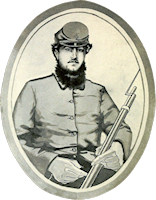
There are a good many of our soldiers deserting to the enemy, but I am in hopes we will have enough left to keep the Yankees in check on this line.
WAGON YARD, COX’S BRIGADE, NEAR
PETERSBURG, VA., March 23rd, 1865.
My Dear Mother:
I received your letter, bearing the date of March 14th, a few minutes ago. It seems that about nine days is the average length of time for a letter to come from home here. I wrote you a letter just before we left the old camp, which you have doubtless received ere this. We have moved twice since I wrote that letter. After the first move, we were temporarily attached to Mahone’s Division, the last move we made we joined our own division, which is in the entrenchments in front of Petersburg. Our Brigade is on the extreme left of it, between the Appomattox River and Swift Creek, with the river between us and the Yankees.
I have not been down on the lines since we last moved, but I hear that it is a very good place, inasmuch as we will hardly be attacked in our front as long as we stay there. I am still staying with Capt. Faircloth in the Q. M. Department, but when the campaign opens, I expect to go back to the company, as every man that can handle a gun will be needed there. Richmond and Petersburg have not been evacuated yet, tho’ there is still rumors that the latter place will be. The papers are not allowed to publish any war news, so we are as completely ignorant as you are as to what is going on. I am very uneasy for fear that Sherman’s army will not be checked before we have to evacuate Richmond and Peterburg. If that army could only be whipped, and it must be, or we can’t stay in Virginia, I would still feel confident of the final results. There are a good many of our soldiers deserting to the enemy, but I am in hopes we will have enough left to keep the Yankees in check on this line. I feel a good deal of anxiety on account of Cullen’s having to go in service so soon. I would not have him join this regiment for anything. If he cannot obtain a better place, I will try and get him into Manley’s Battery from Raleigh, which, if he does have to go into active service right away, will be the best place that I can think of. It is on the lines, some two miles to our left, where it has been about ten months, without losing a man in battle. If he was in that company, he would see a much easier time than he would in Infantry, being small, he would be very apt to be made a driver and in time of fights hold the horses in the rear, or in some place where they can be sheltered. What time will he be seventeen? Write to me as soon as you receive this, and let me know what he thinks about it. In the meantime, I will go over to Manley’s Battery and see if I can get him in. I fear that it will be full, as I know a good many young men who joined on coming seventeen. It is a very good company and composed of a great many very nice men. I knew some of them before the war. I am intimately acquainted with all of the officers. Baz. Manley is Capt. Bunny Guion, James Powell and James McKimmon, the Lieutenant, all from Raleigh. Tell Cullen to take my advice and never join this Regiment as long as he can avoid it. However much I would like to have him with me. I am giving him this advice for his own good. Please think about the matter and write me immediately. Give my love to all the family. Where is sister? Is she at Wilson? I will write again in a few days, probably before I hear from you. Tell Cullen to write when you do. Goodbye.
Your affectionate son,
WALTER.
Letters from two brothers who served in the 4th North Carolina Infantry during the Civil War are available in a number of sources online. Unfortunately, the brothers are misidentified in some places as Walter Lee and George Lee when their names were actually Walter Battle and George Battle. See The Battle Brothers for more information on the misidentification.
“The woods have all been burned over here.”–Army Life of an Illinois Soldier, Charles Wright Wills.
March 22, 2025
Bentonville, N. C., March 22, 1865.
The enemy left about 2 a.m. Our brigade was ordered to follow them to Mill creek, about three miles, which we did almost on the double quick, the 26th Illinois in advance pushing their rear guard. The brigade went to Mill creek, but our skirmishers went a mile further, to Hannah’s creek. The 26th had seven wounded. I saw in one place a dead Rebel and one of our men burned horribly. The woods have all been burned over here. In another place a dead Rebel and one of our men with his foot cut half off, one of his toes cut off, several more cuts on his body, and a bullet hole in his temple. Some of the boys saw one of our men with leg cut off in five places. Some surgeon had probably been practicing on the last two men.
They were 14th Corps men. Sherman again says the campaign is over, that he only came out here to show Johnston that he is ready to fight all the time. We start back for Goldsboro (24 miles), to-morrow. Hurrah for mail and clean clothes. Colonel and I occupy the outside of a house to-night, in the inside of which is a Chinese-eyed girl with a Creole mouth. She is as intelligent as a door post. You don’t know how anxious I am to hear from you. I have had a reply to but one letter that I have written since last November (15th). Our little supper is now ready. Don’t see how we will get along without Frank.
A Rebel War Clerk’s Diary
March 22, 2025
March 22d.–Rained last night; clear and cool this morning. The report of another battle, since Sunday, in North Carolina, is not confirmed.
The “Bureau of Conscription” still lives, notwithstanding the action of Congress! The President himself, who favored its abolition, yet being displeased with some of the details of the act, seems to have finally withheld his approval; and so Col. G. W. Lay, son-in-law of Judge Campbell, is again acting Superintendent. The great weight (wealth) of Gen. Preston perhaps saved it–and may have lost the cause. However, it is again said Judge Campbell will soon retire from office. He considers the cause already lost–the work quite accomplished.
To-day some of our negro troops will parade in the Capitol Square.
The Texas cavalry in Virginia–originally 5000–now number 180!
Congress adjourned without adopting any plan to reduce the currency, deeming it hopeless, since the discovery of a deficiency, in Mr. Memminger’s accounts, of $400,000,000! So the depreciation will go on, since the collection of taxes is rendered quite impracticable by the operations of the enemy. Yet buying and selling, for what they call “dollars,” are still extensively indulged; and although the insecurity of slave property is so manifest, yet a negro man will bring $10,000 at auction. This, however, is only equivalent to about $100. Land, when the price is reduced to the gold standard, is similarly diminished in price.
Downing’s Civil War Diary.—Alexander G. Downing.
March 22, 2025
Wednesday, 22d–Companies E and F of the Eleventh Iowa were sent out at 6 o’clock this morning on the skirmish line, but there were no rebels to be seen in our front. They left during the night, crossing the Neuse river, and retreating towards Raleigh, the state capital. Kilpatrick’s cavalry pursued them for several miles. The rebels fought in the pine woods, which were set on fire by the shells from our artillery. The fire compelled them to fall back, and they left their dead and wounded on the battlefield, to the mercy of the flames; the clothing was entirely burned off some of the bodies. The loss was very light on both sides. We remained all day in bivouac at the rifle pits, while the Fourteenth and Twentieth Corps moved back towards Goldsboro.
War Diary of Luman Harris Tenney.
March 22, 202522nd. Clear. Wind up. Soon after breakfast accompanied Col. Nettleton to the boat which he took for Washington and home on a five days’ leave. Thede and I sent a letter. Would that we could go with him. How happy the home folks will be, especially Melissa and Minnie.