July 11–Orders read out to-day from our father, R. E. Lee, that we would fight the enemy once more on their own soil, as they were now in our front. That order got to them, and fulfilled its mission, as we were then on our way to the Potomac. They still thinking we could not cross the river, because the river was very high from the recent rains, and we had but one pontoon bridge. At 10 in the night we formed in line of battle, got to our position, when our regiment was ordered to support a battery. Laid on our arms all night.
American Civil War Chronicles
Diary of a Tar Heel Confederate Soldier By Louis Léon
July 10, 2013July 10–Moved four and a half miles on the other side of town. We have fortified ourselves here.
Village Life in America
July 9, 2013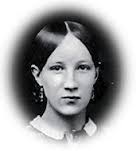
July.–Hiram Goodrich, who lives at Mr Myron H. Clark’s, and George and Wirt Wheeler ran away on Sunday to seek their fortunes. When they did not come back every one was frightened and started out to find them. They set out right after Sunday School, taking their pennies which had been given them for the contribution, and were gone several days. They were finally found at Palmyra. When asked why they had run away, one replied that he thought it was about time they saw something of the world. We heard that Mr Clark had a few moments private conversation with Hiram in the barn and Mr Wheeler the same with his boys and we do not think they will go traveling on their own hook again right off. Miss Upham lives right across the street from them and she was telling little Morris Bates that he must fight the good fight of faith and he asked her if that was the fight that Wirt Wheeler fit. She probably had to make her instructions plainer after that.
1853Diary of a Tar Heel Confederate Soldier By Louis Léon
July 8, 2013July 8–We are resting, and, goodness knows, we need it very much. I sold my coat for twenty dollars and a gray jacket. We lost in the last fight in our company eleven killed and twenty-six wounded; three of the latter will not live, and nine of our number became prisoners, besides the wounded. Our three lieutenants are all wounded and prisoners. Katz is also a prisoner. Nothing further up to the 10th.
Diary of a Tar Heel Confederate Soldier By Louis Léon
July 6, 2013July 6–Our company was ordered out as skirmishers to-day, as our regular skirmish corps was broken up during the fight. We were the rear of the army, and therefore had a very hard job before us. Fighting all day in falling back we certainly had fun. We were close enough to the enemy to hear their commands. We would hold them in check and give them a few rounds, then fall back again. They would then advance until we would make a stand, fight again, and so it was until we reached Fairfield, six miles from Gettysburg. I don’t think there were many lost on either side in this skirmish. We crossed South Mountain at Monteray Gap. When we came to the above town I pressed into service a citizen’s coat, in this way: We were ordered to rest, and, as usual, we would sit on fences and lay about the road. Some of the boys jumped on an old hog pen. It broke through. They fell in, and, lo and behold, there were boxes of clothing, dresses, shawls, blankets, and, in fact, everything in the line of wearing apparel. I, being a little fellow, crawled through some of the boys’ legs and captured the coat. If the fool citizen would have left his things in his house they would have been safe, but to put it in our way was too much for us to leave behind. We also passed through Waterboro, and Waynesboro, Pa., where the Maryland line commences. We then passed through Latisburg, and halted in Hagerstown, Md., on the evening of the 7th. We marched yesterday and all night up to 11 o’clock–twenty-four miles.
Diary of a Tar Heel Confederate Soldier By Louis Léon
July 5, 2013July 5–Left this morning at 5 o’clock. Only marched ten miles to-day. The enemy being in our rear, and skirmishing very strong.
Diary of a Tar Heel Confederate Soldier By Louis Léon
July 4, 2013July 4–We laid on the battlefield of the first day, this the fourth day of July. No fighting to-day, but we are burying the dead. They have been lying on the field in the sun since the first day’s fight; it being dusty and hot, the dead smell terribly. The funny part of it is, the Yankees have all turned black. Several of our company, wounded, have died. Katz is getting along all right. The battle is over, and although we did not succeed in pushing the enemy out of their strong position, I am sure they have not anything to boast about. They have lost at least as many in killed and wounded as we have. We have taken more prisoners from them than they have from us. If that is not the case, why did they lay still all today and see our army going to the rear? An army that has gained a great victory follows it up while its enemy is badly crippled; but Meade, their commander, knows he has had as much as he gave, at least, if not more. As yet I have not heard a word from my brother Morris since the first day’s fight.
Diary of a Tar Heel Confederate Soldier By Louis Léon
July 3, 2013July 3–When under a very heavy fire, we were ordered on Culps Hill, to the support of Gen. A. Johnson. Here we stayed all day–no, here, I may say, we melted away. We were on the brow of one hill, the enemy on the brow of another. We charged on them several times, but of course, running down our hill, and then to get to them was impossible, and every time we attempted it we came back leaving some of our comrades behind. Here our Lieutenant Belt lost his arm. We have now in our company a captain. All of our lieutenants are wounded. We fought here until 7 P.M., when what was left of us was withdrawn and taken to the first day’s battlefield. At the commencement of this fight our Brigade was the strongest in our division, but she is not now. We lost the most men, for we were in the fight all the time, and I have it from Colonel Owens that our regiment lost the most in the Brigade. I know that our company went in the fight with 60 men. When we left Culps Hill there were 16 of us that answered to the roll call. The balance were all killed and wounded. There were 12 sharpshooters in our company and now John Cochran and myself are the only ones that are left. This day none will forget, that participated in the fight. It was truly awful how fast, how very fast, did our poor boys fall by our sides–almost as fast as the leaves that fell as cannon and musket balls hit them, as they flew on their deadly errand. You could see one with his head shot off, others cut in two, then one with his brain oozing out, one with his leg off, others shot through the heart. Then you would hear some poor friend or foe crying for water, or for “God’s sake” to kill him. You would see some of your comrades, shot through the leg, lying between the lines, asking his friends to take him out, but no one could get to his relief, and you would have to leave him there, perhaps to die, or, at best, to become a prisoner. Our brigade was the only one that was sent to Culps Hill to support General Johnson. In our rapid firing today my gun became so hot that the ramrod would not come out, so I shot it at the Yankees, and picked up a gun from the ground, a gun that some poor comrade dropped after being shot. I wonder if it hit a Yankee; if so, I pity him. Our regiment was in a very exposed position at one time to-day, and our General Daniels ordered a courier of his to bring us from the hill. He was killed before he got to us. The General sent another. He was also killed before he reached us. Then General Daniels would not order any one, but called for volunteers. Capt. Ed. Stitt, of Charlotte, one of his aides, responded, and he took us out of the exposed position.
Diary of a Tar Heel Confederate Soldier By Louis Léon
July 2, 2013July 2–Our division was in reserve until dark, but our regiment was supporting a battery all day. We lost several killed and wounded, although we had no chance to fire–only lay by a battery of artillery and be shot at. The caisson of the battery we were supporting was blown up and we got a big good sprinkling of the wood from it. Just at dark we were sent to the front under terrible cannonading. Still, it was certainly a beautiful sight. It being dark, we could see the cannon vomit forth fire. Our company had to cross a rail fence. It gave way and several of our boys were hurt by others walking over them. We laid down here a short time, in fact no longer than 10 minutes, when I positively fell asleep. The cannonading did not disturb me. One of the boys shook me and told me Katz was wounded by a piece of a shell striking him on the side, and he was sent to the rear. We went on to the Baltimore Turnpike until 3 in the morning of the 3d.
Diary of a Tar Heel Confederate Soldier By Louis Léon
July 1, 2013July 1 –We left camp at 6 A.M., passed through Heidelsburg and Middleton. At the latter place we heard firing in the direction of Gettysburg. We were pushed forward after letting the wagon trains get in our rear. We got to Gettysburg at 1 P.M., 15 miles. We were drawn up in line of battle about one mile south of town, and a little to the left of the Lutheran Seminary. We then advanced to the enemy’s line of battle in double quick time. We had not gotten more than 50 paces when Norman of our company fell dead by my side. Katz was going to pick him up. I stopped him, as it is strictly forbidden for anyone to help take the dead or wounded off the field except the ambulance corps. We then crossed over a rail fence, where our Lieutenant McMatthews and Lieutenant Alexander were both wounded. That left us with a captain and one lieutenant. After this we got into battle in earnest, and lost in our company very heavily, both killed and wounded. This fight lasted four hours and a half, when at last we drove them clear out of town, and took at least 3,000 prisoners. They also lost very heavily in killed and wounded, which all fell into our hands. After the fight our company was ordered to pick up all straggling Yankees in town, and bring them together to be brought to the rear as prisoners. One fellow I took up could not speak one word of English, and the first thing he asked me in German was “Will I get my pay in prison?” After we had them all put up in a pen we went to our regiment and rested. Major Iredell, of our regiment, came to me and shook my hand, and also complimented me for action in the fight. At dusk I was about going to hunt up my brother Morris, when he came to me. Thank God, we are both safe as yet. We laid all night among the dead Yankees, but they did not disturb our peaceful slumbers.
Village Life in America
May 1, 2013
May 1.—I arose this morning about the usual time and read my three chapters in the Bible and had time for a walk in the garden before breakfast. The polyanthuses are just beginning to blossom and they border all the walk up and down the garden. I went to school at quarter of nine, but did not get along very well because we played too much. We had two new scholars to-day, Miss Archibald and Miss Andrews, the former about seventeen and the latter about fifteen. In the afternoon old Mrs Kinney made us a visit, but she did not stay very long. In dictionary class I got up sixth, although I had not studied my lesson very much.
Village Life in America
April 1, 2013
April 1. – Grandmother sent me up into the little chamber to-day to straighten things and get the room ready to be cleaned. I found a little book called “Child’s Pilgrim Progress, Illustrated,” that I had never seen before. I got as far as Giant Despair when Anna came up and said Grandmother sent her to see what I was doing, and she went back and told her that I was sitting on the floor in the midst of books and papers and was so absorbed in “Pilgrim’s Progress” that I had made none myself. It must be a good book for Grandmother did not say a word. Father sent us “Gulliver’s Travels” and there is a gilt picture on the green cover, of a giant with legs astride and little Lilliputians standing underneath, who do not come up to his knees. Grandmother did not like the picture, so she pasted a piece of pink calico over it, so we could only see the giant from his waist up. I love the story of Cinderella and the poem, “‘Twas the night before Christmas,” and I am sorry that there are no fairies and no Santa Claus.
We go to school to Miss Zilpha Clark in her own house on Gibson Street. Other girls who go are Laura Chapin, Julia Phelps, Mary Paul, Bessie Seymour, Lucilla and Mary Field, Louisa Benjamin, Nannie Corson, Kittie Marshall, Abbie Clark and several other girls. I like Abbie Clark the best of all the girls in school excepting of course my sister Anna.
Before I go to school every morning I read three chapters in the Bible. I read three every day and five on Sunday and that takes me through the Bible in a year. Those I read this morning were the first, second and third chapters of Job. The first was about Eliphaz reproveth Job; second, Benefit of God’s correction; third, Job justifieth his complaint. I then learned a text to say at school. I went to school at quarter to nine and recited my text and we had prayers and then proceeded with the business of the day. Just before school was out, we recited in “Science of Things Familiar,” and in Dictionary, and then we had calisthenics.
We go through a great many figures and sing “A Life on the Ocean Wave,” “What Fairy Like Music Steals Over the Sea,” “Lightly Row, Lightly Row, O’er the Glassy Waves We Go,” and “O Come, Come Away,” and other songs. Mrs Judge Taylor wrote one song on purpose for us.
Village Life in America
March 20, 2013
Sunday, March 20, 1853.–It snowed so, that we could not go to church to-day and it was the longest day I ever spent. The only excitement was seeing the snowplough, drawn by two horses, go up on this side of the street and down on the other. Grandfather put on his long cloak with a cape, which he wears in real cold weather, and went. We wanted to pull some long stockings over our shoes and go too but Grandmother did not think it was best.
She gave us the “Dairyman’s Daughter” and “Jane the Young Cottager,” by Leigh Richmond, to read. I don’t see how they happened to be so awfully good. Anna says they died of “early piety,” but she did not say it very loud. Grandmother said she would give me 10 cents if I would learn the verses in the New England Primer that John Rogers left for his wife and nine small children and one at the breast, when he was burned at the stake, at Smithfield, England, in 1555. One verse is, “I leave you here a little book for you to look upon that you may see your father’s face when he is dead and gone.” It is a very long piece but I got it. Grandmother says “the blood of the martyrs is the seed of the church.” Anna learned

“In Adam’s fall we sinned all.
My Book and heart shall never part.
The Cat doth slay and after play.
The Dog doth bite a thief at night.”
When she came to the end of it and said,
“Zaccheus he, did climb a tree, his Lord to see.”
she said she heard some one say, “The tree broke down and let him fall and he did not see his Lord at all.” Grandmother said it was very wicked indeed and she hoped Anna would try and forget it.
Village Life in America
December 28, 2012
Tuesday.–I could not keep a journal for two weeks, because Grandfather and Grandmother have been very sick and we were afraid something dreadful was going to happen. We are so glad that they are well again. Grandmother was sick upstairs and Grandfather in the bedroom downstairs, and we carried messages back and forth for them. Dr Carr and Aunt Mary came over twice every day and said they had the influenza and the inflammation of the lungs. It was lonesome for us to sit down to the table and just have Hannah wait on us. We had such lumps in our throats we could not eat much and we cried ourselves to sleep two or three nights. Aunt Ann Field took us home with her one afternoon to stay all night. We liked the idea and Mary and Louisa and Anna and I planned what we would play in the evening, but just as it was dark our hired man, Patrick McCarty, drove over after us. He said Grandfather and Grandmother could not get to sleep till they saw the children and bid them good-night. So we rode home with him. We never stayed anywhere away from home all night that we can remember. When Grandmother came downstairs the first time she was too weak to walk, so she sat on each step till she got down. When Grandfather saw her, he smiled and said to us : “When she will, she will, you may depend on’t; and when she won’t she won’t, and that’s the end on’t.” But we knew all the time that he was very glad to see her.
(December 28, 1852)Village Life in America
December 15, 2012
Wednesday.–Mr Cross had us speak pieces to-day. He calls our names, and we walk on to the platform and toe the mark and make a bow and say what we have got to say. He did not know what our pieces were going to be and some of them said the same ones. Two boys spoke: “The boy stood on the burning deck, whence all but him had fled.” William Sly was one, and he spoke his the best. When he said, “The flames that lit the battle wreck shone round him o’er the dead,” we could almost see the fire, and when he said, “My father, must I stay?” we felt like telling him, no, he needn’t. He is going to make a good speaker. Mr Cross said so. Albert Murray spoke “Excelsior,” and Horace Finley spoke nice, too. My piece was, “Why, Phoebe, are you come so soon? Where are your berries, child?” Emma Van Arsdale spoke the same one. We find them all in our reader. Sometime I am going to speak, “How does the water come down at Ladore?” Splashing and flashing and dashing and clashing and all that–it rhymes, so it is easy to remember.
We played snap the whip at recess to-day and I was on the end and was snapped off against the fence. It hurt me so, that Anna cried. It is not a very good game for girls, especially for the one on the end.
(December 15, 1852)Village Life in America
December 10, 2012
Friday.–We asked Grandmother if we could have some hoop skirts like the seminary girls and she said no, we were not old enough. When we were downtown Anna bought a reed for 10 cents and ran it into the hem of her underskirt and says she is going to wear it to school to-morrow. I think Grandmother will laugh out loud for once, when she sees it, but I don’t think Anna will wear it to school or anywhere else. She wouldn’t want to if she knew how terrible it looked.
I threaded a dozen needles on a spool of thread for Grandmother, before I went to school, so that she could slip them along and use them as she needed them. She says it is a great help.
Grandmother says I will have a great deal to answer for, because Anna looks up to me so and tries to do everything that I do and thinks whatever I say is “gospel truth.” The other day the girls at school were disputing with her about something and she said, “It is so, if it ain’t so, for Calline said so.” I shall have to “toe the mark,” as Grandfather says, if she keeps watch of me all the time and walks in my footsteps.
We asked Grandmother this evening if we could sit out in the kitchen with Bridget and Hannah and the hired man, Thomas Holleran. She said we could take turns and each stay ten minutes by the clock. It gave us a little change. I read once that “variety is the spice of life.” They sit around the table and each one has a candle, and Thomas reads aloud to the girls while they sew. He and Bridget are Catholics, but Hannah is a member of our Church. The girls have lived here always, I think, but I don’t know for sure, as I have not lived here always myself, but we have to get a new hired man sometimes. Grandmother says if you are as good to your girls as you are to yourself they will stay a long time. I am sure that is Grandmother’s rule. Mrs McCarty, who lives on Brook Street (some people call it Cat Alley but Grandmother says that is not proper), washes for us Mondays, and Grandmother always has a lunch for her at eleven o’clock and goes out herself to see that she sits down and eats it. Mrs McCarty told us Monday that Mrs Brockle’s niece was dead, who lives next door to her. Grandmother sent us over with some things for their comfort and told us to say that we were sorry they were in trouble. We went and when we came back Anna told Grandmother that I said, “Never mind, Mrs Brockle, some day we will all be dead.” I am sure that I said something better than that.
(December 10, 1852)Village Life in America
December 9, 2012
Thursday. – Father and Uncle Edward Richards came to see us yesterday and took us down to Mr Corson’s store and told us we could have anything we wanted. So we asked for several kinds of candy, stick candy and lemon drops and bulls’ eyes, and then they got us two rubber balls and two jumping ropes with handles and two hoops and sticks to roll them with and two red carnelian rings and two bracelets. We enjoyed getting them very much, and expect to have lots of fun. They went out to East Bloomfield to see James and John, and father is going to take them to New Orleans. We hate to have them go.
Village Life in America
December 8, 2012
Wednesday.–Captain Menteith was at our house to dinner to-day and he tried to make Anna and me laugh by snapping his snuffbox under the table. He is a very jolly man, I think.
(December 8, 1852)
Village Life in America
December 5, 2012
Sunday. – Rev. Mr Kendall, of East Bloomfield, preached to-day. His text was from Job 26, 14: “Lo these are parts of his ways, but how little a portion is heard of him.” I could not make out what he meant. He is James’ and John’s minister.
(December 5, 1852)
Village Life in America
November 30, 2012
Tuesday.–Grandfather took us to ride this afternoon and let us ask Bessie Seymour to go with us. We rode on the plank road to Chapinville and had to pay 2 cents at the toll gate, both ways. We met a good many people and Grandfather bowed to them and said, “How do you do, neighbour?”
We asked him what their names were and he said he did not know. We went to see Mr Munson, who runs the mill at Chapinville. He took us through the mill and let us get weighed and took us over to his house and out into the barn-yard to see the pigs and chickens and we also saw a colt which was one day old. Anna just wrote in her journal that “it was a very amusing site.”
Village Life in America
November 27, 2012
Saturday. – Our brother John drove over from East Bloomfield to-day to see us and brought Julia Smedley with him, who is just my age. John lives at Mr Ferdinand Beebe’s and goes to school and Julia is Mr Beebe’s niece. They make quantities of maple sugar out there and they brought us a dozen little cakes. They were splendid. I offered John one and he said he would rather throw it over the fence than to eat it. I can’t understand that. Anna had the faceache to – day and I told her that I would be the doctor and make her a ginger poultice. I thought I did it exactly right but when I put it on her face she shivered and said: “Carrie, you make lovely poultices only they are so cold.” I suppose I ought to have warmed it.
Village Life in America
November 21, 2012
Canandaigua, N.Y.
November 21, 1852.–I am ten years old to-day, and I think I will write a journal and tell who I am and what I am doing. I have lived with my Grandfather and Grandmother Beals ever since I was seven years old, and Anna, too, since she was four. Our brothers, James and John, came too, but they are at East Bloomfield at Mr Stephen Clark’s Academy. Miss Laura Clark of Naples is their teacher.
Anna and I go to school at District No. 11. Mr James C. Cross is our teacher, and some of the scholars say he is cross by name and cross by nature, but I like him. He gave me a book by the name of ” Noble Deeds of American Women,” for reward of merit, in my reading class. To-day, a nice old gentleman, by the name of Mr William Wood, visited our school. He is Mrs Nat Gorham’s uncle, and Wood Street is named for him. He had a beautiful pear in his hand and said he would give it to the boy or girl who could spell “virgaloo,” for that was the name of the pear. I spelt it that way, but it was not right. A little boy, named William Schley, spelt it right and he got the pear. I wish I had, but I can’t even remember now how he spelt it. If the pear was as hard as the name, I don’t believe any one would want it, but I don’t see how they happened to give such a hard name to such a nice pear. Grandfather says perhaps Mr Wood will bring in a Seckle pear some day, so I had better be ready for him.
Grandmother told us such a nice story to-day I am going to write it down in my journal. I think I shall write a book some day. Miss Caroline Chesebro did, and I don’t see why I can’t. If I do, I shall put this story in it. It is a true story and better than any I found in three story books Grandmother gave us to read this week, “Peep of Day,” “Line Upon Line,” and “Precept Upon Precept,” but this story was better than them all. One night Grandfather was locking the front door at nine o’clock, and he heard a queer sound, like a baby crying. So he unlocked the door and found a bandbox on the stoop, and the cry seemed to come from inside of it. So he took it up and brought it into the dining-room and called the two girls, who had just gone upstairs to bed. They came right down and opened the box, and there was a poor little girl baby, crying as hard as could be. They took it out and rocked it and sung to it and got some milk and fed it and then sat up all night with it, by the fire. There was a paper pinned on the baby’s dress with her name on it, “Lily T. LaMott,” and a piece of poetry called “Pity the Poor Orphan.” The next morning, Grandfather went to the overseer of the poor and he said it should be taken to the county house, so our hired man got the horse and buggy, and one of the girls carried the baby and they took it away. There was a piece in the paper about it and Grandmother pasted it into her “Jay’s Morning and Evening Exercises,” and showed it to us. It said, “A Deposit After Banking Hours.” “Two suspicious looking females were seen about town in the afternoon, one of them carrying an infant. They took a train early in the morning without the child. They probably secreted themselves in Mr Beals’ yard and if he had not taken the box in they would have carried it somewhere else.” When Grandfather told the clerks in the bank about it next morning, Mr Bunnell, who lives over by Mr Daggett’s, on the park, said, if it had been left at some people’s houses it would not have been sent away. Grandmother says they heard that the baby was adopted afterwards by some nice people in Geneva. People must think this is a nice place for children, for they had eleven of their own before we came. Mrs McCoe was here to call this afternoon and she looked at us and said : “It must be a great responsibility, Mrs Beals.” Grandmother said she thought “her strength would be equal to her day.” That is one of her favourite verses. She said Mrs McCoe never had any children of her own and perhaps that is the reason she looks so sad at us. Perhaps some one will leave a bandbox and a baby at her door some dark night.
Christmas after John Brown.—December 26th, 1859
December 26, 1859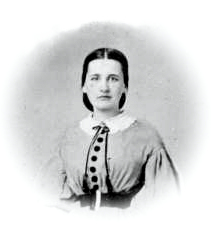
December 26th, 1859—We had a very happy Christmas; just as good as if John Brown had never stirred up so much that was terrible. The scene on the back porch was just as merry; the presents were as joyfully received, the drinks as eagerly quaffed and the good wishes, which, with the negroes, correspond to toasts, were as heartily spoken. I do not believe it will be easy to turn our dear black folks against us though no doubt the abolitionists will keep on trying.
Inside the house we had a lovely time; the day was bright and beautiful. Father is well again; Uncle Richard and Aunt Nancy and all the boys took dinner with us; Cousin Bettie is at school in New York City; she is studying music under Francis H. Brown, the composer. Cousin Rob and I had such a good time. Christmas night we spent the evening at Dr. Holland’s. I forgot to say that Sister Mag and Brother Amos, Cousin Sarah and Cousin William and sweet little Nannie, their pretty baby and Brother Junius, of course, were with us Christmas day. We all went together to Greenwood, we always have a delightful time when we go there and this Christmas Cousin Mag and Dr. Betton were there, too. Dr. Holland does not allow dancing but we played games and had music, both vocal and instrumental, and everything good you could think of to eat. It was a set supper, for this is the way we do things in our neighborhood; all the house-keepers vie with each other in entertaining and not one surpasses Mother, if I do say it myself.
Susan Bradford is 13 years old when this diary entry was made.
Diary entries from before 1860 are included when the content is relevant to the issues that led to or framed the American Civil War. — MpG 5/23/2020
Through Some Eventful Years
December 15, 1859
Insurrection by a governess.
December 15th, I859.—Miss Platt has gone—Last night a letter came in the mail for her. It was a little late but the children had not gone to bed so Lucy carried it upstairs and she came back so excited. Robert, who is Fannie’s little boy, eleven years old he is now, was in Miss Platt’s room; she was holding him in her lap and kissing him and crying over him. Mother went upstairs to see about this and it was just as Lucy said. Mother talked to her and explained that in our country we did not do things like this and advised her to refrain from all such in the future.
Mother told us not to mention this to anybody. Well we did not, but Miss Platt was caught trying to persuade the negroes to rise up and follow in John Brown’s footsteps, put the torch to the home of every white man and murder the people wholesale, sparing none. Jordan and Adeline had found it out and told it. I am so glad our black folks love us and are our friends. Mother says it is so near Christmas she will not try to get another governess until after the holidays.
Susan Bradford is 13 years old when this diary entry was made. Robert, Fannie, Jordan, and Adeline are all slaves. Susan has received an education beyond her years from a succession of tutors, governesses, and hired teachers, of which Miss Platt is the latest. At this point, her perceptions are those of a privileged daughter of a cotton planter in antebellum Florida, views she largely retained for the rest of her life. I’m sure that the “black folks” perception of the situation was quite different.
Diary entries from before 1860 are included when the content is relevant to the issues that led to or framed the American Civil War. — MpG 5/22/2020
Hanging day.—December 2nd, 1859
December 2, 1859
December 2nd, 1859—This is the day John Brown is to be hung. We are not going to school today for Miss Platt is sick in bed with a headache. When Fanny took her breakfast upstairs to her she would not open the door, just said she did not wish any. I took her dinner to her but she answered me through the half-opened door that she was too ill to eat. I asked if I could send the doctor to her but she did not want him; said she often had such attacks and she would be well in the morning; said she did not wish to be disturbed at supper time.
Susan Bradford is 13 years old when this diary entry was made.
Diary entries from before 1860 are included when the content is relevant to the issues that led to or framed the American Civil War. — MpG 5/22/2020