SEPTEMBER 24th.—The time is up for the departure of alien enemies. This is the last day, according to the President’s proclamation. We have had no success lately, and never can have success, while the enemy know all our plans and dispositions. Keep them in total ignorance of our condition and movements, and they will no more invade us than they would explore a vast cave, in which thousands of rattlesnakes can be heard, without lights. Their spies and emissaries here are so many torch-bearers for them.
American Civil War Chronicles
“Brigiadier General Samuel R, Curtis Volunteer Service, will extend his Command over the City of St. Louis…”
September 24, 2021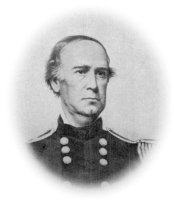
[By special order no. 244, H.Q. Western Division, dated Sept, 23, 1861, “Brigiadier General Samuel R, Curtis Volunteer Service, will extend his Command over the City of St. Louis, and will assume the control during the absence of the Commanding General of the Department, of all matters affecting the public interests in and near St. Louis.]
Headquarters Camp of Instruction
Benton Barracks Sept 24th 1861
General Orders No 7
In profound respect to the Sovereign Ruler of nations, and in obedience to the Proclamation of the President of the United States, Thursday the 26th that will be observed as a day of fasting humiliation and prayer within the limits of this command.1
All drinking Saloons will be closed during the entire day and night and all business houses except drug stores will suspend business and close their establishments during the day, the Assistant Provost Marshall of St. Louis, and the Officers within this Command will see to the faithful execution of these injunctions.
By Order of Brig General Samuel R Curtis
Robert A. Howard,
A A Adj’t General
1. The proclamation which set the last Thurs. in Sept. as a national day of fasting. humiliation, and prayer, was issued by Lincoln August 12. 1861. The day was generally observed in all Iowa communities. Not until 1864 did Lincoln formally establish a Thanksgiving day by proclamation.
Once More
September 24, 2021
Daily Times [Leavenworth, Ks],
September 24, 1861
“When Cleveland Jayhawked Leavenworth, the Times did not even notice the fact as a matter of news. It didn’t dare to speak. One would think from its howl of yesterday that it was really opposed to Jayhawking.”–Conservative.
We dare always, to speak for law and a Christian civilization. The Conservative dare not do as much. We dare to always oppose anarchy and mob rule. The Conservative never does as much. The old saying has many applications, “Birds of a feather flock together.” We have constantly denounced Jayhawking, without fear or favor. We denounced it during the Montgomery excitement, and again in the Tod affair; and more recently we have called it outlawry, and utterly opposed to true patriotism. We do not, we will not, abate one jot or tittle in condemnation of this dangerous system of prostituted patriotism.
The recent Jayhawking done by Cleveland in Leavenworth was on the heels of our municipal election. The factions in both parties had combined and crushed out the conservative element. Riot and misrule was the natural result of that lawless and disorderly coalition. The scene of plunder that ensued was the necessary consequence of that unholy alliance. It was not the fruit of our teachings or efforts, and we felt that tasting the “dead sea apple” was sufficient, without our comment, to be a source of wisdom to the people hereafter.
When we thought it would do good to again speak out against Jayhawking we did it in plain and unmistakable terms. Does the Ishmaelite of the Conservative understand our position on Jayhawking?
War Diary of Luman Harris Tenney.
September 24, 2021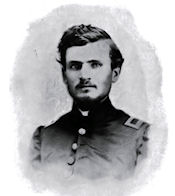
24th. Thede came. He went to the circus. I watched for horses. In the evening went in and saw them play billiards. Stayed at Uncle’s.
The thing seems to be becoming a reality.—David L.Day
September 24, 2021
Sept. 24. Captain Clark has received orders to report with his company at Worcester, tomorrow. The thing seems to be becoming a reality.
Most of the boys are from the surrounding farm–Alexander G. Downing.
September 24, 2021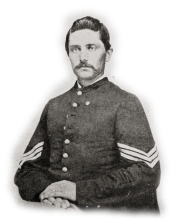
Tuesday, 24th–More enrolled today than any day yet. Most of the boys are from the surrounding farms, though there are a number of Tipton boys in our company. Our drillmaster keeps us on the drill ground most of the time.
Civil War Day-By-Day
September 24, 2021
September 24, 1861
- Frémont shut down a newspaper printed in St Louis that questioned his leadership during the siege of Lexington. The editor of the ‘St. Louis Evening News’ was also arrested.
A Chronological History of the Civil War in America1
- Count de Paris and Due de Chartres entered the U. S. service as aids to Gen. McClellan.
- Grand review of troops at Washington.
- Romney, Va., stormed and captured by U. S. troops.
- A Chronological History of the Civil War in America by Richard Swainson Fisher, New York, Johnson and Ward, 1863
Rebel War Clerk
September 23, 2021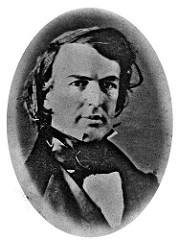
SEPTEMBER 23d.—Thousands of dollars worth of clothing and provisions, voluntary and patriotic contributions to the army, are arriving daily.
“Troops keep coming and moveing about, last night the street by our house was full of Cavalry.”—Horatio Nelson Taft
September 23, 2021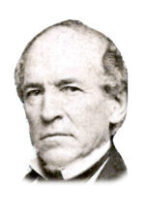
MONDAY 23
Have had a hard days work packing up and geting ready to evacuate these premises. It is one of the miseries of Washington life that few of its inhabitants feel at home. The population is constantly changing. At just at this time a residence here is less disirable than usual, although but slight fears are entertained that the City will be taken by the rebels. Troops keep coming and moveing about, last night the street by our house was full of Cavalry.
______
The three diary manuscript volumes, Washington during the Civil War: The Diary of Horatio Nelson Taft, 1861-1865, are available online at The Library of Congress.
Return to Camp Jackson.
September 23, 2021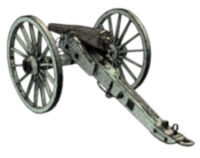
Monday, September 23.—Orders came to leave the picket line at dark, and return to Camp Jackson.
War Diary of Luman Harris Tenney.
September 23, 2021
23rd. Stayed in camp during the day, went out with noncommissioned officers. Stayed over night in camp. Had quite a visit with Sergeant Townsend–good fellow.
The boys are beginning to enlist quite fast.–Alexander G. Downing.
September 23, 2021
Monday, 23d–The boys are beginning to enlist quite fast. A goodly number enrolled today, and we now have our company almost full. We drill twice a day. We drilled today in “double quick” through the streets of Tipton.
“We have the report here to-day that Colonel Mulligan has capitulated to Price, Jackson & Co. at Lexington.”–Army Life of an Illinois Soldier, Charles Wright Wills.
September 23, 2021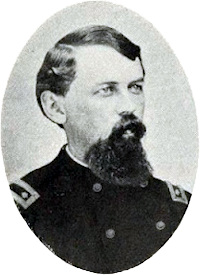
Norfolk (date torn off.)
The colonel talks some to-night about a forward movement, and two regiments have come across the river from the Kentucky side this evening, the Iowa 2d and 7th. The 17th are still opposite us and I have seen none of them yet. Our cavalry scouts are fighting now more or less every day. Yesterday a party of the Iowa 7th were out hunting bushwhackers when they were attacked by a company of horsemen of whom they killed four. One of our men was shot while returning from a scout. They routed the enemy but came back and reported four of their men missing, but the lost four have all come in to-day. Our men think they finished a couple at least but ’tis questionable. We are all again bored to death with lying still, but patience and we’ll get what we want in time. We have the report here to-day that Colonel Mulligan has capitulated to Price, Jackson & Co. at Lexington. This, if true, will certainly retard our movement down the Mississippi. I’m getting perfectly indifferent about Fremont’s being superseded or as to who has the command. It seems to me that none of our commanders are doing anything. With at least 75,000 troops at Paducah, Cairo and in Missouri to allow the gallant Mulligan to be forced to surrender is perfectly shameful. It’s disheartening to a soldier, I tell you. Let them go on, if this war goes against us ’twill be the fault of our commanders and not of the men, sure. Yesterday information was brought our colonel that a battery was in course of erection on the Kentucky shore six miles below us. We were put on steamboats 2,000 or 2,500 strong and preceded by two gunboats scooted down, when within a mile of the place our regiment was landed and we marched down but of course found no battery.
A grim description of the effects of the war on Virginia.–Journal of Surgeon Alfred L. Castleman.
September 23, 2021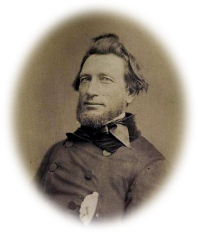
23d.–As a description of the appearance of the country in which we were settled, I here introduce a letter written at this date to a friend:
Camp Advance, Sept. 23, 1861.
A short time since I undertook, from a single feature in the marred and distorted face of this country, to give you some idea of the effects of the war on Virginia, and of how dearly she is paying for her privilege of being shamefully servile to South Carolina. It may not be uninteresting for you, now, to know, to know something of its general appearance as it is, and as it was; and yet when I tell you that my attempt to describe one scene fell far short of the reality, you may imagine something of the difficulty of undertaking, in a single letter, to convey any adequate idea of the whole. When Gov. Pickens said last spring to the Carolinians: “You may plant your seeds in peace, for Virginia will have to bear the brunt of the war,” he cast a shadow of the events which were coming on the head of this superannuated “mother of States and of statesmen.”
Chain Bridge is about seven miles from the Capitol in Washington, and crosses the Potomac at the head of all navigation; even skiffs and canoes cannot pass for any distance above it, though a small steam tug runs up to the bridge, towing scows loaded, principally, with stone for the city. The river runs through a gorge in a mountainous region, and from here to Georgetown, a suburb of Washington, is unapproachable on the Virginia side. There are very few places where even a single footman can, with safety, get down the precipitous banks to the water. The river then is a perfect barrier to any advance by the enemy from this side, except at Georgetown, Chain Bridge, and Long Bridge, at the lower end of Washington City. On the Columbia side is a narrow plateau of land, along which runs the Ohio and Chesapeake Canal, and a public road. These occupy the entire plateau till you come near Georgetown, where the country opens out, making room for fine rolling farms of exceeding fertility, with here and there a stately mansion overlooking road, city, canal and river, making some of the most beautiful residences I ever beheld. On Meridian Hill, a little north of the road from Washington to Georgetown, stands the old Porter Mansion, from which one of the most aristocratic families in America were wont to overlook the social, political, and physical movements of our National Capital; from which, too, they habitually dispensed those hospitalities which made it the resort, not only of the citizens of Columbia and Maryland, but also of the F. F. V.’s, for whom it had especial attractions. All around it speaks in unmistakable language of the social and [continue reading…]
Civil War Day-By-Day
September 23, 2021
September 23, 1861
- Guerrillas under James H. Lane drove off a small Southern force at Osceola, Missouri, and then looted and burned the town.
“Everything remains quiet over the River and nothing but the long wagon trains today would indicate anything unusual going on in or near the City.”—Horatio Nelson Taft
September 22, 2021
SUNDAY, SEPTEMBER 22, 1861.
Went to ch. this morning with wife and the three boys. Wife & Julia went in the afternoon. Edd Dickerson called in the evening and took tea. Chas & Sallie also called about the same time. Went down to the camp to hear the music of the Regimental Band. It performs every night from 1/2 past 8 till 9 o’clock, a large crowd usualy attends. Everything remains quiet over the River and nothing but the long wagon trains today would indicate anything unusual going on in or near the City.
______
The three diary manuscript volumes, Washington during the Civil War: The Diary of Horatio Nelson Taft, 1861-1865, are available online at The Library of Congress.
…no longer called the Second Battery, but Battery A.
September 22, 2021
Sunday, September 22.—Squads of cavalry and infantry visible on the Virginia shore. Great changes took place during this period. Orderly J. H. Newton being promoted to Lieutenant, took command of the left section. Sergeants Owen and Randolph, after having been promoted to Lieutenants, left the battery, and were transferred to other Rhode Island batteries. The State having organized a regiment of light artillery, on the thirteenth of August, we were no longer called the Second Battery, but Battery A.
Rebel War Clerk
September 22, 2021
SEPTEMBER 22d.—Harris and Magraw, who were taken on the field of Manassas, looking for the remains of Col. Cameron, have been liberated by Gen. Winder, on the order of the acting Secretary of War. This is startling; for Mr. Benjamin was the most decided man, at the time of their capture, against their liberation. Per contra, a Mr. G., a rich New York merchant, and Mr. R., a wealthy railroad contractor, whom I feared would break through the meshes of the law, with the large sums realized by them here, have been arrested by the Secretary’s order, on the ground that they have no right to transfer the sinews of war to the North, to be used against us.
In the Patent Office, a hospital.—Woolsey Family letters, Eliza Woolsey Howland to her husband, Joseph.
September 22, 2021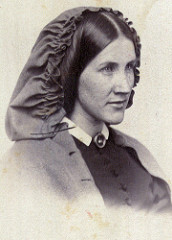
Sept. 11th, 1861.
Where do you think I am writing? In the Patent Office, where we heard the other day that a large number of sick men had been brought from the 19th Indiana regiment. We found them in a dirty and forlorn condition and have come to do what we can. The whole regiment, nearly, is down with sickness from great exposure when they first arrived, they say. The assistant-surgeon of the regiment and the matron are here all the time, and a number of Washington women come in to help every day.
From G’s letter to the Sanitary Commission Fair’s paper this account of the hospital is taken:–“One of the first extemporized hospitals of the war was in the top story of the Patent Office, where the 19th Indiana regiment was brought, nearly every man of them. The great, unfinished lumber room was set aside for their use, and rough tables–I can’t call them beds–were knocked together from pieces of the scaffolding. These beds were so high that it was impossible to reach them, and we had to make them up with brooms, sweeping off the mattresses, and jerking the sheets as smooth as we could. About six men could be accommodated on one table. These ran the whole length of the long room, while on the stacks of marble slabs, which were some day to be the floor, we spread mattresses, and put the sickest men. As the number increased, camp-beds were set up between the glass cases in the outer room, and we alternated –typhoid fever, cog-wheels and patent churns –typhoid fever, balloons and mouse-traps (how many ways of catching mice there are!)–typhoid fever, locomotives, water-wheels, clocks,–and a general nightmare of machinery.
Here, for weeks, went on a sort of hospital picnic. We scrambled through with what we had to do. The floors were covered with lime dust, shavings, nails, and carpenters’ scraps. We had the rubbish taken up with shovels, and stacked in barrels at one end of the ward. The men were crowded in upon us; the whole regiment soaked with a malignant, malarial fever, from exposure, night after night, to drenching rains, without tents. There was so much of this murderous, blundering want of prevision and provision, in the first few months of the war–and is now, for that matter.
Gradually, out of the confusion came some system and order. Climbing up to the top of the Patent Office with each loaf of bread was found not to be an amusing occupation, and an arrangement of pulleys was made out of one of the windows, and any time through the day, barrels of water, baskets of vegetables and great pieces of army beef, might be seen crawling slowly up the marble face of the building.
Here, for weeks, we worked among these men, cooking for them, feeding them, washing them, sliding them along on their tables, while we climbed up on something and made up their beds with brooms, putting the same powders down their throats with the same spoon, all up and down what seemed half a mile of uneven floor;–coaxing back to life some of the most unpromising,–watching the youngest and best die.
I remember rushing about from apothecary to apothecary, in the lower part of the city, one Sunday afternoon, to get, in a great hurry, mustard, to help bring life into a poor Irishman, who called me Betty in his delirium, and, to our surprise, got well, went home, and at once married the Betty we had saved him for.
By-and-by the regiment got through with the fever, improvements came into the long ward, cots took the place of the tables, and matting covered the little hills of the floor. The hospital for the 19th Indiana became the “U. S. General Hospital at the Patent Office,” and the “volunteers for emergencies” took up their saucepans and retired.”
Reconnoissance in Force by General Grant
September 22, 2021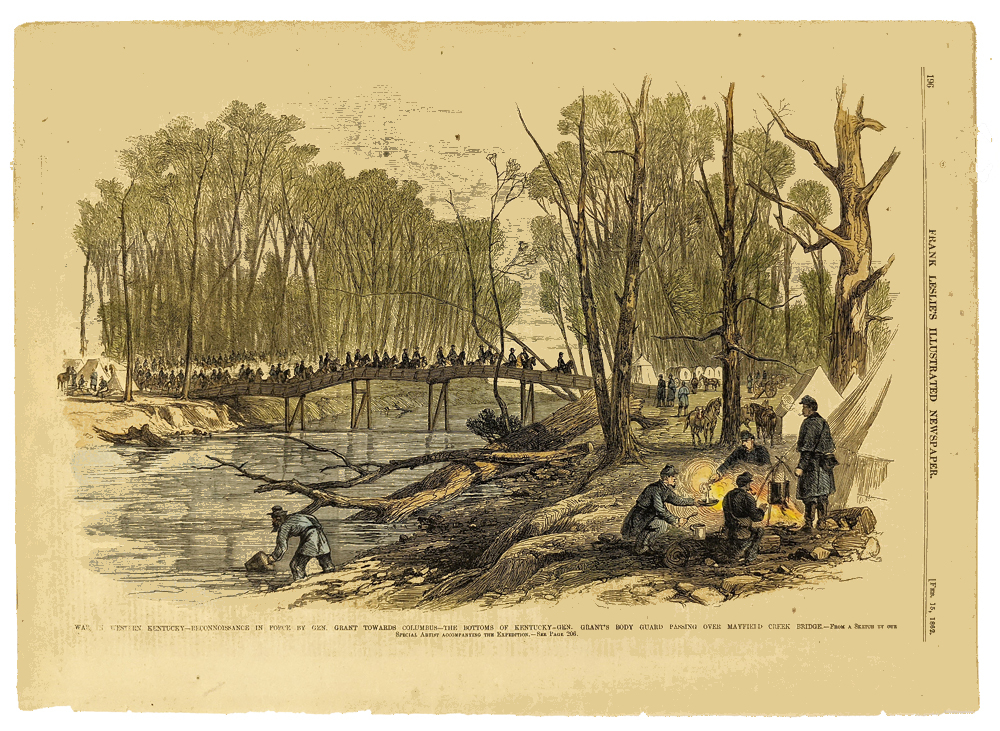
Reconnoissance in Force by General Grant toward Columbus, Ky.–General Grant’s Bodyguard Passing Over Mayfield Creek Bridge.
The scenery of the “Bottoms” is the most interesting in this part of Kentucky. During freshets they are from two to twelve feet under water. The soil is exceedingly rich and heavily timbered, and numberless creeks and bayous intersect the country in every direction. The few farms in this section of the State occupy the ridges, while the low ground is a primitive forest, unfit for cultivation on account of frequent overflows. The largest of the many streams which drain this swamp is Mayfield Creek.
(from Frank Leslie’s Illustrated History of the Civil War…, edited by Louis Shepheard Moat, Published by Mrs. Frank Leslie, New York, 1895)
___________
Report of Brig. Gen. U. S. Grant, U. S. Army.
HEADQUARTERS DISTRICT SOUTHEAST MISSOURI,
Cairo, September 22, 1861.
GENERAL: Yesterday I directed a reconnaissance in force to discover the position of the enemy. The main part of the troops from Norfolk {p.200} and Fort Jefferson were landed below Island No. 1, and marched from there down the beach road, supported by the gunboats Tyler and Lexington. The result proved the Confederates to be in and around Columbus. No outposts are occupied by them nearer to us. Mayfield has been deserted by the rebels.
Colonel Waagner, chief of ordnance, left here this evening, in pursuance of orders telegraphed to him. His energy and ability have been of great service to me, particularly in directing reconnaissances, and his loss from this post will be felt.
To-day the advanced sentinels of one of our pickets fired into a scouting party of about 100 rebels, killing 1 horse and unhorsing 5 or 6 men. This took place about 1 mile from Elliott’s Mills, on the Columbus road.
The general health of this command is improving, but the number of sick is still very large.
I am, sir, very respectfully, your obedient servant,
U. S. GRANT,
Brigadier-General, Commanding.
Maj. Gen. J. C. FRÉMONT, Comdg. Western Dep’t, Saint Louis, Mo.
Letters of Rutherford B. Hayes.
September 22, 2021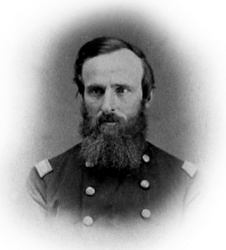
Cross Lanes, Virginia, Sunday,
September 22, 1861.
Dear Mother : – … We are waiting for good weather to go in pursuit of the enemy. Unless some calamity occurs to us at Washington, so as to enable the Rebels to reinforce Wise and Floyd, I do not think they will fight us again. We shall probably not pursue more than forty miles to Lewisburg or White Sulphur Springs, and then our campaign closes for the season. You see, probably, that I am appointed judge-advocate for the department of the Ohio. This includes the State of Ohio, and, should I continue to hold the place, I shall probably be required to go to Columbus and Cincinnati in the course of my duties. But I shall get out of it, I hope, in a month or so. It will separate me from my regiment a good deal, and the increase of pay, about forty or fifty dollars per month, and increase of honor, perhaps, is no compensation for this separation. I have acted in all the cases which have arisen in General Rosecrans’ army. I shall be with my regiment soon again, I hope. While the general is in the same army with them, we are together, of course. I am constantly interrupted. I am today in command of the regiment, Colonel Matthews being unwell, so I am perpetually interrupted. Good-bye.
Affectionately,
R. B. Hayes.
Mrs. Sophia Hayes.
Letters of Rutherford B. Hayes.
September 22, 2021
Cross Lanes, Virginia, September 22, [1861].
Sunday morning, before breakfast.
Dearest: – It is a cold, drizzly, suicidal morning. The equinoctial seems to be a severe storm. Part of our force has crossed [the] Gauley to operate in conjunction with General Cox who is near us. The enemy have retreated in a broken and disheartened condition twenty or thirty miles to near Lewisburg. Unless largely reinforced, they will hardly make another stand. The first fair day our regiment will cross [the] Gauley and the rest will follow as weather permits. We have such a long line of transportation and as the wet fall months are at hand, I suspect we shall not attempt to go further than Lewisburg, possibly to the White Sulphur Springs, before we go into winter quarters.
You know I am ordered to be attached to headquarters. As soon as my regiment moves they will leave me. This is hard, very. I shall feel badly enough when they march off without me. There are some things pleasant about it, however. In the first place, I shall probably not be kept away more than a month or two before I shall be relieved. Then, I shall be in much more immediate communication with you. I can at any time, if need be, dispatch you; so you are within an hour of me. I shall travel a good deal and may possibly go to Ohio. I began my new duties by trying to do a good thing. I have sent for Channing Richards to be my clerk. He is a private in the Guthries. Enough said. If he comes as he is ordered to by the general, and as no doubt he will, I can easily see how his education, brought to notice as it will be, will get him into the way of promotion. I have also a soldier of the Twenty-third, who has been a sailor, an ostler, and a cook, and will be able to look after me in his several capacities. . . .
The wounded are all doing well. The number now in the hospital is small. The doctor has been getting discharges or furloughs for our sick. The rest are getting hardened to this life and I hope we shall continue healthy. Colonel Matthews has been slightly, or even worse, sick, not so as to confine him to his quarters except one morning. His health generally has been excellent. The “poor blind soldier,” as Birtie called him, is perfectly well again. . . . [continue reading…]
Diary of Rutherford B. Hayes.
September 22, 2021
September 22. Sunday. – Cold, raw, and damp – probably will rain. I must get two flannel or thick shirts with collars, also one or two pairs of thick gloves.
War Diary of Luman Harris Tenney.
September 22, 2021
22nd. In the morning Lt. Nettleton and I went over to the Cathedral. In the afternoon visited at Uncle’s. Returned to camp and found thousands of visitors. Such a Sunday. Prayer meeting in the evening.
Downing’s Civil War Diary.–Alexander G. Downing.
September 22, 2021
Sunday, 22d–I remained in Tipton all day, going to preaching this morning and to Sunday school in the afternoon.