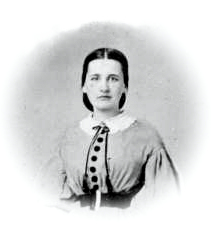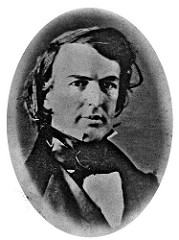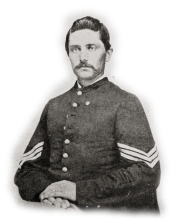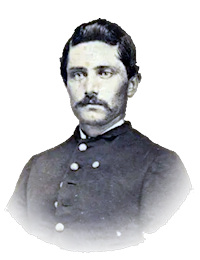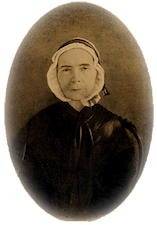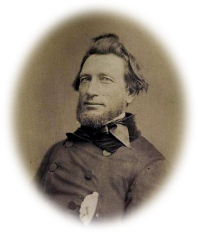
“I wonder if any body ever imagines the value of a letter to a soldier.”–Battle of Drainesville.–Journal of Surgeon Alfred L. Castleman.

Journal of Surgeon Alfred L Castleman.

21st.–Did ever husband and father need the comforting aid of the help-meets of home as I need them this evening? See my table. Six full foolscap sheets of letters from home –read, re-read, studied, spelled, and now to be answered. I wonder if any body ever imagines the value of a letter to a soldier. His power of estimating must be large indeed, if he can appreciate it. Were it not for this value I should never have the courage to attempt answering all this pile. But then, I have no room to arrange all these with a view to replies, for my whole tent is as crowded as my table, full of evidences of the kindness–I will dare to say, of the affection of so many of my kind lady-friends. The dictates of kindness and benevolence may crowd upon you articles of comfort and utility, but it requires the affections to indicate the numerous little tokens which peep from the packages of useful things now piled around my tent. They strengthen and they cheer me. I shall endeavor, right here, to make mysel worthy of all this confidence. What a field this is for the exercise of the “unseen heroism” of life!

But how in the name of Legerdemain do our friends contrive to get so many things into a little box? Why, my 10×10 tent is absolutely full. It is well, too, that the box was opened just to-day, for things in it were getting considerably “mixed.” Two or three preserve and jelly jars, and a bottle of pickles had been broken. The contents had escaped, and to make amends for their long confinement, like colts let loose, they ran considerably. The pickles had “pitched into” the sugar. The jelly had made a dash at the tea. The nutmegs were luxuriating in a mixture of preserves and coffee. There seemed to be an inclination amongst these belligerents to get into “a muss” generally; but I “offered mediation.” After two or three hours of back-ache work, I got the conglomerates restored to their original elements, and gave the men a look at them. They were gratified and thankful. I do not think one man looked on one of these evidences of home rememberance but felt strengthened in his resolves to perform manfully the duties which he had undertaken.

Yesterday we had the first fight worthy the name, since we joined the army. General McCall sent out a Brigade (about 4,000 men) to reconnoitre. They came upon an equal number of the enemy, and after taking a good look at each other, concluded to “go in.” In this fight we gained a decided victory. No mistake this time. We fought and won.

We lost a few men–about ten killed and some thirty wounded. Amongst the latter is Lieutenant Colonel Kane of the Pennsylvania “Buck Tails.” He is a brother of the late Doctor Kane, of the Arctic Expedition.[1]

Yesterday a few Surgeons met in my tent and gave expressions to their feelings against a self-constituted organization calling itself the ” U. S. Sanitary Commission.” I have had very little acquaintance with its members, or with its mode of doing business. From the almost universal prejudice which the Surgeons have against it, I infer that it must possess many bad or troublesome traits of character. I have naturally enough imbibed impressions which are anything but favorable in regard to it. At our little talk, yesterday, it was determined amongst us’ that the Commission must be ” written down.” I am selected to do the writing, my professional brothers to furnish the data. This morning I commenced my first article, but before it was finished, the roar of cannon and the bursting of shells arrested my attention, and I left my writing to watch the progress of the battle of Drainesville. In a little while, the wounded began to be brought in, and the whole being new to us, the Surgeons, now, for the first, began to examine their stores and appliances for wounded men. We had very few things which we needed, and whilst mourning over the delay necessary to procure them from Washington (some 9 miles distant) the agents of this Commission, having got wind of the progressing fight, had loaded up light wagons with their sanitary stores and rushed to the scene of suffering with the very things most needed. I confess that I feel a little ashamed to have been caught in the act of writing such an article, under such ciscumstances. Something good may come out of Nazareth yet. I think I shall wait and sec} rather than be induced by the prejudices or opinions of others, to commit an act, perhaps a wrong, which I may be sorry for.
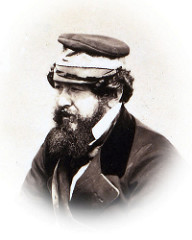
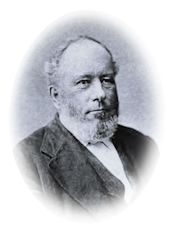

[1] Battle of Drainesville.

0 comments

Trent affair.—William Howard Russell’s Diary.

My Diary North and South – William Howard Russell

December 20th.–I went down to the Senate, as it was expected at the Legation and elsewhere the President would send a special message to the Senate on the Trent affair; but, instead, there was merely a long speech from a senator, to show the South did not like democratic institutions. Lord Lyons called on Mr. Seward yesterday to read Lord Russell’s dispatch to him, and to give time for a reply; but Mr. Seward was out, and Mr. Sumner told me the Minister was down with the Committee of Foreign Relations, where there is a serious business in reference to the State of Mexico and certain European Powers under discussion, when the British Minister went to the State Department.

Next day Lord Lyons had two interviews with Mr. Seward, read the despatch, which simply asks for surrender of Mason and Slidell and reparation, without any specific act named, but he received no indication from Mr. Seward of the course he would pursue. Mr. Lincoln has “put down his foot” on no surrender. “Sir!” exclaimed the President, to an old Treasury official the other day, “I would sooner die than give them up.” “Mr. President,” was the reply, “your death would be a great loss, but the destruction of the United States would be a still more deplorable event.” Mr. Seward will, however, control the situation, as the Cabinet will very probably support his views; and Americans will comfort themselves, in case the captives are surrendered, with a promise of future revenge, and with the reflection that they have avoided a very disagreeable intervention between their march of conquest and the Southern Confederacy. The general belief of the diplomatists is that the prisoners will not be given up, and in that case Lord Lyons and the Legation will retire from Washington for the time, probably to Halifax, leaving Mr. Monson to wind up affairs and clear out the archives. But it is understood that there is no ultimatum, and that Lord Lyons is not to indicate any course of action, should Mr. Seward inform him the United States Government refuses to comply with the demands of Great Britain.

Any humiliation which may be attached to concession will be caused by the language of the Americans themselves, who have given in their press, in public meetings, in the Lower House, in the Cabinet, and in the conduct of the President, a complete ratification of the act of Captain Wilkes, not to speak of the opinions of the lawyers, and the speeches of their orators, who declare “they will face any alternative, but that they will never surrender.” The friendly relations which existed between ourselves and many excellent Americans are now rendered somewhat constrained by the prospect of a great national difference.

0 comments

Diary of David L. Day.

David L Day – My diary of rambles with the 25th Mass

A Depot of Supplies.

Dec. 20. We are having cold weather; freezing quite hard at night, and making our lodgings in these little rag houses anything but comfortable. I have been with a detail of men down to the wharf unloading and storing army supplies. Annapolis is a depot of supplies, and immense quantities are landed here and sent by rail to Washington. A person never having given the subject of army preparation and supplies much thought, would be astonished at the immense quantities he would see here, and would begin to calculate how long it would be before Uncle Sam would be bankrupt. Large warehouses are filled and breaking down under the weight of flour, beef, pork, bread, sugar, coffee, clothing, ammunition, etc., while the wharves and adjacent grounds are filled with hay, oats, lumber, coal, guns, mortars, gun-carriages, pontoons and other appendages of an army. I presume the cost of feeding and clothing an army of half a million of men is not really so much as the same number of men would cost at home, but the army being consumers, instead of producers, the balance will eventually be found on the debit page of the ledger.

0 comments

Diary of Horatio Nelson Taft

Diary of US patent clerk Horatio Nelson Taft.

FRIDAY 20

Warm and pleasant but indications of rain, in the office as usual. News tonight of a Union Victory in Missouri. Other Union Victories will soon be heard from. I called at the “Chronicle” office this evening & subscribed for the Chronicle and the “Phil’a Press.” Called over to the Clarendon Hotel, and then upon Hon Mr Daws M.C., then got the evening papers. Called at Charleys Room on my return home. Miss Hartly has spent the evening here. Mr H called at 1/2 past 9 for her. 10 o’ck (weather clear).

______

The three diary manuscript volumes, Washington during the Civil War: The Diary of Horatio Nelson Taft, 1861-1865, are available online at The Library of   Congress.

0 comments

Susan Bradford writes of Christmas preparations in Florida and the death of a cousin’s soldier fiance — both a part of war.

Through Some Eventful Years by Susan Bradford Eppes
Susa Bradford Eppes

December 20th, 1861.—I spent today at Uncle Tom’s. His daughters are just the smartest, busiest people I ever saw. Cousin Mary Bernard and her three children and cousin Frances with her five are there, while Captain Bernard and Cousin Tom are at the front and Christmas is at hand. There are but few toys to be had, so they are dressing a large Christmas tree with most of the decorations of home manufacture. It is a beautiful tree. They have taken the bright-hued autumn leaves, dipped them in wax and pressed them with a warm iron; these are arranged in clusters and they reflect the light from dozens of tiny twisted Confederate lanterns. Long ropes of “Sodom Apples” lend an added brightness and strings of pop-corn make you think of the snow, which comes at Christmas in colder lands. It is so good of these kind, loving aunts to do so much for the children for I know they work with heavy hearts.

Mr. Routh and Cousin Sallie were to have been married in November, he could only have a three days’ leave of absence and the date was not quite certain, so she was almost ready with her preparations when the news of his death reached us. Her wedding dress was made and waiting and only a few last little things remained to be done. She fainted dead away at the terrible tidings and the next day she locked herself in her room and folded and put away, every article which had been made, in a big Saratoga trunk, locked it and hung the key around her neck. She is so pale and sad, it gives me the heart-ache to look at her. And yet, this is a part of war.


Susan Bradford is 15 years old when this entry was made.

0 comments

Rebel War Clerk

Civil War Day-by-Day
A likeness of Jones when he was editor and majority owner of the Daily Madisonian during President John Tyler’s administration.

DECEMBER 20th.—A man by the name of Dibble, the identical one I passed on my way to Montgomery last spring, and whom I then thought acted and spoke like a Yankee, is here seeking permission to go North; he says to Halifax. He confesses that he is a Yankee born; but has lived in North Carolina for many years, and has amassed a fortune. He declares the South does not contain a truer Southern man than himself; and he says he is going to the British Provinces to purchase supplies for the Confederacy. He brought me an order from Mr. Benjamin, indorsed on the back of a letter, for a passport. I declined to give it, and he departed in anger, saying the Secretary would grant it. He knew this, for he said the Secretary had promised him one.

0 comments

Downing’s Civil War Diary.–Alexander G. Downing.

Diary of Alexander G. Downing; Company E, Eleventh Iowa Infantry

Friday, 20th–We finished cleaning our clothing and accouterments and spent the rest of the day in cleaning up our camp and parade ground, besides bringing in firewood from the timber near by. When we got back we found the Thirteenth Iowa here in camp, having arrived on the 11th day of the month, during our absence.

0 comments

Diary of Horatio Nelson Taft

Diary of US patent clerk Horatio Nelson Taft.

THURSDAY 19

Foggy morning but warm during the day. No particular news today. I have been in the office as usual. The boys have been up to the Presidents most of the day. The two Lincoln boys were here after them. They did not return till dark. I have made a wooden model of my Portable Door fastener this evening. Prof Sparks called and brot Julia a French Book. She has spent the evening at Mr Hartleys. I called there with the Prof and staid an hour or so. People are very anxious to know the contents of the dispatches rcd from our Minister, Mr Adams, in reference to the Mason & Slidel affair.

______

The three diary manuscript volumes, Washington during the Civil War: The Diary of Horatio Nelson Taft, 1861-1865, are available online at The Library of   Congress.

0 comments

Rebel War Clerk

Civil War Day-by-Day
A likeness of Jones when he was editor and majority owner of the Daily Madisonian during President John Tyler’s administration.

DECEMBER 19th.—Judge Perkins came in to-day and denounced in bitter terms the insane policy of granting passports to spies and others to leave the country, when every Northern paper bore testimony that we were betrayed by these people. He asked me how many had been permitted to go North by Mr. Benjamin since the expiration of the time named in the President’s proclamation. This I could not answer: but suggested that a resolution of inquiry might elicit the information. He desired me to write such a resolution. I did so, and he departed with it. An hour afterward, I learned it had been passed unanimously.

0 comments

Poor night for sleeping with all that powder on board.–Alexander G. Downing.

Diary of Alexander G. Downing; Company E, Eleventh Iowa Infantry

Thursday, 19th–We reached Jefferson City this morning at sunup after an uncomfortable night’s ride. The water in the river is very low and it seems that we were fastened on sandbars half the time. Then when the boat was under way, the boat hands, one on each side of the vessel, were constantly calling the soundings, “six feet,” “ten feet,” “no bottom,” etc., in that dreadful, drawling sound, keeping it up all night, and with the thought of that powder on board–it was not a good night for sleeping. But we landed, and marching out to the camp, pitched our tents where we were before. We got back all safe and sound, with one exception, for one of our company took the smallpox and was left at the penthouse at Boonville, with only his bunk-mate to care for him. The weather is quite cool.

0 comments

I feel as if I should never get over the fright of the fire and the expected bombardment of the Town

Journal of Meta Morris Grimball
Meta Morris Grimball

19 Dec.

       There has been a terrible fire in Town and a destruction of 4 Churches, the Circular, the Catholic Cathedral, and St Peter’s & a Methodist Church & the Quaker Meeting. Many fine houses destroyed and great distress. The fire broke out in a sash & blind factory and the difficulty of getting water and the previous drought and a very high wind which drove the flames caused the general destruction. This fire began at Cooper River and burnt across the City to Ashley River, the Institute Hall, St Andrews Hall, the Savings bank, & Art Museum, all destroyed, many of our friends have been sufferers, among them the Reids. Mr R. is a very kind man, and has often been amiably interested in our affairs, and now in his old age he has been deprived of his home, he is the President of the Bank of South Carolina.—

       The fire burnt from 9 o’clock one night to the afternoon of the next day.

       The boys have been ordered off on duty as far as John’s Island. Mr Grimball paid us a visit to condole with his friends, & see the destruction. Mrs Butler & Charles & Clementina have gone off to pay a visit to Georgia on business, Mrs B. intends now going to Papas for a visit, and to save money, which with her is getting rather scant.—The expenses of the property are immense and this year the prices were small. The night of the fire Mrs Butler[,] Charlotte[,] Clementina[,] Charles & ourselves sat up and the piaza was crowded with baggage from the Miles house. My 5 sons were in Town from the Camp at the Race Grounds on guard duty & I felt very glad they were here. Lewis was up from the fort and John from his vessel. Lewis is up to day his situation is a strange one he has an appointment from Pickens and is now notified that he will not be paid or recognised he has to go to Richmond to be examined he is not well and it is very annoying these are the ups & downs in this world. I feel as if I should never get over the fright of the fire and the expected bombardment of the Town, my things are all packed up, in trunks and bags and our silver is sent to the Bank at Camden for safety.—Mr Reid had that arranged for us.—The drought continues, and the alarms of fire are frequent.—

0 comments

“My dear child at home is no better. I may never meet her again.”–Journal of Surgeon Alfred L. Castleman.

Journal of Surgeon Alfred L Castleman.

19th.–To-day I have received the expected letter ; but it relieves no part of my sadness. My dear child at home is no better. I may never meet her again. This in another of the trials of this unholy war; but I am selfish. How many have so much more reason to complain than I?

Boxes of luxuries and comforts for the sick received from home to-day. Many of the days which we have spent in this army have been days of gloom and darkness; and, oh! how these stars of kindness do sparkle in the gloom and lighten the darkness around us! The luxuries contained in the boxes are a comfort to the sick, but these are not the comforts which we derive from them. They come from friends at home. They tell of the interest felt by them in the cause for which we suffer, of their interest in us as the defenders of that cause, and that we are not forgotten! Names of many of those who are engaged in this work of kindness are known to us, and whenever heard will call up a thrill of grateful affection so long as memory holds a place among us.

0 comments

Mutual feelings of the two nations—Rumours of war with Great Britain.—William Howard Russell’s Diary.

My Diary North and South – William Howard Russell

Next day I dined at Mr. Seward’s, as the Minister had given carte blanche to a very lively and agreeable lady, who has to lament over an absent husband in this terrible war, to ask two gentlemen to dine with him, and she had been pleased to select myself and M. de Geoffroy, Secretary of the French Legation, as her thick and her thin umbra; and the company went off in the evening to the White House, where there was a reception, whereat I imagined I might be de trop, and so home.

Mr. Seward was in the best spirits, and told one or two rather long, but very pleasant, stories. Now it is evident he must by this time know Great Britain has resolved on the course to be pursued, and his good humour, contrasted with the irritation he displayed in May and June, is not intelligible.

The Russian Minister, at whose house I dined next day, is better able than any man to appreciate the use made of the Czar’s professions of regret for the evils which distract the States by the Americans; but it is the fashion to approve of everything that France does, and to assume a violent affection for Russia. The Americans are irritated by war preparations on the part of England, in case the Government of Washington do not accede to their demands; and, at the same time, much annoyed that all European nations join in an outcry against the famous project of destroying the Southern harbours by the means of the stone fleet.

0 comments

“Our forces now appear to be nearly ready to Strike at various points, in Missouri, Kentuckey, and at the South.”—Horatio Nelson Taft

Diary of US patent clerk Horatio Nelson Taft.

WEDNESDAY, DECEMBER 18, 1861.

The weather continues delightful but there are today indications of rain. We have heard all day heavy guns. Some in the distance are the rebel guns at Centreville. They are practicing too. Troops have been moveing about the City a good deal today. We are expecting important news from various quarters, and the public mind is considerably agitated just now. Our forces now appear to be nearly ready to Strike at various points, in Missouri, Kentuckey, and at the South. I have been at home all the evening.

______

The three diary manuscript volumes, Washington during the Civil War: The Diary of Horatio Nelson Taft, 1861-1865, are available online at The Library of   Congress.

0 comments

Diary of David L. Day.

David L Day – My diary of rambles with the 25th Mass

A Look through the Camps.

Dec. 18. I have been looking through the camp around here and am astonished at the amount of offal and swill that is buried up and lost instead of being turned to a valuable account. An enterprising farmer could collect from these camps, manure and swill to the value of $100 a day, costing nothing but simply carting it off, thus enriching his land and fattening hundreds of hogs and cattle; but this lack of energy and enterprise prevents these people from turning anything to account. They content themselves with sitting down and finding fault with the government and their more enterprising and energetic neighbors of the north.

0 comments

“Newspapers have just come, giving an account of a fight at Cheat Mountain, on the 13th of December, in which we were successful.”—Diary of a Southern Refugee, Judith White McGuire.

Diary of a Southern Refugee During the War by Judith White McGuire

“The Briars,” December 18.—Sadly negligent of my diary lately. Nothing new has occurred. We pleasantly pursue the even tenor of our way, but are now preparing to go to my brother’s, in Hanover, next week. We have been to “Mountain View” for a couple of days, on a farewell visit to the family. The Bishop has sent his study-carpet to the camp, along with every thing he could possibly spare, for the soldiers’ comfort. He looks cheerfully upon our prospects, and is now listening to “Motley’s Dutch Republic” with “infinite zest.” It is read to him by his daughter-in-law, on these long winter nights. His manner of life is certainly most amiable, as well as pleasant to himself and instructive to others.

Newspapers have just come, giving an account of a fight at Cheat Mountain, on the 13th of December, in which we were successful. Rumours also of a fight on the Chesapeake and Ohio Canal; and another rumour that England has demanded the restoration of “Mason and Slidell,” and in case of non-compliance with the demand, that Lord Lyons should demand his passports. How ardently I do wish that England would break up the blockade!

0 comments

Rebel War Clerk

Civil War Day-by-Day
A likeness of Jones when he was editor and majority owner of the Daily Madisonian during President John Tyler’s administration.

DECEMBER 18TH.—Men escaped from the Eastern Shore of Virginia report that Mr. Custis had landed there, and remains quiet.

0 comments

55 kegs of seized powder.–Alexander G. Downing.

Diary of Alexander G. Downing; Company E, Eleventh Iowa Infantry

Wednesday, 18th–The four companies of cavalry that accompanied us up the river (also by boat) went on a scouting expedition yesterday toward the town of Glasgow. They captured and brought in this morning one hundred and fifty-five kegs of powder which they found hid in haystacks. We stored the powder in the hull of our boat, and at 2 p. m. left this place for an all-night run on our return to Jefferson City. But we are quite uneasy for fear of an explosion from our cargo of powder.

0 comments

“To-morrow I hope I shall hear from home, and get news of the returning health of my family, and then feel better.”–Journal of Surgeon Alfred L. Castleman.

Journal of Surgeon Alfred L Castleman.

18th.–I am disappointed to-night, and feel sadly. I had almost no letters from home lately. None yesterday, to-day none. To-morrow I hope I shall hear from home, and get news of the returning health of my family, and then feel better. It is very hard to be shut up here, hundreds of miles from those we love most dearly, and during their sickness, can have no hope of getting to see them. I suppose the “necessities of war” demands the sacrifice, and we must submit.

0 comments

Two dead out of hospital; Presidents Levee; McClellan—Horatio Nelson Taft

Diary of US patent clerk Horatio Nelson Taft.

TUESDAY 17

Most beautiful day, warm as May, in the office all day. Two dead Soldiers carried out of the Hospital. They say that there is about one death pr day there. Tonight myself and wife went to the Presidents Levee, first of the Season. Genl McClellan & Lady was there and we were frequently near him and had a good opportunity to observe him. He was the “observed of all observers.” Many other distinguished personages were there. The crowd was not very oppressive. Got home 1/2 past ten, took a cup of tea & and [sic] to bed at 11.

______

The three diary manuscript volumes, Washington during the Civil War: The Diary of Horatio Nelson Taft, 1861-1865, are available online at The Library of   Congress.

0 comments

Rebel War Clerk

Civil War Day-by-Day
A likeness of Jones when he was editor and majority owner of the Daily Madisonian during President John Tyler’s administration.

DECEMBER 17th.—Bravo, Col. Edward Johnson! He was attacked by 5000 Yankees on the Alleghany Mountains, and he has beaten them with 1200 men. They say Johnson is an energetic man, and swears like a trooper; and instead of a sword, he goes into battle with a stout cane in his hand, with which he belabors any skulking miscreant found dodging in the hour of danger.

0 comments

Search for ‘secesh’ in Boonesboro.–Alexander G. Downing.

Diary of Alexander G. Downing; Company E, Eleventh Iowa Infantry

Tuesday, 17th–This morning we entered the town and made a search of all the houses for “secesh.” We took seven prisoners, besides some arms and ammunition. This being a great apple country, we found stores of apples in the houses, and helping ourselves, we filled our haversacks. By one o’clock we had finished sacking the town and started back to our boats, arriving there at dark.

0 comments

“Some malicious representations have been made in camp, today, as to the condition of my hospital, and as to my proper disposal of its funds.”–Journal of Surgeon Alfred L. Castleman.

Journal of Surgeon Alfred L Castleman.

17th –This is the anniversary of my advent to this noisy, scheming world of vanity and trouble. What wonderful changes have taken place on this continent, in the life time of a little man like me. I will not attempt to write them here; the changes in myself, are sufficient to keep me constantly in remembrance (without a written journal) of the changes going on around me. I hope those of the world are more palpably for the better, than those which I experience. Some malicious representations have been made in camp, today, as to the condition of my hospital, and as to my proper disposal of its funds. I have written to the Brigade Commander, demanding an immediate and thorough investigation. In consequence of the long time that I could get no settlement with the Commissary, I advanced for the sick, and the hospital is considerably my debtor. I hope I shall succeed in getting a thorough examination.

0 comments

Downing’s Civil War Diary.–Alexander G. Downing.

Diary of Alexander G. Downing; Company E, Eleventh Iowa Infantry

Monday, 16th–We reached Boonville at sunup, and landing, remained there about two hours, when we again boarded the boat and crossed to the other side of the river. We lay on the boat here till dark, when Company E and three other companies started for Boonesboro, seven or eight miles distant. Reaching the town we surrounded it and waited for daylight. On our way out we marched through some very heavy timber, where the sound of our tramping and the rattle of our bayonets aroused the many wood owls, and of all the hideous noises I ever listened to–it made my hair stand on end!

0 comments

Uproar over ” the arrest of ‘Mason’ and ‘Slidel’.”—Horatio Nelson Taft

Diary of US patent clerk Horatio Nelson Taft.

MONDAY 16

Delightful day. Some excitement in the City at the news from England in relation to the arrest of “Mason” and “Slidel.” Some predict a war with her. But I do not. It is only giving her a dose of her own Medicine. The Law of Nations is also on our side, and She has always insisted upon the right of Search for herself. I have spent the evening at home making Willie a picture frame. Matty Hartly spent the evening here. Mr H called about 9 for her. Chas & Sallie also called. Put a night latch on the Hall Door.

______

The three diary manuscript volumes, Washington during the Civil War: The Diary of Horatio Nelson Taft, 1861-1865, are available online at The Library of   Congress.

0 comments