A Confederate Girl’s Diary

Civil War Day-by-Day

June 16th, Monday.

My poor old diary comes to a very abrupt end, to my great distress. The hardest thing in the world is to break off journalizing when you are once accustomed to it, and mine has proved such a resource to me in these dark days of trouble that I feel as though I were saying good-bye to an old and tried friend. Thanks to my liberal supply of pens, ink, and paper, how many inexpressibly dreary days I have filled up to my own satisfaction, if not to that of others! How many disagreeable affairs it has caused me to pass over without another thought, how many times it has proved a relief to me where my tongue was forced to remain quiet! Without the blessed materials, I would have fallen victim to despair and “the Blues” long since; but they have kept my eyes fixed on “ Better days a-coming “ while slightly alluding to present woes; kept me from making a fool of myself many a day; acted as lightning rod to my mental thunder, and have made me happy generally. For all of which I cry, “Vivent pen, ink, and paper!” and add with regret, “Adieu, my mental Conductor. I fear this unchained lightning will strike somewhere, in your absence!”

0 comments

Drowned Out and Starved Out

War Diary of a Union Woman in the South

June 16.—Max got back this morning. H. and he were in the parlor talking and examining maps together till dinner-time. When that was over they laid the matter before us. To buy provisions had proved impossible. The planters across the lake had decided to issue rations of corn-meal and peas to the villagers whose men had all gone to war, but they utterly refused to sell anything. “They said to me,” said Max, “‘ We will not see your family starve, Mr. K.; but with such numbers of slaves and the village poor to feed, we can spare nothing for sale.’” “Well, of course,” said H., “we do not purpose to stay here and live on charity rations. We must leave the place at all hazards. We have studied out every route and made inquiries everywhere we went. We shall have to go down the Mississippi in an open boat as far as Fetler’s Landing (on the eastern bank). There we can cross by land and put the boat into Steele’s Bayou, pass thence to the Yazoo River, from there to Chickasaw Bayou, into McNutt’s Lake, and land near my uncle’s in Warren County.”


Note: To protect Mrs. Miller’s job as a teacher in post-civil war New Orleans, her diary was published anonymously, edited by G. W. Cable, names were changed and initials were generally used instead of full names—and even the initials differed from the real person’s initials. (Read Dora Richards Miller’s biographical sketch.)

0 comments

Rebel War Clerk

Civil War Day-by-Day
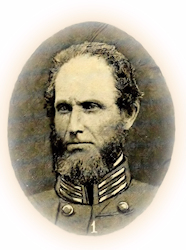
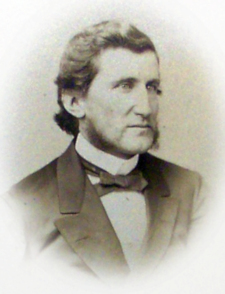
A likeness of Jones when he was editor and majority owner of the Daily Madisonian during President John Tyler’s administration.

JUNE 15th.—What a change! No one now dreams of the loss of the capital.

0 comments

Downing’s Civil War Diary.–Alexander G. Downing.

Diary of Alexander G. Downing; Company E, Eleventh Iowa Infantry

Sunday, 15th–There were five hundred men from the Sixth Division detailed to go out and cut down the timber in front of the fortifications around the camp. The trees are cut so as to make them fall outward toward the approach of an enemy; the branches are then sharpened, making what is called an abatis. The trees in a space six hundred feet wide and twenty miles long are being felled. We had company inspection at 5 o’clock in the evening.

0 comments

War Diary of Luman Harris Tenney.

War Diary of Luman Harris Tenney.

15th. Sunday. A beautiful Sabbath morning. Would love to be at home or somewhere to enjoy peaceful rest. Read the Independent. Wrote to Emma McWade.

0 comments

“General Stuart must have gone, it is said, within a few miles, perhaps nearer, of his father-in-law, the Federal General Cooke.”—Diary of a Southern Refugee, Judith White McGuire.

Diary of a Southern Refugee During the War by Judith White McGuire

15th.—General Stuart has just returned to camp after a most wonderful and successful raid. He left Richmond two or three days ago with a portion of his command; went to Hanover Court-House, where he found a body of the enemy; repulsed them, killing and wounding several, and losing one gallant man, Captain Latane, of the Essex cavalry; continuing his march by the “Old Church,” he broke up their camp and burnt their stores; thence to Tunstall’s Station on the York River Railroad; fired into the train, destroying a part of it, and taking some prisoners; thence to Pamunky River; found three transports loaded with provender, which they burned; filled their haversacks with West India fruit, which had been brought on for Federal consumption; then went on towards Charles City Court-House, encountering a train of wagons; took their horses, mules, and drivers, and burnt the wagons and contents; thence they went to a Yankee sutler’s stand, took what they wanted, and burnt the rest; thence across the Chickahominy and on to Richmond; bringing 175 prisoners and a number of horses and mules. We are all full of excitement and delight, hoping that he discovered much about the Federal army which may be useful, but which, of course, is kept from the public; and I trust most fervently that our dear ones at S. H. and W. may have been cheered by their presence, for they must have gone very near them, if not immediately by their gates—how the appearance of our men must have excited them! I wish I could see some member of the cavalry who could tell me all about it—where they went, and whom they saw. General Stuart must have gone, it is said, within a few miles, perhaps nearer, of his father-in-law, the Federal General Cooke. I wonder what the old renegade Virginian thinks of his dashing son-in-law? If he has a spark of proper feeling left in his obdurate heart, he must be proud of him.

0 comments

Robert M. McGill

Robert M. Magill – Personal Reminiscences of a Confederate Soldier Boy, 39th Georgia Regiment of Infantry

Sunday, 15th.—Hotel burned in town last night. About 12 o’clock regiment came in, having been ordered back at Bean’s Station. Very sick all day. One of Company D knocked Spencer Pursly down with his gun, as they were marching along. Got aboard the train, and left for Knoxville, 11 P. M.


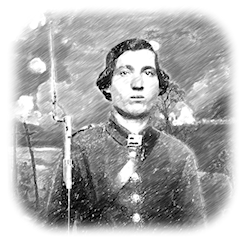
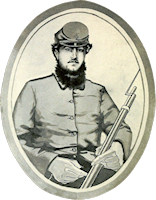
(Note: picture is of an unidentified Confederate soldier.)

0 comments

Chaplain

Experience of a Confederate Chaplain—Rev. A. D. Betts, 30th N. C. Regiment

When the 30th Regiment was organized at Raleigh some one proposed that the commissioned officers should call a chaplain. Lieut. Cain wrote me from Raleigh that they had chosen me, and urged me to accept, modestly suggesting that it would give me a field for large usefulness. I prayed over it a few days and wrote to Governor Clark that I would accept. My commission was dated October 25th, 1861. The 30th Regiment was soon sent to Smithville. I reported for duty. Col. F. M. Parker kindly allowed me to finish up my work on the circuit and go to Conference at Louisburg.

There three others had an experience with me. A noble citizen put us in a nice new house. One night we left our house unlocked while we were out. Rev. R. A. Willis lost his trunk, with books, clothes and manuscript sermons. Rev. J. H. Robbins lost his overcoat. Rev. R. S. Webb lost his valise and clothes. My carpet bag and clothing were gone too. We hired a detective to hunt our lost goods. One day we heard a valise had been seen on some drift wood in Tar river. We hastened to the spot. As we crossed a field we saw sheets of paper among the briars. They were Brother Willis’ sermons. We walked on picking the sheets from the briars. Bro. Webb, in a solemn, dry tone, said: Bro. Willis sows “beside all waters.” Bro. Willis did not laugh. We found a shirt for me and a garment or two for others.

My regiment was moved to Camp Wyatt, on Federal Point. I rented a house near by for wife and three children. I preached often and held prayer meeting in some company almost every night. I copied rolls of companies, noting age of each soldier, where born, postoffice, creed, and to what local church each belonged, married or single, number of children if any. etc.

In the spring of 1862 the regiment was ordered to White Oak River, Onslow County.

J. W. Russ, of Bladen, asked me to send my family to board with him. I sent them.

Regiment was reorganized in May and ordered to Richmond in June, reaching there June 15th.

0 comments

I don’t believe I will ever get over the death of George.

Civil War Day-by-Day

RICHMOND, VA., June 15, 1862.

Dear Mother:

I hope you are not uneasy about me because I have not written before. I knew if I wrote it would take a week for you to get it, so I put it off till I could send it by Mr. Albert Farmer, who will go tomorrow. The Surgeon of the hospital has given me a passport to stay wherever I please in the city and report to him every week. I believe I should go crazy if I had to stay out in the hospital where everything is so dull and disheartening. In fact I don’t believe I am the same being I was two weeks ago, at least I don’t think as I used to and things don’t seem as they did. I don’t believe I will ever get over the death of George. The more I think of him the more it affects me, and unless I am in some battle and excitement I am eternally thinking of the last moments of his life. How he must have suffered, if he was conscious of it. I shall never forget it. I think a long letter from some of you would make me feel so much better. I shall send by Mr. Farmer my watch, sleeve buttons, also the shirt I wore off. Everything I ought to have left at home I brought away and a great many things I ought to have brought I left behind. I only brought one flannel shirt, and by the way I’ll send this one back and try this summer without them, as they are very heavy for summer wear. The war news you read every day in the papers, but Capt. Billy Brown came down from Gordonville with some of Jackson’s prisoners. He says he was in Lynchburg. Twenty-two hundred were sent in and that thirteen hundred were on the way.

The Yankees that are near Richmond, we don’t hear anything of, everything is quiet. Please some of you write me soon.

Your loving son,
WALTER.


Letters from two brothers who served in the 4th North Carolina Infantry during the Civil War are available in a number of sources online.  Unfortunately, the brothers are misidentified in some places as Walter Lee and George Lee when their names were actually Walter Battle and George Battle. See The Battle Brothers for more information on the misidentification.

0 comments

Woolsey Family during the War.

Woolsey family letters during the War for the Union

Dr. Hugh Lenox Hodge to Georgeanna Woosey.

Philadelphia, June, 1862.

Dear Georgy: Once more our paths have separated. . . . Upon my return with the wounded from the battle of Fair Oaks, I received appointment to a large hospital (1,500 beds), now building in West Philadelphia. I will live at home, but will be there a part of each day.

The Pennsylvania delegation to which, as you know, I was attached when at the White House and elsewhere, has been dissolved.

0 comments

Drowned Out and Starved Out

War Diary of a Union Woman in the South

June 15, 1862.—Max got back to-day. He started right off again to cross the lake and interview the planters on that side, for they had not suffered from overflow.


Note: To protect Mrs. Miller’s job as a teacher in post-civil war New Orleans, her diary was published anonymously, edited by G. W. Cable, names were changed and initials were generally used instead of full names—and even the initials differed from the real person’s initials. (Read Dora Richards Miller’s biographical sketch.)

0 comments

“’Tis an outrage to post troops in this manner, and if they all get cut off it won’t surprise me.”–Army Life of an Illinois Soldier, Charles Wright Wills.

Civil War Day-by-Day

Rienzi, Tishomingo Co., Miss., June 14, ’62.

We have located for a somewhat permanent stay, as the clumsy order said, in the most beautiful little town I have yet found in Mississippi. We have pitched our tents in a little grove in the edge of the burgh and are preparing to live.

We have been rioting on plums and blackberries the last week. Dewberries are about gone. I don’t think the plums are as good as ours. There is already much suffering amongst the poor here, and God only knows how these people can live until the new crop of corn is harvested. The wheat is all cut these ten days, but ten acres of it will hardly keep one person a year. Cotton is not planted this year to any extent, a tax of $25 per bale being laid on all each man raises over one bale. I told you how we rode out to Baldwin on the 12th; well, this morning the enemy nearly surrounded our picket there and killed or captured a few of them, scattering the rest. They have nearly all got in. There are no troops between here and the picket at Baldwin, 25 miles, and this little body is 12 miles ahead of the main army. ‘Tis an outrage to post troops in this manner, and if they all get cut off (the two battalions on picket) it won’t surprise me. There are not many slaves here, very few planters work more than 25, though 60 miles further down many have from 300 to 400 each. We don’t think these are large bodies that are troubling our outposts, but they will hover around so long as the picket is advanced thus far.

0 comments

Rebel War Clerk

Civil War Day-by-Day
A likeness of Jones when he was editor and majority owner of the Daily Madisonian during President John Tyler’s administration.

JUNE 14th.—The wounded soldiers bless the ladies, who nurse them unceasingly.

0 comments

Downing’s Civil War Diary.–Alexander G. Downing.

Diary of Alexander G. Downing; Company E, Eleventh Iowa Infantry

Saturday, 14th–We came in from picket this morning, having been relieved by the Thirteenth Iowa. We do not have much idle time here, for besides keeping our camp and clothing clean, we have picket duty and fatigue duty on the fortifications.

0 comments

War Diary of Luman Harris Tenney.

War Diary of Luman Harris Tenney.

14th. Wrote a letter home. Mail came bringing home letters and Independent. Issued rations to four companies, to go the next morning on expedition five days. Moved the Second Battalion again half a mile. After work had a gay time finding our tent. Wandered all through the woods.

0 comments

Robert M. McGill

Robert M. Magill – Personal Reminiscences of a Confederate Soldier Boy, 39th Georgia Regiment of Infantry

Saturday, 14th.—Started for Cumberland Gap, 10 A. M. After marching five miles became so sick could go no farther. Dr. Fowler said I would have to get back to Morristown as best I could. An omnibus coming by, I got in and rode back to Morristown.


(Note: picture is of an unidentified Confederate soldier.)

0 comments

A Diary From Dixie

Civil War Day-by-Day

June 14th.–All things are against us. Memphis gone. Mississippi fleet annihilated, and we hear it all as stolidly apathetic as if it were a story of the English war against China which happened a year or so ago.

The sons of Mrs. John Julius Pringle have come. They were left at school in the North. A young Huger is with them. They seem to have had adventures enough. Walked, waded, rowed in boats, if boats they could find; swam rivers when boats there were none; brave lads are they. One can but admire their pluck and energy. Mrs. Fisher, of Philadelphia, née Middleton, gave them money to make the attempt to get home.

Stuart’s cavalry have rushed through McClellan’s lines and burned five of his transports. Jackson has been reenforced by 16,000 men, and they hope the enemy will be drawn from around Richmond, and the valley be the seat of war.

John Chesnut is in Whiting’s brigade, which has been sent to Stonewall. Mem’s son is with the Boykin Rangers; Company A, No. 1, we call it. And she has persistently wept ever since she heard the news. It is no child’s play, she says, when you are with Stonewall. He doesn’t play at soldiering. He doesn’t take care of his men at all. He only goes to kill the Yankees.

Wade Hampton is here, shot in the foot, but he knows no more about France than he does of the man in the moon. Wet blanket he is just now. Johnston badly wounded. Lee is King of Spades. They are all once more digging for dear life. Unless we can reenforce Stonewall, the game is up. Our chiefs contrive to dampen and destroy the enthusiasm of all who go near them. So much entrenching and falling back destroys the morale of any army. This everlasting retreating, it kills the hearts of the men. Then we are scant of powder.

James Chesnut is awfully proud of Le Conte’s powder manufactory here. Le Conte knows how to do it. James Chesnut provides him the means to carry out his plans.

Colonel Venable doesn’t mince matters: “If we do not deal a blow, a blow that will be felt, it will be soon all up with us. The Southwest will be lost to us. We can not afford to shilly-shally much longer.”

Thousands are enlisting on the other side in New Orleans. Butler holds out inducements. To be sure, they are principally foreigners who want to escape starvation. Tennessee we may count on as gone, since we abandoned her at Corinth, Fort Pillow, and Memphis. A man must be sent there, or it is all gone now.

“You call a spade by that name, it seems, and not an agricultural implement?” “They call Mars Robert ‘Old Spade Lee.’ He keeps them digging so.” “General Lee is a noble Virginian. Respect something in this world. Cæsar–call him Old Spade Cæsar? As a soldier, he was as much above suspicion, as he required his wife to be, as Cæsar’s wife, you know. If I remember Cæsar’s Commentaries, he owns up to a lot of entrenching. You let Mars Robert alone. He knows what he is about.” [continue reading…]

0 comments

Woolsey Family during the War.

Woolsey family letters during the War for the Union

Harriet Roosevelt Woolsey to her sisters on the Virginia Peninsula, Georgeanna Woolsey and Eliza Howland.

New York, June.

Dear Girls: I write more for the sake of sending a letter by Dr. Draper, than because there is anything to tell you about. . . . I think Abby looks miserable and needs rest. I don’t believe even you, “the working sisters,” as Dr. Ferris calls you, do as much as Abby does, for there is certainly something that pays in giving nice little things to soldiers and having them so grateful to you and seeing them get well under your care,–there is an excitement in it all which cannot be got out of homely unbleached cotton, yards and yards and hundreds of square yards of shirts. . . .

Think of my having a chance of becoming a nurse up at the Mott Hospital in Fifty-first street. Mrs. Ferris offered me a place of that kind, out of consideration for my merits and the one hundred dollars Uncle E. had given them the week before, but I foolishly gave in to the family row. They had me laid out and buried twenty times over of malignant typhoid, diphtheria, and other ills which flesh is heir to.

. . . Carry is engaged in finding a summer retreat for the family. . . . The combinations absolutely necessary are: sea and mountain air, a place near the city with speedy communication, and no New Yorkers.

I send Charley’s wine, Dr. Draper having offered to take anything for us.

0 comments

“He sent six men with us as guard, and the cuss gave orders to shoot us if we tried to run.”–Army Life of an Illinois Soldier, Charles Wright Wills.

Civil War Day-by-Day
The following material contains wording that is offensive to many in the world of today. However, the work is provided unedited for its historical content and context.

Camp near Boonville, Miss., June 13, 1862.

This is the fourth camp that we have had to call as above. We have lived all around the burg, but to-morrow we leave. We have just got nicely arranged here after working hard all day, and now an order comes to move brigade headquarters back to Rienzi, nearly 10 miles toward Corinth. Bah! how sick it makes me to write that name. I haven’t seen the place yet, and have no desire to. I feel about once a week as though a little skirmish would do me good, but I don’t see any use in getting mad because they won’t give me a chance to fight. I couldn’t feel any more out of the war at home than I do here. The enemy have all gone further into Dixie and we’re left the undisputed occupants of this neck. Our headquarters here are about 25 miles south of Corinth, and we have pickets at Baldwin, 15 miles south of this. Pope’s whole division has moved back to just this side of Corinth except our brigade, so here we are, maybe 1,200 effective men, doing outpost duty nearly 40 miles in advance of the army. Yesterday the colonel, his A. D. C. and myself rode around our entire picket line, I mean the part of our brigade that is guarding the M. & O. R. R. There is only one regiment doing this, and they are strung out so that our ride was full 40 miles. When we were within two miles of our camp, coming in, I was galloping along ahead of the colonel, maybe 50 yards (’twas 10 p.m.) and I thought I heard a “halt,” but was so sure there were no pickets there (full a dozen miles inside of our corps’ pickets) that I didn’t mind it until bang, went an old musket, and the bullet zipped considerably over my head. I halted. They were some infantry pickets whose regiment was close by in the woods (some two miles). Well, we hadn’t the countersign and they wern’t going to let us pass. The colonel swore, I was awful hungry, and I cussed, the A. D. C. raved, but the picket sergeant was immovable. At last we coaxed him to send us in with a guard to his colonel. He sent six men with us as guard, and the cuss gave orders to shoot us if we tried to run. The chap that shot was one of the guard, and he told me that he shot over my head on purpose after he had halloed “halt” several times. They didn’t know there was cavalry outside of them and said they’d shot us sure if they hadn’t seen the glimmer of my straps in the moonlight. We got their colonel up, took a toddy with him and—home. Did I ever tell you about my darkey, “Charley”? We got him at Cape Girardeau. [continue reading…]

0 comments

Rebel War Clerk

Civil War Day-by-Day
A likeness of Jones when he was editor and majority owner of the Daily Madisonian during President John Tyler’s administration.

JUNE 13th.—Gen. Lee is satisfied with the present posture of affairs–and McClellan has no idea of attacking us now. He don’t say what he means to do himself.

0 comments

Downing’s Civil War Diary.–Alexander G. Downing.

Diary of Alexander G. Downing; Company E, Eleventh Iowa Infantry

Friday, 13th–It came the Eleventh Iowa’s turn to go on picket today. The teams still have to go to Pittsburg Landing, twenty-two miles from Corinth, for provisions and ammunition for the army.

0 comments

War Diary of Luman Harris Tenney.

War Diary of Luman Harris Tenney.

13th. Issued rations in the morning. Moved camp over the river west. Pitched our tent in a splendid grove in a secesh corn field. Found some mulberries.

0 comments

Robert M. McGill

Robert M. Magill – Personal Reminiscences of a Confederate Soldier Boy, 39th Georgia Regiment of Infantry

Friday, 13th.—Arrived at Knoxville, 12 M. Left for Morristown at 2 P. M.; arrived 5 P. M.


(Note: picture is of an unidentified Confederate soldier.)

0 comments

A Diary From Dixie

Civil War Day-by-Day

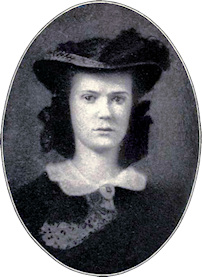
June 13th.–Decca’s wedding. It took place last year. We were all lying on the bed or sofas taking it coolly as to undress. Mrs. Singleton had the floor. They were engaged before they went up to Charlottesville; Alexander was on Gregg’s staff, and Gregg was not hard on him; Decca was the worst in love girl she ever saw. “Letters came while we were at the hospital, from Alex, urging her to let him marry her at once. In war times human events, life especially, are very uncertain.

“For several days consecutively she cried without ceasing, and then she consented. The rooms at the hospital were all crowded. Decca and I slept together in the same room. It was arranged by letter that the marriage should take place; a luncheon at her grandfather Minor’s, and then she was to depart with Alex for a few days at Richmond. That was to be their brief slice of honeymoon.

“The day came. The wedding-breakfast was ready, so was the bride in all her bridal array; but no Alex, no bridegroom. Alas! such is the uncertainty of a soldier’s life. The bride said nothing, but she wept like a water-nymph. At dinner she plucked up heart, and at my earnest request was about to join us. And then the cry, ‘ The bridegroom cometh.’ He brought his best man and other friends. We had a jolly dinner. ‘Circumstances over which he had no control’ had kept him away.

“His father sat next to Decca and talked to her all the time as if she had been already married. It was a piece of absent-mindedness on his part, pure and simple, but it was very trying, and the girl had had much to stand that morning, you can well understand. Immediately after dinner the belated bridegroom proposed a walk; so they went for a brief stroll up the mountain. Decca, upon her return, said to me: ‘Send for Robert Barnwell. I mean to be married to-day.’

“‘Impossible. No spare room in the house. No getting away from here; the trains all gone. Don’t you know this hospital place is crammed to the ceiling?’ ‘Alex says I promised to marry him to-day. It is not his fault; he could not come before.’ I shook my head. ‘I don’t care,’ said the positive little thing, ‘I promised Alex to marry him to-day and I will. Send for the Rev. Robert Barnwell.’ We found Robert after a world of trouble, and the bride, lovely in Swiss muslin, was married.

“Then I proposed they should take another walk, and I went to one of my sister nurses and begged her to take me in for the night, as I wished to resign my room to the young couple. At daylight next day they took the train for Richmond.” Such is the small allowance of honeymoon permitted in war time.

Beauregard’s telegram: he can not leave the army of the West. His health is bad. No doubt the sea breezes would restore him, but–he can not come now. Such a lovely name–Gustave Tautant Beauregard. But Jackson and Johnston and Smith and Jones will do–and Lee, how short and sweet.

“Every day,” says Mem, “they come here in shoals– men to say we can not hold Richmond, and we can not hold Charleston much longer. Wretches, beasts! Why do you come here? Why don’t you stay there and fight? Don’t you see that you own yourselves cowards by coming away in the very face of a battle ? If you are not liars as to the danger, you are cowards to run away from it.” Thus roars the practical Mem, growing more furious at each word. These Jeremiahs laugh. They think she means others, not the present company.

Tom Huger resigned his place in the United States Navy and came to us. The Iroquois was his ship in the old navy. They say, as he stood in the rigging, after he was shot in the leg, when his ship was leading the attack upon the Iroquois, his old crew in the Iroquois cheered him, and when his body was borne in, the Federals took off their caps in respect for his gallant conduct. When he was dying, Meta Huger said to him: “An officer wants to see you: he is one of the enemy.” “Let him come in; I have no enemies now.” But when he heard the man’s name:

“No, no. I do not want to see a Southern man who is now in Lincoln’s navy.” The officers of the United States Navy attended his funeral.
0 comments

Woolsey Family during the War.

Woolsey family letters during the War for the Union

While we were lying at White House in the Wilson Small, one day, Mr. Olmsted came to G. with the statement that “young Mr. Mitchell of New York, who had come down to help in the Commission’s Quarter-master’s department, was ill on the supply boat Elizabeth.” G. went across the plank to him at once, and found a most attractive six or seven feet of future brother-in-law cramped into an uncomfortable little hole of a cabin. This was E. M.’s first introduction to the family; he was looked after a little, and sent home in a returning hospital ship to recruit. Mr. Olmsted had his father’s private instructions to keep him out of the army.


Abby Howland Woolsey a little later, writes:

Mr. Mitchell called yesterday afternoon to say good-bye and to offer to take anything to Georgy. Dr. Agnew had sent for him in a great hurry to go back as quartermaster on the Elm City. He had promised to go back on three or four days’ notice, and had hoped to spend those at the seaside, where his physician had told him he ought to go. We had nothing for Georgy, the Elm City lying at Jersey City, it would not have been convenient anyhow–but Carry took to his house in 9th street a letter to Georgy and a large bundle of candy for himself.–(C’s first present to her future husband).

0 comments