24th. Tuesday. Arose before sunrise 3:45 A. M. Took the horses out to graze. Archie and I went with horses to an oat field up on a hill beyond the pickets. Good feed for the horses. Detachment went ahead to Neosho at 7 A. M. Entered N. and encamped a little after noon on the ground where the militia was surprised. An alarm in the night. False.
American Civil War Chronicles
Robert M. McGill
June 24, 2022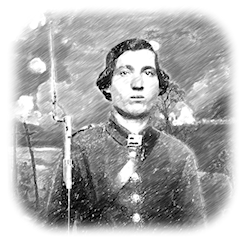
Tuesday, 24th.—Brother J. H. has permission to take us home with him to Mouse Creek. Left Knoxville 11 A. M. ; arrived Mouse Creek 2 P. M.
(Note: picture is of an unidentified Confederate soldier.)
A Diary From Dixie
June 24, 2022
June 24th.–Mr. Chesnut, having missed the Secessionville ¹ fight by half a day, was determined to see the one around Richmond. He went off with General Cooper and Wade Hampton. Blanton Duncan sent them for a luncheon on board the cars,–ice, wine, and every manner of good thing.
In all this death and destruction, the women are the same–chatter, patter, clatter. “Oh, the Charleston refugees are so full of airs; there is no sympathy for them here!” “Oh, indeed! That is queer. They are not half as exclusive as these Hamptons and Prestons. The airs these people do give themselves.” “Airs, airs,” laughed Mrs. Bartow, parodying Tennyson’s Charge of the Light Brigade. “Airs to the right of them, Airs to the left of them, some one had blundered.” “Volleyed and thundered rhymes but is out of place.”
The worst of all airs came from a democratic landlady, who was asked by Mrs. President Davis to have a carpet shaken, and shook herself with rage as she answered, “You know, madam, you need not stay here if my carpet or anything else does not suit you.”
John Chesnut gives us a spirited account of their ride around McClellan. I sent the letter to his grandfather. The women ran out screaming with joyful welcome as soon as they caught sight of our soldiers’ gray uniforms; ran to them bringing handfuls and armfuls of food. One grayheaded man, after preparing a hasty meal for them, knelt and prayed as they snatched it, as you may say. They were in the saddle from Friday until Sunday. They were used up; so were their horses. Johnny writes for clothes and more horses. Miss S. C. says: “No need to send any more of his fine horses to be killed or captured by the Yankees; wait and see how the siege of Richmond ends.” The horses will go all the same, as Johnny wants them.
______
¹ The battle of Secessionville occurred on James Island, in the harbor of Charleston, June 16, 1862.
Journal of Surgeon Alfred L. Castleman.
June 24, 2022
24th.–To-day General Hooker advanced his picket lines about one mile nearer to Richmond, and the incessant roar of artillery, with the constant volleys of musketry and the cheers of fighting men, wafted to us from beyond the Chickahominy, tell that it is being done, not without cost of the blood and suffering of brave and good men. At night we hear that Hooker’s movement has been a success, crowned with a victory. General Hooker rarely undertakes a thing which he does not accomplish; but I fear our loss has been heavier than is now admitted. These frequent reports from our Commander-in-Chief, of great victories with little loss, subsequently contradicted by the real facts, begin to shake the confidence of a large portion of the army in his infallibility.
Rebel War Clerk
June 23, 2022
JUNE 23d.—And Gen. Johnston, I learn, has had his day. And Magruder is on “sick leave.” He is too open in his censures of the late Secretary of War. But Gen. Huger comes off scot-free; he has always had the confidence of Mr. Benjamin, and used to send the flag of truce to Fortress Monroe as often as could be desired.
Downing’s Civil War Diary.–Alexander G. Downing.
June 23, 2022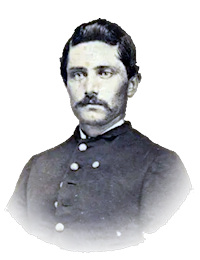
Monday, 23d–Nothing of importance. I went out to the branch a mile from camp to do my washing. Burtis Rumsey of our company has been sick for about two weeks and he begged me to take two of his shirts along and wash them for him, so I did. I used a small camp kettle which the company cook has set aside for boiling clothes. Some of the boys in the company hire colored women to wash their clothes. I prefer to do my own washing.
War Diary of Luman Harris Tenney.
June 23, 2022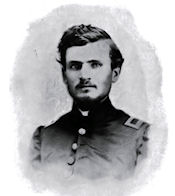
23rd. Monday. According to orders started for Neosho at 6 A. M. Up early and flew around to get chores done. Our road lay mostly through the woods. After 8 miles ride, mail came. A letter from good Fannie. Met Co. “A” and “D” from Sherwood, three miles north of Neosho. Met some Kansas Sixth who had fallen in with a band of 400 rebels on the road to Granby. Council of War–Burnett wanting to go on with 200 men–Ratcliff not thinking it best. Bivouacked for the night in open air.
Robert M. McGill
June 23, 2022
Saturday, 23d.—Feel some better this morning. Brother J. H. Magill came up from Mouse Creek to see me to-day. In afternoon, regiment passed through Knoxville, and Brother Tom is sent to this hospital, sick. J. H. got him in the same room with me. Got two letters to-day; one from Cousin Fannie Lowry, the other from 3, 3, 1.
(Note: picture is of an unidentified Confederate soldier.)
First Wounded
June 23, 2022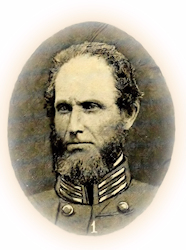
June 23rd
I saw the first wounded of my regiment, A. A. Lewis, of Sampson County, and Dr. Grissom, of Wake County.
A very anxious day.
June 23, 2022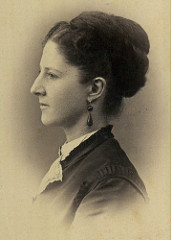
Eliza Woolsey Howland’s Journal.
Wilson Small, June 23.
A very anxious day. An orderly from Brigade Headquarters brought word from Captain Hopkins that Joe was ill and unable to write. I at once put up a basket of stores for him–bedsack, pillows, sheets, arrowroot, etc., etc., to go by the orderly, and Charley telegraphed Generals Slocum and Franklin to know the truth, while Mr. Olmsted arranged with Captain Sawtelle for a pass to take me to the front to-morrow morning. My mind was relieved, however, by the telegraphic answers and better accounts, and I have given up the idea of going out.
Journal of Surgeon Alfred L. Castleman.
June 23, 2022
(This month was the one in which commenced the retreat, or “change of base,”) from before Richmond. The constant call on my time, from the last date to the 25th, prevented my keeping a full journal of events, and I therefore state, generally, that after having been compelled, for three weeks, to witness an amount of unnecessary suffering, which I cannot now contemplate without a shudder, I at last succeeded, by the efficient and cordial aid of my Assistant Surgeons, Dickinson, Tuttle, Freeman and Brett, (the last two named coming in at a late date) and by my ” insufferably insolent demands” on my superior officers, in getting the hospital well supplied with provisions, stores, bedding, &c. The Assistant Surgeons named above, have my acknowledgements and my grateful thanks for their ever willing and well-timed support of me in my efforts to relieve the sufferings of brave men under our care. I wish, too, to make my acknowledgement to Medical Director Brown, for his courteous and cordial support of my efforts. Nor can I pass here without bearing testimony to the ever-ready and humane efforts of the Sanitary Commission to aid, by every means in its power, in the proper distribution of comforts for the sick and wounded. On arriving at Washington, shortly after entering the service of the United States, I became much prejudiced by statements made to me against this organization, but it required but a short time to satisfy me that my prejudices were groundless. I have uniformly found the members both courteous and humane, and am satisfied that the privations of the soldiers would have been incomparably greater but for the aid received through them. From this Commission we received, about the 15th June, amongst other things, a generous supply of bed sacks. These, by the aid of the convalescents in hospital, were filled with the fine boughs of the cedar, pine and other evergreens, which made very comfortable beds, and in a few days after this every man was comfortably bedded and between clean, white sheets.[1] About the time of this change in the condition of the hospital, patients unable to be moved to the rear began to be sent in here from other hospitals. The removing of convalescents to the rear, and the breaking up numbers of hospitals and massing their very sick in one general field hospital, always indicates some active army operations. ‘Twas so in this case. But the condition of the patients sent in was shocking in the extreme, and a disgrace to the officers by whom such things are permitted. Poor fellows, wounded in battle, had been neglected till their wounded limbs or bodies had become a living mass of maggots. Legs were dropping off from rottenness, and yet these poor men were alive. Yet if the Surgeons had have protested against these things, perhaps they would have been threatened, as I was, with dismissal, and have been told that it was ” bad enough that this should be, without having it told to discourage the army.” There is no necessity for it, and the Surgeon who will submit to being made the instrument of such imposition on the soldiers, without a protest, deserves dismissal and dishonor. I must be permitted to insert here my most solemn protest against the action of any Governor, in promoting, at the request of (7×9) party politicians, (and in defiance of the remonstrance of those acquainted with the facts,) officers, and particularly surgeons, whose only notoriety consists in their ability to stand up under the greatest amount of whisky; and also against their re-appointing surgeons under the same influence who, after examination, have been mustered out of the service for incompetency. Under such appointments humanity is shocked, and a true and zealous army of patriots dwindle rapidly into a mass of mal-contents.
[1] A little incident here. Amongst the loads of hospital supplies furnished by the U. S. Sanitary Commission, were many articles of clothing and bedding marked with the names of the persons by whom they were donated. After the new beds were all made and severally assigned to those who were to occupy them, I was supporting a poor, feeble Pennsylvanian to his bed. As he was in the act of getting in he started back with a shriek and a shudder, accompanied by convulsive sobs so heart-rending that there was scarcely a dry eye in the ward. He stood fixed, staring and pointing at the bed, as if some monster was there concealed. As soon as he became sufficiently calm to speak, I asked what was the matter? With a half-maniacal screech he exclaimed–his finger still pointing–” My mother!” Her name was marked upon the sheet. Three days after the poor fellow died with that name firmly grasped in his hand. The sheet was rolled around him, the name still grasped, and this loved testimonial of the mother’s affection was committed with him to his last resting place. This circumstance was published at the time, in a letter from myself and I have seen it also stated in several papers, extracted from letters written to friends by soldiers in the hospital.
Village Life in America
June 22, 2022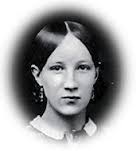
June. – There was great excitement in prayer meeting last night, it seemed to Abbie Clark, Mary Field and me on the back seat where we always sit. Several people have asked us why we sit away back there by old Mrs Kinney, but we tell them that she sits on the other side of the stove from us and we like the seat, because we have occupied it so long. I presume we would see less and hear more if we sat in front. To-night just after Mr Walter Hubbell had made one of his most beautiful prayers and Mr Cyrus Dixon was praying, a big June bug came zipping into the room and snapped against the wall and the lights and barely escaped several bald heads. Anna kept dodging around in a most startling manner and I expected every moment to see her walk out and take Emma Wheeler with her, for if she is afraid of anything more than dogs it is June bugs. At this crisis the bug flew out and a cat stealthily walked in. We knew that dear Mrs Taylor was always unpleasantly affected by the sight of cats and we didn’t know what would happen if the cat should go near her. The cat very innocently ascended the steps to the desk and as Judge and Mrs Taylor always sit on the front seat, she couldn’t help observing the ambitious animal as it started to assist Dr Dagget in conducting the meeting. The result was that Mrs Taylor just managed to reach the outside door before fainting away. We were glad when the benediction was pronounced.
Downing’s Civil War Diary.–Alexander G. Downing.
June 22, 2022
Sunday, 22d–We had company inspection at 5 o’clock this evening. Our chaplain, John S. Whittlesey, died of diphtheria on May 11th at Durant, Iowa, and our regiment has no chaplain at present. We have no services on Sunday now, except that some of the companies occasionally have prayer meetings.
War Diary of Luman Harris Tenney.
June 22, 2022
22nd. Sunday. Major Purington started at 5 for Ohio on 30 days furlough. Carried lots of money for the boys. We boys sent to Wilson Dodge, former Q. M,, to get the Major a ring worth $10. Got our pay. Commissary and Q. M. received alike this time.
Issued some rations and drew enough from Brigade Com’y for ten days.
Who wrote it?
June 22, 2022
Eliza Howland to Joe, Howland, her husband.
Wilson Small, June –.
This morning I have your Sunday note with the charming little poem. Who wrote it? Be sure and tell me. It is a poem, and though entirely undeserved, I value it very much indeed.
[Poem by a Lieutenant of the 16th N. Y., dedicated to Eliza Woolsey Howland]
.
To Mrs. Joseph Howland.
________
From old Saint Paul till now,
Of honorable women not a few
Have quit their golden ease, in love to do
The saintly works that Christ-like hearts pursue.
.
Such an one art thou, God’s fair apostle,
Bearing His love in war’s horrific train;
Thy blessed feet follow its ghastly pain
And misery and death, without disdain.
.
To one borne from the sullen battle’s roar,
Dearer the greeting of thy gentle eyes,
When he aweary, torn and bleeding lies,
Than all the glory that the victors prize.
.
When peace shall come, and homes shall smile again,
Ten thousand soldier hearts, in Northern climes,
Shall tell their little children, with their rhymes,
Of the sweet saint who blessed the old war times..
Rebel War Clerk
June 21, 2022
JUNE 21st.—Gen. Beauregard is doubly doomed. A few weeks ago, when the blackness of midnight brooded over our cause, there were some intimations, I know not whether they were well founded, that certain high functionaries were making arrangements for a flight to France; and Gen. Beauregard getting intimation of an order to move certain sums in bullion in the custody of an Assistant Treasurer in his military department, forbid its departure until he could be certain that it was not destined to leave the Confederacy. I have not learned its ultimate destination; but the victory of the Seven Pines intervening, Gem Beauregard has been relieved of his command, “on sick leave.” But I know his army is to be commanded permanently by Gen. Bragg. There are charges against Beauregard. It is said the Yankee army might have been annihilated at Shiloh, if Beauregard had fought a little longer.
Downing’s Civil War Diary.–Alexander G. Downing.
June 21, 2022
Saturday, 21st–We were relieved this morning by the Thirteenth Iowa. Some of the fruit in this locality is beginning to ripen and we will have some variety in our rations.
0
June 21, 2022
On the 8th of June, the Flag Officer having received the proper authority, once more turned the Hartford towards Vicksburg, followed by the Richmond–the Brooklyn being detained, but soon followed. We anchored near sunset, alongside the U. S. steam transport Tennessee, which had got aground. During the night the Brooklyn arrived, in company with several river steamers with troops. On the following morning two steamers fastened to the Tennessee, to tow her off, while we passed on, and arrived without accident at Baton Rouge on the 10th, where we found everything going off quietly. We lay here nearly ten days, during which time the mortar schooners of Capt. Porter’s fleet had passed by us, and having left one, we on the 19th took it in tow and started for Vicksburg. We proceeded with moderate speed and success until the 21st, in the evening, when we unexpectedly ran hard aground. Our attendant steamers immediately came up to our assistance, and after laboring the entire night, succeeded in getting afloat the following morning at eleven o’clock. Continuing on we passed some high bluffs, on which we looked for rebel batteries and accordingly kept prepared for them, but we were not molested. We observe that the river is rapidly falling, having thus far receded some six feet.
War Diary of Luman Harris Tenney.
June 21, 2022
21st. Saturday. Wrote home. Major Purington and Adjutant acted ridiculously in the evening. Out almost all night on a spree.
Downing’s Civil War Diary.–Alexander G. Downing.
June 20, 2022
Friday, 20th–Our regiment went out on picket this evening. Water is very scarce out on the picket line and so we have our canteens filled in the evening before we go out.
War Diary of Luman Harris Tenney.
June 20, 2022
20th. Friday. Attended to my usual duties. Read papers.
Robert M. McGill
June 20, 2022
Friday, 20th.—No nurse in my room. Some very rough looking fellows in my room. Remained very sick all day.
(Note: picture is of an unidentified Confederate soldier.)
Through Some Eventful Years
June 20, 2022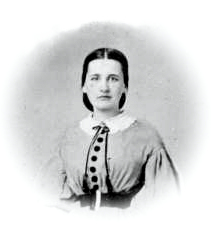
June 20th, 1862.—The tannery, under Mr. James, is a complete success. Father sent to Gadsden County for a shoemaker, and three of the black boys are working under him, learning the trade; he has three sons and they are motherless. John, the eldest, is fourteen years old, but is very small for his age; David is twelve and Nathan is nine; they have never been to school in their lives and Father wants me to teach them two hours every morning. I have taught Frances right along, since Grandpa gave her to me but I do not know if I can “instill knowledge,” as Dr. Cleveland says, into such unpromising specimens. However, I will try.
Susan Bradford is 16 years old when this entry was made.
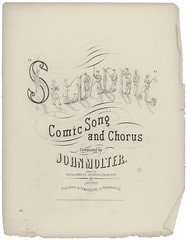
Skedaddle
June 20, 2022by Thomas Bailey Aldrich 1,2
adapted to music by John Molter 3
.
 The shades of night were falling fast,
As through a Southern village passed
A youth, who bore, not over nice,
A banner with the gay device,
Skedaddle!
.
His hair was red, his toes beneath
Peeped, like an acorn from its sheath,
While with a frightened, voice he sang
A burden strange to Yankee tongue,
Skedaddle!
.
He saw no household fire where he
Might warm his tod or hominy;
Beyond the Cordilleras shone,
And from his lips escaped a groan,
Skedaddle!
.
“Oh! stay,” a cullered pusson said,
“An’ on dis bossom res’ your hed!”
The octoroon she winked her eye,
But still he answered, with a sigh,
Skedaddle!
.
“Beware McClellan, Buell, and Banks,
Beware of Halleck’s deadly ranks!”.
This was the planter’s last Good Night;
The chap replied, far out of sight,
Skedaddle!
.
At break of day, as several boys
from Maine, New York and Illinois
Were moving Southward, in the air
They heard these accents of despair,
Skedaddle!
.
A chap was found and at his side
A bottle, showing how he died,
Still grasping in his hand of ice
That banner with the strange device,
Skedaddle!
.
There in the twilight, thick and gray,
Considerably played out he lay;
And through the vapor, gray and thick,
A voice fell like a rocket-stick,
Skedaddle!
.
- Moore, F. (1882). Skedaddle. In Anecdotes, poetry, and incidents of the War: North And south: 1860-1865. New York: Arundel.
- Aldrich, T. (1864). Skedaddle. In F. Moore (Editor), Songs of the Soldiers (pp. 94-95). New York, New York: G. P. Putnam.
- Molter, J. (1862). Skedaddle. H. M. Higgins, Chicago. [Notated Music] Retrieved 7/21/21 from the Library of Congress, www.loc.gov/item/ihas.200000783/.