July 7th
Visit Swift Galloway of Brunswick, Daniel McDugald of Cumberland, J. Mason, etc., etc. A telegram from Wilmington says Mrs. Betts is on her way. God bring her safely!
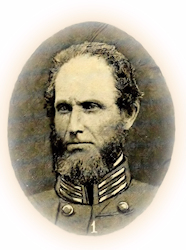
July 7th
Visit Swift Galloway of Brunswick, Daniel McDugald of Cumberland, J. Mason, etc., etc. A telegram from Wilmington says Mrs. Betts is on her way. God bring her safely!
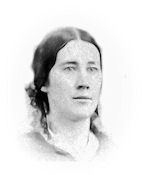
Abbie Howland Woolsey to her sister at Harrison’s Landing.
8 Brevoort Place, July 7, 1862.
My dear Georgy: Eliza and Joe came safely through yesterday (Sunday) morning. Jane and I were just going to the front door on our way to church when their hotel coach drove up. They had a pleasant voyage, only Joe says (in joke) he was neglected–Eliza and Miss Lowell directing their attention to other men!. . Joe hobbled up on his broom-stick for a crutch, and we swarmed round, having so many questions to ask that we didn’t know where to begin, and so were silent. Some broth and sangaree were quickly served and relished. I should say that Charley’s telegram from Washington came Saturday afternoon, and gave us notice enough to send out and get what extra supplies we needed. . . . Mother and Uncle E. drove right in from Astoria, and Joe has had the story to go over a great many times.
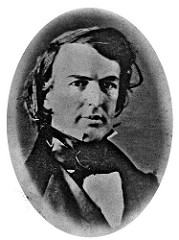
JULY 6th.—Thousands of fathers, brothers, mothers, and sisters of the wounded are arriving in the city to attend their suffering relations, and to recover the remains of those who were slain.
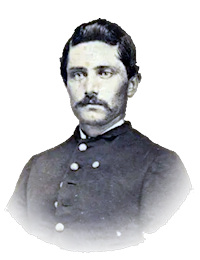
Sunday, 6th–It is very hot today. We had company inspection this morning. No news of importance.
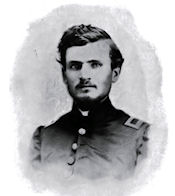
6th. Sunday. Overslept and wakened at “forward.” Hurried along. Rode a little obstinate pony. Passed the other brigade and encamped at two miles distant. Saw some Confederate papers, very neat. Warmest day of the season. Bathed in Grand River. Wrote a little, read two or three chapters in Philippians. I wish it were easier to be good, or rather I wish I were a better boy and doing some good.
July 6th
Letter from wife; she may come next Tuesday! Walk, walk, walk, visit wounded soldiers, Camp Winder and other Hospitals, Thos. Whitted and Captain Sykes of Bladen, many friends and many poor strangers. Some will live, others will die. Reach camp late, very tired. Cough and cold very bad.
JULY 5th.—Gen. Lee is bringing forward the conscript regiments with rapidity; and so large are his powers that the Secretary of War has but little to do. He is, truly, but a mere clerk. The correspondence is mostly referred to the different bureaus for action, whose experienced heads know what should be done much better than Mr. Randolph could tell them.

July 5th
Think, that since the 28th of May, I have not walked three squares at a time, for my only walks are to Mrs. Brunot’s!
It is enough to kill any one; I might as well be at Ship Island, where Butler has sentenced Mrs. Phillips for laughing while the corpse of a Federal officer[i] was passing – at least, that is to be the principal charge, though I hope, for the sake of Butler’s soul, that he had better reasons. Shocking as her conduct was, she hardly deserved two years’ close confinement in such a dreadful place as that, because she happened to have no sense of delicacy, and no feeling.
“The darkest hour is just before the day”; we have had the blackest night for almost three months, and I don’t see the light yet. “Better days are coming–” I am getting skeptical, I fear me. [continue reading…]
Saturday, 5th–There is nothing of importance. Everything seems quite dull. There are but few whites left in Corinth and we seldom see white natives anywhere. There are some colored people in town, women and children, but the able-bodied men have all been taken off with the rebels. Some colored men are coming into camp from the plantations.
5th. Issued rations to two battalions. The reaction of the 4th was visible among the boys. Slept on the prairie by my horse.
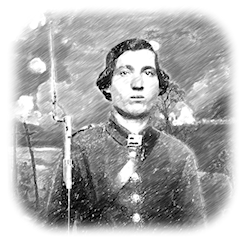
Saturday, 5th.—Returned to Mouse Creek; started for home 2 P. M. Arrived Varnells’ 5 P. M. Went out to Lowe’s and stayed all night. Got home 10 A. M.
(Note: picture is of an unidentified Confederate soldier.)
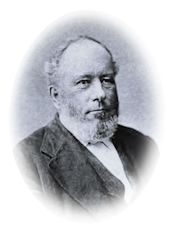
Celebrating the Fourth of July.
July 5. The Fourth was celebrated with salutes from the forts, batteries and gunboats, morning, noon and night. There were gala times in Camp Oliver last night. A huge bonfire was set from a pyramid of 75 barrels of resin, and when well on fire it lighted up the camp in grand style. All the regimental bands were present, and under the direction of P. S. Gilmore, leader of the 24th Massachusetts regimental band, were consolidated, and gave a grand concert with artillery accompaniment. The effect was very fine. The camp guard was taken off and all went in for a good time. The parade ground was covered with officers and soldiers from other camps, and officers and marines from the boats and citizens generally. The delighted darkies were on hand in force. It far surpassed anything they had ever heard or dreamed of. They are very fond of music, and gathered in great numbers in the vicinity of the bands, never noticing the battery which stood a short distance away, or if they did it was a sealed book to them and a harmless looking battery enough. After the bands had played a few selections they struck up Hail Columbia; and when in quick succession three or four of those guns were let off, there was a great scarcity of darkies. They are terribly frightened at artillery firing, and will make the distance between themselves and the guns as far and as quick as possible. The celebration was kept up till near midnight; everybody seemed to enjoy it and had a good time. If we were behind Boston in orations, floral exhibitions and the like of that, we certainly were ahead of them in music, salutes and fireworks.

July 5th, 1862.—Brother Junius spent the day with us yesterday. He gave us such an entertaining account of the winter on the St. Johns. He likes army life better than he expected. He says he never was fond of hunting and when he has to really go “Man-hunting” he will not like it at all.
He thinks they will break camp about the middle of August.
Susan Bradford is 16 years old when this entry was made.
Abby Howland Woolsey to her sister, Eliza.
8 Brevoort Place, Saturday, July 5th, ’62.
My dear Eliza: Georgy’s and Charley’s letters from Harrison’s have just arrived, the last date being a postscript Thursday, July 3, which brings us into close correspondence again you see. These letters have relieved the painful anxiety that began to possess us, about Joe’s condition and whereabouts. We thought perhaps that if his wound were really slight, he had been tempted to rejoin the regiment, and had shared in that horrible battle of White Oak Swamp. . . . Mother says that if it is Charley’s desire to stay a little while longer, she consents; he is evidently so useful, that she should not have the heart to insist on his coming back. As for Georgy, if you leave her behind, we shall never forgive you. She must come. Mother cannot stand the anxiety much longer, nor can Georgy bear the constant strain. By-and-by, perhaps, if necessary, she could go back; now she must come home with you. We should be better pleased to have Charley and all once more together, at the end of this battle-year, and before we all begin on other years of separation and distress. Have C. come too. Poor, poor Colonel Marsh! mortally wounded at Gaines’ Mill. What a mercy it would have been had he been killed on the spot. . . We shall never know all that this week of desperate fighting has cost us; our dead and wounded being left behind, or crawling painfully along in the trail of the retreating army. Here and there an officer picked up in a passing ambulance, as Joe rescued the four you speak of. Our great, beautiful “Army of the Potomac,” dwindled down to an exhausted handful. . . . Fifty thousand in all destroyed by fever and wounds, in McClellan’s brief campaign! No wonder if the President has hesitated to send more troops to be used up in swamps, when so little was being done to show for it. . . . Any fool might have known that Beauregard and the bulk of his army had come to Richmond; but then our generals are not even fools, but something less if possible. . . . It may be God’s will to destroy this nation by inches. It is certainly the devil’s will to put dissension into the hearts of our leaders, and blundering darkness into their minds. God overrules all evil, even this, I suppose, to his own glory. I have no question that this and all other defeats are intended to drive us, as a nation, to a higher moral ground in the conduct and purpose of this war. As things stand, the South is fighting to maintain slavery, and the North is trying to fight so as not to put it down. When this policy ceases, perhaps we shall begin to have victory, if we haven’t already sinned away our day of grace. [continue reading…]
JULY 4th.—Lee does not follow up his blows on the whipped enemy, and some sage critics censure him for it. But he knows that the fatal blow has been dealt this “grand army” of the North. The serpent has been killed, though its tail still exhibits some spasmodic motions. It will die, so far as the Peninsula is concerned, after sunset, or when it thunders.
The commanding general neither sleeps nor slumbers. Already the process of reorganizing Jackson’s corps has been commenced for a blow at or near the enemy’s capital. Let Lincoln beware the hour of retribution.
The enemy’s losses in the seven days’ battles around Richmond, in killed, wounded, sick, and desertions, are estimated at 50,000 men, and their losses in cannon, stores, etc., at some $50,000,000. Their own papers say the work is to be begun anew, and subjugation is put off six months, which is equivalent to a loss of $500,000,000 inflicted by Lee’s victory.
By their emancipation and confiscation measures, the Yankees have made this a war of extermination, and added new zeal and resolution to our brave defenders. All hope of a reconstruction of the Union is relinquished by the few, comparatively, in the South, who still clung to the delusion. It is well. If the enemy had pursued a different course we should never have had the same unanimity. If they had made war only on men in arms, and spared private property, according to the usages of civilized nations, there would, at least, have been a neutral party in the South, and never the same energy and determination to contest the last inch of soil with the cruel invader. Now they will find that 3,000,000 of troops cannot subjugate us, and if subjugated, that a standing army of half a million would be required to keep us in subjection.
July 4th.
Here I am, and still alive, having wakened but once in the night, and that only in consequence of Louis and Morgan crying; nothing more alarming than that. I ought to feel foolish; but I do not. I am glad I was prepared, even though there was no occasion for it.
While I was taking my early bath, Lilly came to the bath-house and told me through the weatherboarding of another battle. Stonewall Jackson has surrounded McClellan completely, and victory is again ours. This is said to be the sixth battle he has fought in twenty days, and they say he has won them all. And the Seventh Regiment distinguished itself, and was presented with four cannon on the battlefield in acknowledgment of its gallant conduct! Gibbes belongs to the “ragged howling regiment that rushed on the field yelling like unchained devils and spread a panic through the army,” as the Northern papers said, describing the battle of Manassas. Oh, how I hope he has escaped!
And they say “Palmerston has urged the recognition of the Confederacy, and an armed intervention on our side.” Would it not be glorious? [continue reading…]
Friday, 4th–The Eleventh Iowa came in from picket. The weather is very hot. This is my first Fourth of July in the army. Things appear so lonesome. The battery boys of our brigade took their battery of six guns out a short distance from camp and fired a salute to celebrate the day.

We arrived at Vicksburg on the 25th, where we found the Brooklyn and Richmond, the gunboats, and mortar fleet; and, soon after arriving, an officer came on board from Commodore Davis’s fleet, and communicated with Commodore Farragut. Davis, in our absence, had moved down the river, and now occupied a position just above Vicksburg.
Preparations were immediately made for an attack, by putting the mortars in position but they did not open until the evening of the 26th. On the following day they bombarded slowly the whole day. In the evening a council of Commanders determined to attack the place on the following morning. During the night the mortars were moved up to easy range, and on the 28th, before daylight, the mortars opened in earnest. The whole fleet now moved up to the attack. Our ships were before the city, while the shells from the mortars were being hurled right over our heads, and, as battery after battery was unmasked from every conceivable position, the ridge of the bluff was one sheet of fire. The big ships sent in their broadsides, the mortars scores of shell, and all combined to make up a grand display and terrible conflict. After nearly two hours of hard fighting, our ships had nearly all passed the city, out of range, and the firing ceased.
On looking around I found the Hartford riddled from stem to stern; first a hole through her bow, then two through the side, one below water, then another through the bulwarks, another through the stern and cabin, and another through the smoke-pipe, &c., &c., the main topsail-yard cut in twain, and the rigging terribly cut fore and aft.
Our casualties in killed and wounded were light, one killed, and a dozen slightly wounded, including the Flag Officer and Capt. Broome of the marines–while the casualties of the fleet were less than a dozen in killed. The afternoon was devoted to burying the dead and communicating with the ram fleet belonging to Commodore Davis’s division. From our anchorage we could see across the point of land to General Williams’s camp and the transports below, and we immediately established communication with them. Here we spent the Fourth of July, which was celebrated by the booming of cannon from both fleets, and a volley of shells to the rebels. I visited the iron-clad gunboat Benton, which to me was quite a curiosity.
4th. Great day. So many drunk. Officers gave the freest license to the men. Both caroused. I was most disgusted. Bill and L. fought.

July, 1862.–The President has called for 300,000 more brave men to fill up the ranks of the fallen. We hear every day of more friends and acquaintances who have volunteered to go.
July 4th
Once a National Jubilee? With Brother Gattis visit Captains Brooks and Stanley. Visit Chimborazo Hospital, some of 30th Regiment, Lieut. Angus Shaw of 38th Regiment, D. Danford of Company “C,” and others at Seabrook Hospital. See Jos. Mason’s left leg cut off below the knee. Brother Gattis spends night with me in camp.
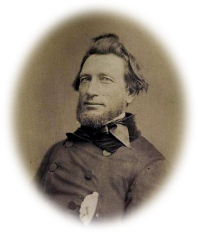
4th.–The fourth has come and gone, but brought no fight, and our great Republic has passed another anniversary, if not in safety, in integrity, for its flag yet floats over the loyal men of every State, and the sunset salute of thirty-four guns, proclaims that we are yet an integral. But for the bombast of General McClellan’s proclamation of to-day, we should feel sad. That makes us laugh. Shut up in a little bend of the James River, not daring to venture a single mile from his encampment, he commences digging and peeping from his ditch to see that Lee is not in sight, he cries thus: “On this, our Nation’s birthday, we declare to our foes, who are rebels against the best interests of Mankind, that this army shall enter the Capital of their so-called Confederacy.” Stuff! Has he forgotten that last winter he promised that under him we should have no more defeats?
July 3rd
In camp sick. Meet Revs. T. J. Gattis and J. C. Brent of North Carolina. Learn that Bro. E. J. Grear of Company “C,” was badly wounded and captured. He had left his pocket book containing $42.21 with me. I wish he had it in gold.
JULY 3d.—Our wounded are now coming in fast, under the direction of the Ambulance Committee. I give passports to no one not having legitimate business on the field to pass the pickets of the army. There is no pilfering on this field of battle; no “Plug Ugly” detectives stripping dead colonels, and, Falstaff like, claiming to be made “either Earl or Duke” for killing them.
So great is the demand for vehicles that the brother of a North Carolina major, reported mortally wounded, paid $100 for a hack to bring his brother into the city. He returned with him a few hours after, and, fortunately, found him to be not even dangerously wounded.
I suffer no physicians not belonging to the army to go upon the battle-field without taking amputating instruments with them, and no private vehicle without binding the drivers to bring in two or more of the wounded.
There are fifty hospitals in the city, fast filling with the sick and wounded. I have seen men in my office and walking in the streets, whose arms have been amputated within the last three days. The realization of a great victory seems to give them strength.
Thursday night, July 3d.
Another day of sickening suspense. This evening, about three, came the rumor that there was to be an attack on the town to-night, or early in the morning, and we had best be prepared for anything. I can’t say I believe it, but in spite of my distrust, I made my preparations. First of all I made a charming improvement in my knapsack, alias pillow-case, by sewing a strong black band down each side of the centre from the bottom to the top, when it is carried back and fastened below again, allowing me to pass my arms through, and thus present the appearance of an old peddler. Miriam’s I secured also, and tied all our laces in a handkerchief ready to lay it in the last thing.
But the interior of my bag! – what a medley it is! First, I believe, I have secured four underskirts, three chemises, as many pairs of stockings, two under-bodies, the prayer book father gave me, “Tennyson” that Harry gave me when I was fourteen, two unmade muslins, a white mull, English grenadine trimmed with lilac, and a purple linen, and nightgown. Then, I must have Lavinia’s daguerreotype, and how could I leave Will’s, when perhaps he was dead? Besides, Howell’s and Will Carter’s were with him, and one single case did not matter. But there was Tom Barker’s I would like to keep, and oh! let’s take Mr. Stone’s! and I can’t slight Mr. Dunnington, for these two have been too kind to Jimmy for me to forget; and poor Captain Huger is dead, and I will keep his, so they all went together. A box of pens, too, was indispensable, and a case of French notepaper, and a bundle of Harry’s letters were added. Miriam insisted on the old diary that preceded this, and found place for it, though I am afraid if she knew what trash she was to carry, she would retract before going farther. [continue reading…]